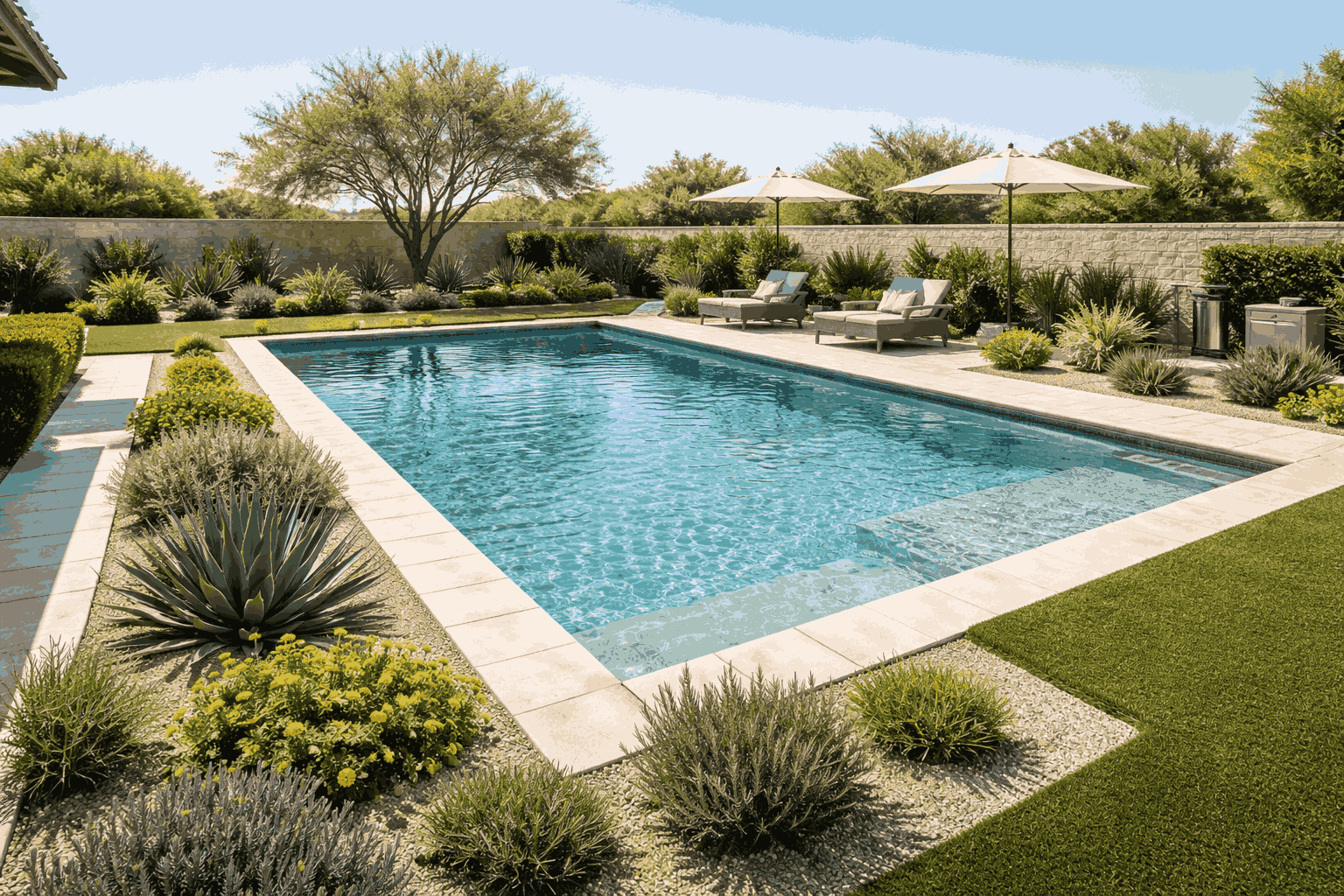
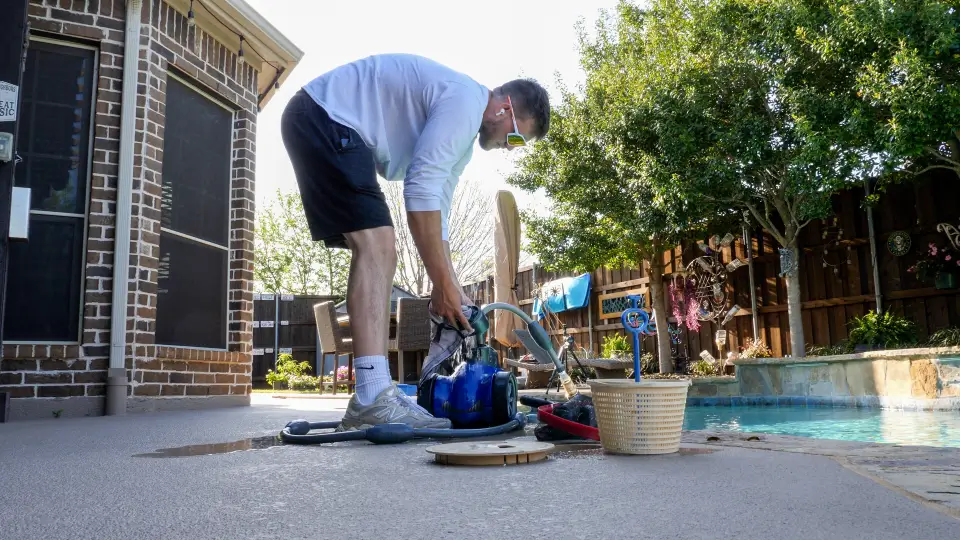
Pool maintenance by month is what separates pool owners who stay ahead from those constantly chasing problems. DFW’s climate creates distinct maintenance demands that shift throughout the year — freeze emergencies in January, cedar pollen in February, algae warfare in July, leaf chaos in October. Following a DFW pool maintenance calendar prevents seasonal surprises and keeps your pool healthy year-round. This is the complete month by month pool care Texas guide built specifically for North Texas conditions.
January — Cold Watch Month
Freeze risk is high with 2 to 4 events typical. Run the pump 4 to 6 hours daily, switching to continuous during freezes. Chemical demand is low — maintain 1 to 2 ppm chlorine. Cedar pollen starts clogging filters. Monitor weather obsessively and have your freeze protection plan ready. The National Weather Service issues freeze warnings for DFW that you should track weekly. Service level: bi-weekly or monthly plus freeze response.
February — Late Winter Transition
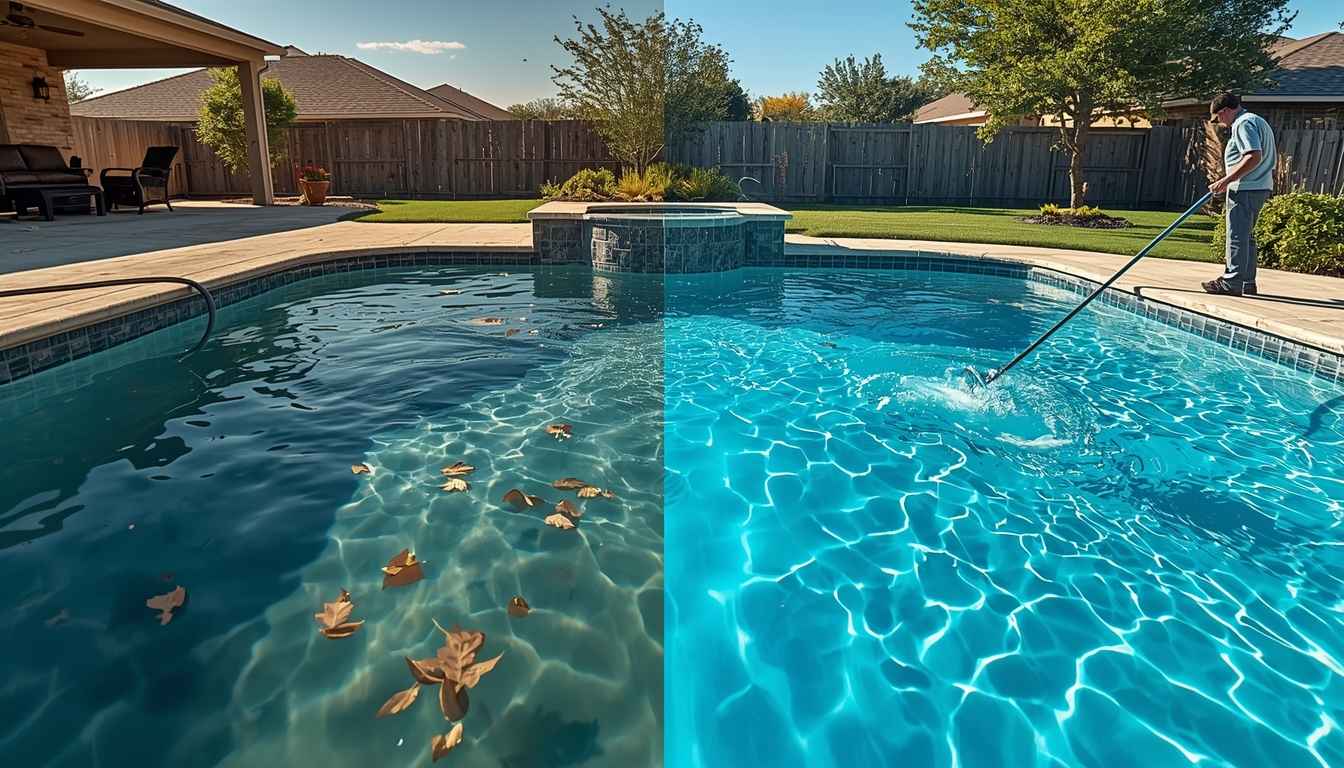
Freeze risk drops to moderate. Keep the pump at 4 to 6 hours. Cedar pollen winds down toward month’s end. Begin equipment inspection for spring — test the heater, check all valves, inspect the filter. Run a full water chemistry panel to establish your spring baseline. Pool maintenance by month really starts paying off here because catching equipment issues now saves you during the spring rush.
March — Spring Startup Month
Freeze risk is low. Increase pump time to 8 to 10 hours. Chemical demand starts climbing. This is your full spring startup: equipment inspection, filter deep clean, shock the pool, rebalance all chemistry, first algaecide application, and resume weekly service. Oak pollen begins. You should be swim-ready by mid-to-late March most years. Our pool opening service handles the entire startup if you want it done professionally.
April — Pollen Onslaught Month
Pump runs 10 to 12 hours. Chemical demand is high. Oak pollen hits peak levels — baskets fill daily, filter pressure climbs fast, and phosphates spike from decomposing pollen. Clean baskets daily, backwash or clean the filter every 3 to 7 days, and test for phosphates. Our pollen guide covers the full DFW pollen management protocol. This month makes or breaks your spring water quality.
May — Peak Season Ramp-Up
Pump stays at 10 to 12 hours. Verify all equipment is ready for peak season. Optimize your variable speed pump schedule for summer. Chemistry monitoring increases to twice weekly. Grass pollen is still active. Memorial Day means pool parties — shock before and after. The Pool & Hot Tub Alliance recommends a full equipment check before peak season to catch issues while repair schedules are still manageable.



June Through August — Full Summer Battle
Pump runs 12+ hours. Chemical demand is at maximum. Water temperatures hit 85 to 95°F. This is the stretch where pool maintenance by month matters most. Test chemistry 2 to 3 times per week. Chlorine consumption doubles or triples compared to spring. Algae prevention runs at full intensity. Clean the filter every 1 to 2 weeks. Monitor water level for evaporation — you may need to add water weekly. Mid-week chlorine boosts keep things stable between service visits. Equipment runs under maximum stress — watch for overheating pumps, heater issues, and salt cell scaling.
July is typically the worst month for chemical demand in the entire DFW pool maintenance calendar. According to the CDC, maintaining adequate sanitizer levels during peak swim season is essential for preventing recreational water illness.
September — Transition Begins
Pump drops to 10 to 12 hours. Chemical demand is still high but starts decreasing. Fall debris management begins. Labor Day is the last big party weekend — shock before and after. This is a good window for equipment maintenance you deferred during summer. Our maintenance tips page covers fall transition tasks.
October — Fall Maintenance Month
Pump drops to 8 to 10 hours. Pecans, oaks, and other trees dump heavy leaf loads. Consider a leaf net over the pool. Reduce chemical treatment proportionally as temperatures drop. Clean the filter after peak leaf drop. Begin freeze planning. Transition from weekly to bi-weekly service if your month by month pool care Texas calendar supports it.
November — Pre-Winter Preparation
First freeze possible late in the month. Pump drops to 6 to 8 hours. Do a fall deep clean. Verify freeze guard systems work. Test the heater for the occasional cool-weather swim. Prepare your freeze action plan. Our winterization guide covers everything. Service shifts to bi-weekly.
December — Winter Care Month
Freeze risk is moderate to high. Pump at 4 to 6 hours, continuous during freeze events. Cedar pollen starts again — clean filters more frequently. Minimal chemical maintenance with chlorine at 1 to 2 ppm. Monitor weather forecasts weekly. This is where the DFW pool maintenance calendar loops back to January. According to HomeAdvisor’s pool data, pools maintained through winter with a seasonal calendar require significantly less spring recovery work and cost less to operate annually.
The U.S. Department of Energy recommends seasonal pump scheduling adjustments as one of the most effective ways to reduce annual pool energy costs.
People Also Ask
What pool maintenance do I need each month in Texas?
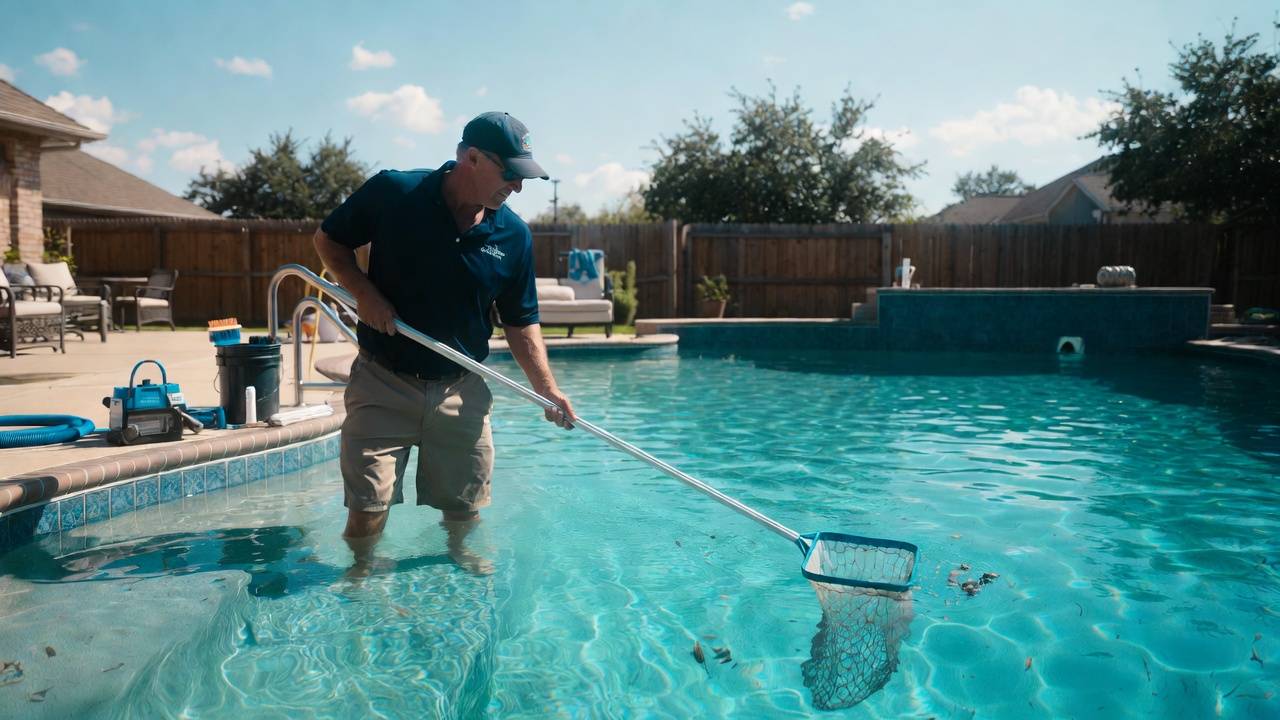
It varies dramatically. Winter months need freeze protection and minimal chemistry. Spring needs startup, pollen management, and equipment checks. Summer needs maximum chemistry, extended filtration, and algae prevention. Fall needs debris management and pre-winter prep. Pool maintenance by month is the only way to stay ahead.
When does pool season start in DFW?
Mid-to-late March for most DFW homeowners. Water temperatures become comfortable by late March or early April. With a heater, you can start even earlier.
Do I need to maintain my pool in winter in Texas?
Yes. DFW winters aren’t cold enough for full closure. You reduce service intensity but never shut down completely. Freeze protection, minimal chemistry, and equipment monitoring continue year-round. Our closing vs winterizing guide covers the difference.
How do I prepare my pool for summer in DFW?
March: full spring startup with equipment inspection, filter deep clean, shock, and chemistry rebalancing. April: ramp up for pollen. May: verify everything before Memorial Day. By June you should be at full summer intensity with 12+ hours of pump time and 2 to 3 chemistry checks per week.
What month should I open my pool in North Texas?
March. Begin spring startup procedures in early March. By mid-to-late March, water should be swim-ready. Our pool opening service handles everything if you want a hands-off startup.
PoolBurg Follows This Calendar at Every Visit
Our team adjusts service intensity month by month automatically — you don’t have to track any of this. Pool maintenance by month is built into every PoolBurg service plan. Contact PoolBurg and let us handle the calendar so you can just enjoy the pool.