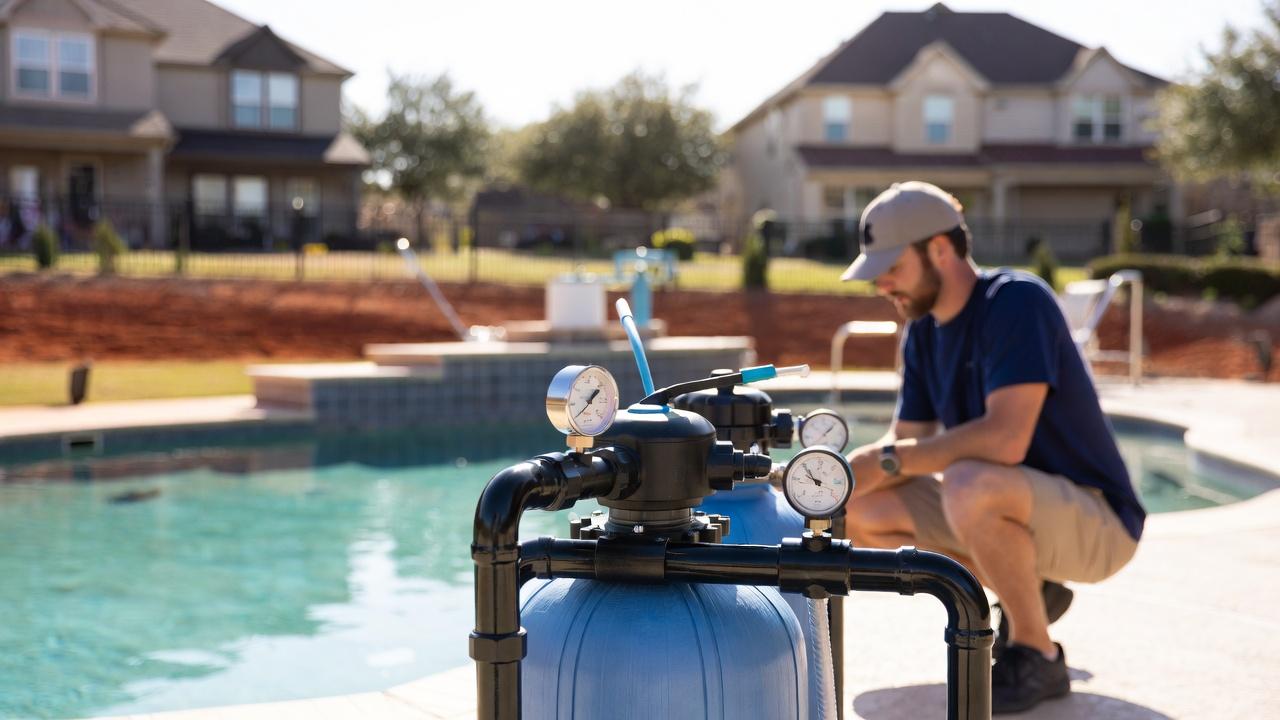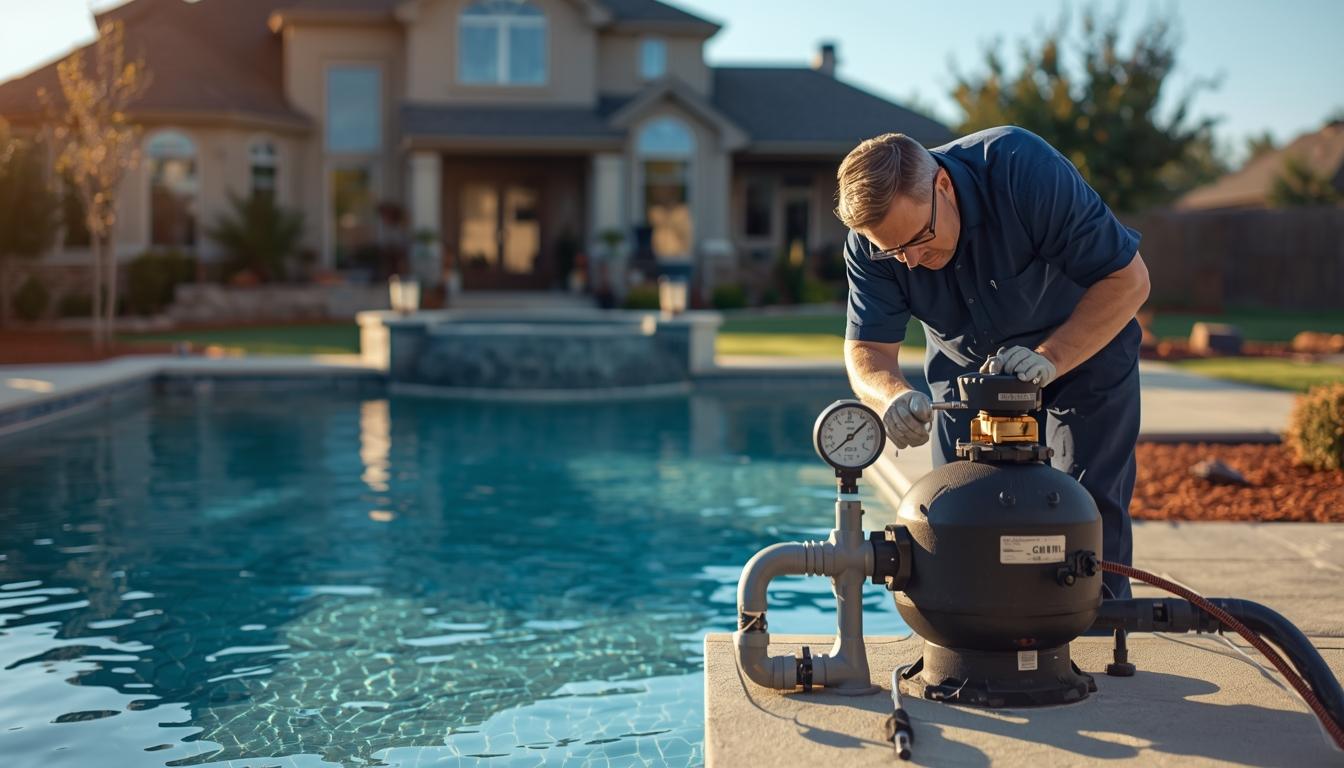
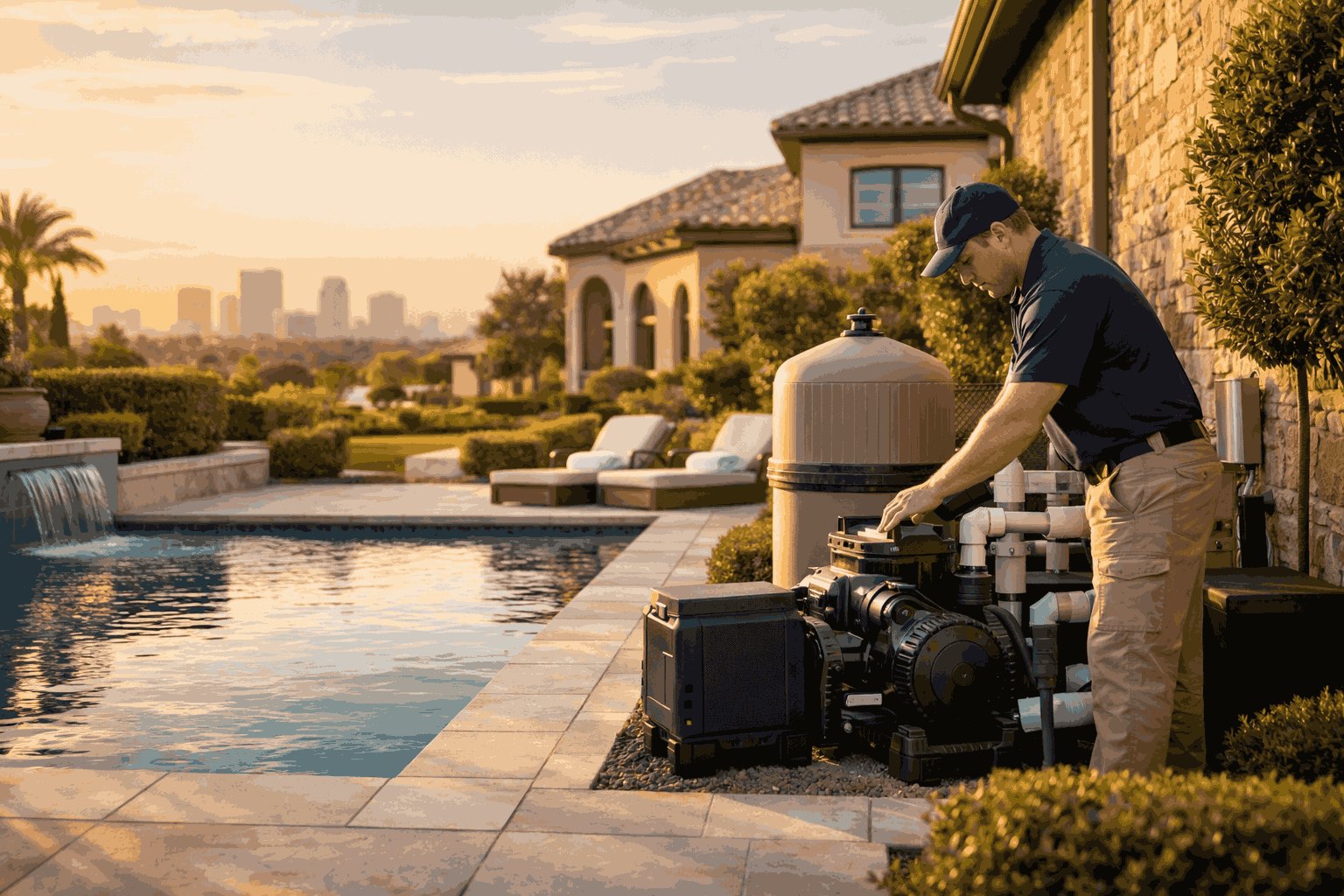
Pool pump replacement is one of those expenses every DFW pool owner faces eventually. Your pump runs ten to twelve hours a day in Texas summer heat, pushing thousands of gallons through your system while baking in direct sunlight on a concrete pad. Nothing lasts forever under those conditions. The question isn’t whether you’ll need a pool pump replacement — it’s when, and how much you should expect to pay. If your pump is making weird noises, your electricity bill is climbing, or you’ve repaired the same thing three times already, this guide breaks down exactly when to replace pool pump equipment and what the real pool pump replacement cost looks like in North Texas.
How Do You Know When to Replace Your Pool Pump?
Age — The Number One Indicator
This is the most straightforward signal that pool pump replacement is approaching. Single-speed pumps in DFW typically last 8 to 12 years. Variable speed pumps get 8 to 15 years with proper maintenance. But here’s the thing — those are national averages, and Texas heat plus DFW’s hard water shorten lifespan compared to cooler, softer-water markets. If your pump is approaching that window, start planning. A proactive replacement on your schedule is always cheaper than an emergency replacement on the pump’s schedule.
The 50 Percent Rule — Repair Cost vs Replacement Cost
Here’s a rule that saves pool owners a lot of wasted money: if the repair bill exceeds 50 percent of what a new pump costs, replace it. Simple as that. A $400 motor replacement on a pump that’s worth $600 new? That math doesn’t work. You’re better off putting that $400 toward a brand new pool pump replacement that comes with a fresh warranty and years of reliable service. Your pool pump repair tech should be honest about when repair stops making sense.
Repeated Failures
If you’ve repaired the same pump three or more times in two years, it’s telling you something. Each repair buys less time than the last. Capacitors, seals, bearings — when one component after another starts failing, the pump is at the end of its useful life. Throwing more repair money at it is just delaying the inevitable pool pump replacement.
Energy Consumption That’s Bleeding Your Wallet
An old single-speed pump running 10 hours a day in DFW summer can cost $100 to $180 per month in electricity. A new variable speed pump doing the same job costs $30 to $60 per month. That’s $600 to $1,500 in annual savings. Sometimes pool pump replacement is worth it purely for the energy savings — even if the old pump technically still runs. The Department of Energy now requires variable speed pumps on new installations for exactly this reason.
Noise and Vibration Getting Worse
A loud pump isn’t just annoying — it’s a symptom. Screaming bearings, grinding noises, and excessive vibration all indicate internal failure that’s progressing. In DFW’s close-set suburban neighborhoods, noise complaints from neighbors are a real thing too. If your pump sounds like a jet engine, it’s time.
Visible Physical Deterioration
Cracked pump housing — especially common after North Texas freeze events — severe motor corrosion, stripped mounting bolts, and a warped or cracked lid are all signs that no repair is going to bring this pump back to reliable condition. When the body of the pump itself is failing, pool pump replacement is the only real option.
Pool Pump Replacement Cost in North Texas
Pump Only — Homeowner Self-Install
If you’re buying the pump and installing it yourself (which we don’t recommend), here’s what the hardware costs: a variable speed pump runs $600 to $1,400 depending on brand and model. A single-speed pump runs $200 to $500. But the pool pump replacement cost doesn’t end with the hardware — incorrect installation can void your warranty, damage your plumbing, and create electrical hazards.
Professional Installation — The Smart Choice
With professional installation, pool pump replacement cost in DFW looks like this: a variable speed pump plus installation runs $800 to $1,800. A single-speed pump plus installation runs $400 to $800. Professional installation includes removing the old pump, installing the new one with proper plumbing connections, electrical wiring (230V for most variable speed pumps), programming and optimization of speed settings, a full system test and leak check, cleanup, and hauling away the old pump.
Additional Costs That May Apply
Depending on your specific situation, some extras might add to your total pool pump replacement cost: plumbing modifications if the new pump has a different footprint run $50 to $200. Electrical upgrade from 115V to 230V adds $100 to $300. New union fittings or valves cost $25 to $75. And concrete pad repair or leveling runs $50 to $150. A good installer quotes these upfront so nothing surprises you.
How to Choose the Right Pool Pump Replacement for Your DFW Pool

Sizing — The Most Critical Decision
The biggest mistake in pool pump replacement is getting the wrong size. Your pump must be matched to your pool volume, plumbing diameter, and total dynamic head. An oversized pump wastes energy and damages your filter. An undersized pump can’t maintain adequate circulation. Don’t guess — always have a professional calculate the right size for your specific setup.
Variable Speed vs Single Speed — The Choice Is Clear in Texas
For DFW pools, variable speed is the only sensible choice. The energy savings alone justify the higher upfront cost, plus you get quieter operation, longer lifespan, and better filtration at lower speeds. Texas law now requires variable speed pumps on all new pool installations. Even for a pool pump replacement on an existing pool, going variable speed is the smartest long-term decision.
Best Brands for DFW Pool Pump Replacement
The Pentair IntelliFlo is the most common in DFW with the best local dealer support and excellent reliability. The Hayward TriStar VS is a strong alternative with good parts availability. Pentair’s SuperFlo VS offers a solid budget option. And the Jandy VS FloPro integrates well if you’re already running Jandy equipment and automation. When possible, match the brand to your existing system — it simplifies installation and future service.
Features to Consider
Think about built-in timer versus external timer control, compatibility with your automation system (IntelliCenter, iAqualink, OmniLogic), warranty length and what it actually covers, and noise level — which matters a lot in DFW’s close-proximity neighborhoods where your pump pad might be ten feet from your neighbor’s bedroom window.
Can I Replace My Pool Pump Myself?
Technically possible if you’re mechanically skilled and comfortable with plumbing and electrical work. But there are real reasons we don’t recommend DIY pool pump replacement. Electrical work may require a permit in many DFW cities. Improper installation voids the manufacturer’s warranty — so if the pump fails in year one, you’re eating the full cost. Incorrect sizing causes long-term circulation and filtration problems that cost more to fix down the road. And professional labor for installation runs $200 to $400 — that’s cheap insurance against getting it wrong. Our honest recommendation: hire a professional every time.
People Also Ask
How much does it cost to replace a pool pump in Texas?
Total pool pump replacement cost in DFW with professional installation: $800 to $1,800 for variable speed, $400 to $800 for single speed. Additional costs for plumbing or electrical modifications can add $50 to $300.
How long do pool pumps last in DFW?
Single-speed pumps typically last 8 to 12 years, variable speed pumps 8 to 15 years. Texas heat and hard water tend to shorten lifespan compared to national averages. Regular maintenance extends pump life significantly.
Should I replace my pool pump with the same brand?
Matching brands simplifies installation and keeps your equipment ecosystem compatible — especially if you have an automation system. But switching brands is perfectly fine if a different pump better fits your needs. Your installer handles the plumbing and electrical adjustments.
Is it worth replacing a single-speed pump with a variable speed?
In Texas, absolutely. The energy savings of $600 to $1,500 per year mean the upgrade pays for itself in 12 to 24 months. After that, it’s pure savings. Check our full variable speed pump guide for the complete breakdown.
Does the pool pump need to be the same horsepower as the old one?
Not necessarily. Pump sizing should be based on your pool’s actual flow requirements, not just matching what was there before. The previous pump may have been oversized or undersized. A professional calculates the correct size based on your pool volume, plumbing, and equipment.
How long does pool pump installation take?
A straightforward same-brand swap takes 2 to 3 hours. Switching brands or upgrading from single-speed to variable speed with plumbing and electrical modifications takes 3 to 5 hours. Either way, you’re back up and running same day.
PoolBurg — Expert Pool Pump Replacement Across DFW
At PoolBurg, we handle pool pump replacement across our entire 17-city DFW service area every single week. We professionally size every pump to match your pool’s actual requirements, install it correctly with proper electrical and plumbing, program the speed settings for optimal efficiency, and maintain it as part of your regular service going forward. No guessing, no oversizing, no cutting corners.
Pump on its last legs? Get a free replacement assessment from PoolBurg — we’ll size it right.