
Pool warranty questions come up constantly with DFW homeowners — usually right after something breaks and someone tells them the repair isn’t covered. The reality is that most new pools come with several overlapping warranties from different sources, each with its own terms, time limits, and conditions. Most homeowners have no idea what any of them actually say until there’s a problem. And by then, it’s often too late to fix the mistake that voided coverage.
Whether you just had a pool built, bought a home with an existing pool, or are just trying to protect what you’ve got — here’s a plain-English breakdown of exactly what your pool warranty does and doesn’t cover in North Texas.
Understanding Pool Warranties in North Texas
A new pool doesn’t come with one warranty — it comes with several. Your builder covers the structural shell and workmanship. The plaster or pebble finish manufacturer covers the surface. Every piece of equipment carries its own pool equipment warranty from Pentair, Hayward, Jandy, or whoever made it. Each has different durations, different exclusions, and different documentation requirements.
Used pools purchased with a home may still have active transferable warranties on both structure and equipment — worth checking immediately after closing. Knowing what each layer covers, and what kills coverage, is how you avoid a five-figure surprise.
Types of Pool Warranties for DFW Homeowners

Builder and Contractor Structural Warranty
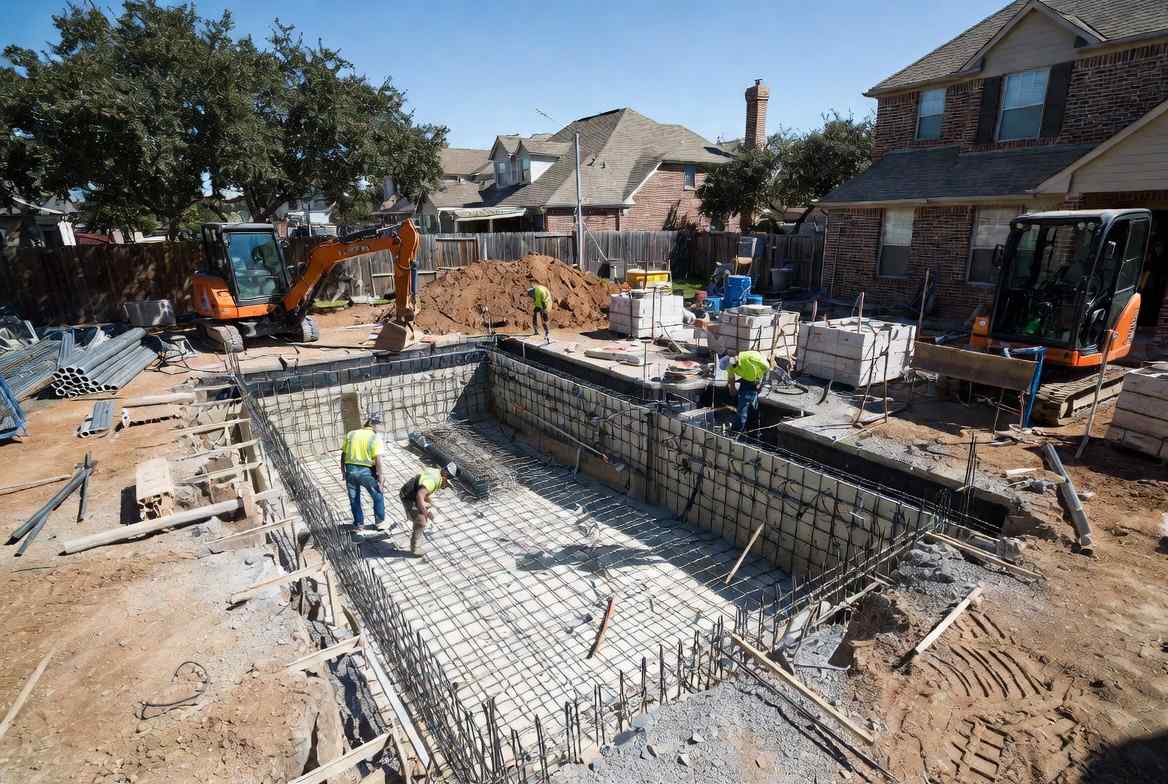
This covers the pool shell itself — structural cracks, leaks caused by structural failure, and major construction defects. Duration varies widely: some builders offer 5 years, others claim 25. But read the actual document carefully, not just what the salesperson told you. Most structural warranties in Texas explicitly exclude damage from acts of God — and many builders classify freeze events as exactly that.
According to the Texas Residential Construction Commission statutes, new residential construction does carry implied warranty protections — but the specifics of what’s covered and for how long depend heavily on the contract language your builder used.
Builder Workmanship Warranty
Separate from the structural warranty, this covers how the work was done — tile installation, coping, plumbing connections, and equipment installation quality. The window here is short: typically 1 to 2 years. DFW pool owners should schedule a professional assessment before the one-year mark, without exception. Issues with tile adhesion, coping, or plumbing connections are far more common than most builders will volunteer. Document everything you find in writing before that clock runs out.
Surface and Plaster Warranty
Pebble, quartz, and plaster finishes carry separate manufacturer warranties — typically 1 to 5 years depending on the material and brand. This is where what does pool warranty cover gets complicated fast. Almost every surface warranty in existence includes language that voids coverage for damage caused by improper water chemistry. In DFW, that’s a real risk.
High calcium hardness from our hard tap water, combined with elevated pH, causes scale damage that manufacturers will point to as a chemistry failure — not a product defect. Professional water test records showing chemistry consistently within manufacturer specs are your only defense. Without them, a surface warranty claim is nearly impossible to win.
Pool Equipment Warranty
Every major piece of equipment carries its own pool equipment warranty from the manufacturer. Here’s a realistic breakdown of what to expect:
- Pool pumps (Pentair, Hayward, Jandy): 1 to 3 years on motors and components
- Pool heaters: 1 to 2 years on parts, heat exchangers sometimes longer
- Salt cells: 1 to 3 years, or rated for a specific gallons-of-chlorine-production figure
- Automation systems: 1 to 3 years on electronics and controllers
- Filter housings: 1 to 2 years — filter media and cartridges are consumables, not covered
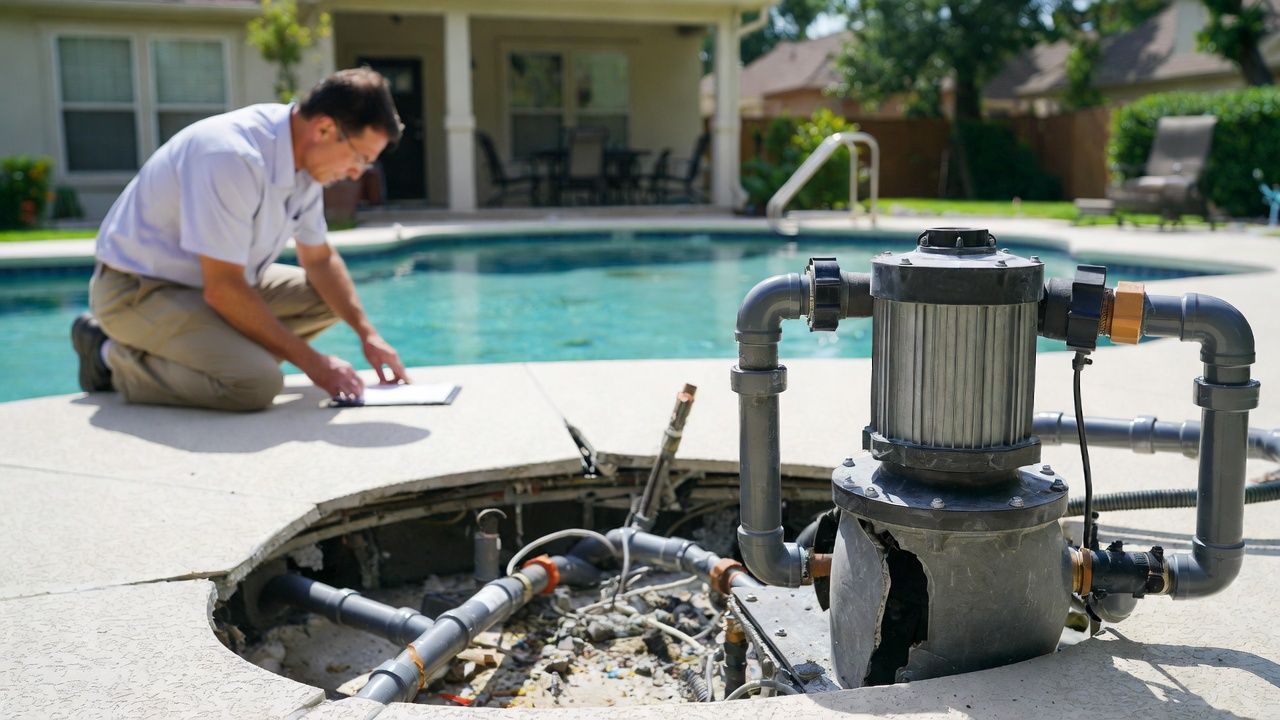
Critical caveat on all of the above: most pool equipment warranty policies require professional installation for full coverage to apply, and virtually all of them exclude damage from improper water chemistry, power surges, and freeze events. See the Pentair warranty terms and Hayward warranty documentation for specifics on two of the most common DFW equipment brands.
Extended Warranties and Service Plans
Some equipment dealers and builders offer extended warranty coverage for an additional upfront cost. Quality varies enormously — some are genuinely worth it, others are expensive paperwork. Read what’s actually covered, what the deductible structure looks like, and who does the repair work before signing anything.
What Voids Pool Warranties — and Why DFW Creates Extra Risk
Improper Water Chemistry
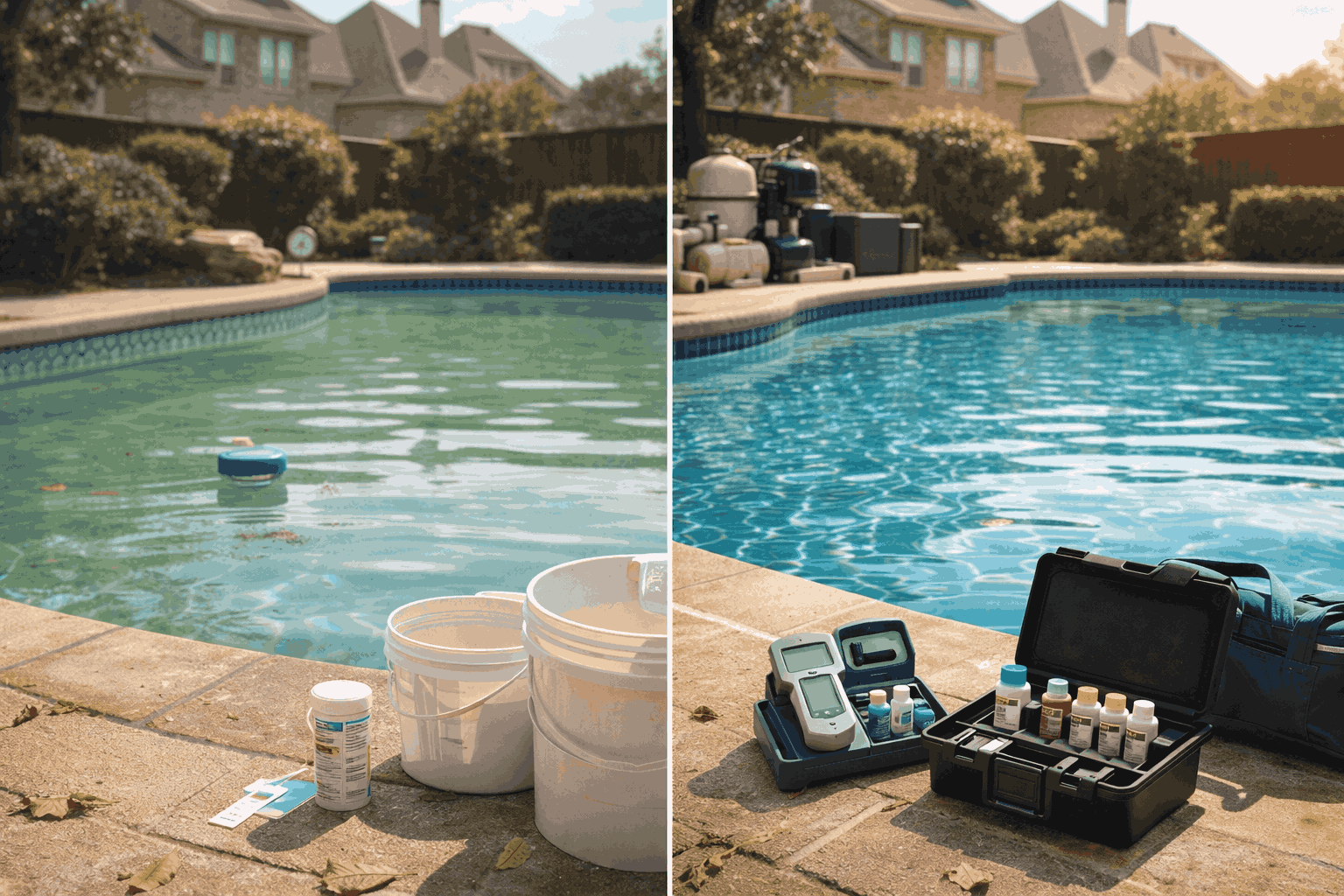
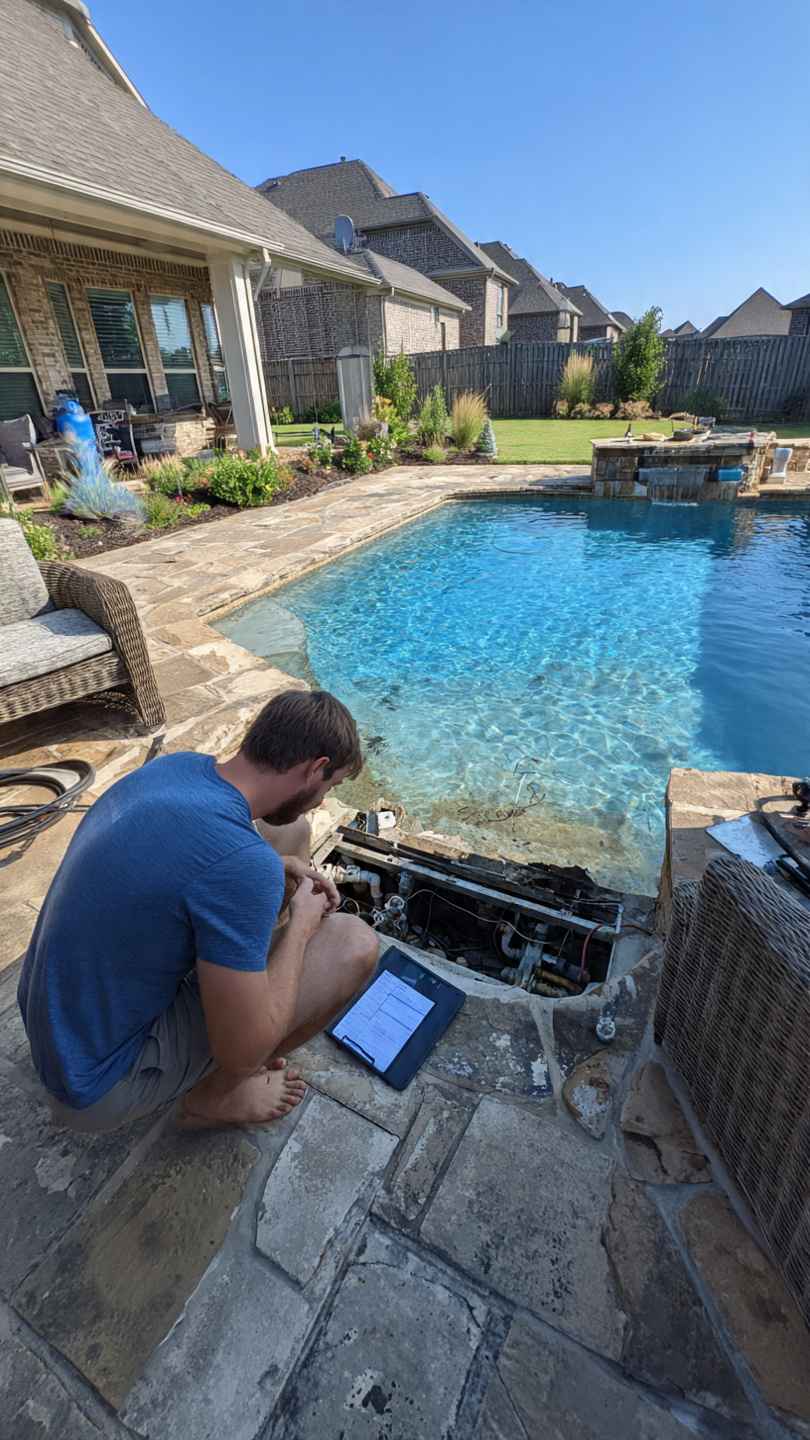
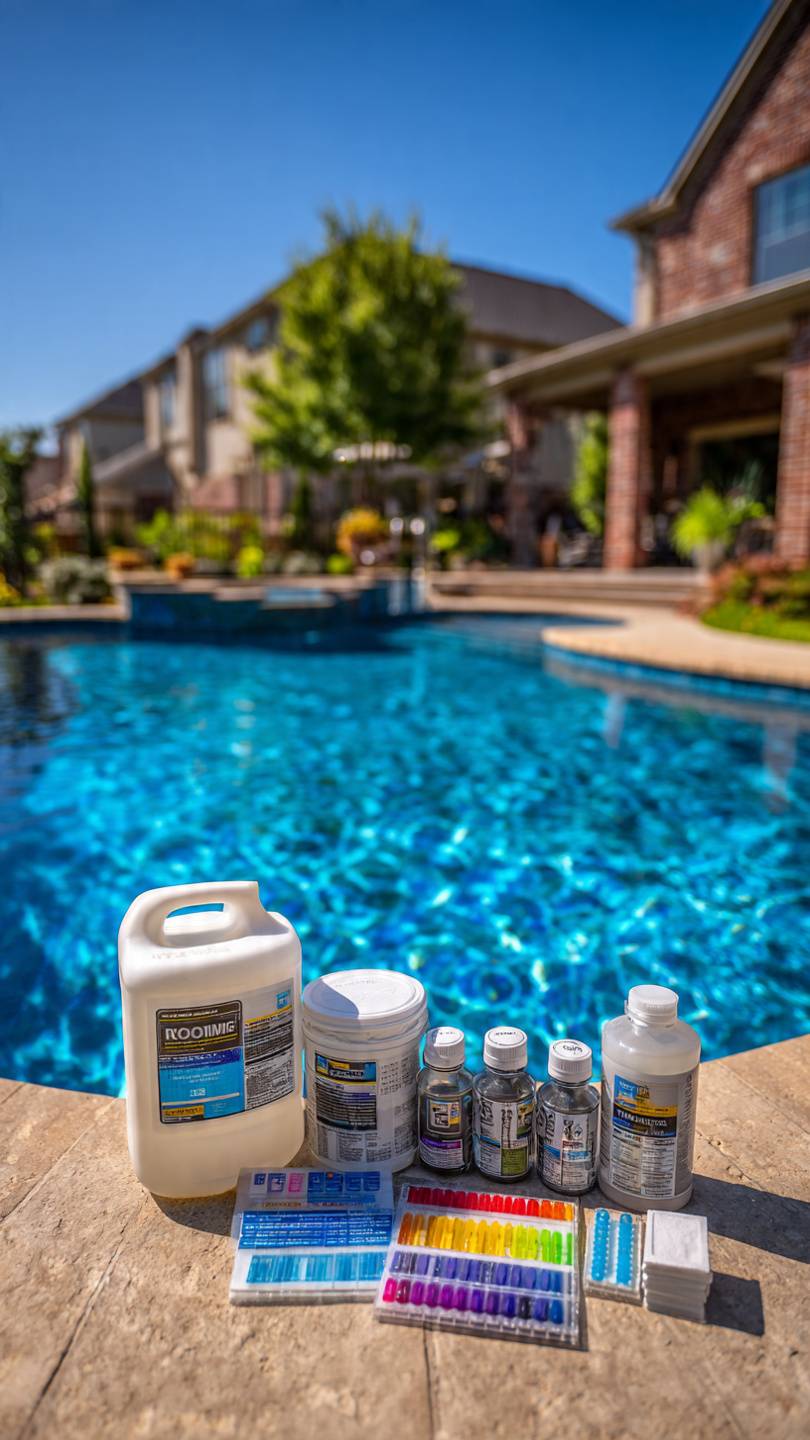
This is the most common reason pool warranty claims get denied. Low pH etches plaster and voids surface warranties. High calcium combined with high pH causes scale damage that voids both surface and equipment coverage. Salt cells fail prematurely when salt levels run low — and the warranty won’t cover it. DFW’s hard water makes all of this harder to manage than in most parts of the country. Consistent professional service with documented water tests is your best protection. Our pool water testing guide covers what to track and how often.
No Maintenance Records
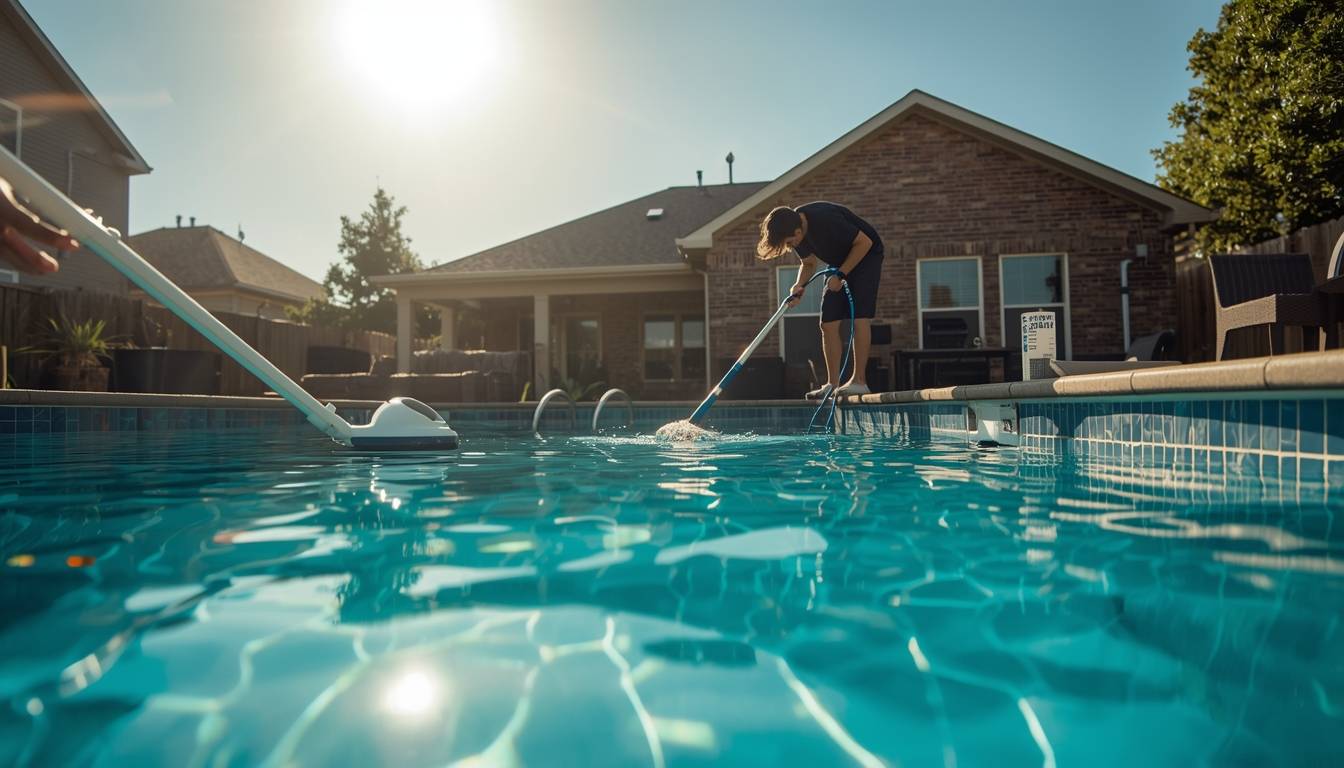
Many warranties — especially surface warranties — include language requiring proof of regular and proper maintenance. If you can’t produce service records when you file a claim, the claim gets denied. It’s that simple. Professional weekly service that generates documented visit records is not just convenient — it’s warranty protection documentation.
Unauthorized Modifications and DIY Repairs
DIY plumbing changes, equipment additions, or electrical work done without manufacturer-approved parts and certified installation can void coverage on adjacent equipment. Always use professional installation for any repair or upgrade — and keep the invoice as documentation.
Freeze Damage Without Documented Precautions
Most equipment warranties exclude freeze damage explicitly. However, demonstrating that you took reasonable precautions — running the pump during the freeze, having winterization service on record — can sometimes support a claim even when the policy language is unfavorable. Service records from our pool freeze protection service are exactly the kind of documentation that helps here.
Power Surge Damage
Equipment warranties almost universally exclude electrical surge damage. A whole-home or pool-specific surge protector runs $100 to $300 and is one of the smartest, cheapest investments a DFW pool owner can make. One storm season without one and you understand why.
How to Protect Every Layer of Your Pool Warranty
- Maintain professional weekly service with documented visit records — this is your primary defense
- Get professional water tests at least monthly and keep the results on file
- Store all warranty documents somewhere accessible — digital copies are fine, just make sure they exist
- Register equipment with manufacturers — many warranties require registration within 30 to 90 days of installation
- Schedule a professional pool assessment before each warranty period expires — especially the one-year workmanship window
- Use only authorized parts and professional installation for any repair or modification
- Winterize professionally every freeze season and keep that service record
Our pool inspection service is specifically designed for pre-warranty-expiration assessments — we document everything in writing so you have a formal record before the clock runs out.
People Also Ask

What does a pool builder warranty cover?
Most builder warranties cover structural integrity of the pool shell for 5 to 25 years, and workmanship (tile, coping, plumbing, equipment installation) for 1 to 2 years. What pool warranty does NOT typically cover includes cosmetic issues, normal settlement, equipment failure, and in many cases freeze damage. Read the actual contract — verbal assurances from salespeople mean nothing after closing.
How long is the warranty on pool equipment?
Standard pool equipment warranty coverage runs 1 to 3 years for most major brands on pumps, automation, and salt cells. Heaters typically get 1 to 2 years on parts. Always verify by registering the equipment with the manufacturer and reading the specific warranty document — coverage terms vary by product line and model.
Can poor water chemistry void my pool warranty?
Yes — and it’s the most common reason claims get denied. Surface warranties are particularly vulnerable to chemistry-related voidance. Low pH damages plaster. High calcium causes scale. Low salt ruins salt cells. In DFW’s hard water environment, consistent professional chemistry management isn’t optional if you want your pool warranty to actually be worth anything.
Is pool freeze damage covered under warranty?
Usually not — most equipment warranties exclude freeze damage explicitly. Documented evidence that you ran the pump and took reasonable precautions during a freeze event gives you the best chance of a successful claim, even when the warranty language isn’t in your favor. Service records are everything.
Do I need professional service to maintain my pool warranty?
For surface and equipment warranties specifically, yes — documented professional service records are often required to support a claim. Some warranties explicitly state this. Even where it’s not explicitly required, having no maintenance records makes any pool warranty claim extremely difficult to win.
How do I file a pool equipment warranty claim?
Contact the equipment manufacturer directly with your purchase date, proof of professional installation, and service records showing proper maintenance. For builder warranty claims, submit issues in writing to your builder with photos, dates, and descriptions. The Better Business Bureau and Texas Attorney General’s office are resources if a builder refuses to honor legitimate warranty claims.
PoolBurg — Your Pool Warranty’s Best Friend
The single most powerful thing you can do to protect every layer of your pool warranty is maintain professional service with documented records. That’s exactly what PoolBurg provides. Every visit is logged, every water test is recorded, and every service note is available when you need it for a warranty claim. We serve homeowners across DFW and North Texas and we understand how DFW’s hard water, freeze season, and heat conditions interact with the fine print in your warranty documents. Our weekly service plans give you the documentation trail that keeps your coverage intact.
Protect your pool warranty with documented professional service. Contact PoolBurg today — we provide the service records you’ll need when it matters most.