Test pool water chemistry regularly and you will avoid most common pool problems before they even begin. When homeowners test pool water chemistry consistently, they get clear data about chlorine, pH, alkalinity, and other levels that control water balance. Without regular testing, pool care becomes guesswork and small imbalances can quickly lead to algae growth, cloudy water, or costly equipment damage. According to the CDC Healthy Swimming water chemistry guidance, proper water chemistry is essential for safe swimming and preventing harmful bacteria in pools.
Why Regular Pool Water Testing Is Critical in DFW
The climate in North Texas makes it especially important to test pool water chemistry on a regular schedule.
High temperatures accelerate chemical reactions in pool water. That means perfectly balanced water on Monday may already be drifting by midweek. Strong sunlight also burns off chlorine quickly, especially when stabilizer levels are low. According to EPA water quality basics, ultraviolet radiation breaks down chlorine faster in outdoor water environments.
Hard water is another challenge in the region. Minerals like calcium are already present in municipal water supplies. Over time, these minerals accumulate and affect water balance. If homeowners do not test pool water chemistry, high calcium combined with rising pH can lead to scale buildup on pool tile, heaters, and filtration equipment.
Testing simply provides the information needed to make the correct adjustments before problems appear.
Recommended Pool Water Testing Schedule
Free chlorine
Free chlorine should be tested two to three times per week in summer and at least weekly during cooler months. Ideal chlorine levels are 2–4 ppm for traditional chlorine pools and 1–3 ppm for saltwater pools. When you consistently test pool water chemistry, you can catch low chlorine levels before algae begins forming.
pH
pH should also be checked several times per week. The ideal range is 7.2 to 7.6. According to Pool & Hot Tub Alliance water balance recommendations, balanced pH protects swimmers while preventing corrosion and scaling.
Total alkalinity
Total alkalinity should be tested weekly. It acts as a buffer that stabilizes pH and prevents dramatic chemical swings.
Calcium hardness
Calcium hardness should be tested monthly. The National Swimming Pool Foundation water chemistry guidelines note that excessive calcium combined with high pH is the primary cause of scale formation.
Cyanuric acid
Cyanuric acid protects chlorine from UV degradation. Maintaining the right stabilizer level helps chlorine last longer in sunny climates.
Salt levels
Saltwater pools should verify salt levels monthly to ensure the chlorine generator operates efficiently.
Pool Water Testing Methods Homeowners Use
Test strips
Test strips are the quickest way to test pool water chemistry. They are inexpensive and easy to use, delivering results within seconds. However, they are not always precise enough for detailed water balancing.
Liquid test kits
Liquid kits are widely considered the most accurate method for homeowners. These kits measure multiple parameters including chlorine, alkalinity, and stabilizer levels.
Pool store testing
Many pool supply stores provide professional water analysis. According to InterNACHI water testing resources, professional testing can help identify hidden chemistry problems that simple home tests may miss.
How to Take an Accurate Pool Water Sample
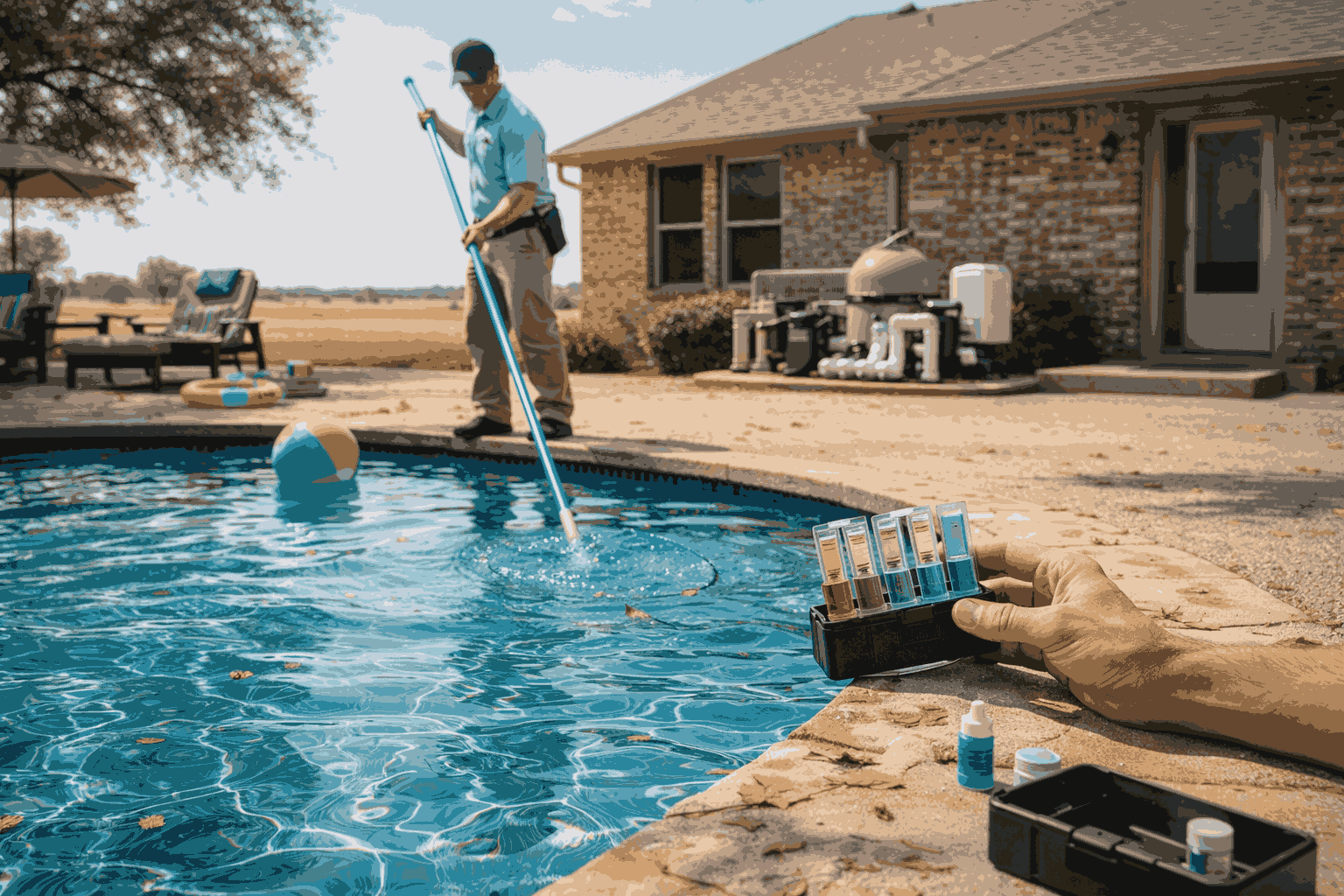
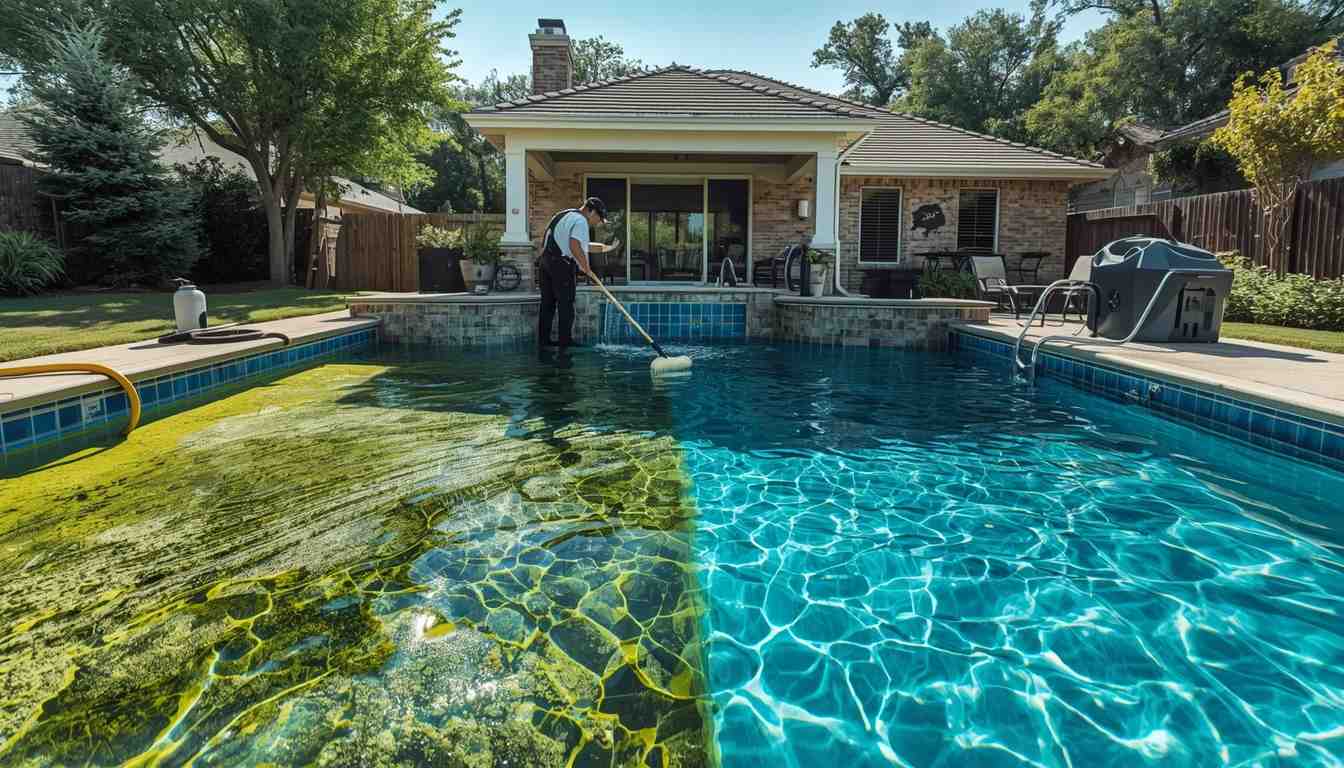

Sample water from elbow depth
To properly test pool water chemistry, collect water from elbow depth rather than the surface. Surface water may contain different chemical concentrations.
Avoid sampling near returns or skimmers
Return jets circulate freshly treated water and may produce misleading readings.
Test water promptly
Pool chemistry can change quickly if a sample sits too long before testing.
Common Pool Water Testing Mistakes Homeowners Make
Many homeowners only check chlorine and ignore other critical factors like alkalinity or stabilizer levels. Another common mistake is testing immediately after adding chemicals. Water needs time to circulate before accurate readings can be obtained.
Using expired test strips or performing tests under direct sunlight can also distort results. During summer, failing to increase testing frequency is one of the biggest causes of algae outbreaks.
People Also Ask
How often should I test my pool water in summer?
Most pools should test pool water chemistry two to three times per week during hot weather.
What chemicals should I test in my pool water?
Key parameters include chlorine, pH, alkalinity, calcium hardness, and stabilizer.
Is pool store water testing accurate?
Yes, most pool stores use professional equipment that provides reliable results.
Can I test pool water too often?
Testing too often is not harmful, but once chemistry is stable weekly testing may be enough.
What happens if I do not test pool water regularly?
Imbalanced water can lead to algae growth, cloudy water, and damage to pool equipment.
Do saltwater pools need frequent testing?
Yes. Even though they generate chlorine automatically, saltwater pools still require routine chemical monitoring.
PoolBurg Provides Professional Water Testing at Every Service Visit
At PoolBurg, technicians test pool water chemistry during every service visit to maintain balanced water conditions. Chlorine, pH, and alkalinity are checked weekly, while calcium hardness, stabilizer, and salt levels are monitored on a monthly schedule.
Professional water analysis ensures accurate chemical adjustments and helps prevent costly problems before they start.
Tired of guessing with test strips? PoolBurg’s professional water testing and chemical balancing are included with every weekly service visit.