Pool water feature maintenance is the part of pool ownership that catches most DFW homeowners completely off guard. You added the waterfall or the sheer descent because it looked incredible — and it still does, for now. But every water feature that moves water over a surface, through a nozzle, or across rock is also accumulating calcium scale, building up algae in shaded spots, and putting wear on pumps and valves that basic pool service doesn’t always cover.
In DFW’s hard water environment, water features work harder and degrade faster than they would almost anywhere else in the country. Here’s what you actually need to know to keep them looking and running like day one.
Water Features Are Beautiful — But They Need Real Attention
Water features are one of the most requested pool additions across DFW — especially in Frisco, Southlake, and Prosper where backyard resort builds are the norm. They add visual appeal, that satisfying ambient sound, and genuine property value. But every feature you add is also an additional pump, valve, nozzle, or surface that needs care. Ignore pool water feature maintenance long enough and you’re looking at white calcium crust on your sheer descent, clogged bubblers that barely trickle, algae colonizing the crevices in your rock waterfall, and automation relay failures that leave features stuck on or stuck off. None of it is expensive to prevent. All of it is annoying and costly once it gets ahead of you.
Types of Pool Water Features Common in DFW Homes
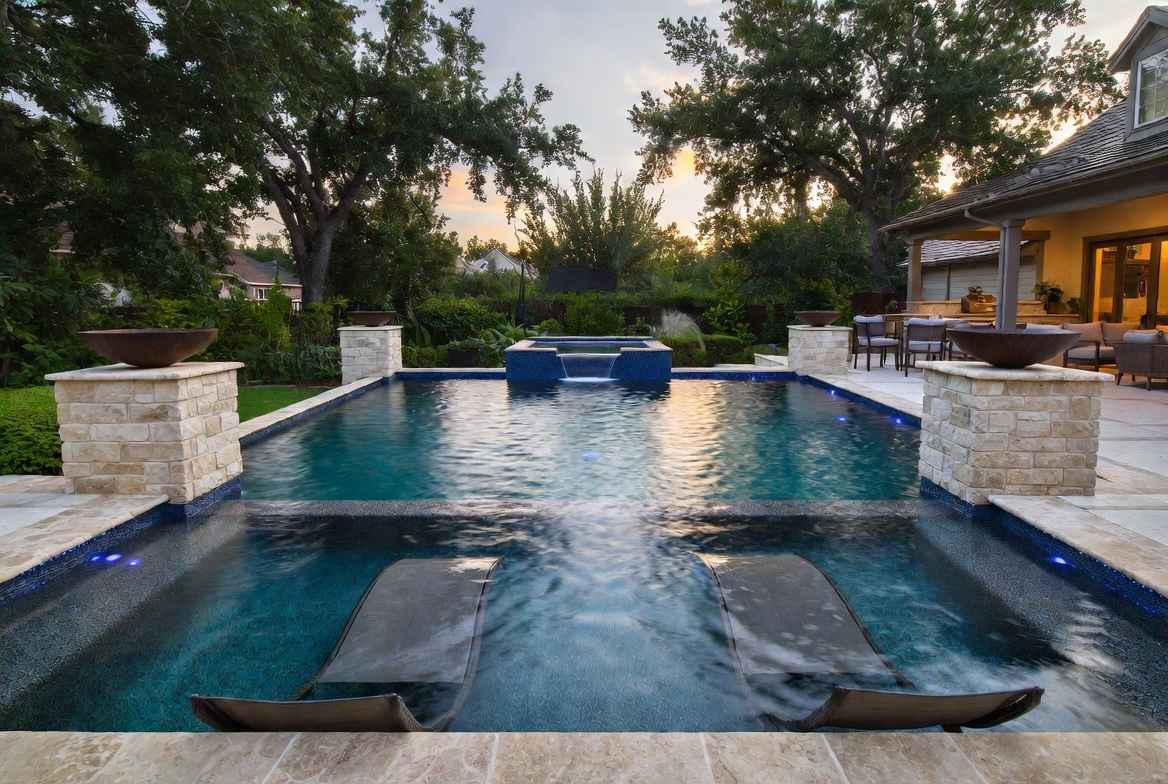
Sheer Descent Waterfalls
A clean, even sheet of water flowing from a raised bond beam or wall. One of the most popular features in modern DFW pools — and one of the worst for calcium buildup because the entire water surface is constantly exposed to air as it falls.
Natural Rock Waterfalls
Rock-constructed cascades that create a natural, tropical feel. They look incredible and they’re also the most maintenance-intensive water feature you can have in DFW. Irregular surfaces, constant moisture, and shaded areas make them prime territory for both calcium scale and algae.
Scuppers, Bubblers, and Deck Jets
Scuppers are geometric water spouts from raised walls. Bubblers push water up from tanning ledges. Deck jets create arching streams from the pool deck into the water. All three have small openings or nozzles that clog with calcium deposits in DFW’s hard water — usually within one pool season without regular cleaning.
Spillover Spas and Rain Curtains
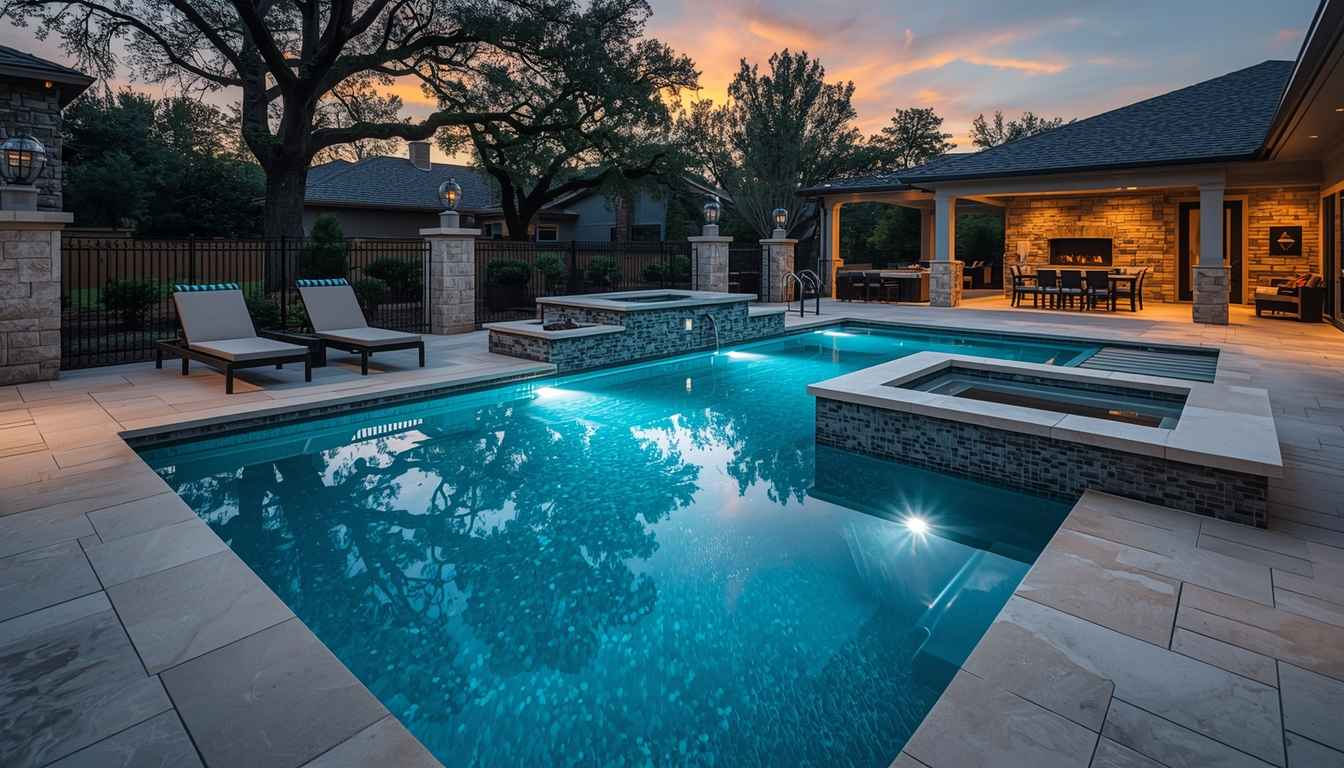
A raised spa with a spillover waterfall into the main pool is the most dramatic visual upgrade available for any pool. Rain curtains create multiple streams that form a curtain effect across an entry or seating area. Both are beautiful and both require consistent waterfall maintenance to stay that way.
Common Water Feature Problems in North Texas
Calcium Scale Buildup — The Number One Issue
DFW’s tap water is hard — notoriously so. Every gallon that flows over a sheer descent, through a scupper, or across a rock surface deposits a tiny amount of calcium. Over weeks and months, that becomes a white, crusty layer that’s obvious, ugly, and increasingly difficult to remove. According to the Water Quality Association, North Texas sits in one of the highest hard water zones in the country. Prevention is straightforward: keep pH at 7.2 to 7.4, use a scale inhibitor regularly, and clean feature surfaces before the buildup hardens. Once it’s thick, you’re looking at professional acid treatment to remove it.
Pump and Valve Failures
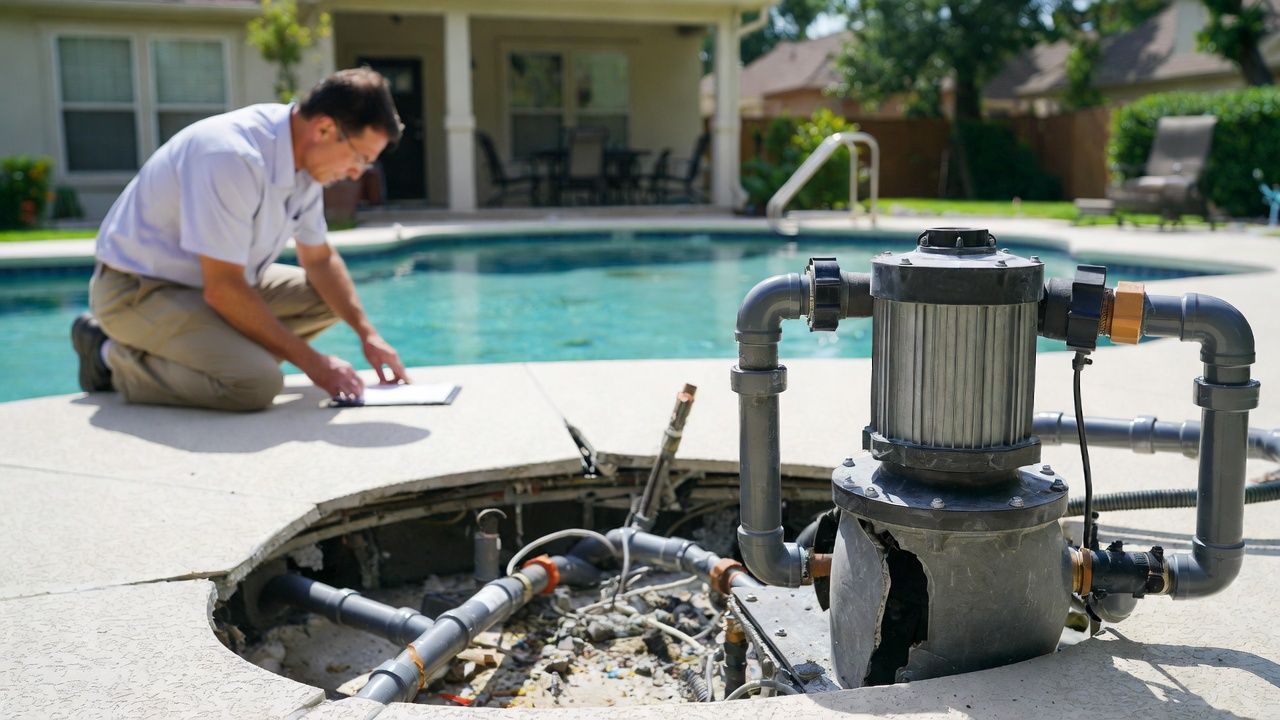
Water features often run off dedicated pumps or diverter valves separate from the main pool circulation. That means additional mechanical points of failure. Automation system relay failures can prevent features from activating. Valve actuator failures on diverter valves are one of the most common pool fountain repair calls in DFW — the actuator motor wears out and the feature gets stuck open or closed. These are $150 to $400 fixes when caught early.
Algae on Rock Waterfalls
Natural rock waterfalls stay damp in the crevices even when the feature is off. Shaded rock surfaces in particular create near-perfect algae conditions. Regular scrubbing of accessible surfaces and spot treatment with algaecide on rock features is part of solid pool water feature maintenance — it’s not glamorous work but skipping it means resealing and deep cleaning that costs real money.
Clogged Nozzles, Bubblers, and Deck Jets
The small openings in bubblers, deck jets, and fountain heads are calcium magnets. In DFW, plan on quarterly cleaning and descaling of all nozzle-type features. A clogged bubbler on a tanning ledge doesn’t just look bad — it creates uneven water pressure that can damage the fitting over time.
pH Drift From Aeration
This one surprises a lot of pool owners. Water features aerate the pool water as they run — exposing it to air, which naturally drives pH upward. In DFW where pH already trends high due to hard water, a pool with multiple waterfalls or a large sheer descent may need significantly more muriatic acid to maintain pH balance. Check our pool chemical balancing guide for how to stay ahead of this.
Pool Water Feature Maintenance Schedule for DFW
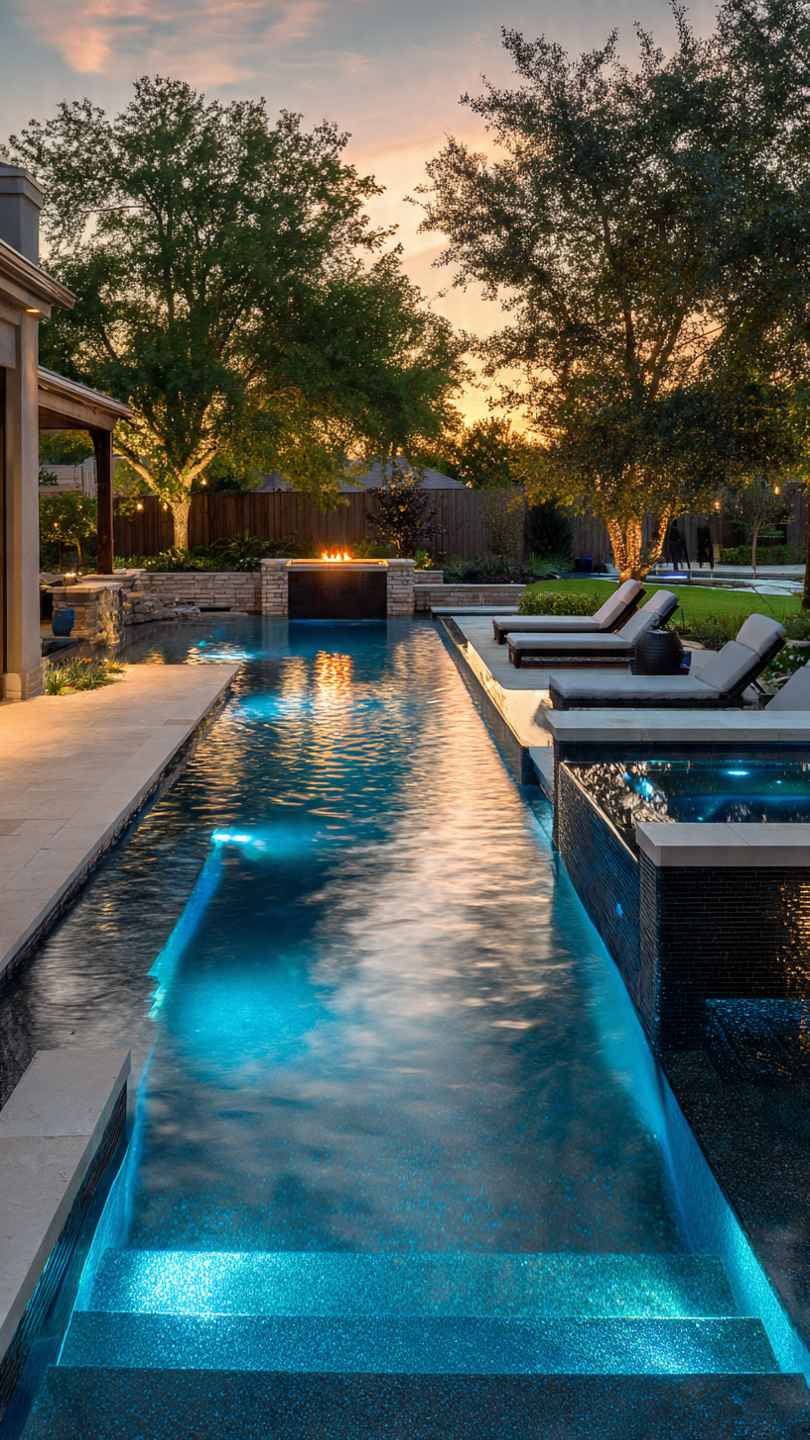
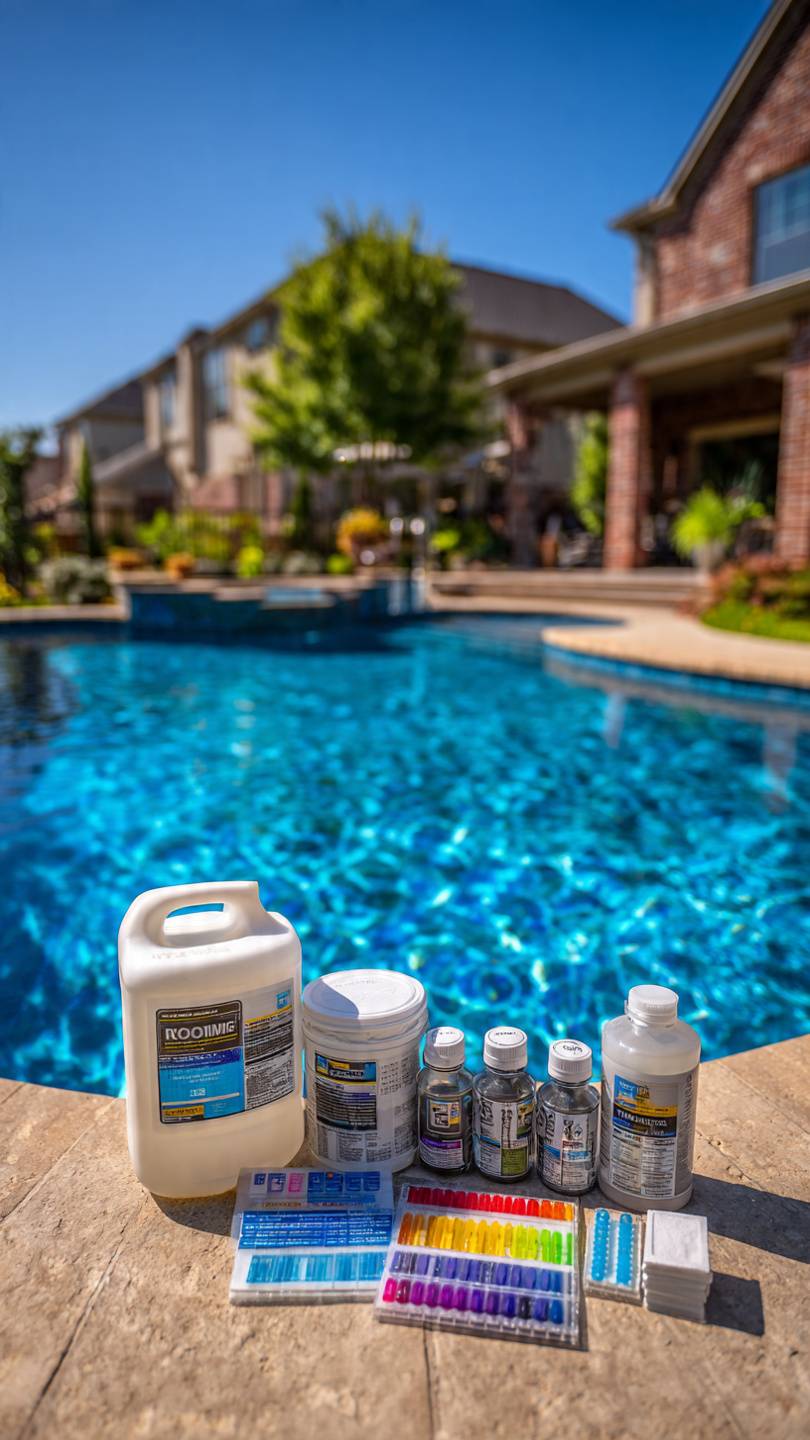

Weekly — Visual Inspection
Every service visit should include a quick check of all features — flow rate, visible scale or algae starting to form, and any unusual sounds from feature pumps. Catching issues at this stage is the difference between a $20 cleaning and a $400 repair.
Monthly — Descaling and Nozzle Cleaning
Clean accessible surfaces of all features with a calcium scale remover. Clean all nozzle-type features — bubblers, deck jets, fountain heads. This is the most impactful routine waterfall maintenance task in DFW’s hard water environment.
Quarterly — Deep Clean and Mechanical Check
Deep clean all feature surfaces including rock waterfalls. Inspect dedicated feature pumps and diverter valves. Check automation system control for all features. Flush and inspect all nozzle openings thoroughly.
Annually — Full Mechanical Inspection
Full inspection of all feature pump motors, actuators, and plumbing connections. Check for slow leaks at feature fittings. Inspect rock waterfall surfaces for areas needing resealing. Review automation programming for all features with your pool service technician.
Water Feature Maintenance and Repair Costs in DFW
- Regular descaling and cleaning: Included in premium service plans or $50 to $100 per session
- Nozzle or bubbler replacement: $25 to $100 per unit
- Feature pump repair: $150 to $500
- Feature pump replacement: $300 to $1,000 depending on size and brand
- Valve actuator replacement: $150 to $400
- Professional rock waterfall cleaning: $200 to $500
- Sheer descent calcium scale removal: $100 to $300
The pattern is consistent — routine pool water feature maintenance costs very little. Deferred maintenance turns into repair bills that are 5 to 10 times higher. See our pool repair cost guide for broader context on DFW repair pricing.
People Also Ask
How do I maintain a pool waterfall?
Weekly visual inspection for flow and early scale, monthly descaling of feature surfaces, quarterly deep clean and nozzle cleaning, and annual mechanical inspection of feature pumps and valves. In DFW, use a scale inhibitor year-round and keep pH at 7.2 to 7.4 to slow calcium buildup on waterfall maintenance.
Why does my pool waterfall have white buildup?
That’s calcium scale from DFW’s hard water depositing on every surface the water flows over. It’s extremely common here and gets worse the higher your pH runs. Light buildup comes off with a calcium scale remover and a scrub brush. Heavy buildup needs professional acid treatment — don’t let it get to that point.
Do water features make pool maintenance harder?
They add maintenance complexity, yes — especially in DFW. More surfaces to scale, additional pumps and valves to maintain, and the aeration effect that drives pH higher. But with consistent pool water feature maintenance built into your service schedule, they’re very manageable. The key is not treating them as an afterthought.
How much do water feature repairs cost?
Routine cleaning runs $50 to $100 per session. Nozzle replacements are $25 to $100. Feature pump repairs run $150 to $500, and replacements can reach $1,000 for larger units. Valve actuator failures — one of the most common pool fountain repair calls — typically cost $150 to $400 to fix.
Should I run my water features all the time?
Running them during pool hours is fine and even beneficial — the aeration improves water quality. But running them 24/7 adds unnecessary wear to dedicated pumps and accelerates calcium buildup on feature surfaces. Most automation systems let you schedule features independently from the main pump, which is the smart approach.
Do water features affect pool chemistry?
Yes — significantly. The aeration from waterfalls and fountains drives pH upward. Pools with large or multiple water features typically need more acid to maintain pH balance, especially in DFW where pH already trends high. Factor this into your chemical management routine.
PoolBurg Maintains Water Features at Every Service Visit
At PoolBurg, pool water feature maintenance is part of what we do on every visit — not a separate billable add-on. We inspect flow, check for early scale buildup, clean nozzles and accessible surfaces, and flag anything mechanical that needs attention before it becomes a repair. We work with pools across DFW and North Texas and we know exactly what DFW hard water does to sheer descents, bubblers, and rock waterfalls over time. Our weekly service plans include feature care as standard.
Water features looking rough? Contact PoolBurg today — we restore and maintain them as part of our premium service plans.