A salt water pool conversion is easily one of the most requested backyard upgrades we handle across the DFW metroplex. Everyone wants that silky, soft water feel that doesn’t leave your skin dry or your eyes burning. The overall process is surprisingly straightforward, but there is a major catch that national guides completely ignore. Our local tap water is brutally hard, which completely changes how these systems operate and survive in Texas. If you are trying to figure out how to convert pool to salt water without destroying your equipment, you need the honest truth. This guide covers the entire chlorine to salt conversion process, the actual costs, and the specific DFW challenges you need to prepare for.
Thinking About Going Salt Water? Here’s Everything DFW Homeowners Need to Know
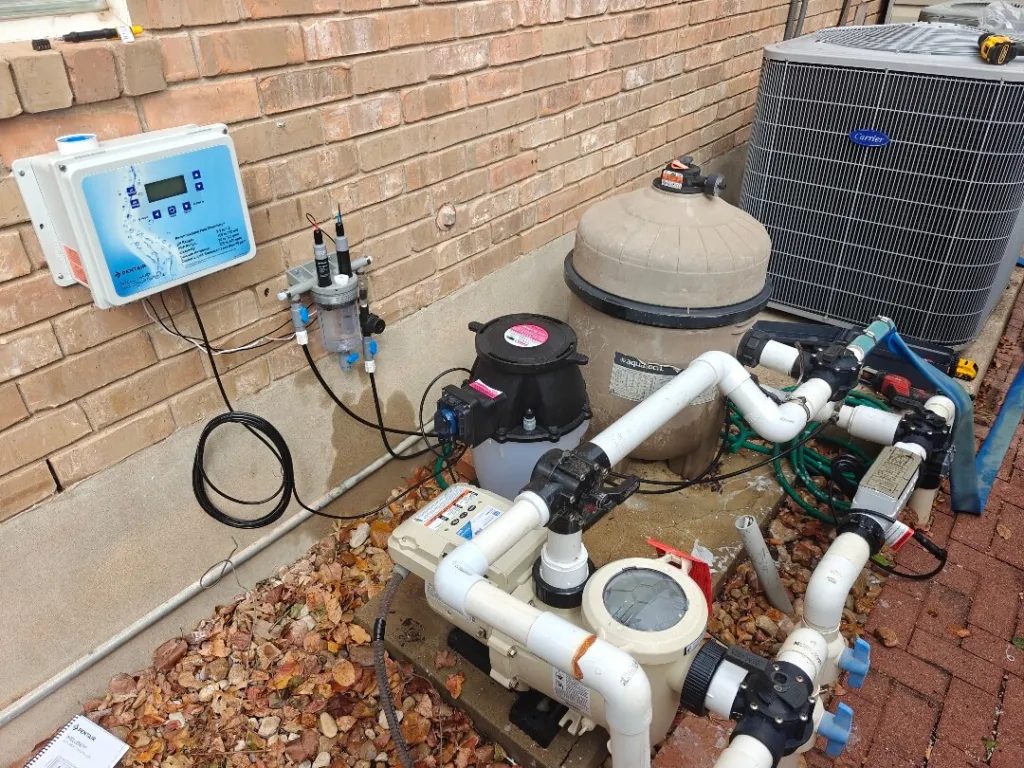
A salt water pool conversion sounds like magic to most homeowners. You stop buying heavy buckets of chlorine tablets, and the pool just takes care of itself, right? Not exactly. While a conversion is incredibly popular and drastically reduces your weekly chemical handling, it is not completely maintenance-free. You are essentially building a miniature chlorine factory right on your equipment pad. To make sure it survives the intense Texas heat and our mineral-heavy water, you have to understand the hardware.
What salt water pool conversion Actually Involves
The equipment you need
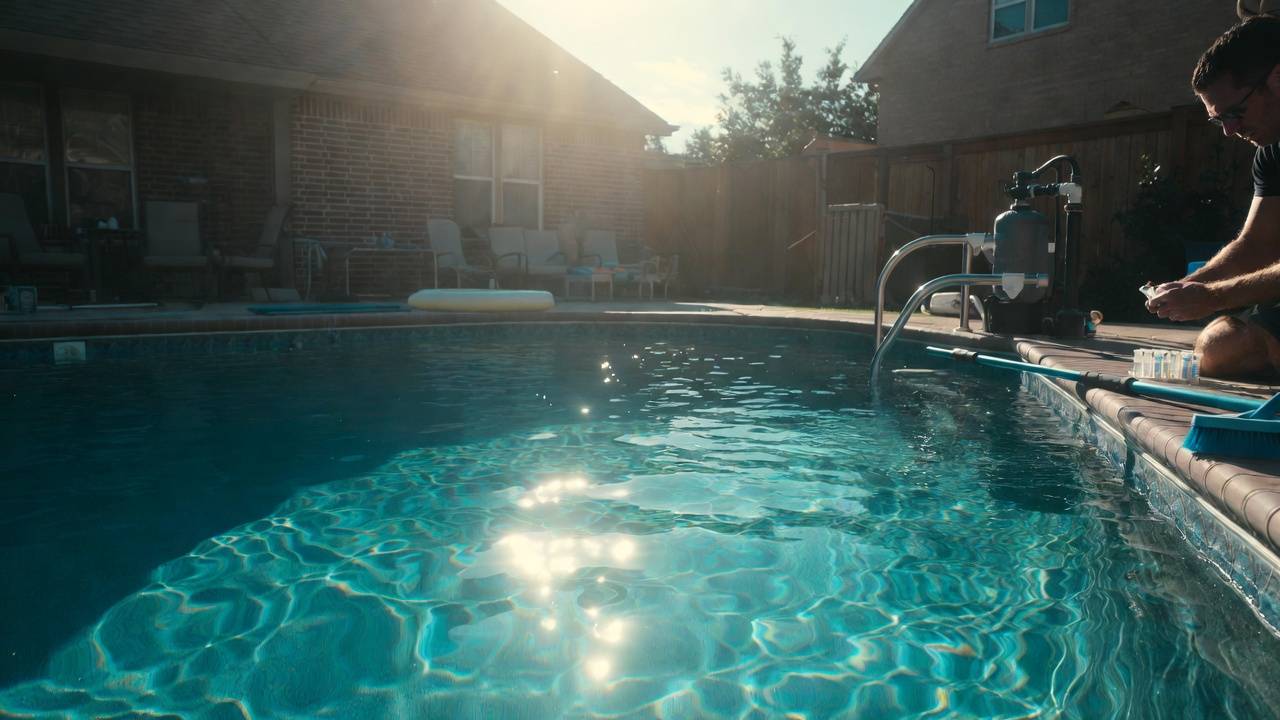
To convert to salt water pool systems, you only need a few specific items. First, you need a salt chlorine generator, which consists of a digital control unit and an electrolytic cell. Second, you need hundreds of pounds of 99% pure, pool-grade sodium chloride (salt). Finally, depending on your current equipment pad, you might need a new bonding wire attached to the generator to satisfy local electrical safety codes. That is it.
What you’re NOT changing
I constantly get asked if we have to rip out the entire plumbing system. We don’t. Your pool structure stays the exact same. Your main circulation pump stays the same. Your filter stays the same, and your heater stays the same. You are simply adding a salt chlorine generator into the existing return plumbing line. It is an addition, not a total replacement.
Step-by-Step Salt Water Conversion Process for DFW Pools
Step 1 — Choose the right salt system for your pool
You have to size the equipment correctly based on your total water volume. For most DFW pools holding 15,000 to 30,000 gallons, there are three top-tier systems we trust. The Pentair IntelliChlor, the Hayward AquaRite, and the Jandy AquaPure are the absolute industry standards. Here is my professional DFW recommendation: slightly OVERSIZE the system. If you have a 20,000-gallon pool, install a cell rated for 40,000 gallons. Our hard water puts massive extra demand on the titanium plates, so having that capacity headroom dramatically extends the life of your cell. Expect the salt system itself to cost between $800 and $2,000.
Step 2 — Professional installation
The physical cell is plumbed inline on the return line, completely after the filter and the heater. We install a flow sensor to ensure the cell only activates when water is actively moving through the pipes. The main control unit is mounted securely near your equipment pad and requires a dedicated 240V electrical connection. A proper bonding wire is then connected per NEC code to prevent dangerous stray currents. Professional labor usually runs $200 to $500, and the entire timeline is just 2 to 4 hours.
Step 3 — Add salt to the pool
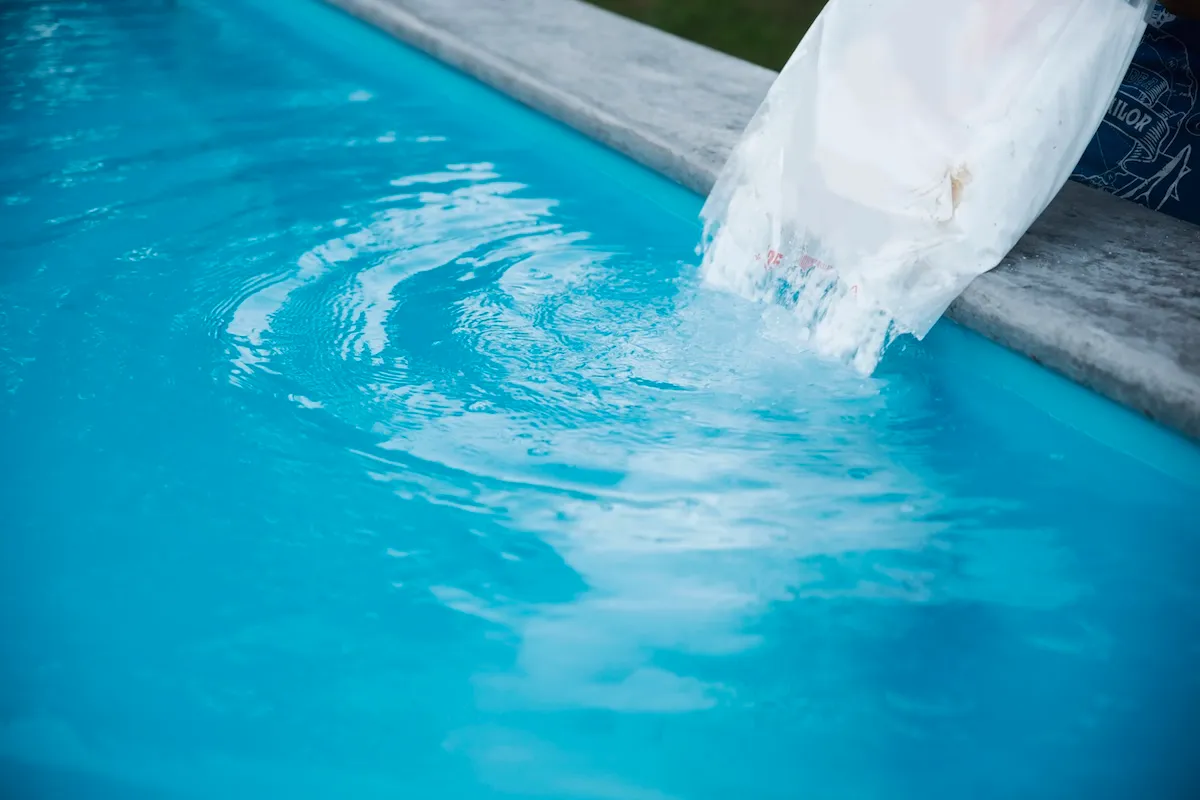
Most systems require a strict salt level of 2,700 to 3,400 ppm to function. For an average 20,000-gallon pool, you will need to pour in about 400 to 500 pounds of salt. We literally just pour the bags around the perimeter of the pool while the pump is running. With continuous circulation, the salt dissolves fully into the water in 24 to 48 hours. Your initial salt cost will be roughly $40 to $80.
Step 4 — System startup and calibration
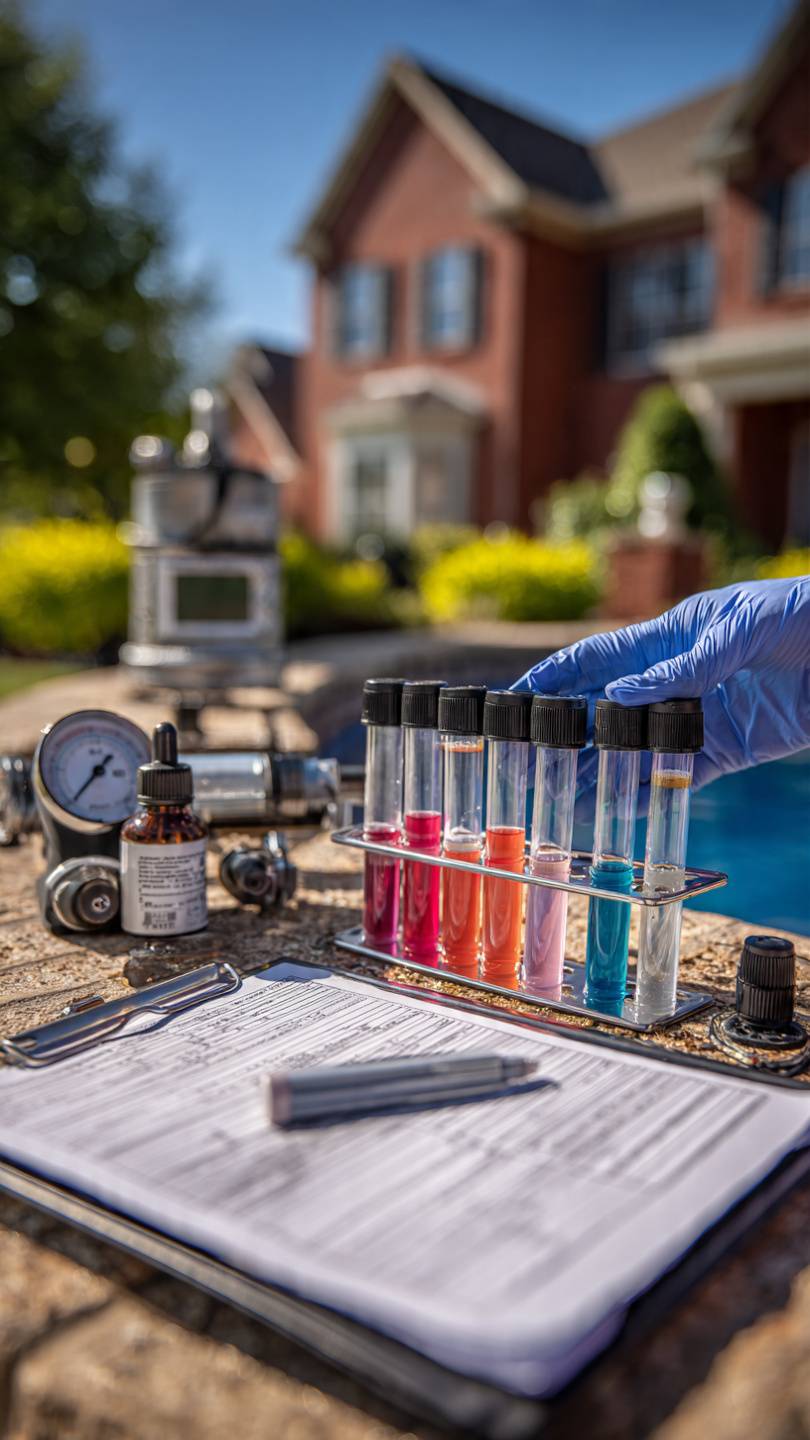
Never rely solely on the digital readout on day one. We verify the salt level with an independent test kit. We set the chlorine production percentage to 50% to start, and program the run time. The cell only produces chlorine when the pump is physically running, which is why having a variable speed pump is ideal. After 24 hours, we test the free chlorine levels and dial the production percentage up or down as needed.
Step 5 — Chemistry adjustment period (first 2-4 weeks)
Here is the dirty little secret about salt systems that no one tells you. Through the electrolysis process, they naturally create sodium hydroxide, which constantly raises your pH. Because DFW already has high-pH tap water, you will find yourself adding muriatic acid much more frequently than before. During the first two weeks, you must monitor the free chlorine daily until you find the perfect production level. You also need to raise your Cyanuric Acid (CYA) to 70-80 ppm, because salt pools require a higher stabilizer shield than traditional liquid chlorine pools.
Step 6 — Establish ongoing maintenance protocol
You need to test your salt levels manually every single month. More importantly, you must inspect the cell plates for white calcium scale. In DFW’s hard water, you will likely need to perform a mild acid cleaning on the cell every 2 to 3 months. Aside from the increased pH management, all your other routine maintenance like brushing, skimming, and filter cleaning continues exactly as before.
Salt Water Conversion Cost in DFW
If you are looking at HomeAdvisor pool cost data, the numbers can be confusing, so let’s break down the local DFW pricing.
Breakdown of initial costs
- Salt chlorine generator: $800 to $2,000
- Professional installation: $200 to $500
- Initial pool-grade salt: $40 to $80
- Electrical work (if needed): $100 to $300
- Total conversion cost: $1,200 to $2,800
Ongoing additional costs
You will need to buy a few bags of salt after heavy rainstorms overflow the pool, costing about $20 to $50 a year. The biggest hidden cost is the cell replacement. In DFW, the titanium cell burns out every 3 to 5 years and costs $300 to $800 to replace. You will also buy slightly more muriatic acid than you did with a traditional chlorine pool. Ultimately, the net ongoing cost versus buying buckets of chlorine tablets is approximately equal. You can read our full breakdown on our chlorine vs. salt water pool cost comparison page.

DFW-Specific Considerations for Salt Water Conversion
Hard water shortens salt cell life
Nationally, a salt cell might last 5 to 7 years. Here in North Texas, the average lifespan is strictly 3 to 5 years. The notes that high calcium levels quickly create thick scaling on metal components. This scale coats the titanium plates inside your salt cell, forcing it to overheat and fail prematurely. To mitigate this, you must keep your pH locked at 7.2 to 7.4 and consider using a pre-filter on your garden hose.
pH management increases
As mentioned, the salt system’s natural chemical reaction forces your pH upward. You will absolutely fight high pH constantly, so budget for more muriatic acid.
Metal corrosion awareness
Salt water conducts electricity significantly better than fresh water. This makes it much more corrosive to certain metals through a process called galvanic corrosion. You must regularly inspect your metal ladders, handrails, light fixture screws, and your heater header. We highly recommend installing sacrificial zinc anodes into the plumbing to protect your expensive metal components from rusting.
Equipment compatibility
Before we install anything, we have to verify that your existing heater is salt-compatible. Most modern heaters are fine, but some older models use delicate copper heat exchangers that salt water will aggressively corrode. If you have a copper heater header, you need to factor in accelerated wear or consider upgrading to a cupro-nickel header to prevent a blowout.
Should YOU Convert to Salt Water in DFW? Decision Framework
Convert if:
You value the luxurious, softer water feel on your skin and eyes. You want automated, steady chlorine production without hauling heavy buckets of tablets. You are on a professional service plan where we manage the hard water scaling for you. Your existing equipment pad is compatible and relatively modern.
Don’t convert if:
You are entirely unwilling to maintain and manually clean the salt cell. You have significant, unprotected copper components in your plumbing or heater. You are on a tight budget, because the initial conversion plus the inevitable cell replacement costs definitely add up. You just want the absolute simplest, lowest-tech system possible.
Bottom line:
Going salt is a massive lifestyle choice, not a financial cost savings move. If you want to dive deeper into the pros and cons, see our detailed chlorine vs salt water pool guide.
People Also Ask
How much does it cost to convert a pool to salt water in DFW?
A complete salt water pool conversion typically costs between $1,200 and $2,800. This includes the hardware, the initial salt dosage, and the professional plumbing and electrical installation labor.
Is converting to salt water worth it in Texas?
It is absolutely worth it if your main goal is swimmer comfort and automated sanitation. However, because the extreme Texas heat and hard water wear out the salt cells faster, it will not necessarily save you money over traditional chlorine.
How long does salt water conversion take?
The physical installation only takes about 2 to 4 hours on the equipment pad. However, it takes another 24 to 48 hours for the massive amount of added salt to fully dissolve into the water before you can turn the generator on.
Can any pool be converted to salt water?
Almost any pool can be converted, but you have to be careful with older equipment. According to the(https://www.phta.org/), pools with unsealed natural stone coping, steel walls, or older copper heat exchangers require special sealants and sacrificial anodes to prevent severe corrosion.
Does DFW hard water affect salt water pools?
Yes, significantly. The high calcium hardness in North Texas tap water causes rapid, thick white scaling on the electronic titanium plates inside the salt cell, requiring much more frequent acid washings to prevent hardware failure.
Do I still need to add chlorine with a salt water pool?
Occasionally, yes. While the generator handles your daily needs, the CDC recommend supplementing with liquid shock after heavy pool parties or massive DFW rainstorms to quickly burn off the excess bacteria.
PoolBurg Handles Salt Water Conversions and Ongoing Salt System Maintenance
Tired of buying buckets of chlorine and dealing with itchy, dry skin? We perform seamless installations, precise calibrations, and routine cell cleanings tailored specifically for our brutal North Texas water. Ready to go salt? Contact Us today. PoolBurg installs and maintains top-tier salt systems with DFW hard water expertise built right in.