
Swim spa maintenance is genuinely different from maintaining a regular pool — and a lot of DFW owners find that out the hard way after their first few months of ownership. A swim spa looks like a simple, compact alternative to a full pool. And in many ways it is. But the smaller water volume, higher operating temperature, and heavier per-gallon bather load create a maintenance environment where things go wrong faster and chemistry errors hit harder. Whether you’ve got an Endless Pool, a Master Spas unit, a Hydropool, or a TidalFit, this guide covers exactly what your swim spa needs to stay clean, safe, and running well in the DFW climate.
Swim Spas Are Growing Fast in DFW — And They Need Specific Care
Swim spas make a lot of sense for North Texas. Smaller lot? A swim spa fits where a full pool won’t. Want year-round use for swimming, exercise, and soaking? A swim spa does all three. They’re genuinely versatile — and that’s exactly why they’re showing up in more and more DFW backyards. But swim spa maintenance doesn’t work like pool maintenance, and treating it the same way is where most owners run into problems.
How Swim Spa Maintenance Differs From Pool Maintenance
Smaller Water Volume Means Less Margin for Error
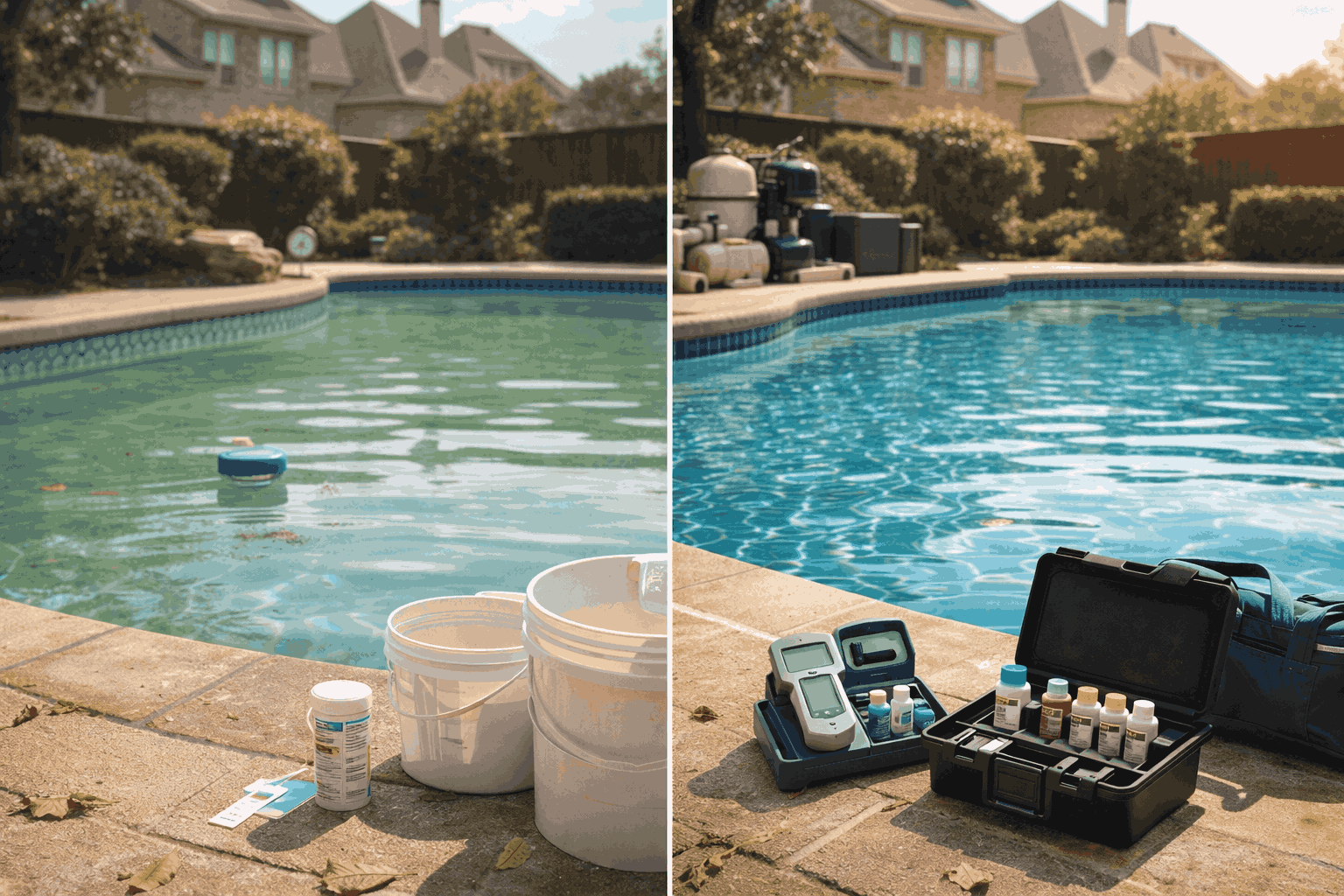
A typical swim spa holds around 2,000 gallons. A standard DFW pool holds 15,000 gallons or more. That means chemistry changes 7 to 8 times faster per chemical addition in a swim spa. Add a little too much of anything and you’ve got a real problem on your hands. Testing frequency needs to be higher — 2 to 3 times per week minimum, not once a week like a pool.
Higher Water Temperature Accelerates Everything
Most swim spas run between 80°F and 95°F. According to the Pool & Hot Tub Alliance, warm water consumes sanitizer significantly faster than cool water, and bacteria growth accelerates with heat. pH and alkalinity drift more quickly too. The chemistry management demands are much closer to a hot tub than a swimming pool.
Heavier Per-Gallon Bather Load
One person swimming in a 2,000-gallon swim spa has roughly 7 to 8 times the chemical impact of one person in a 15,000-gallon pool. Oils, sweat, and organics concentrate fast. After a solid workout session, your swim spa needs attention — it doesn’t just shrug it off the way a big pool does.
Enclosed Cabinet Environment
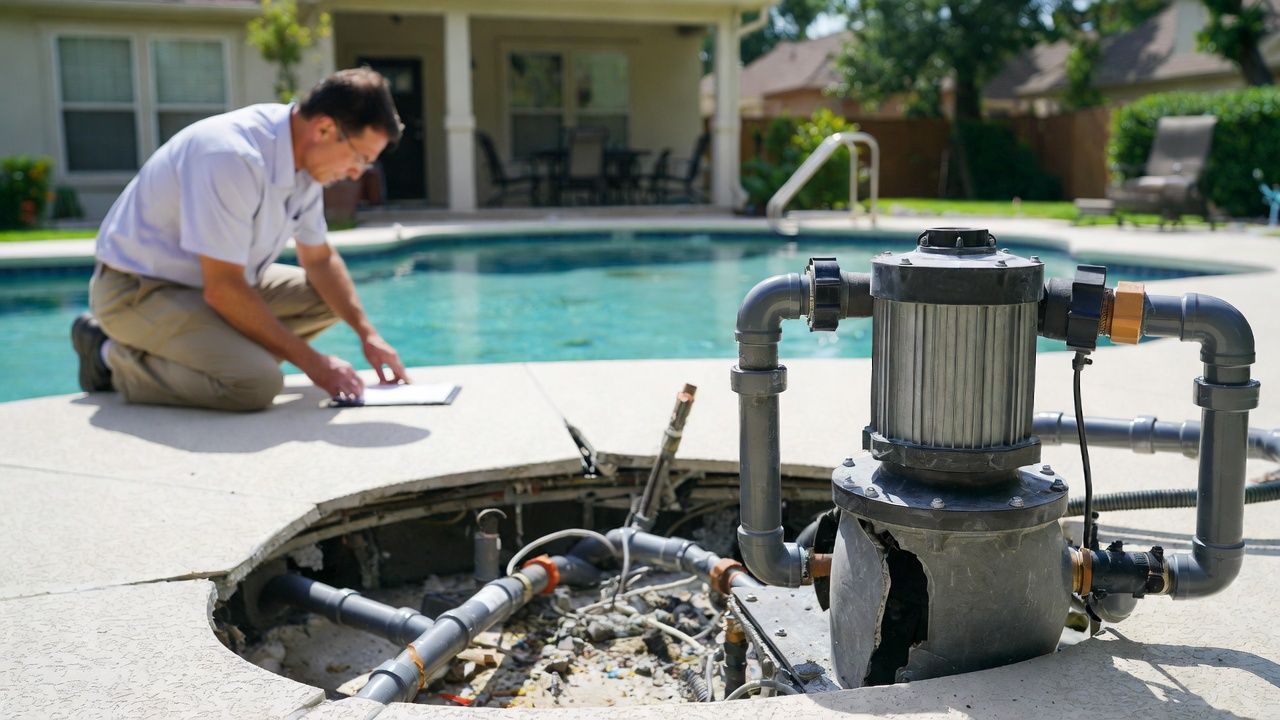
Swim spa equipment lives inside an enclosed cabinet, which means heat dissipation, ventilation, and moisture management are all different from a traditional pool equipment pad. Humidity inside the cabinet can accelerate corrosion on connections and components over time. Part of smart swim spa maintenance is keeping an eye on what’s happening inside that cabinet, not just in the water.
Filtration Is Smaller and Works Harder
Swim spa filters are compact relative to the job they’re doing. Most need cleaning 2 to 4 times more frequently than pool filters — some systems use multiple small cartridges that need rinsing weekly. Neglect the filter and the water turns on you fast.
Swim Spa Maintenance Schedule for DFW
Daily
- Check water temperature and clarity — a quick visual tells you a lot
- Verify circulation is running properly
2 to 3 Times Per Week
- Test sanitizer levels (chlorine or bromine) and pH
- Add chemicals as needed — always in small, careful doses given the low water volume
Weekly
- Rinse filter cartridges with a hose
- Wipe the waterline to prevent oil and scum buildup
- Check and top off water level
Monthly
- Deep clean filters with a chemical cartridge cleaner soak
- Test alkalinity, calcium hardness, and total dissolved solids (TDS)
- Inspect the cabinet and all equipment for leaks or unusual sounds
Every 3 to 4 Months — Drain and Refill
This is the most important swim spa maintenance task that most owners underestimate. Small water volume accumulates TDS, chemical byproducts, and contaminants much faster than a full-size pool. A complete drain and refill every 3 to 4 months resets everything. After refill, balance all chemistry from scratch — don’t just top off and add chemicals. Our pool water testing guide covers what to check and in what order.
Annually
- Full equipment inspection — pumps, heater, jets, seals
- Cover inspection and treatment — Texas UV degrades vinyl covers faster than almost anywhere in the country
- Cabinet ventilation check
Swim Spa Maintenance Cost in DFW

Monthly chemical cost: $30 to $60 (less volume, but more frequent additions than a pool)
Quarterly drain-and-refill water cost: $10 to $30
Annual filter replacement: $30 to $100 depending on your system
Cover replacement every 3 to 5 years: $300 to $800
Professional service: $80 to $150 per month
Annual total: $1,200 to $2,500 — noticeably less than maintaining a full-size pool
That’s the good news on swim spa maintenance cost — the smaller footprint does mean lower annual chemical and water expenses overall.
DFW-Specific Swim Spa Challenges
Hard Water Calcium Buildup
DFW’s notoriously hard tap water creates calcium problems in any pool or spa — but in a 2,000-gallon swim spa, it concentrates even faster. Stay on top of calcium hardness and consider a pre-fill filter to soften the water before it even goes into the spa.
Summer Overheating
Outdoor swim spas in a Texas summer can struggle to cool down to comfortable temperatures. If your unit doesn’t have a cooling mode, running it early morning or evening and keeping the cover off strategically helps manage heat buildup.
Freeze Protection
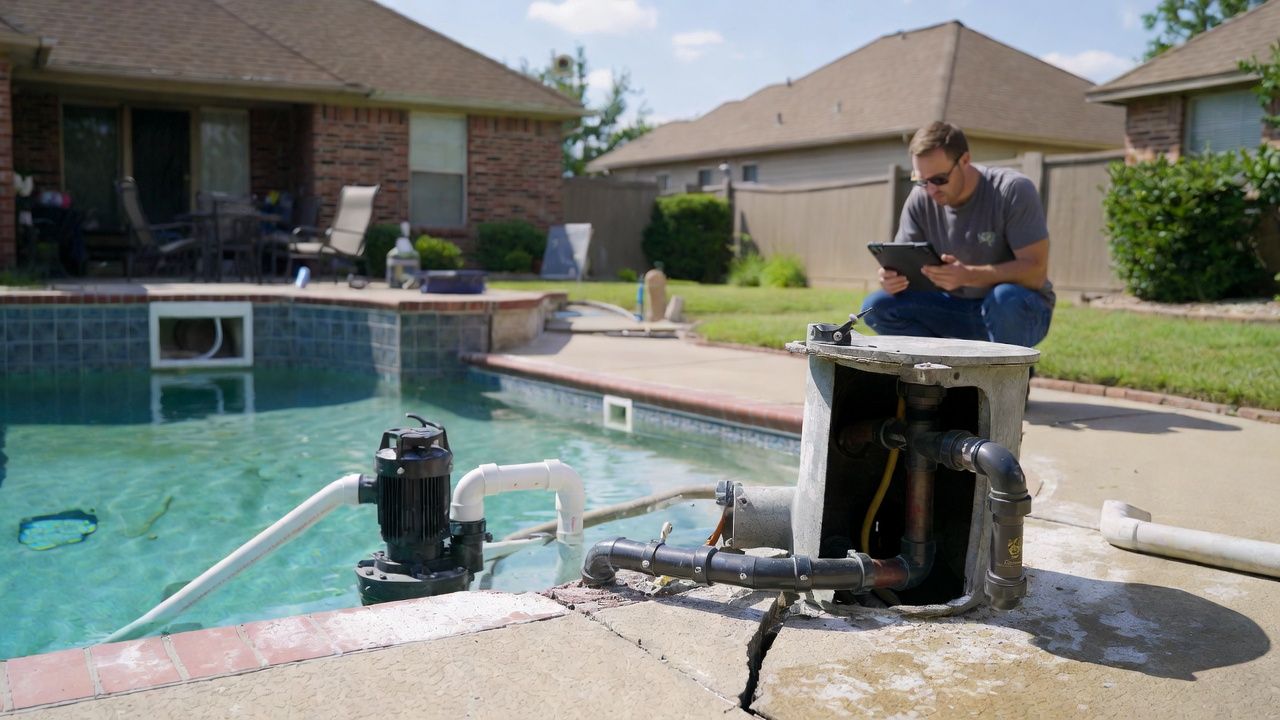
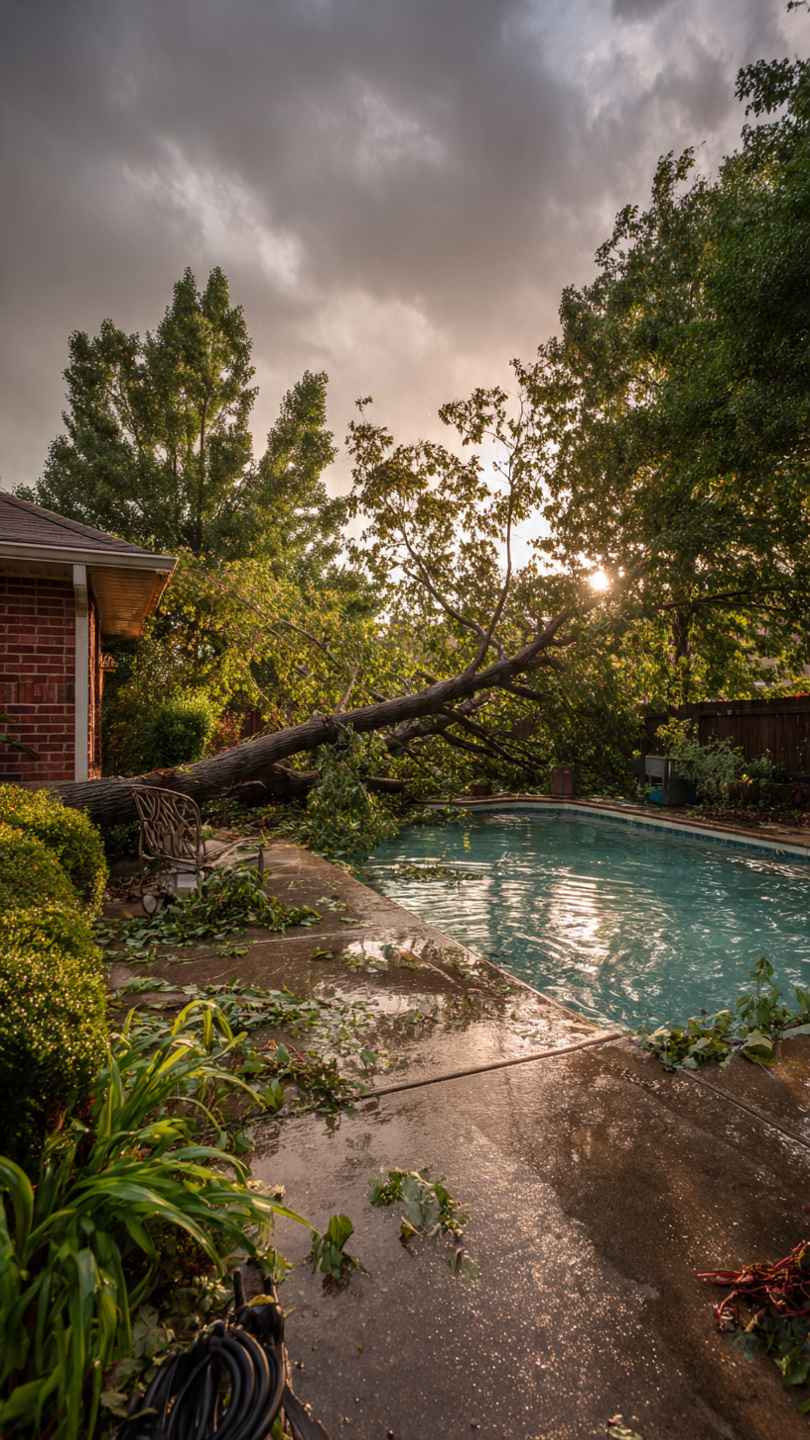
This is critical. During North Texas freeze events, a swim spa must stay running or be properly winterized — the small plumbing components freeze faster than a full pool’s. Check our pool freeze protection guide — the same principles apply directly to swim spas. A frozen swim spa repair bill starts at several hundred dollars and goes up fast.
UV Damage to Covers
Nationally, swim spa covers last 5 to 7 years. In Texas, plan on 3 to 5 years. The sun here is brutal on vinyl, and a degraded cover loses its insulation value fast — which means higher heating costs and more heat loss overnight.
People Also Ask
How much does it cost to maintain a swim spa in Texas?
Budget $1,200 to $2,500 annually for swim spa maintenance cost in DFW, covering chemicals, filter replacements, quarterly drain-and-refills, and professional service. Less than a full pool, but more intensive on a per-gallon basis.
How often do you drain a swim spa?
Every 3 to 4 months. Small water volume accumulates TDS and chemical contaminants much faster than a full pool. A complete drain and refill is the single most impactful swim spa maintenance task you can do.
Is swim spa maintenance harder than pool maintenance?
Different, not necessarily harder. The smaller volume means chemistry moves faster and errors hit harder. But the overall workload — and cost — is lower than a full-size pool. The key is understanding that swim spa chemistry behaves more like a hot tub than a pool.
Do pool companies service swim spas?
Some do, some don’t. PoolBurg services swim spas across DFW — same water chemistry expertise, scaled for smaller systems. It’s worth calling ahead to confirm any company has specific endless pool maintenance or swim spa experience before booking.
Can a swim spa freeze in Texas?
Yes — and the damage happens fast. Swim spas have smaller plumbing components that freeze more quickly than a full pool. During any North Texas freeze event, keep it running or properly winterize it. Never just turn it off and hope for the best.
PoolBurg Services Swim Spas Across DFW
At PoolBurg, we maintain swim spas across the Metroplex with the same expertise we bring to full-size pools — just scaled for the specific demands of smaller, hotter systems. We know DFW’s hard water, we know Texas freeze season, and we know how fast things go sideways in a 2,000-gallon system when swim spa maintenance gets skipped. Whether you need a regular weekly service plan or a one-time water chemistry reset, we’ve got you covered. Reach out to us across DFW and North Texas.
Swim spa owner in DFW? Contact PoolBurg for a custom swim spa maintenance plan — we’ll keep your investment clean, safe, and running perfectly year-round.