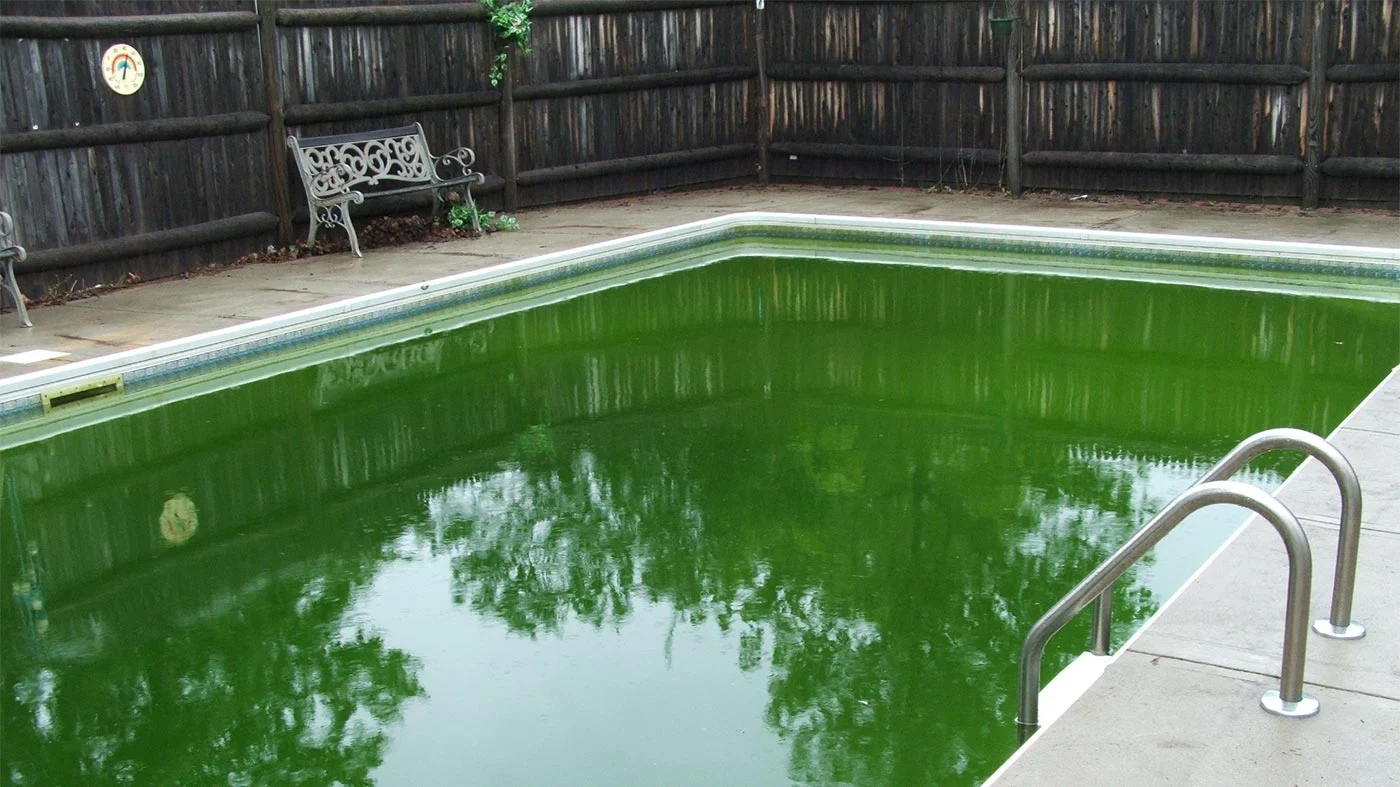
Why is my pool green is probably the last question you want to be asking on a Saturday morning when the kids are ready to jump in. Look, I’ve been maintaining pools in North Texas for over 35 years, and I can tell you that “clear and blue” is the only acceptable answer. When your pool water turned brown, green, or cloudy overnight, it’s not just an eyesore—it’s your pool telling you a specific story about its chemistry. Think of your backyard as a giant mood ring; the color shifts based on chemical reactions or biological “invasions.”
This guide acts as your local pool water color chart to help you diagnose the issue and get back to swimming within 24 to 72 hours.
Your Pool Water Changed Color — Here’s What It Means
In the Frisco and Plano heat, things happen fast. Water should be clear enough to see a coin on the bottom. When that clarity vanishes, the color you see is your best diagnostic tool. Don’t panic; most shifts are fixable with the right protocol. According to CDC health swimming, swimming in discolored water is a safety risk because it signals a lack of sanitizer. If you can’t see the main drain, it’s also a drowning hazard.
GREEN Pool Water
This is the most common call we get. Usually, “why is my pool green” comes down to one of two things: algae or metals.
Light green / green tint
- Cause #1: Early-stage algae. Your chlorine dropped, and the 95°F Texas sun did the rest.
- Cause #2: Copper in the water. This usually comes from cheap copper-based algaecides or a corroding heater.
- The Vitamin C Test: Rub a vitamin C tablet on a green spot. If it lightens instantly, it’s copper. If not, it’s algae.
- The Fix: For algae, shock it hard and run the filter 24/7. For copper, use a metal sequestrant and adjust your pH to 7.2.
Dark green / swamp green
- Cause: Severe algae bloom where chlorine has been at zero for days.
- Fix: You need our full “green-to-clean” recovery protocol. This usually takes 3-7 days. While average pool repair costs vary, a professional recovery typically runs between $250 and $800.
Green only on walls/floor
- Cause: Algae or copper staining embedded in porous gunite surfaces.
- Fix: Aggressive brushing and sequestrants.
BROWN / RUST-COLORED Pool Water
It’s a shock when you see it, but here is why your pool water turned brown.
Light brown / tea-colored
- Cause #1: Iron in the water. This often happens if you fill from a well or have old rebar bleeding through gunite.
- Cause #2: Organic tannins. In neighborhoods with heavy oak or pecan trees, decomposing leaves act like a giant tea bag in your pool.
- The Fix: If it’s iron, use a sequestrant and wait 24 hours before shocking. For tannins, shock the pool and use an enzymatic cleaner.
Dark brown / rusty
- Cause: High iron concentration, often seen when filling from untreated sources.
Fix: A partial drain and refill using a WQA approved pre-filter on your hose is usually the best path.
MILKY / CLOUDY WHITE Pool Water
This is DFW’s most frequent clarity headache.
Slightly hazy / dull
- Cause: High pH causing calcium to precipitate. This happens because North Texas water is naturally hard.
- Fix: Lower the pH to 7.2 and use a clarifier.
Milky white / can’t see the bottom
- Cause: Severe calcium precipitation or filter failure. Sometimes, adding cal-hypo shock without pre-dissolving it causes this.
- Fix: Lower pH to 7.0 temporarily, add scale inhibitor, and clean your filter every 12 hours until it clears. If it won’t budge, you likely need to lower your TDS.
YELLOW / MUSTARD-COLORED Pool Water or Surfaces
Yellow film on walls
- Cause: Mustard algae. This variety is “chlorine resistant” and loves the shade.
- Fix: Triple shock and a specialty algaecide. Brush everything, including your pool toys—mustard algae is a hitchhiker.
Yellow/tan water
- Cause: Pollen. During March and May, oak pollen can tint the whole pool.
- Fix: Check weather forecasts and keep your filter running. Clean that filter frequently!
BLACK Spots or Dark Patches
- Cause: Black algae. These are the “roots” that grow into your plaster.
- Fix: You need a stainless steel brush (for gunite only) and a professional-grade black algae treatment. It’s a 7-14 day battle.
PURPLE / BLUE-GREEN Staining
- Cause: Manganese or Copper Cyanurate. Manganese is rare but leaves purple patches.
- Fix: Use ascorbic acid (Vitamin C) and sequestrants.
When to Call a Professional vs. DIY
If it’s a light green tint or some spring pollen, you can usually handle it with a trip to the store. However, if your pool water milky white won’t clear or you see dark brown “rust” clouds, call PoolBurg. Messing with metals and heavy calcium without a pro can lead to permanent plaster stains. We follow PHTA to ensure your water is safe for your family.

People Also Ask
Why is my pool water green even though I add chlorine?
You might have a “chlorine lock” from high cyanuric acid, or your pH is too high, making the chlorine lazy.
What causes brown pool water?
Almost always oxidized iron or organic tannins from those North Texas oak trees.
Why is my pool water cloudy white?
In DFW, it’s usually high pH forcing calcium out of the water.
Is it safe to swim in discolored pool water?
No. If you can’t see the bottom or the chemistry is off, stay out.
PoolBurg Diagnoses Water Color Changes at Every Visit
We don’t guess—we test. Whether it’s an acid wash or a simple chemistry tweak, we restore clarity so you can get back to enjoying your investment. Pool water looking weird? Don’t guess — PoolBurg diagnoses the cause and fixes it right the first time.