Heat pump vs gas pool heater is one of those choices that sounds simple until you start thinking about real life. Do you swim daily in spring and fall? Do you only want warm water for weekend guests? Do you have an attached spa that needs heat fast? For Frisco, Plano, Allen, McKinney, Grapevine, and Keller homeowners, the best answer depends less on the equipment brochure and more on how your family actually uses the pool. PoolBurg helps with PoolBurg Pool Heating and Cooling when homeowners want a straight answer before spending thousands on the wrong setup.
How a Heat Pump and a Gas Heater Work
Moving heat from the air versus creating heat with fuel
A pool heat pump vs gas heater comparison starts with how each system makes warm water. A heat pump pulls warmth from the outside air, concentrates it with refrigerant and a compressor, then transfers that heat into the pool water. The DOE heat pump pool heater guide explains that heat pumps move existing heat instead of creating it from fuel, which is why they can be very efficient in warm air.
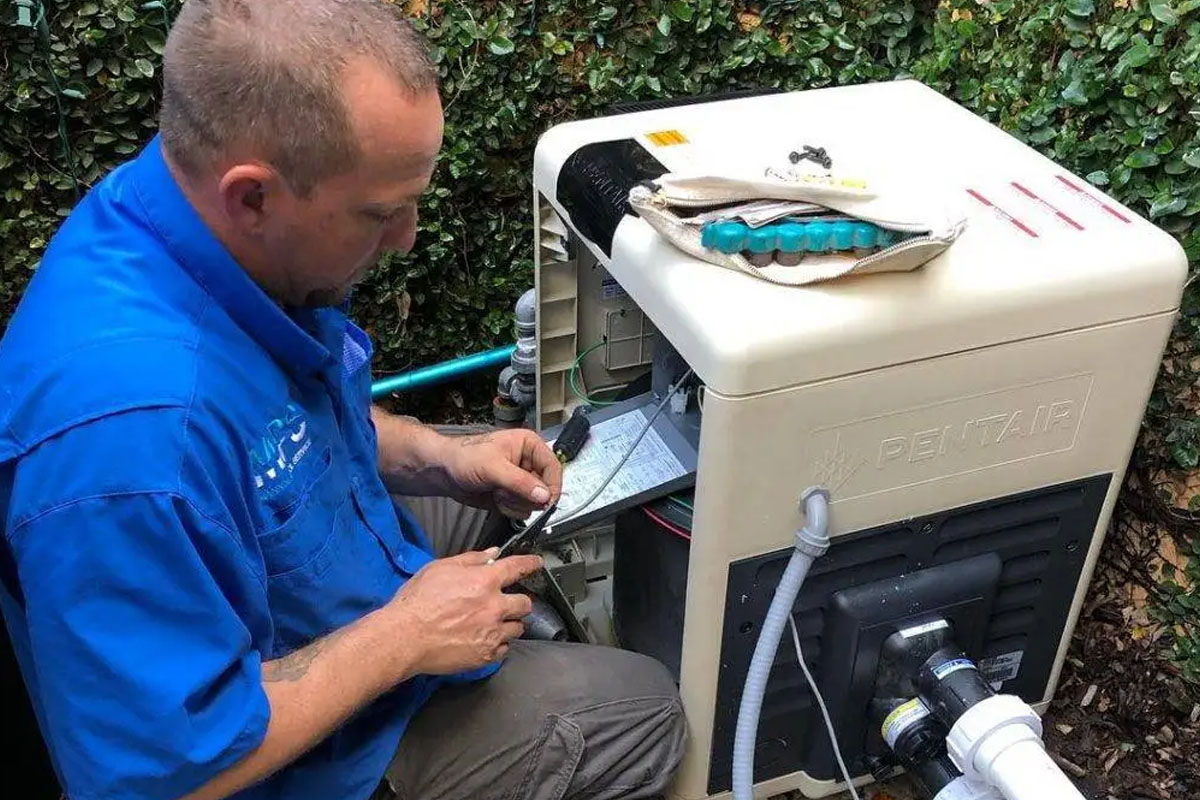
A gas heater burns natural gas or propane and sends pool water through a heat exchanger. The Pentair pool heater selection guidance describes gas heaters as fuel-based systems that can heat water in a hurry. That is the core difference: heat pumps are steady and efficient, while gas heaters are fast and forceful.
Speed Versus Efficiency
Which one heats the pool faster?
Gas usually wins the speed fight. If you want to take a cool pool and make it comfortable before a Saturday party, a gas heater is often the better tool. That is also why many attached spas lean gas, because nobody wants to wait all afternoon for spa temperature.
Which one is usually cheaper to run?
A heat pump is usually cheaper for steady seasonal heating, especially when DFW air is mild or warm. The DOE gas pool heater guide also shows how pool covers can dramatically change heating cost in Dallas examples. So the cheapest way to heat a pool is rarely just “buy the cheapest heater.” It is usually the right heater, the right temperature, and a cover used consistently.
Which one holds an even temperature better?
For daily-use pools, a heat pump often feels smoother because it maintains temperature over time instead of blasting heat only when someone remembers to turn it on. For occasional pools, gas can still make more sense because you only pay for heat when you need it.
| Comparison Point | Heat Pump | Gas Heater |
| Best use pattern | Daily or frequent swimming | Weekend use, parties, attached spas |
| Heating speed | Slower and steadier | Fastest option |
| Typical running cost | Usually lower in warm weather | Usually higher, but quick |
| Texas fit | Strong for spring and fall comfort | Strong for quick heat and cold snaps |
Which System Fits Which Swim Pattern
Weekend-only pools
If the pool sits quiet Monday through Friday, gas may be the smarter heat pump vs gas pool heater choice. You can leave the water lower during the week and heat it when company comes over.
Daily-use pools
For families who swim most evenings during shoulder season, a heat pump often wins. It may not feel dramatic on day one, but it can hold comfortable water without the same fuel burn.
Attached spas and quick-heat needs
Spas change the math. A heat pump can maintain a pool nicely, but a gas heater is usually better for quick spa heat. Some homeowners even consider a dual setup. Hayward heater and heat pump combination guidance explains the logic of using a heat pump most of the time and switching to gas when fast heat is needed.
Why Texas Climate Changes the Answer
Warm-air efficiency
North Texas is a strong heat pump market because much of the swim season happens when the air is warm enough for efficient heat transfer. That matters in March, April, October, and early November, when the pool water feels cold but the daytime air still has heat to give.
Why covers change the math
The DOE pool cover guidance says covering a pool when it is not in use is one of the most effective ways to reduce heating costs, with possible savings of 50% to 70%. PoolBurg’s guide to pool cover types is worth reading before choosing any heater, because the best pool heater for Texas performs better when heat is not disappearing every night.
Upfront Cost, Lifespan and Replacement Strategy
Install cost drivers
Gas heaters may need gas line sizing, meter capacity, ventilation clearance, and fuel access. Heat pumps need the right electrical circuit, airflow clearance, pad space, and proper plumbing. If either system needs major infrastructure upgrades, the cheaper box can become the more expensive project.
Operating-cost drivers
Run cost depends on pool size, target temperature, wind, cover use, local utility rates, and how often you swim. PoolBurg’s cost to run a pool heat pump guide and cheapest way to heat a pool article can help DFW homeowners compare real-world comfort against monthly cost. The DOE swimming pool temperature guidance also notes that each degree of higher water temperature can raise energy use, so set point matters more than people think.
Long-term ownership view
For a heat pump vs gas pool heater decision, think in years, not just installation day. Heat pumps often cost more upfront but may cost less to operate. Gas heaters can be less expensive to install in some homes and are hard to beat for quick heat. Neither is automatically “best.” The best fit is the one that matches your swim pattern and existing equipment pad.
The Most Common Buying Mistakes
Choosing by BTU alone. BTU matters, but pool size, surface area, wind, cover use, and desired heat-up speed matter too.
Ignoring run pattern. The person who swims daily and the person who heats once a month should not buy the same system for the same reason.
Forgetting infrastructure. Gas line capacity and electrical availability can swing the whole pool heater comparison.
When to Ask PoolBurg for a Heater Comparison Visit
If your current heater is aging, expensive to run, or just not matching how you use the pool, PoolBurg can help compare options before you commit. We can look at swim habits, existing gas or electrical feed, pool size, spa needs, cover use, and repair-vs-replacement timing. If your heater is already acting up, start with our pool heater not working guide, then contact PoolBurg for a practical quote in Frisco, Plano, Allen, McKinney, Grapevine, Keller, and nearby DFW areas.
People Also Ask
Are heat pumps good for heating pools?
Yes. Heat pumps are good for pools that are used often, especially in warmer climates like North Texas where outdoor air can support efficient heating for much of the swim season.
Is a heat pump or heater better for a pool?
A heat pump is often better for steady, efficient heating. A gas heater is often better for fast heating, occasional use, and attached spas.
What is the cheapest way to heat your swimming pool?
For many DFW homes, the cheapest way to heat a pool is using a properly sized heat pump with a pool cover and a realistic temperature setting.
What are the disadvantages of a pool heat pump?
A pool heat pump heats slower, depends on outdoor air temperature, and may require a dedicated electrical setup. It is not the best choice for quick spa heat.
Are heat pumps worth it for pools?
Heat pumps are worth it when you swim often and want lower operating costs over time. They may not be worth it if you only heat the pool a few times per season.
How long does it take to heat a pool with a heat pump?
It depends on pool size, water temperature, air temperature, wind, and cover use. Heat pumps are usually measured in steady comfort, not instant heat.
Is gas better if I only use the pool occasionally?
Usually, yes. Gas is often better for occasional use because it heats faster and does not need to maintain the pool temperature all week.
PoolBurg Helps You Choose the Right Pool Heater
A heat pump vs gas pool heater decision should not feel like a guess. PoolBurg can compare your pool, spa, comfort goals, utility setup, and budget so you choose the system that actually fits your backyard. Ask for a heater comparison visit and we will walk you through repair, replacement, and best-fit heating options without the sales fog.