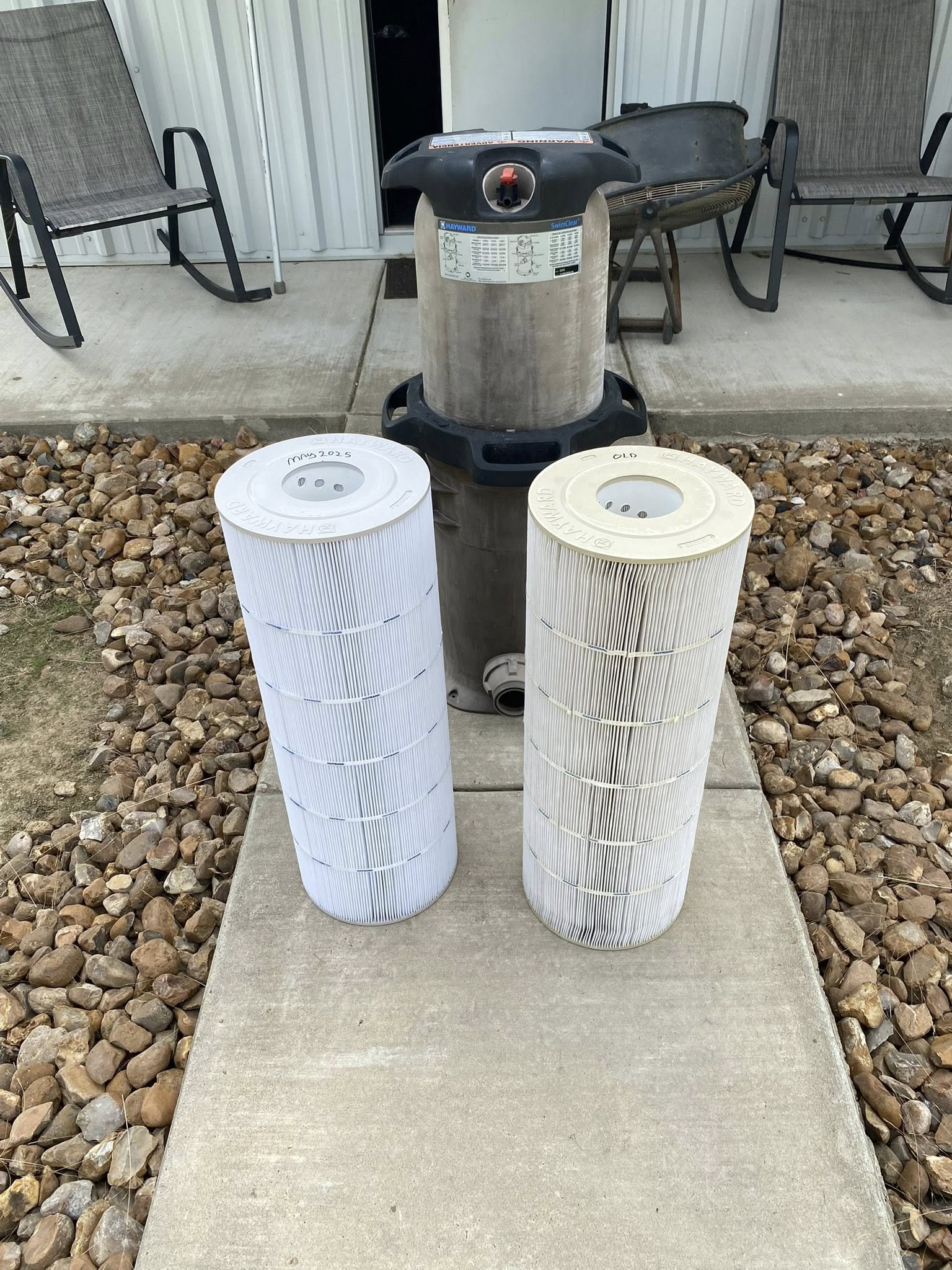
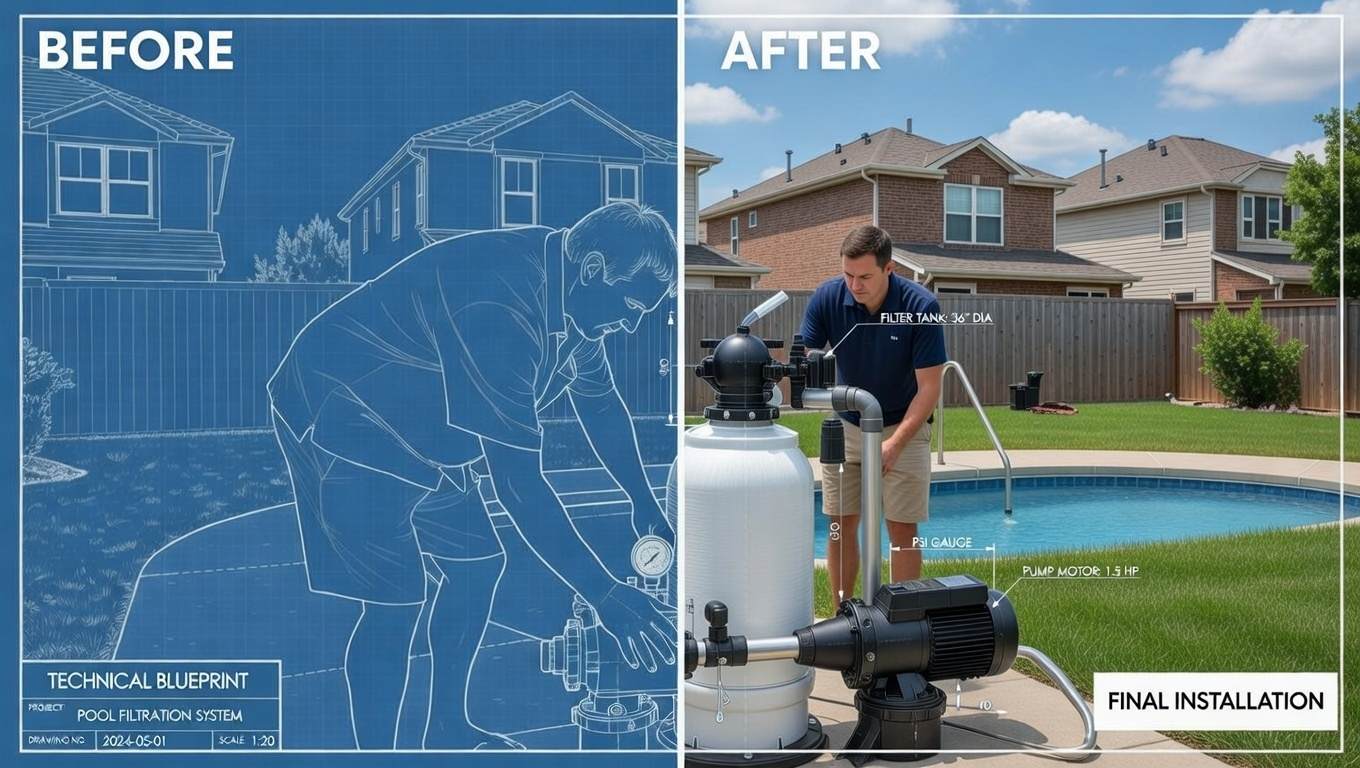
Your pool sand filter and pump are the two hardest-working pieces of equipment on your pool pad. The pump pushes water, the sand filter cleans it, and when they’re working together properly you barely think about either one. But when something goes wrong with your pool sand filter and pump setup — cloudy water that won’t clear up, sand blowing back into the pool, pressure gauge through the roof — it’s usually a sign that one or both need attention. Here’s what every North Texas pool owner should know.
How Pool Sand Filters and Pumps Work Together
The relationship is simple but critical. Your pump pulls water from the pool through the skimmer and main drain, then pushes it through the sand filter where debris gets trapped in the sand bed. Clean water flows out the bottom of the filter through a set of laterals and returns to the pool. Sand media filters particles down to 20 to 40 microns — that’s smaller than a human hair. When the sand bed gets dirty, you backwash the filter to flush the trapped debris out through the waste line. Because your pool sand filter and pump depend on each other, a problem with one almost always affects the other. A failing pump delivers inconsistent flow that reduces filtration. A clogged filter increases backpressure that strains the pump motor. Diagnosing the right component saves you from replacing the wrong one.
Common Pool Sand Filter Problems in North Texas

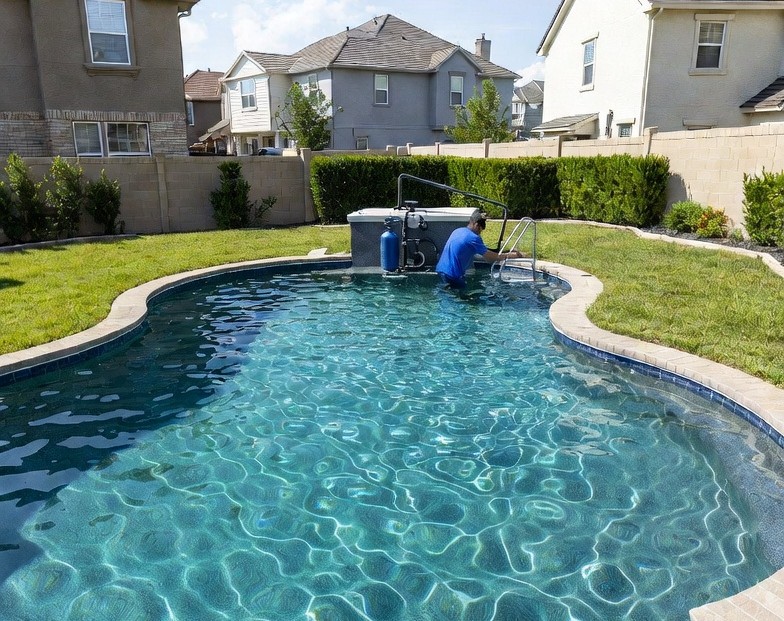

Channeling
Over time, water cuts grooves through the sand bed instead of filtering evenly through the entire media. When channeling happens, water bypasses the sand completely and returns to the pool unfiltered. Your pressure gauge reads normal but the water stays cloudy. This is one of the most misdiagnosed pool sand filter and pump issues we see.
Calcified Sand From DFW Hard Water
This is a huge local problem. The limestone-rich water from the NTMWD system deposits calcium and magnesium directly into your filter sand. Over time, the grains cement together into hard clumps that water flows around instead of through. In North Texas, this calcification cuts sand life roughly in half compared to areas with softer water.
Broken Laterals Sending Sand Into the Pool
The laterals are the slotted tubes at the bottom of the filter tank that let clean water pass through while keeping sand inside. When a lateral cracks — often from freeze damage or age — sand escapes into the return lines and blows back into your pool. If you’re finding sand on the pool floor, broken laterals are almost always the cause.
Multiport Valve Failure
The multiport valve directs water flow through the filter in different modes: filter, backwash, rinse, waste, recirculate, and closed. When the internal gasket or spider gasket wears out, the valve leaks water between ports. You’ll notice water coming from the waste line during normal filtration or ineffective backwashing. Replacement gaskets run $20 to $50 but the labor involves disassembling the valve.
Cracked Filter Tank
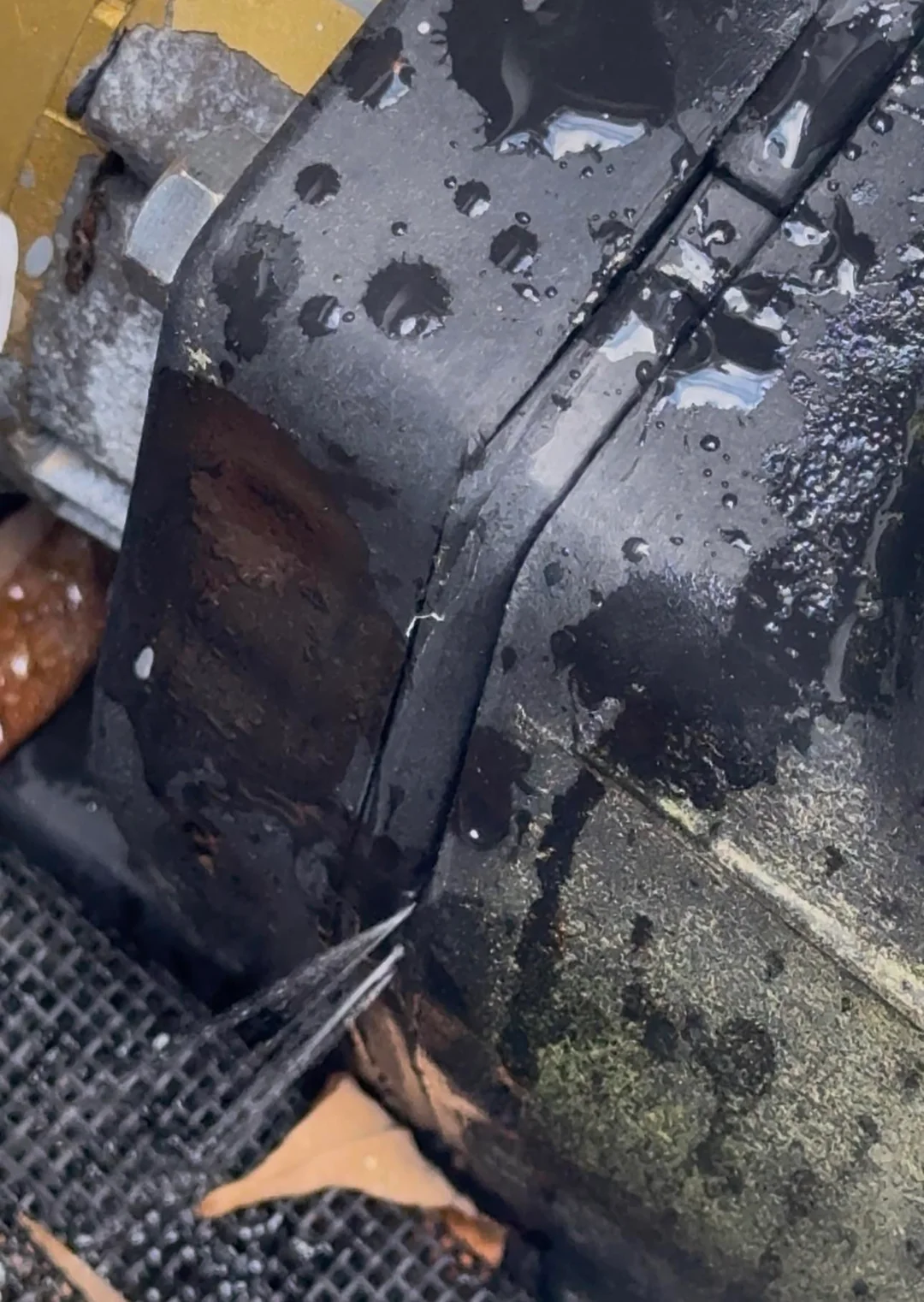
Sand filter tanks are built tough, but they’re not immune to freeze damage. Water left inside the tank during a hard DFW freeze can expand and crack the fiberglass or polypropylene shell. A cracked tank can’t be repaired — it needs full replacement.
When to Replace Your Pool Filter Sand

You’ll see claims online that filter sand lasts 5 to 7 years. In North Texas, 3 to 5 years is more realistic because our hard water calcifies the sand faster. In areas like Frisco and Prosper where the water is especially hard, you might need a sand change closer to every 3 years. Signs your sand needs replacing include persistently cloudy water despite balanced chemistry, filter pressure that climbs faster than usual after backwashing, sand appearing in the pool, and the filter simply not clearing up after a proper backwash. A standard sand change for a residential pool sand filter and pump system runs $150 to $400 including sand and labor. It’s one of the most cost-effective maintenance tasks you can do.
Pool Sand Filter and Pump Sizing — Are Yours Matched Correctly?
This is a problem we see all the time in DFW, especially in homes where equipment has been replaced piecemeal over the years. An oversized pump pushes water through the sand bed too fast, which reduces filtration effectiveness and channels the sand. It also increases backpressure, which strains the pump motor. An undersized filter can’t handle the volume of water the pump delivers and gets dirty too quickly. Most residential pools in North Texas — 15,000 to 25,000 gallons — pair best with a 24-inch to 30-inch sand filter and a 1 to 1.5 HP pump. If you’re not sure whether your pool sand filter and pump are properly matched, a quick flow rate assessment can identify the mismatch before it causes bigger problems.
Sand Filter vs. Cartridge Filter vs. DE Filter for DFW Pools
Sand filters are the most affordable and lowest-maintenance option. They filter to 20 to 40 microns, cost $250 to $1,000 installed, and the sand media costs $50 to $150 to replace every 3 to 5 years. Maintenance is simple backwashing. Cartridge filters offer finer filtration at 10 to 15 microns with no backwashing required. They cost $250 to $1,200 installed but cartridge replacements run $50 to $200 every 1 to 3 years — and in DFW’s hard water, closer to every 1 to 2 years. DE filters provide the finest filtration at 2 to 5 microns but cost $550 to $1,300 installed and require more hands-on maintenance. For most North Texas homeowners, a sand filter remains the most practical and budget-friendly choice, especially when paired with the right pump.
How Much Does Sand Filter Repair and Replacement Cost?
Here are the realistic cost ranges for pool sand filter and pump work in DFW: sand replacement runs $150 to $400, multiport valve replacement $200 to $500 installed, lateral kit replacement $150 to $400 (parts and labor), spider gasket replacement $100 to $250 installed, full sand filter tank replacement $400 to $1,200 depending on size and brand, and a complete pump plus filter combo replacement $800 to $2,500 installed. Labor rates in North Texas average $75 to $150 per hour for licensed pool equipment work.
People Also Ask About Pool Sand Filters and Pumps
How often should I replace sand in my pool filter?
Every 3 to 5 years in North Texas. Our hard water calcifies the sand faster than the 5 to 7 year lifespan manufacturers often quote. If your water stays cloudy after backwashing or filter pressure rises quickly, the sand is likely due for a change.
Can I upgrade from a sand filter to a cartridge filter?
Yes. The switch requires replumbing the filter connections and possibly resizing the equipment to match your pump’s flow rate. Expect $200 to $600 in additional plumbing work on top of the new filter cost. Cartridge filters eliminate backwashing and offer finer filtration, but replacement cartridges cost more than sand over time.
Why is sand coming back into my pool?
Broken laterals inside the filter tank are the most common cause. The lateral tubes have tiny slots that are supposed to keep sand inside while letting water pass through. When a lateral cracks, sand escapes into the return line and ends up on your pool floor. This requires opening the tank, removing the sand, and replacing the damaged laterals.
How do I know if my multiport valve is bad?
Water leaking from the waste line during normal filtration is the clearest sign. You might also notice the valve handle feels loose or the filter doesn’t seem to backwash properly. A worn spider gasket inside the valve is usually the culprit and can be replaced without buying a whole new valve.
What PSI should my sand filter run at?
Every system is different, so know your baseline. When the sand is clean — right after a sand change or thorough backwash — note the pressure gauge reading. That’s your clean baseline. When the pressure rises 8 to 10 PSI above that number, it’s time to backwash. Most residential pool sand filter and pump systems run a clean baseline between 10 and 20 PSI.
PoolBurg’s Sand Filter and Pump Services
PoolBurg handles every aspect of pool sand filter and pump service across North Texas. Sand changes, lateral replacements, multiport valve repairs, full filter upgrades, pump replacements, and complete system overhauls. We service all major brands including Hayward, Pentair, Sta-Rite, and Waterway. Every job starts with an honest assessment — we tell you what actually needs fixing and what doesn’t, so you’re never paying for work that wasn’t necessary.
Not sure what’s wrong with your filter? Book a free equipment assessment.
We’ll diagnose the issue and give you honest options before any work begins.
Visit poolburg.com or call us today.