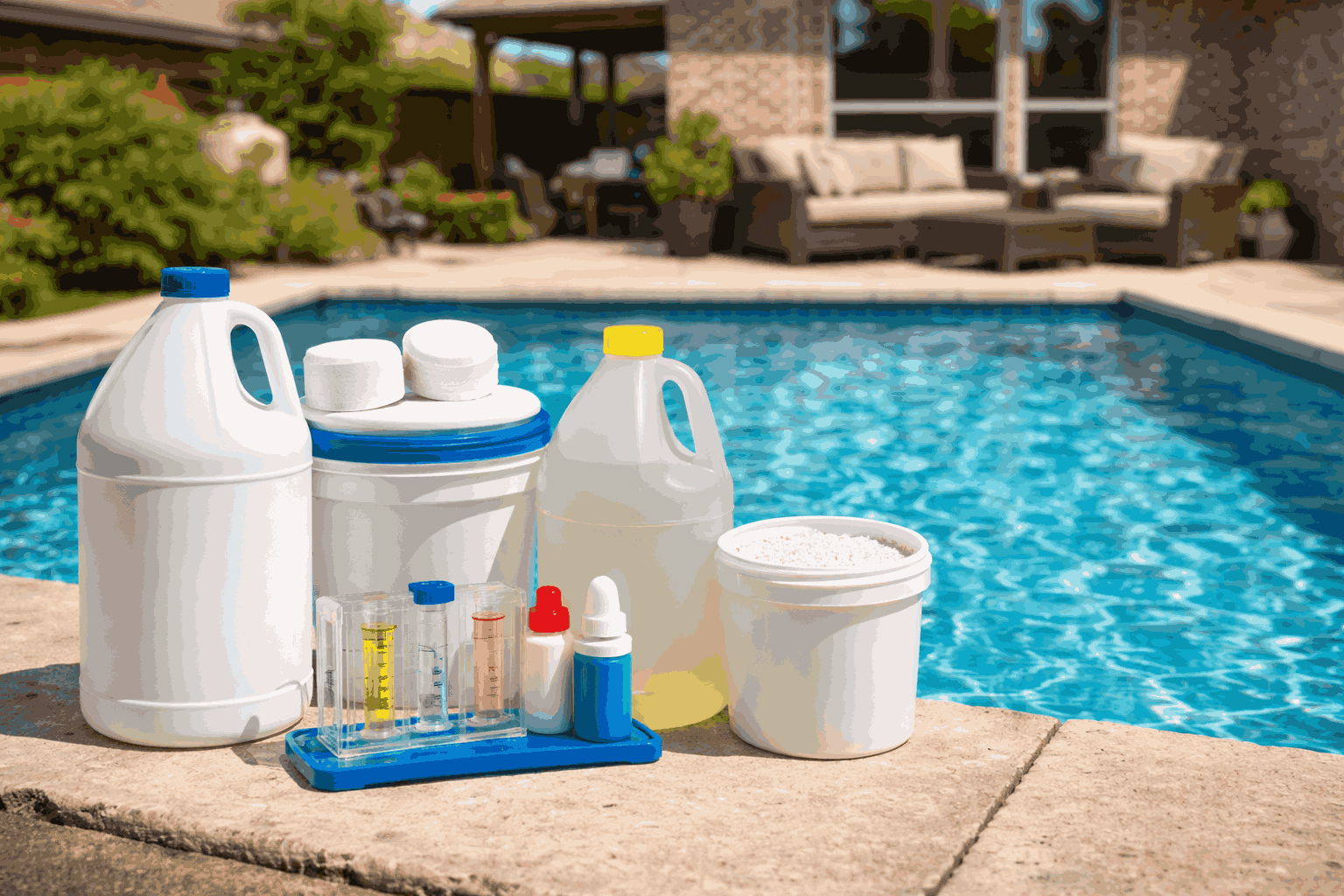
Pool maintenance chemicals are where most pool owners either overspend or underspend, and both cost you money. In North Texas, the chemical equation is different from what you’ll read in a generic pool care guide because DFW’s hard water, intense UV, and extreme summer heat change the rules on nearly every product you put in the water.
The right pool maintenance chemicals in the right amounts keep your water safe, clear, and equipment-friendly. The wrong ones waste money, damage surfaces, and create problems that are more expensive to fix than the chemicals themselves. Here’s what actually works in this market.
Pool Chemicals 101: What Goes in Your Pool and Why
A swimming pool is a living chemical system. Sanitizer kills bacteria and algae. pH control keeps the water comfortable and ensures the sanitizer works effectively. Alkalinity buffers pH from swinging wildly. Calcium hardness protects surfaces and equipment. Stabilizer shields chlorine from UV destruction. And specialty chemicals handle staining, phosphates, and metals that are specific to your water source. In cooler climates, this system is relatively forgiving.
In North Texas, where water temperatures hit the 90s, UV is relentless, and tap water arrives loaded with calcium and minerals from NTMWD water quality reports showing 150 to 300-plus ppm, the margin for error is much smaller. Getting your pool maintenance chemicals right here means understanding what DFW water does differently.
Essential Pool Maintenance Chemicals for North Texas Pools
Chlorine: Your Primary Sanitizer
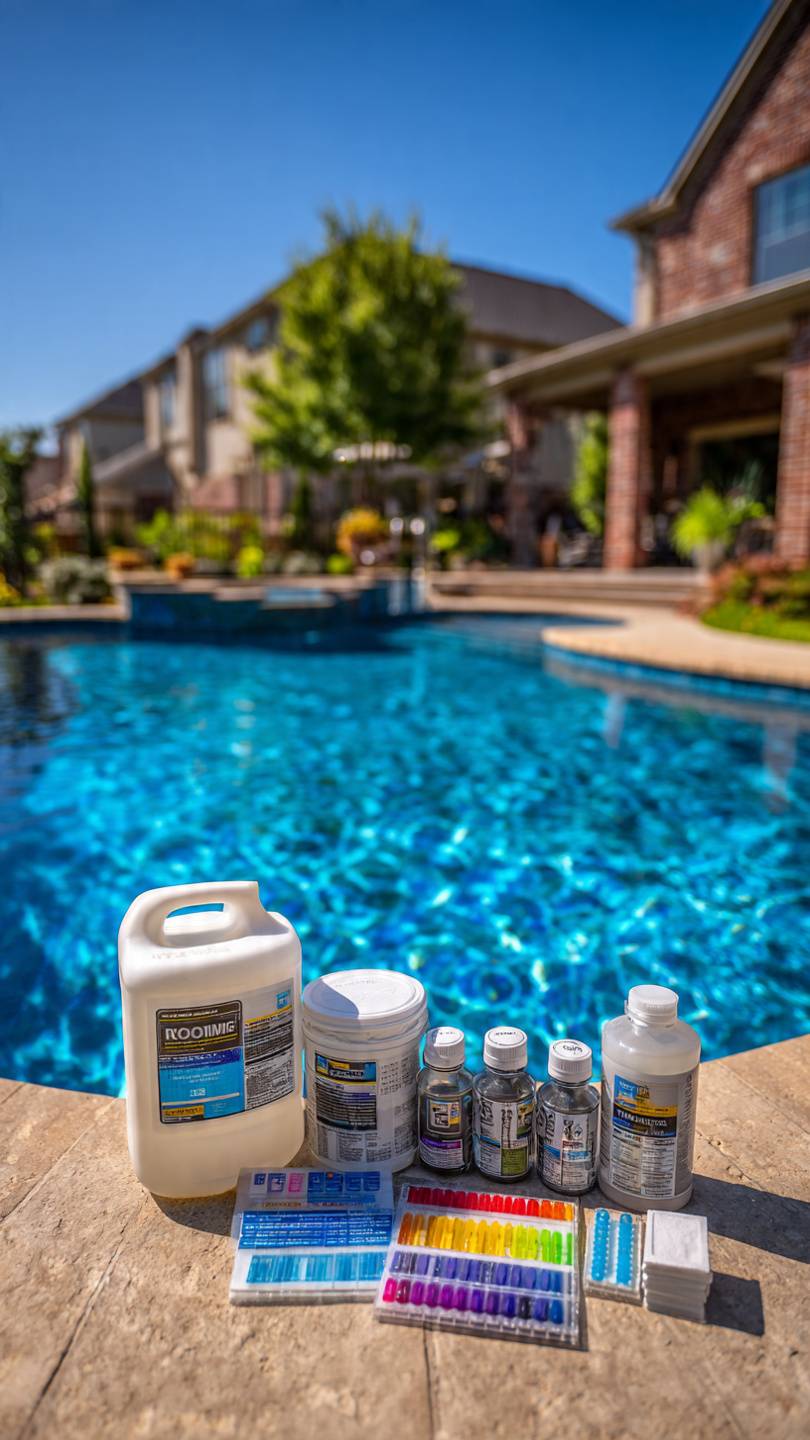
Chlorine comes in several forms and choosing the right one matters in DFW. Trichlor tablets are the most popular for homeowners — they dissolve slowly in a feeder or floater and contain built-in stabilizer. Dichlor granular is a fast-dissolving shock option that also contains stabilizer. Liquid chlorine, or sodium hypochlorite, is what most professionals prefer in hard water areas because it adds zero calcium and zero CYA — just pure chlorine.
Calcium hypochlorite is a powerful shock but adds calcium with every dose, which is the last thing a DFW pool needs. For ongoing pool maintenance chemicals in North Texas, liquid chlorine or trichlor tablets with periodic liquid chlorine supplementation is the most effective approach. CDC pool disinfection guidelines recommend maintaining free chlorine between 1 and 4 ppm at all times.
pH Adjusters: Muriatic Acid and Soda Ash
pH drifts high in DFW pools constantly because our source water has high alkalinity and salt chlorine generators naturally raise pH during operation. You’ll use muriatic acid far more often than soda ash in this market. Target range is 7.2 to 7.6. High pH reduces chlorine effectiveness, causes cloudy water, and accelerates calcium scaling — all critical concerns for pool maintenance chemicals management in hard water.
Alkalinity Adjusters: Sodium Bicarbonate
Total alkalinity should stay between 80 and 120 ppm. Alkalinity acts as a buffer for pH — when it’s too low, pH bounces around with every chemical addition. When it’s too high, pH resists correction and stays stubbornly elevated. DFW tap water tends to arrive with alkalinity on the higher side, so you’ll typically need to lower it with acid rather than raise it with baking soda.
Calcium Hardness Management
This is where DFW pool chemistry diverges from the national playbook. Most guides tell you to add calcium hardness increaser to reach 200 to 400 ppm. In North Texas, your tap water already arrives at 200 to 300 ppm or higher. Never add calcium hardness increaser unless a test specifically shows you’re below 200 ppm, which is rare here.
When calcium climbs above 400 ppm, it scales everything — tile lines, heat exchangers, salt cells, and filter media. The solutions are partial drain-and-refill to dilute, or sequestering agents that keep calcium dissolved instead of depositing. Calcium management is the most DFW-specific part of pool maintenance chemicals.
Cyanuric Acid: Stabilizer and Conditioner
CYA is essential in Texas because without it, UV destroys free chlorine in hours. Target 30 to 50 ppm for chlorine pools and 70 to 80 ppm for salt water pools. The catch is that trichlor tablets add CYA with every dose, so over months, CYA accumulates and can climb past 100 ppm.
At that level, chlorine becomes ineffective even though your test shows adequate levels — this is called overstabilization or chlorine lock. The only fix is draining and diluting. Pool and Hot Tub Alliance water chemistry standards recommend monitoring CYA as part of regular pool maintenance chemicals testing.
Algaecide
Algaecide works as a preventive supplement, not a replacement for chlorine. A weekly maintenance dose helps prevent algae from gaining a foothold, which is valuable in DFW summers when chlorine demand is at its highest. Copper-based algaecides are effective but can stain surfaces — use with caution on fiberglass and light-colored plaster.
Phosphate Remover
Phosphates are an algae food source that enters the pool through tap water, fertilizer runoff, landscaping debris, and rain. High phosphate levels don’t cause algae on their own, but they make it harder to prevent. Phosphate removers are useful as part of ongoing pool maintenance chemicals when levels exceed 500 ppb.
Sequestering Agents
Critical for DFW pools. Sequestering agents bind to dissolved metals and minerals — calcium, iron, copper, manganese — and keep them in solution instead of depositing on surfaces as stains and scale. In a market with water as hard as ours, a monthly dose of sequestering agent is one of the most important pool maintenance chemicals you can use.
Pool Maintenance Chemicals Cost in North Texas
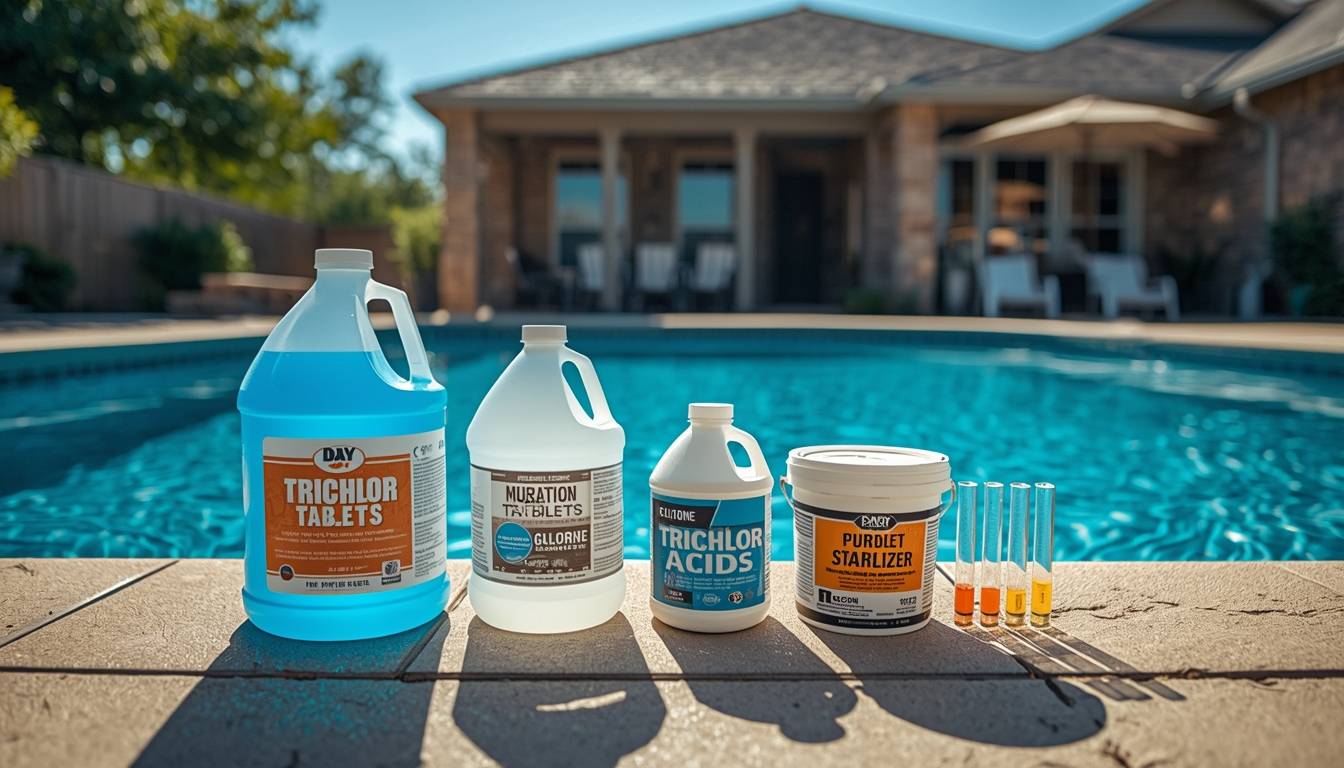
DIY pool maintenance chemicals for a typical DFW pool run $50 to $120 per month depending on pool size, chemical system, and how aggressively the water needs managing. Chlorine and acid are the biggest ongoing expenses. Salt water pools save on chlorine cost but add salt and cell replacement to the budget. Professional pool service typically includes chemicals in the monthly fee — $130 to $250 per month covers weekly testing, balancing, and all chemical products.
The professional route eliminates the guesswork, prevents overbuying, and ensures the right products are used in the right amounts. Pool supply stores across DFW stock everything you need if you prefer the DIY approach — Leslie’s, Pinch A Penny, and local suppliers all carry North Texas-appropriate products.
Common Chemical Mistakes DFW Pool Owners Make
Adding Calcium Hardness Increaser
The most common pool maintenance chemicals mistake in North Texas. Your water is already hard. Adding more calcium is like pouring gas on a fire. Unless your test shows calcium below 200 ppm, leave this product on the shelf.
CYA Creep From Trichlor Tablets
Using stabilized trichlor tablets exclusively adds CYA with every dose. Over a season, CYA climbs past 80, then 100, then 150 ppm. At that point, chlorine can’t sanitize effectively no matter how much you add. Test CYA monthly and switch to liquid chlorine periodically to break the cycle.
Not Testing Often Enough in Summer
Water chemistry in a DFW pool changes daily when temps exceed 100 degrees. Testing once a week is the minimum. In peak summer, twice-weekly testing catches problems before they become expensive.
Mixing Chemicals or Adding Them Simultaneously
Never mix pool maintenance chemicals together before adding them to the pool. Never add acid and chlorine at the same time — they react and release toxic chlorine gas. Add one chemical, let it circulate for 15 to 30 minutes, then add the next.
Shocking During the Day
UV destroys unstabilized chlorine rapidly. Shocking during afternoon sun wastes 50 percent or more of the product before it can do its job. Always shock at dusk or after dark for maximum effectiveness. This single change in timing is one of the easiest ways to get more out of your pool maintenance chemicals budget.
People Also Ask About Pool Maintenance Chemicals
What pool chemicals do I need in Texas?
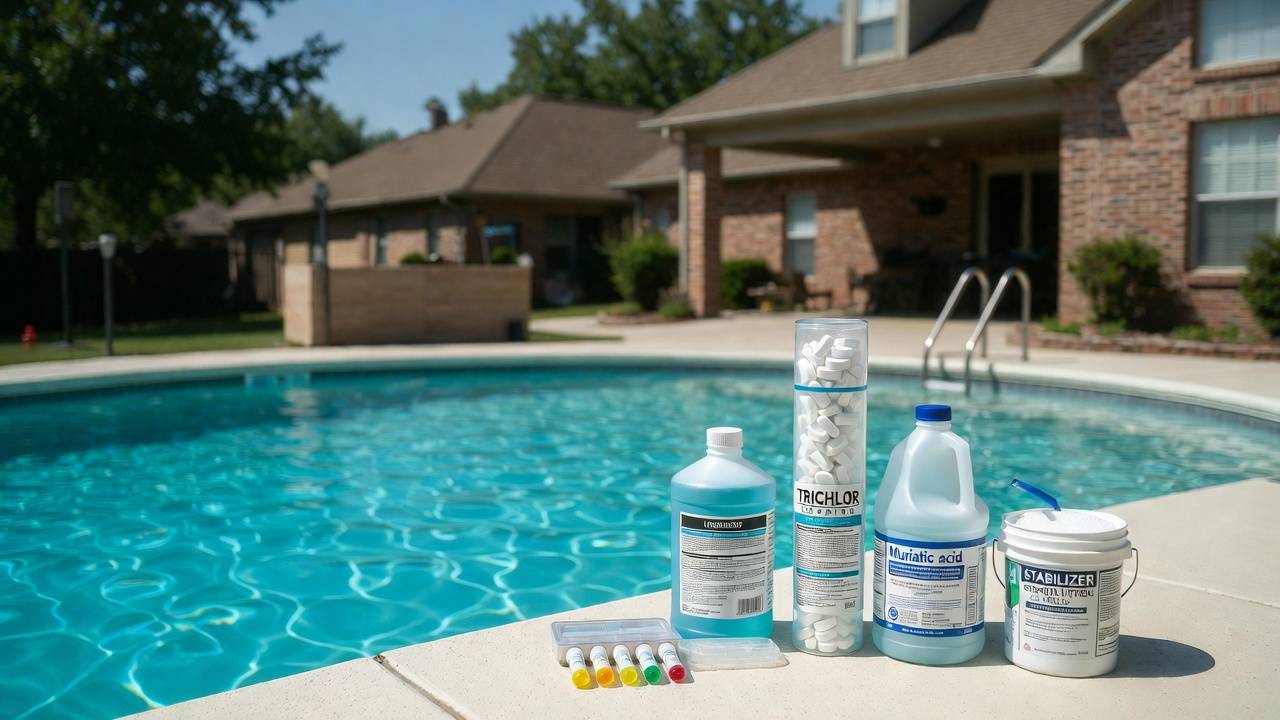
Chlorine (liquid or trichlor tablets), muriatic acid for pH control, cyanuric acid for UV protection, a sequestering agent for hard water management, and algaecide as a preventive supplement. That covers the essential pool maintenance chemicals for North Texas conditions.
How much do pool chemicals cost per month?
$50 to $120 per month for DIY in DFW. Professional service with chemicals included runs $130 to $250 per month. The professional option eliminates waste from incorrect dosing and includes expert testing.
What’s the most important pool chemical to maintain?
Free chlorine. It’s the front line against bacteria, algae, and contamination. Without adequate free chlorine, nothing else matters. In North Texas, maintaining chlorine requires CYA protection from UV, proper pH for chlorine effectiveness, and sufficient pump runtime for distribution.
Can I use too much chlorine in my pool?
Yes. Chlorine above 10 ppm causes skin and eye irritation, bleaches swimsuits and hair, and can damage vinyl liners and fiberglass gel coats. After shocking, wait until free chlorine drops below 5 ppm before swimming. Maintaining 1 to 4 ppm for daily use is the sweet spot.
Why does my pool chemistry change so fast in summer?
Heat accelerates every chemical reaction. Chlorine evaporates faster, pH drifts higher, algae grows more aggressively, and bather load from heavy pool use adds contaminants. Pool maintenance chemicals consumption in a DFW summer can be double or triple what it is in winter.
What chemicals should I avoid with a salt water pool?
Avoid calcium hypochlorite shock — it adds calcium to already-hard water and isn’t necessary with a salt system generating its own chlorine. Avoid copper-based algaecides that can stain the cell and surfaces. Use liquid chlorine for supplemental shocking when needed.
PoolBurg’s Chemical Service: Expert Balancing With Every Visit
PoolBurg includes full pool maintenance chemicals management with every weekly service visit across all 17 North Texas cities we serve. Professional-grade testing, precise dosing based on your pool’s actual conditions, the right products for DFW hard water, and documentation so you always know what was added and why. No guesswork, no overbuying at the pool store, no wasted product. Just balanced, clear, safe water every week.
Tired of the chemistry guessing game? Let PoolBurg handle it — included in every service plan.
Professional-grade chemicals, precise testing, and the right products for North Texas water.
Visit poolburg.com or call us today.