Pool pump running time is one of those behind-the-scenes things that makes the biggest difference in how your pool looks and how much you spend on electricity. You know how it goes — run it too little and you’re fighting cloudy water and algae; run it too long and your electric bill screams at you. In North Texas, with our crazy heat, dust, and pollen, getting the pool pump running time dialed in is huge. The good news? Once you understand the sweet spot, your water stays crystal clear and your wallet stays happy.
Why Proper Pool Pump Run Time Is Critical in DFW
Texas heat accelerates algae growth — circulation is the first defense against green water. DFW dust, pollen, and storms constantly introduce debris that must be filtered out. Chlorine only works effectively when water is circulating throughout the pool. Running the pump too little causes cloudy water and algae — too long wastes electricity. Finding the right balance keeps water clear while controlling energy costs.
The Basic Rule — One Full Pool Water Turnover Per Day
Goal: circulate the entire pool volume through the filter every 24 hours. Most residential pools achieve this with 8–12 hours of pump operation. Smaller pools or stronger pumps may need less time. Larger pools or older pumps may require longer run times. Proper turnover ensures debris reaches the filter and chemicals distribute evenly.
Recommended Pump Run Time by Pump Type

Single-speed pumps
Typical run time: 8–10 hours per day. Most common pump type in older DFW pools. Runs at full speed the entire time — higher electricity usage. Usually scheduled during daylight for better skimming.
Variable-speed pumps
Typical run time: 12–24 hours at low speed. Low-speed operation dramatically reduces energy consumption. Provides better filtration and constant circulation. Often runs low speed all day with short high-speed cleaning cycles.
Two-speed pumps
Typical run time: 8–12 hours combining low and high speed. Low speed handles filtration while high speed is used for cleaning or spa operation.
Seasonal Pump Running Time Adjustments in North Texas
Summer (May–September)
Recommended run time: 10–12 hours daily. High temperatures and heavy pool use increase filtration needs.
Spring and fall
Recommended run time: 8–10 hours daily. Moderate temperatures reduce algae pressure and chemical demand.
Winter
Recommended run time: 4–6 hours daily. Cold water slows algae growth but circulation is still required.
Freeze protection periods
Pump should run continuously during freezing conditions. Moving water helps prevent pipes and equipment from freezing.
Factors That Affect How Long Your Pump Should

Pool size and pump horsepower
Larger pools require longer circulation time to achieve turnover.
Filter type and cleanliness
Dirty filters reduce water flow and circulation efficiency.
Pool usage and swimmer load
Heavy use introduces oils, sunscreen, and contaminants.
Debris and surrounding landscaping
Pools near trees require longer skimming time.
Signs Your Pool Pump Is Not Running For Enough Time
Cloudy or dull pool water
Often caused by insufficient filtration time.
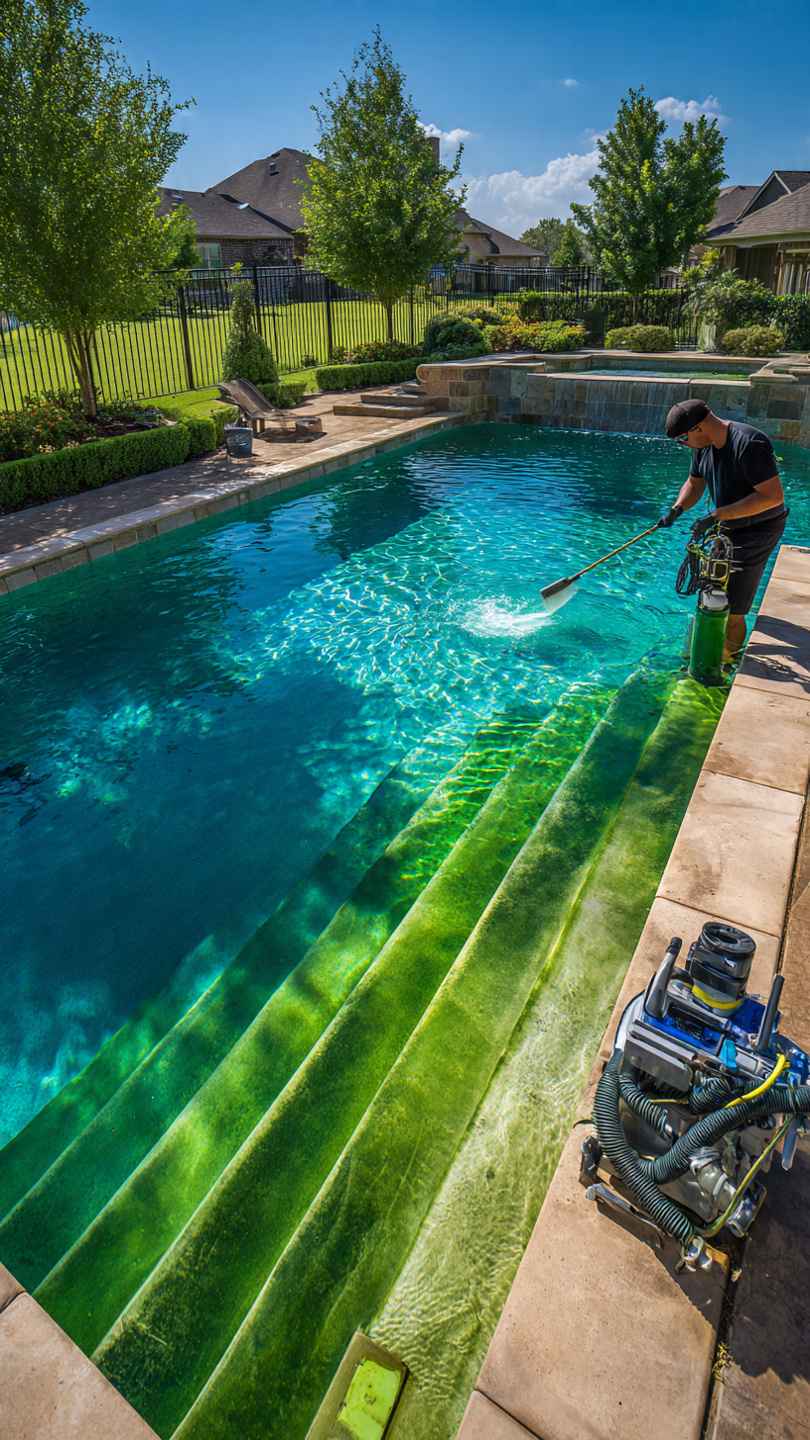
Algae forming on walls or steps
Poor circulation allows algae to grow in stagnant areas.
Floating debris that never reaches the skimmer
Indicates the pump is not running long enough.
People Also Ask
Should I run my pool pump during the day or at night?
Daytime is usually best in DFW because the skimmer pulls in floating debris while the sun is up. Night running works fine too if you’re on a time-of-use electric plan — just make sure you still hit your full turnover.
How long should I run a variable-speed pool pump?
Most variable-speed pumps run 12–24 hours at low RPM for excellent filtration and huge energy savings. The longer low-speed runtime actually costs less than a short blast on high speed.
Is it okay to run my pool pump 24 hours a day?
Yes — especially with a variable-speed model. Constant gentle circulation keeps water clearer and can actually lower your bill compared to an old single-speed running fewer hours.
How long should I run my pump after adding pool chemicals?
Run it at least 4–6 hours (or one full turnover) after adding chemicals so everything mixes evenly and reaches every corner of the pool.
Does running the pool pump longer save money?
It can — if you have a variable-speed pump. Longer runtime at low speed uses way less electricity than short high-speed cycles on older pumps.
What happens if I don’t run my pool pump long enough?
You’ll end up with cloudy water, algae outbreaks, poor chemical distribution, and higher overall maintenance costs. Circulation is the foundation of everything else.
PoolBurg Optimizes Pump Schedules for Maximum Efficiency
PoolBurg technicians evaluate pump type, pool size, and filtration system. Timers and automation systems are programmed for ideal circulation and energy efficiency. Routine service includes monitoring pump performance and filtration effectiveness.
Not sure if your pool pump is running the right amount of time? PoolBurg technicians can optimize your pump schedule and keep your pool clear year-round. Ask us during your next visit or check out our pool pump repair and weekly pool service options — we’ll get your pool pump running time perfect.