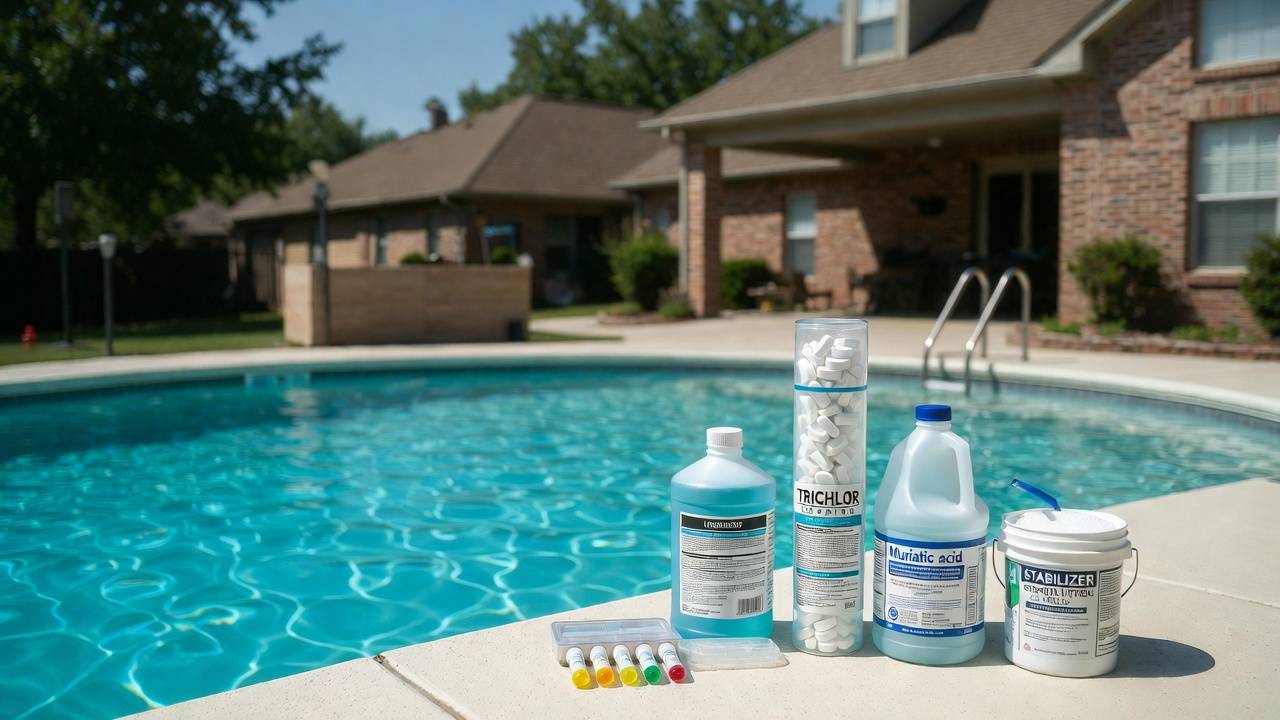
Balance pool water chemicals correctly and you solve most pool problems before they ever start. Clear water, safe swimming, and long-lasting equipment all depend on maintaining proper pool chemistry. When homeowners balance pool water chemicals consistently, algae struggles to grow, surfaces stay protected, and swimmers avoid irritation.
Professional organizations like the CDC Healthy Swimming water chemistry guidelines emphasize that balanced pool chemistry protects both swimmers and pool equipment. The key is understanding which chemicals matter most and adjusting them in the correct order.
Why Balanced Pool Water Is Critical
Hot climates and strong sunlight can cause pool chemistry to shift quickly. Chlorine breaks down faster, pH tends to rise, and minerals can accumulate in the water.
Unbalanced chemistry often leads to common issues such as cloudy water, algae growth, equipment corrosion, and skin irritation. According to the Pool and Hot Tub Alliance water balance standards, maintaining balanced pool chemistry prevents surface damage and protects heaters, pumps, and filters.
Regular testing makes it much easier to balance pool water chemicals before small issues become expensive repairs.
The Key Pool Chemicals You Need to Test

Free chlorine
Chlorine is the sanitizer that keeps pool water safe.
Ideal range: 2–4 ppm for chlorine pools and 1–3 ppm for saltwater pools.
Chlorine eliminates bacteria, algae, and contaminants introduced by swimmers. However, sunlight can quickly destroy chlorine when stabilizer levels are too low. The EPA water disinfection basics explain how chlorine works to eliminate harmful microorganisms in water.
pH
pH is the most frequently adjusted chemical in pool water.
Target range: 7.2–7.6
Low pH can cause corrosion and eye irritation, while high pH can reduce chlorine efficiency and cause cloudy water.
Total alkalinity
Total alkalinity helps stabilize pH.
Target range: 80–120 ppm
When alkalinity is balanced, it prevents constant swings in pH levels and makes it easier to balance pool water chemicals consistently.
Calcium hardness
Calcium hardness protects plaster surfaces and pool equipment.
Target range: 200–400 ppm
Excess calcium combined with high pH can cause scale buildup on tiles, heaters, and salt cells.
Cyanuric acid
Cyanuric acid protects chlorine from sunlight.
Recommended range:
30–50 ppm for chlorine pools
70–80 ppm for saltwater pools
According to NSPF pool chemistry research, stabilizer helps chlorine remain effective even in strong sunlight.
How to Test Pool Water Properly
Test strips
Test strips are a quick and inexpensive way to monitor basic chemistry levels. Simply dip the strip into the water and compare the colors with the provided chart.
They are best for frequent checks but may not always provide precise readings for certain parameters.
Liquid test kits
Liquid test kits offer more accurate results and measure additional parameters such as alkalinity and stabilizer levels.
Many professionals consider these kits the gold standard for homeowner testing.
Professional pool store testing
Many pool supply stores offer comprehensive testing that analyzes multiple chemistry parameters.
The InterNACHI water testing guide explains how professional analysis can help identify hidden chemistry issues that basic test kits may miss.
The Correct Order to Balance Pool Water Chemicals


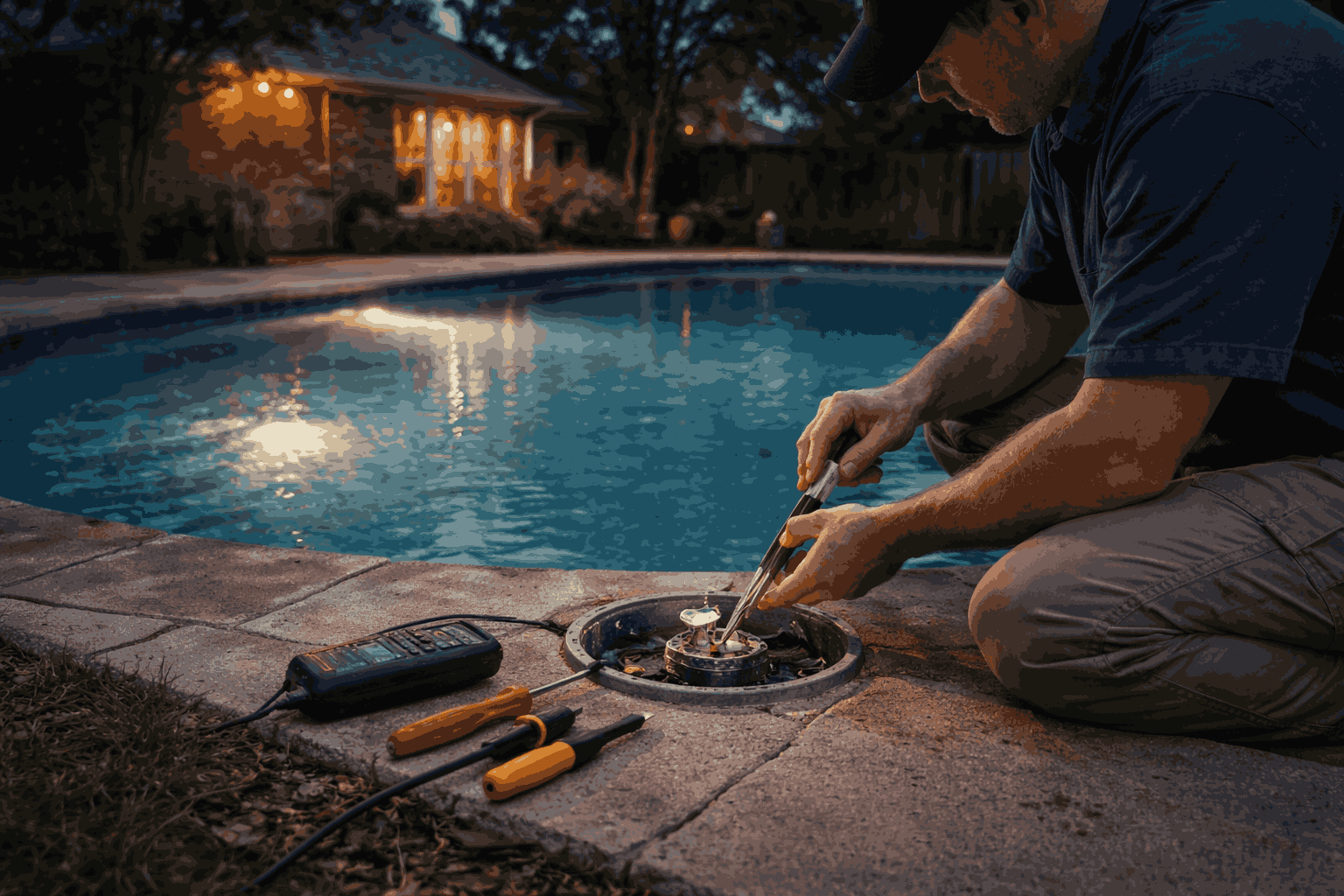
Step 1: Adjust total alkalinity
Alkalinity stabilizes pH levels, so it should always be adjusted first. Baking soda is commonly used to increase alkalinity if needed.
Step 2: Adjust pH levels
Use muriatic acid to lower pH or soda ash to raise it. After making adjustments, allow the water to circulate for several hours before testing again.
Step 3: Adjust calcium hardness
Calcium chloride can increase hardness if levels are too low. If calcium becomes excessive, partial draining and refilling may be necessary.
Step 4: Adjust cyanuric acid
Add stabilizer if levels are too low. High stabilizer levels usually require partial dilution of the pool water.
Step 5: Adjust chlorine levels
Finally, add chlorine tablets, liquid chlorine, or shock treatments to maintain proper sanitation.
Following this order helps ensure you balance pool water chemicals effectively without causing new imbalances.
How Often You Should Test Pool Water
Test chlorine and pH several times per week
Warm weather and heavy pool use can cause rapid chemical changes.
Test alkalinity weekly
Stable alkalinity keeps pH levels easier to control.
Test calcium hardness and stabilizer monthly
Monitoring these levels helps prevent scale buildup, cloudy water, and chlorine loss.
Common Pool Chemical Balancing Mistakes Homeowners Make
Many pool owners make the mistake of only checking chlorine levels while ignoring alkalinity, calcium, or stabilizer. Others add chemicals without testing first, which can actually worsen water balance.
Another common error is adjusting pH before fixing alkalinity. Since alkalinity controls pH stability, correcting it first makes balancing much easier.
Finally, testing immediately after adding chemicals can produce misleading results. Always allow the pump to circulate water before testing again.
People Also Ask
What is the correct order to balance pool chemicals?
Always adjust alkalinity first, followed by pH, calcium hardness, stabilizer, and chlorine.
How often should I test my pool water?
Chlorine and pH should be checked several times per week, while other parameters can be tested weekly or monthly.
What chemicals are needed to balance pool water?
Chlorine, pH adjusters, alkalinity increaser, stabilizer, and sometimes calcium hardness increaser.
Why does pool chemistry keep going out of balance?
Weather, sunlight, swimmer use, and water chemistry changes can all affect balance.
Can I add multiple pool chemicals at the same time?
It’s best to add chemicals separately and allow circulation before adding another product.
How long should I wait between adding pool chemicals?
Wait several hours and retest before making additional adjustments.
PoolBurg Keeps Your Pool Water Perfectly Balanced
Keeping pool chemistry balanced can feel overwhelming for many homeowners. That’s why PoolBurg technicians test and balance pool water chemicals during every service visit.
Our team uses professional-grade testing tools to ensure your pool stays safe, clear, and comfortable to swim in.
Routine service helps prevent algae growth, cloudy water, and equipment damage before they become expensive problems.
Tired of guessing with pool chemicals? PoolBurg handles testing and balancing so your pool stays clear and swim-ready all year long.