Pool pump noise is one of those things that sneaks up on you — one day it’s humming along quietly like it always has, and the next it’s grinding or rattling so loud you can hear it from the backyard fence. If you’re thinking “My pool pump is making a loud noise, what could be wrong?” you’re not alone. Most DFW pool owners have been there, especially after a big storm or a long hot summer. The truth is, that pool pump noise is almost never “just normal.” It’s your equipment waving a red flag, and catching it early can save you a ton of money and headaches.
Why Pool Pump Noise Should Never Be Ignored
Pool pumps normally produce a steady humming sound — loud or unusual noises signal a problem. Ignoring pump noise can lead to expensive equipment damage or complete pump failure. Small issues like debris or loose components can quickly escalate into motor burnout. Early diagnosis can save hundreds or even thousands in repair costs. Unusual noises often indicate mechanical wear, air leaks, or water flow problems.
Common Pool Pump Noises and What They Mean
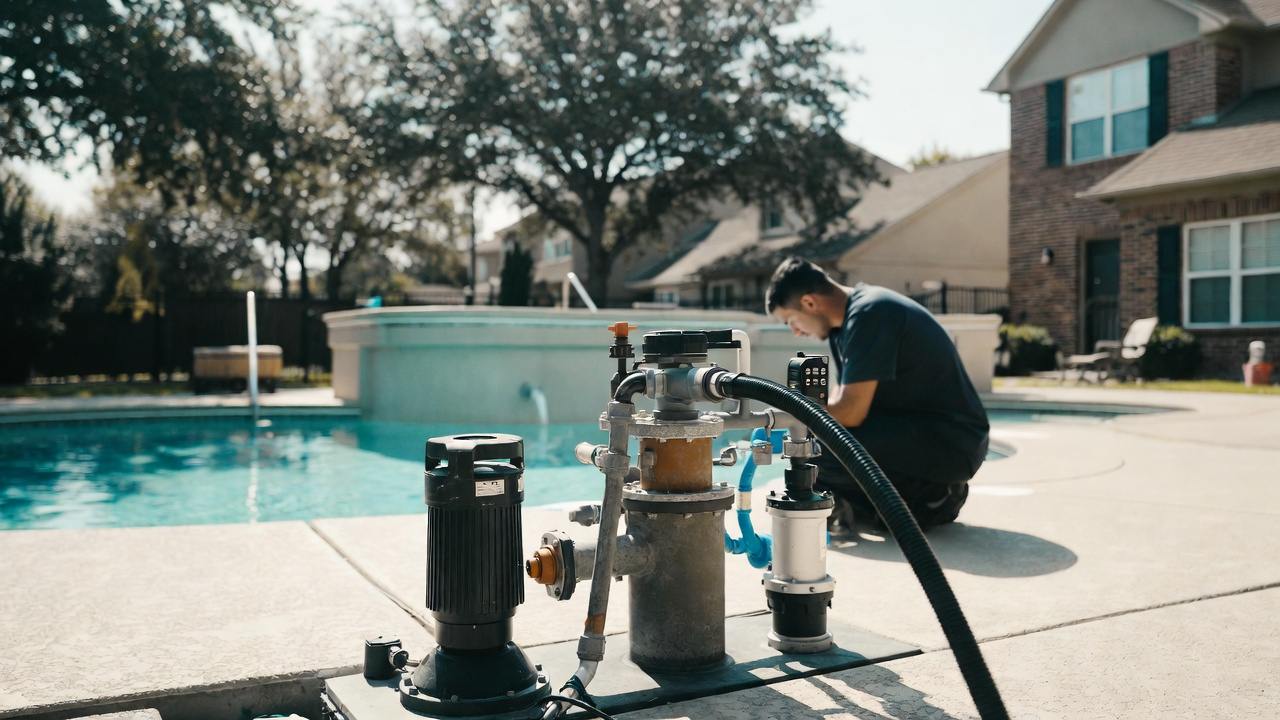
Grinding noise
Often caused by worn motor bearings. Bearings wear down over time due to heat and friction. Usually means the motor is nearing the end of its lifespan.
Screeching or high-pitched squealing
Typically indicates failing motor bearings or internal motor issues. The sound may start intermittently and become constant. Often worsens as the pump runs longer.
Rattling or vibrating noise
Loose pump components or mounting bolts can cause vibration. Debris trapped in the pump basket or impeller may also create rattling. Sometimes caused by worn internal parts.
Humming noise without water flow
Pump motor is running but the impeller may be stuck or jammed. Electrical issues or a seized motor can also cause humming.
Air Leaks and Cavitation — A Common Cause of Loud Pool Pump Noise
Air entering the suction line can cause loud gurgling or grinding sounds. Cavitation occurs when air bubbles collapse inside the pump. Common causes include loose pump lids, cracked O-rings, or low pool water levels. Air leaks reduce pump efficiency and can damage the impeller.
Debris and Blockages Inside the Pump
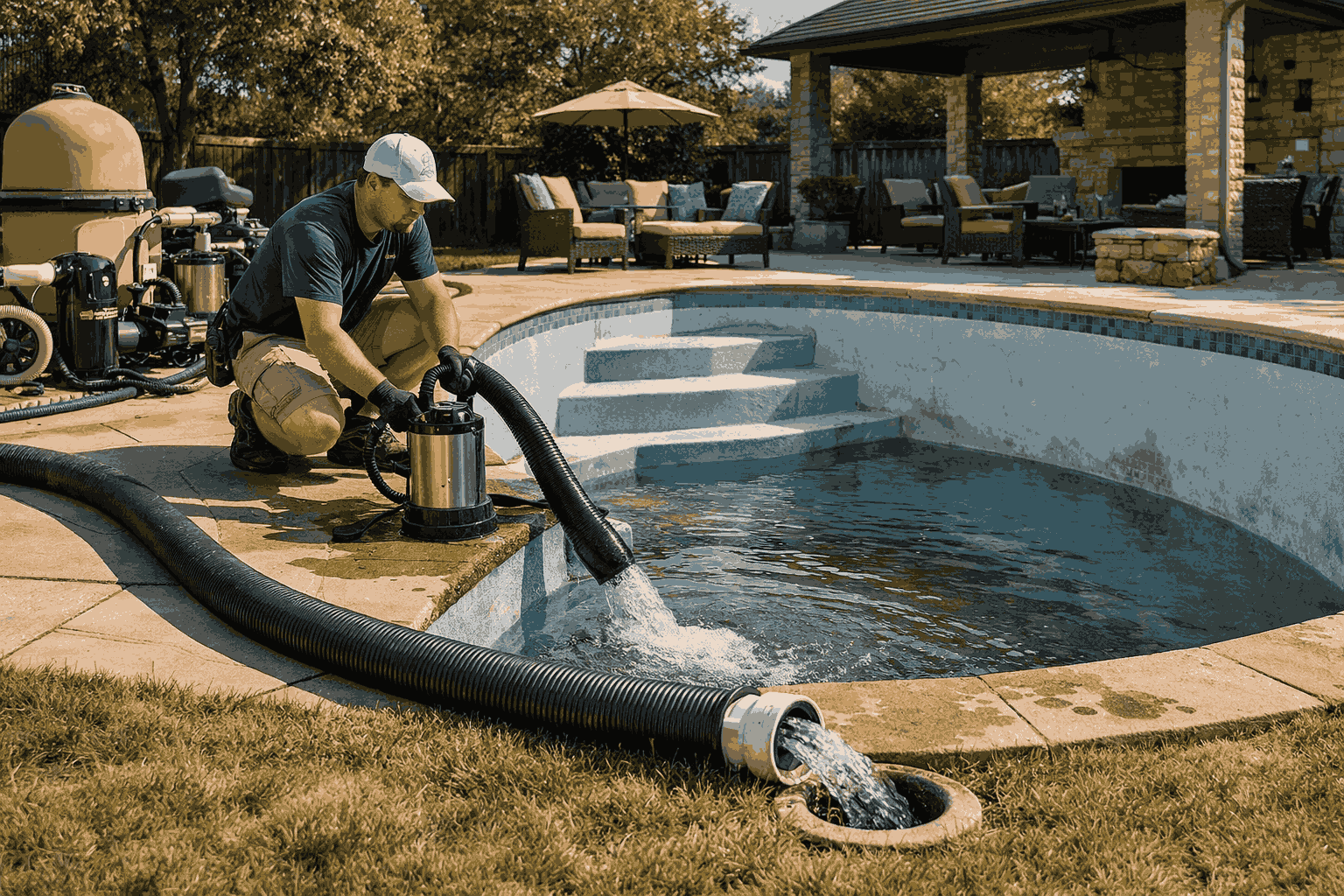

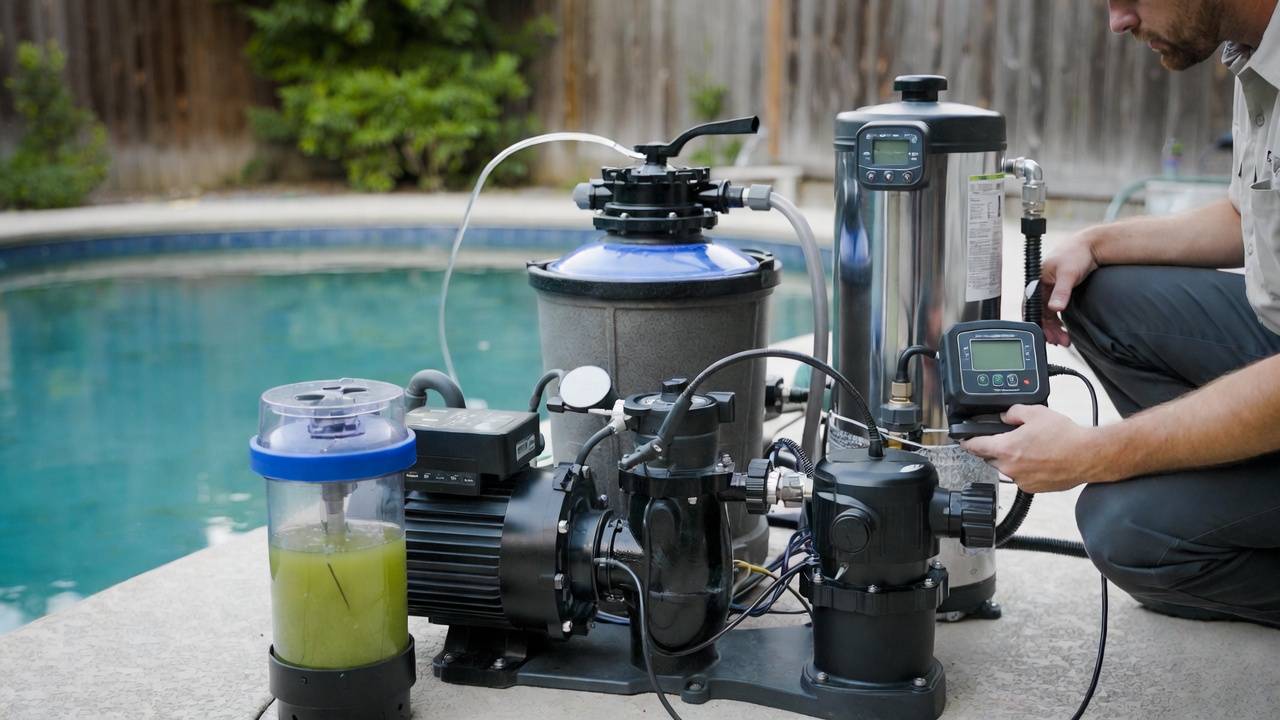
Clogged pump basket
Leaves, sticks, and debris restrict water flow and cause noise. Regular basket cleaning prevents circulation issues.
Debris stuck in the impeller
Small objects can pass the basket and jam the impeller. This often produces grinding or rattling sounds.
Blocked suction lines
Heavy debris can partially block plumbing lines. Reduced water flow causes the pump to strain and make noise.
Other Equipment Problems That Can Cause Pump Noise
Loose pump mounting or equipment pad vibration
Pumps not properly secured can vibrate loudly during operation. Concrete pads or mounting bolts may loosen over time.
Dirty or clogged pool filter
Restricted water flow forces the pump to work harder. High pressure can cause strain and increased noise levels.
Worn pump seals or internal components
Internal wear can cause friction and vibration inside the pump housing.
People Also Ask
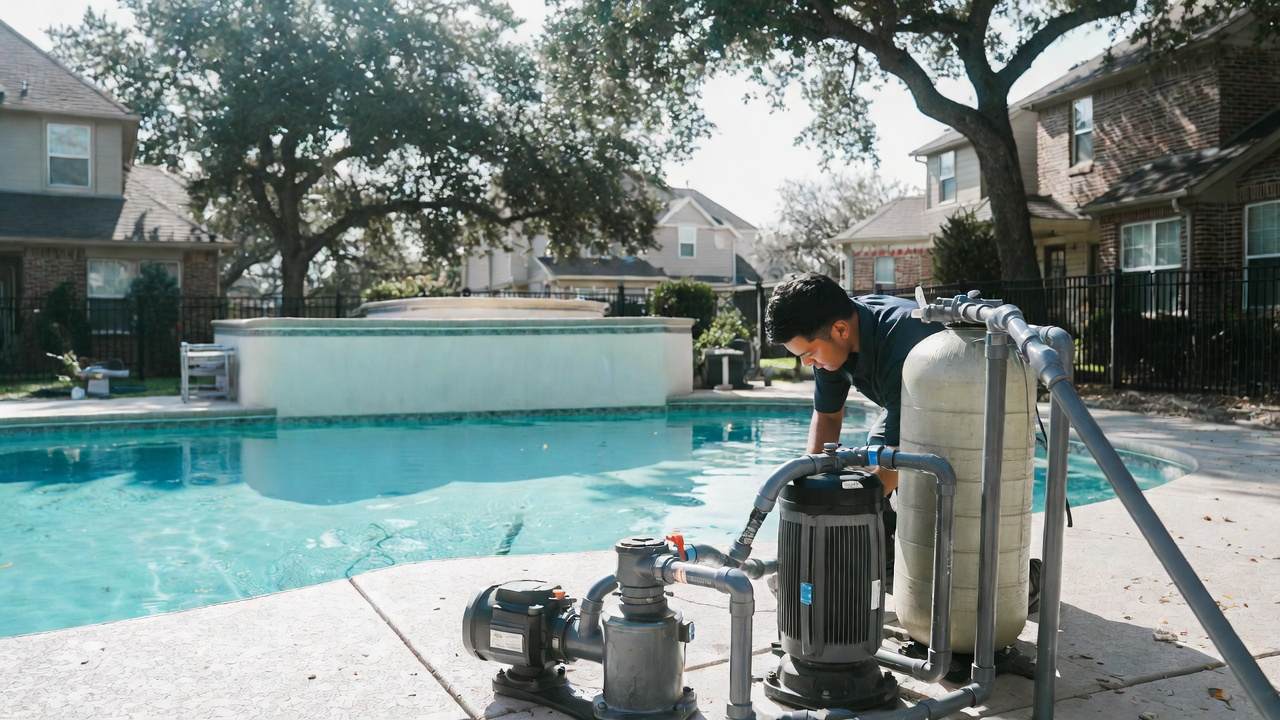
Why is my pool pump making a loud grinding noise?
Grinding usually means the motor bearings are shot or debris is caught in the impeller. In Texas heat, bearings wear faster, so if you hear it, shut the pump off and get it checked before the motor burns out completely.
Is it normal for a pool pump to make noise?
A quiet hum is normal, but anything loud, screeching, rattling, or gurgling isn’t. Most pumps run for 8–12 years before they start getting noisy — if yours is louder than usual, something’s wearing out or blocked.
Can a noisy pool pump be repaired or does it need replacement?
Many times yes — bearings, seals, or impellers can be fixed or replaced for a fraction of a new pump. But if the motor is toast or the housing is cracked, replacement is smarter long-term.
Why does my pool pump make noise when it starts?
That initial rattle or hum often points to a weak capacitor, stuck impeller, or low voltage. It’s common after storms or long off-seasons in DFW.
How long do pool pump motors usually last?
Most last 8–12 years with good maintenance. Variable-speed models often go longer because they run cooler and easier on the bearings.
What does cavitation sound like in a pool pump?
It sounds like marbles rattling around inside the pump or a loud gurgling/grinding. It happens when air gets in the lines — usually from low water or a bad O-ring — and it can destroy your impeller fast if you ignore it.
PoolBurg Diagnoses and Fixes Noisy Pool Pumps Quickly
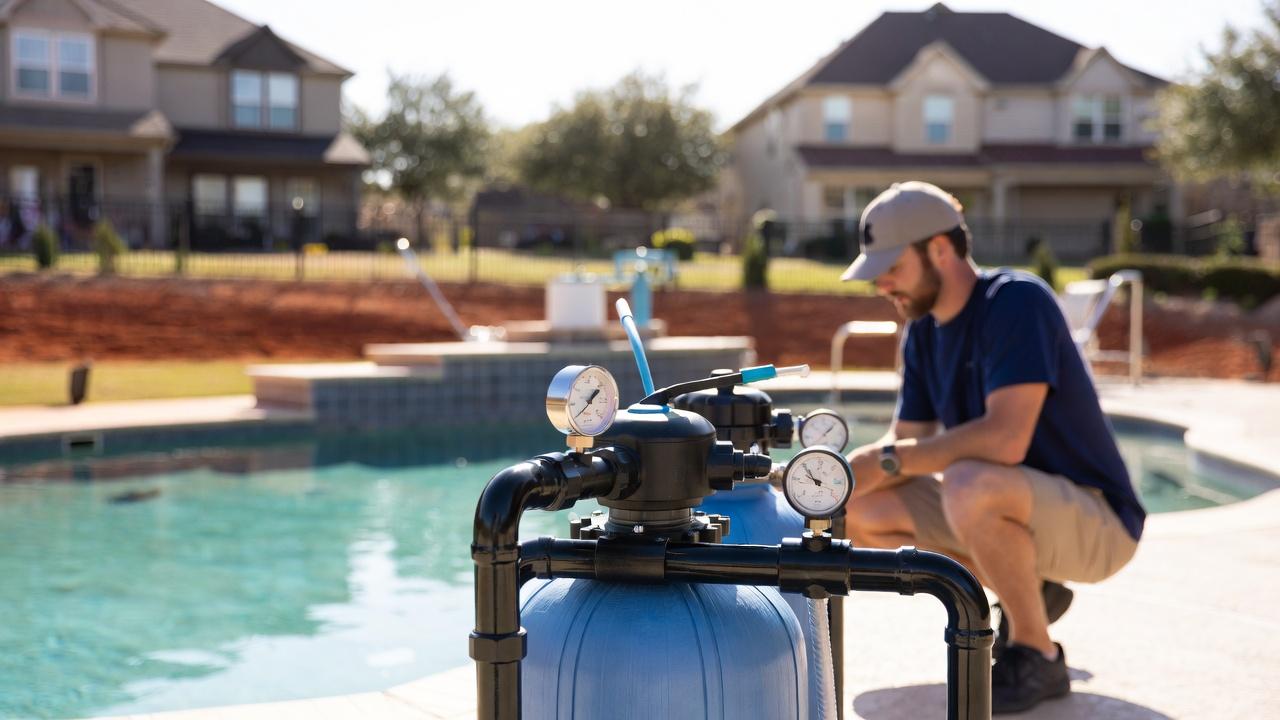
PoolBurg technicians inspect pump motors, bearings, seals, and plumbing connections. Professional diagnosis identifies whether repair or replacement is needed. Timely service prevents costly equipment damage and water circulation problems.
Hearing strange noises from your pool pump? PoolBurg can diagnose the problem and get your pool equipment running quietly again. Give us a call or shoot us a message and we’ll swing by on our next weekly service visit or handle a quick pool pump repair. Don’t wait until the noise turns into a $1,000 headache.