Normal pool filter pressure gauge reading questions usually start when the pool looks off: weak returns, cloudy water, a skimmer that barely pulls, or a gauge suddenly sitting higher than you remember. The tricky part is that there is no magic PSI number that fits every pool. A reading that is perfectly fine on one system may be a warning sign on another. PoolBurg sees this often in Garland, Mesquite, Carrollton, Farmers Branch, Lewisville and Plano, especially after pollen, storms, algae cleanup or a filter that has not been opened in a while.
The better question is not, “What number should my gauge show?” It is, “What does my clean system normally show?” Once you know that baseline, the pressure gauge becomes a simple early-warning tool instead of a little round dial of mystery.
Why There Is No Single Perfect PSI for Every Pool
Filter type
Cartridge, sand and DE filters do not all behave the same. Some clean cartridge systems sit around 10 to 15 PSI. Some sand or DE setups may run higher because of plumbing, valves, pump speed or attached equipment. That is why a generic range can only point you in the right direction. The real normal pool filter PSI is the number your pool shows after the filter has been properly cleaned and the system is running in its normal mode.
Pump size and plumbing resistance
A variable-speed pump running low may show lower pressure than the same pool at high speed. Long plumbing runs, small return lines, heaters, water features and cleaner lines can all add resistance. That does not automatically mean something is wrong. It just means your pressure reading has to be interpreted with the whole equipment pad in mind.
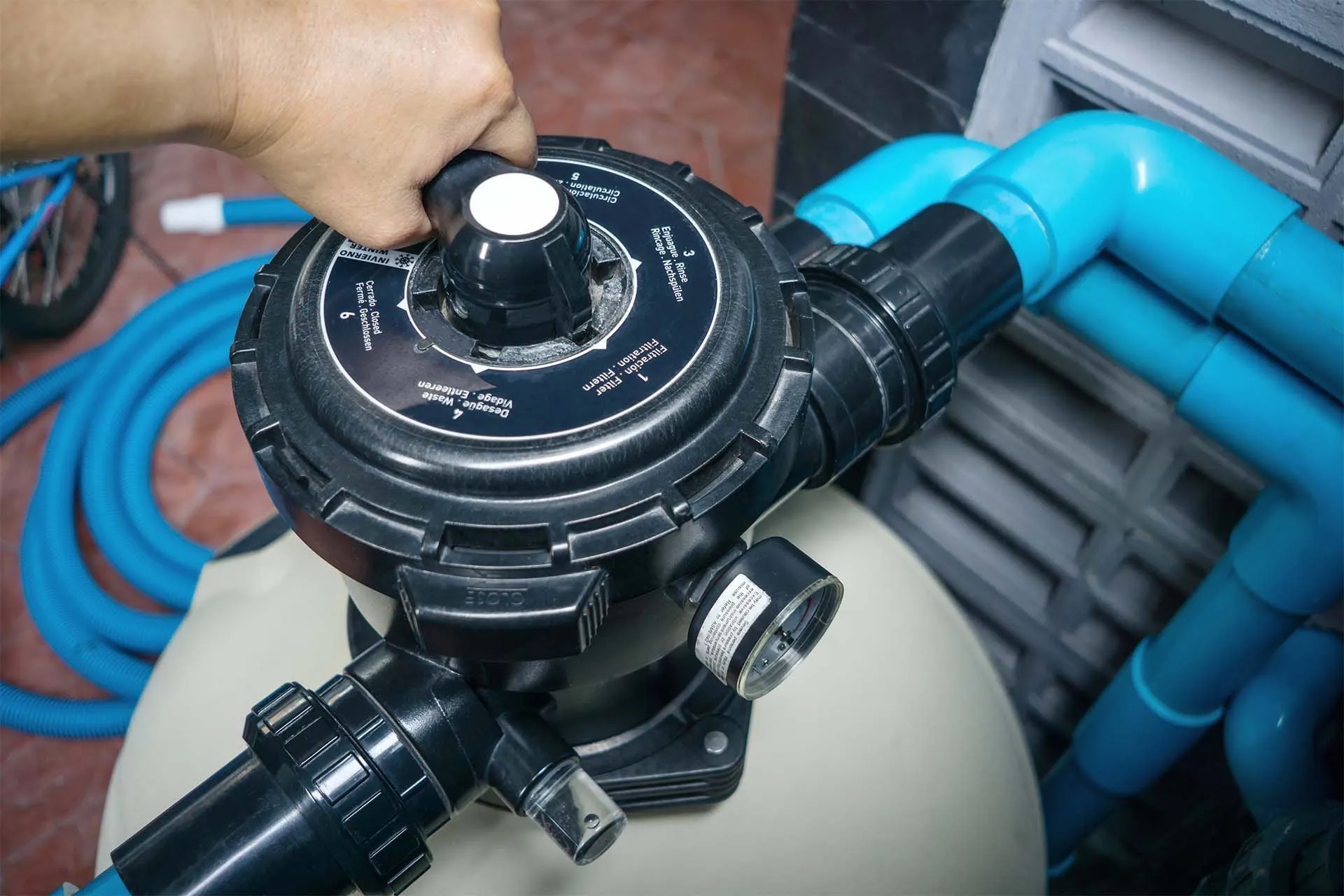
How to Establish Your Clean Baseline Reading
When to record it
The best time to record your baseline is right after a full filter cleaning or backwash, with baskets empty, water level correct and valves in their usual position. Pentair notes that filters operate at their lowest pressure right after cleaning and should be cleaned again when pressure rises about 8 to 10 PSI above the start pressure. Hayward gives similar guidance for many systems, saying a dirty filter may be the issue when pressure rises 8 to 10 PSI over clean starting pressure.
Why normal is personal to the pool
Write the number on a service log, take a photo of the gauge, or mark it on the filter tank if that makes life easier. If your clean baseline is 14 PSI, then 22 to 24 PSI may mean cleaning time. If your clean baseline is 21 PSI, the same number may not be alarming. Context matters.
What High Pool Filter Pressure Usually Means
Dirty cartridge, sand or DE issue
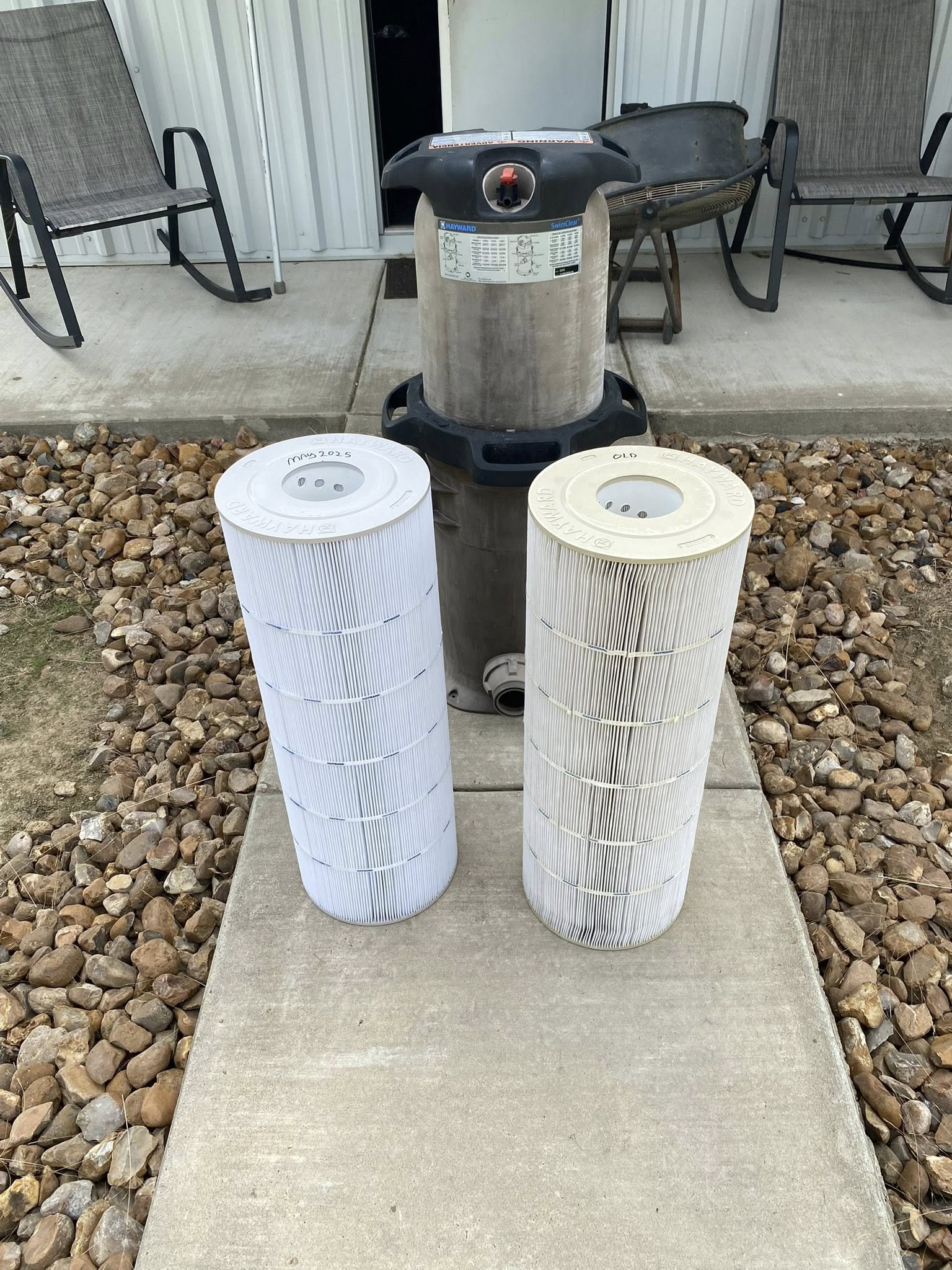
High pool filter pressure usually means water is getting through the filter too slowly on the return side. Most often, the filter media is loaded with debris, algae dust, pollen, oils or DE buildup. For cartridges, that means removing the elements and rinsing between the pleats. For sand and DE filters, it may mean backwashing, rinsing, cleaning grids or checking whether DE was added correctly. The filter pressure gauge guide from SwimmingPool.com also points homeowners back to their normal range rather than one universal number.
Return-side restriction
If pressure stays high after cleaning, look beyond the filter. A closed return valve, blocked heater bypass, plugged return eyeball or stuck valve can create back pressure. INYO Pools explains that solving high pressure often means checking for return-side restrictions instead of cleaning the same filter over and over.
What Low Pool Filter Pressure Usually Means
Air leaks, low water or suction blockage
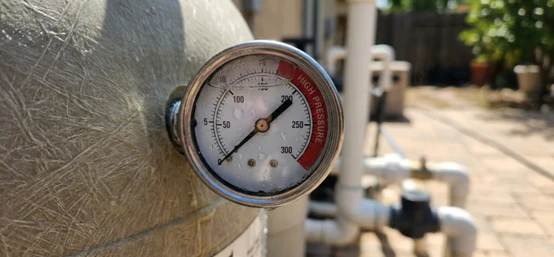
Low pool filter pressure usually points to the suction side. The pump may not be getting enough water because the pool level is low, the skimmer basket is packed, the pump basket is clogged, a valve is partly closed, or air is leaking around the pump lid or plumbing. This is why low pressure often comes with bubbles, a pump basket that will not stay full, or weak skimmer suction.
Pump-side problems
A clogged impeller, failing pump, wrong pump speed or blocked suction line can also drop pressure. If the gauge is low but the water flow is clearly weak, do not assume the filter is clean. The filter may not be receiving enough water to build pressure in the first place.
When the Gauge Itself Is Lying
Pressure gauges are cheap parts that live in sun, rain, vibration and chlorinated air. If the needle never returns to zero when the pump is off, sits frozen in one place, has water inside the face, or jumps around strangely, replace the gauge before chasing a complicated repair. A bad gauge can make a normal system look scary or make a real problem look harmless.
| Gauge Clue | Likely Direction | Smart First Step |
| 8 to 10 PSI above clean baseline | Filter is loading up | Clean cartridge or backwash/rinse as appropriate |
| High pressure with weak returns | Dirty filter or return restriction | Clean filter, then check return valves and heater bypass |
| Low pressure with weak skimmer suction | Suction-side issue | Check water level, baskets, pump lid and suction valves |
| Gauge never moves or never returns to zero | Bad gauge possible | Replace gauge before deeper troubleshooting |
What to Do After Reading the Gauge
Clean, backwash and inspect the flow path
Start with the simple stuff. Empty baskets. Confirm the water level sits around the middle of the skimmer opening. Clean or backwash the filter based on your filter type. Always turn the pump off and relieve filter pressure before opening equipment; Pentair’s Clean & Clear Plus guide says the manual air relief valve and pressure gauge help support safe operation of the equipment. If you are not comfortable opening a pressurized filter, that is not the time to prove a point. Call a pro.
Book service when the reading and symptoms disagree
If the filter has been cleaned, the gauge is believable, and flow still feels wrong, PoolBurg can pair the PSI reading with real equipment checks. We look at baskets, filter condition, pump prime, valve positions, suction leaks, heater restrictions and return flow so you are not guessing from one number. And because good circulation supports sanitation, keep testing chemistry too; the CDC’s home pool water treatment and testing guidance is still part of keeping water safe and clear.
People Also Ask
What is normal pool filter pressure?
Normal pool filter pressure is whatever your system reads right after a proper cleaning, with normal pump speed and valve positions. Many residential pools land somewhere between 10 and 25 PSI, but your clean baseline matters more than a generic number.
What pool filter PSI is too high?
A common rule is to clean or backwash when pressure rises about 8 to 10 PSI above the clean baseline. If the gauge is near 30 PSI or flow is poor, stop guessing and inspect the system.
What pool filter PSI is too low?
Low PSI often means the pump is not getting enough water. Check water level, skimmer basket, pump basket, pump lid seal, suction valves and possible air leaks.
Can a bad pressure gauge give false readings?
Yes. A stuck, waterlogged or zero-reading gauge can mislead you. Replace the gauge if it does not return to zero when the pump is off.
Does a dirty filter always raise pressure?
Usually, but not always. If the pump has a suction issue, the gauge may stay low because water is not reaching the filter properly.
When should I clean the cartridge based on PSI?
Clean the cartridge when pressure rises about 8 to 10 PSI over the clean baseline, or sooner after storms, algae cleanup, heavy pollen or weak flow.
PoolBurg CTA
Not sure whether your pressure gauge is telling the truth or just making the pool feel more confusing? PoolBurg can help with a filter-and-flow inspection across Garland, Mesquite, Carrollton, Farmers Branch, Lewisville, Plano and nearby DFW areas. We check the gauge, clean baseline, filter condition, pump suction, valve positions and water flow together, so the diagnosis actually makes sense. Contact PoolBurg to schedule service or ask about a weekly plan that keeps baskets, filter pressure and chemistry under control.