When it comes to maintaining a pristine oasis in Frisco or Plano, we often talk about “liquid rock” hard water and the 105-degree summer sun. But there is a silent, much more volatile side to pool ownership: the substances we use to keep that water clear. Pool chemical safety is not just a boring list of rules; it is a critical skill for every homeowner.
The truth is, the chemicals sitting in your garage right now are essentially tiny, unstable energy cells. If you aren’t careful about storing pool chemicals correctly—especially during a DFW heatwave where garage temperatures can skyrocket to 140°F—you are sitting on a genuine safety hazard. This guide is your “unvarnished truth” on how to handle these powerhouses without ending up in the emergency room.
Pool Chemicals Are Powerful — Treat Them With Respect
We use high-grade sanitizers and acids because DFW’s mineral-heavy water demands it. According to the WQA, hard water scale and high pH levels are relentless in Texas, and fighting them requires potent chemistry. However, many homeowners forget that these products are designed to be “oxidizers” and “corrosives.” This means they are looking to react with something.
If they react with each other—or your skin—the results are immediate and often permanent. Pool chemical safety begins with acknowledging that these are industrial-strength tools that belong nowhere near your family’s living space.
The Most Dangerous Mistakes Most Homeowners Make
In my 35 years in the North Texas pool industry, I’ve seen some close calls. Here are the “never” rules you must follow:
- NEVER Mix Chemicals: This is the #1 rule of pool chemical safety. Mixing different types of chlorine (like tablets and shock) or, worse, mixing chlorine and acid, creates a cloud of toxic gas that can overcome you in seconds. The CDC confirm that chemical mixing errors are the leading cause of pool-related injuries in the U.S.
- NEVER Store Chlorine Near Acid: Even the fumes from a leaky muriatic acid bottle can react with chlorine tablets across the room. This can lead to spontaneous combustion or a fire that standard extinguishers struggle to put out.
- NEVER Add Water to Chemicals: Always add the chemical to a bucket of water—never pour water into a pile of chemicals. Doing it backward can cause a “volcanic” eruption of caustic liquid into your face.
- NEVER Store in Direct Sun: Texas garages are ovens. Storing pool chemicals in 140°F heat doesn’t just make them dangerous; it kills their potency. In DFW, liquid chlorine can lose 50% of its strength in just a few weeks if stored in a hot shed.
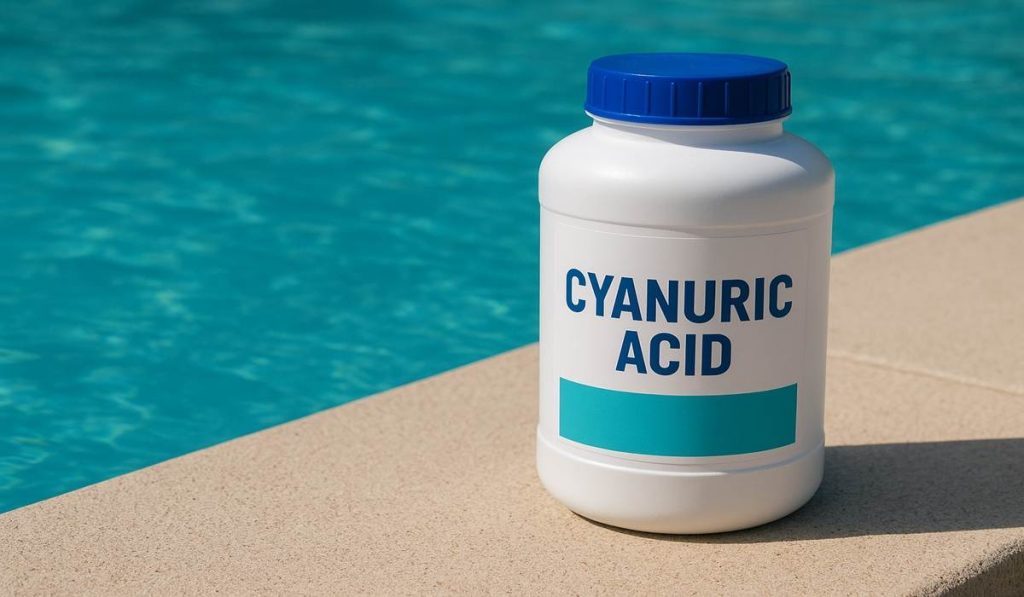
Proper Storage Guidelines for North Texas
If you want to master storing pool chemicals, you need a “Guardian” mindset. Your storage area should be:
- Cool, Dry, and Ventilated: Use an outdoor cabinet or a section of the garage that is away from your HVAC intake. Fumes can actually corrode your home’s copper wiring and ductwork if they get pulled into the vents.
- Off the Ground: Store buckets on pallets or shelves. This prevents concrete moisture from seeping into bags and causing them to clump or react.
- Locked and Labeled: Keep everything in its original manufacturer container. If a label falls off, don’t guess—dispose of it safely at a local hazardous waste site.
- Separated by Type: Use a “vertical rule”—never store liquid chemicals (which can leak) on a shelf above dry chemicals.
Handling Safety: Protecting Your Skin and Eyes
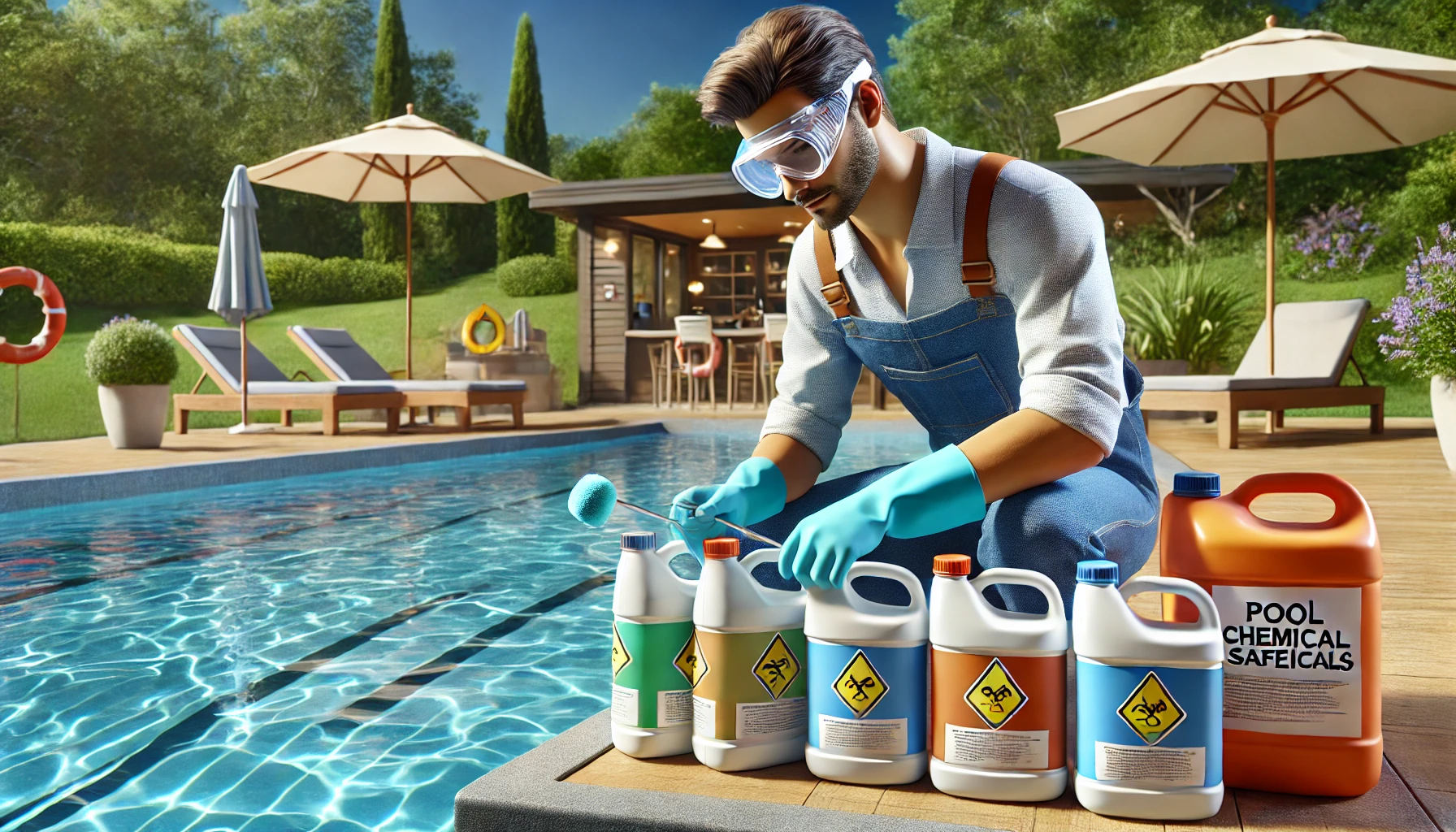
Before you even crack a lid, you need the right gear. Pool chemical safety requires proper PPE (Personal Protective Equipment). At the very least, wear chemical-resistant gloves and safety goggles. Even a tiny splash of DFW-grade muriatic acid can cause severe burns.
If you are dealing with chlorine sensitivity or noticing red eyes, remember that the problem is often “chloramines” (combined chlorine) which are created when sanitizer is overworked. Always handle one chemical at a time, and wash your hands thoroughly the moment you are done.
Disposing of Expired Chemicals in DFW
Don’t ever pour old chemicals down the drain or into a storm sewer. It’s illegal in Frisco and Plano and wreaks havoc on our local ecosystems. Instead, use our local resources:
- Frisco: Take items to the Environmental Collection Center at 6616 Walnut St.
- McKinney: Schedule a pickup through the city’s Household Hazardous Waste (HHW) program.
Why Professional Service Eliminates Most Risk
At PoolBurg, we take the danger out of your backyard. When you sign up for our weekly pool service, we bring the chemicals with us. You don’t have to buy 100 lbs of shock, you don’t have to haul heavy bottles, and—most importantly—you don’t have a “mini-lab” of dangerous substances sitting in your hot Texas garage. Our technicians are trained in the latest pool chemical safety protocols, ensuring your water stays balanced without the risk to your family.

People Also Ask
Is it safe to store pool chemicals in a Texas garage?
Only if the temperature stays below 95°F and the area is highly ventilated. In North Texas, a dedicated outdoor, shaded, and locked cabinet is usually safer.
Do pool chemicals explode in the heat?
They won’t typically “explode” like dynamite, but heat causes them to off-gas and expand. If a container is pressurized and fails, it can spray caustic chemicals everywhere.
How long do pool chemicals last?
Liquid chlorine has a shelf life of only a few weeks in the summer. Dry chemicals can last up to 5 years if kept perfectly dry and cool.
Eliminate Chemical Handling Hassle — Let PoolBurg Manage It
Overdue for a water check? We handle the heavy chemistry while you stay safe and relax.