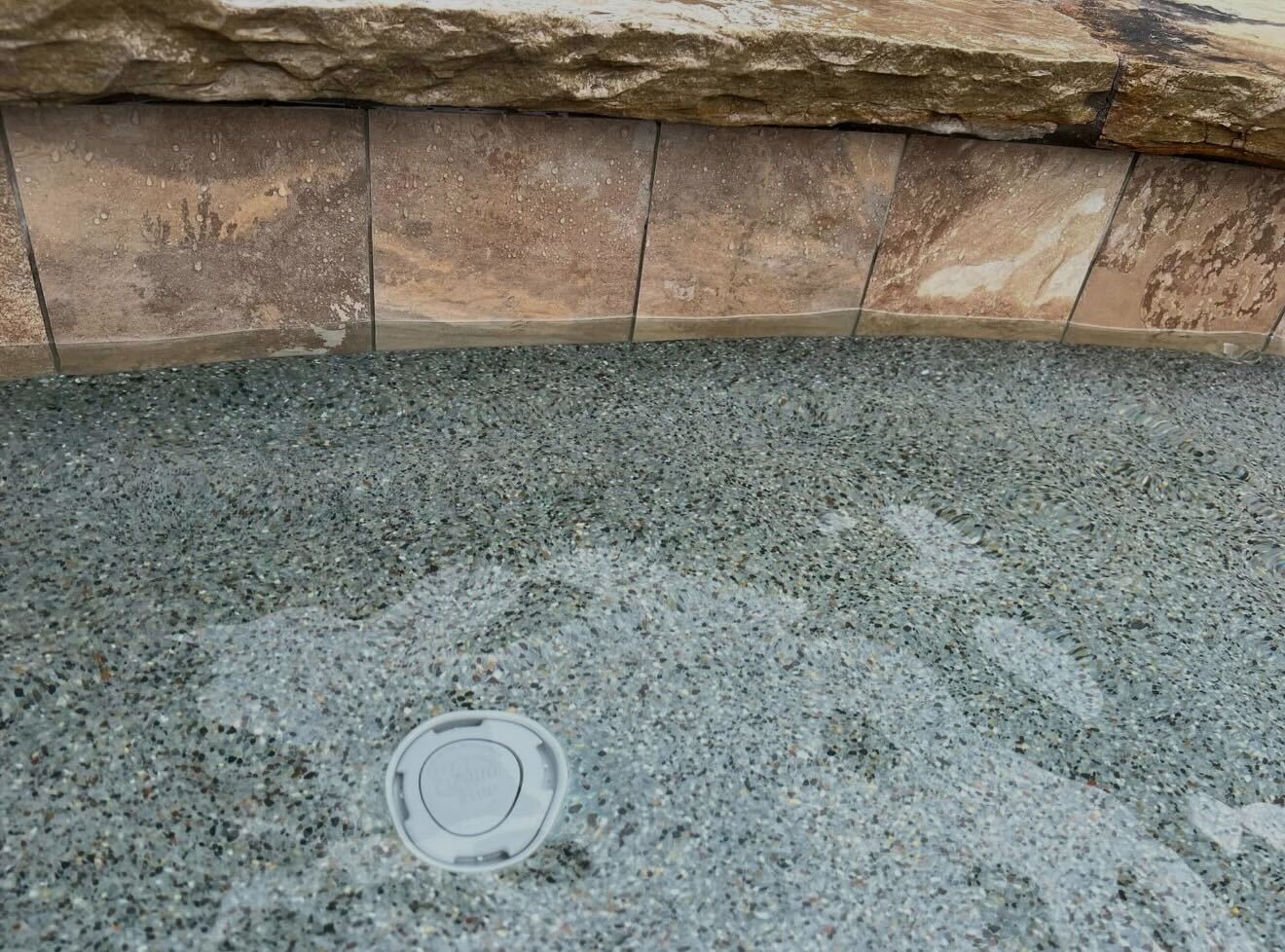
Even when your equipment is functioning correctly and the water appears clear, pool plaster stains can give the impression that a pool is poorly maintained. Identifying the root cause is difficult because different types of discoloration—such as brown spots on steps, gray streaks on walls, white crusty deposits near tiles, or small black dots in deep areas—each indicate distinct problems. Attempting to fix these issues with random stain removers often leads to unnecessary expenses without addressing the underlying source.
Why Pool Plaster Gets Stained
Most pool plaster stains start when something sits on the surface, falls out of the water, or grows into the finish. Leaves, acorns, fertilizer granules, metal in fill water, high calcium, algae, and aging plaster can all leave marks. The Reddit discussion attached to this blog is a good example: homeowners were looking at small dark stains and debating whether they were metal, organic debris, rebar, fertilizer, or something sitting too close to the surface.
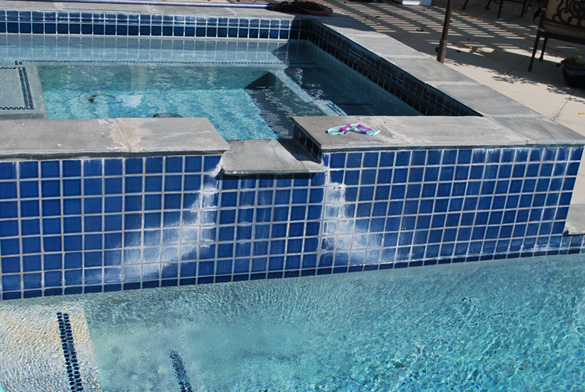
Color helps, but it is not the whole diagnosis. Brown and green stains on pool plaster often point toward organic material. Rusty orange or teal marks can point toward pool metal stains from iron or copper. White, crusty deposits are usually pool scale stains. Black spots may be black algae, but they can also be small surface defects or contaminants trapped in the finish.
Common Types of Pool Plaster Stains
Here is the simple field guide. Organic stains usually come from leaves, berries, acorns, dirt, or storm debris. They often show up where debris sat for a while and may lighten after brushing and proper chlorine treatment. Metal stains can come from irrigation overspray, well water, copper-based algaecide, heater corrosion, or metal objects falling into the pool. Scale stains usually form when calcium, pH, alkalinity, and temperature push minerals out of solution.
That last part matters in North Texas. Heat and evaporation can concentrate minerals, and high pH can make pool surface stains worse. Pentair’s pool water guide explains that high pH can contribute to scaling, while water that is too soft can damage plaster and metal. PoolBurg also covers this in our pool calcium hardness guide.
Organic Stains vs Metal Stains
A helpful clue is how the stain reacts. Organic stains on pool plaster may fade after good brushing and sanitizer. Metal stains often need a different approach. Homeowners sometimes test small spots with vitamin C because ascorbic acid can affect certain iron stains, but that little test does not replace a full water test. It only gives a clue.
If the same stain keeps coming back, look beyond the stain itself. Test for iron, copper, pH, alkalinity, calcium hardness, and sanitizer. The CDC home pool water treatment guidance reminds pool owners that chlorine and pH need routine testing because they protect swimmers and help keep water under control. For comfort and stain prevention, PoolBurg’s swimming pool pH levels guide is also a smart internal read.
Scale Stains and Hard Water
Pool scale stains are usually white, gray, or rough to the touch. They can appear on plaster, tile, spillways, heaters, and salt cells. Orenda’s Langelier Saturation Index guide explains that water can become scale-forming when it is oversaturated with calcium carbonate. Taylor Technologies’ calcium hardness guidance also notes that high calcium can lead to cloudy water and grayish-white scale on surfaces, piping, and equipment.
This is why pool plaster stains are not just cosmetic. A stain may be the first visible warning that the water has been out of balance for weeks. In Plano, Southlake, Grapevine, Keller, Garland, Mesquite, and Wylie, hard fill water, heat, leaves, acorns, and storm debris can all speed the problem up.

Can Pool Plaster Stains Be Removed?
Sometimes, yes. Light organic stains may improve with brushing, filtration, and correct chlorine. Some pool metal stains may need a metal treatment or sequestrant. Scale removal takes more care because aggressive acid treatments can damage plaster if they are done blindly. PoolBurg’s acid wash service is meant for tougher stains, discoloration, and mineral buildup, but the stain type should be identified first.
If the plaster is old, rough, etched, or blotchy everywhere, stain remover may only improve the appearance temporarily. In that case, pool resurfacing may be the better long-term conversation.
How to Prevent Pool Plaster Stains
The best prevention is boring, steady maintenance: keep pH balanced, control calcium hardness, brush the pool, remove leaves quickly, maintain sanitizer, and test metals if stains keep returning. After storms, do not let debris sit on the floor for days. If fertilizer, nails, toys, or metal tools fall in, remove them quickly.
Also, do not treat every spot the same way. Chlorine may help an organic stain but do almost nothing for iron. Acid may remove some scale but can harm plaster if overused. That is why PoolBurg looks for the cause before throwing chemicals at the stain.
People Also Ask
What causes pool plaster stains?
Pool plaster stains are commonly caused by organic debris, metals, calcium scale, algae, chemical imbalance, or aging plaster. The stain color and texture usually give the first clue.
How do I remove brown stains from pool plaster?
Brown stains may be organic or metal-based. Brushing and chlorine may help organic stains, while metal stains often need testing and a targeted treatment.
Are pool stains algae or metal?
They can be either. Black or green spots may be algae, while orange, brown, teal, or blue-green marks may point to metals. Testing matters before treatment.
Can high pH stain pool plaster?
High pH can encourage calcium scale, especially when calcium hardness and alkalinity are also high. That scale can look like white or gray pool surface stains.
Will brushing remove pool stains?
Brushing can help with fresh organic stains and algae, but it will not remove every metal stain, scale deposit, or damaged plaster mark.
When does stained plaster need resurfacing?
If staining is widespread, rough, etched, or tied to old worn plaster, resurfacing may make more sense than repeated stain treatments.
PoolBurg Can Find the Stain Before You Waste Money on Chemicals
Pool plaster stains are easier to fix when the cause is clear. PoolBurg can inspect the stain, test the water, check for metals, review calcium and pH, and explain whether you are dealing with organic staining, pool metal stains, pool scale stains, algae, or aging plaster. If your DFW pool has stains on pool plaster that keep coming back, contact PoolBurg before buying another bottle that may not match the problem.