Swimming pool pH levels are one of those quiet little numbers that can make your pool feel amazing or make the whole backyard experience annoying. The water may look decent from the patio, but if the pH is drifting too high or too low, chlorine starts acting differently, swimmers feel it on their skin and eyes, and equipment can slowly take a beating.
For homeowners in Frisco, McKinney, Allen, Prosper, Southlake, and Las Colinas, swimming pool pH levels can be extra stubborn because hard fill water, long summer heat, salt systems, rain, and heavy swimming all keep nudging the water out of balance.
What Pool pH Means
pH simply tells you whether pool water is acidic, neutral, or basic. A lower number means the water is more acidic. A higher number means it is more basic. That sounds like science class, sure, but in a real pool it shows up as comfort, clarity, chlorine performance, and long-term equipment protection.
When swimming pool pH levels are balanced, chlorine works better, water feels smoother, and the pool is easier to maintain. When pH is ignored, you can end up chasing cloudy water, scaling, irritation, stains, and chemical swings that never seem to settle.If your pool keeps changing even after treatment, it may be tied to a bigger pool chemical maintenance pattern rather than one bad test.
What Is the Ideal Swimming Pool pH Level?
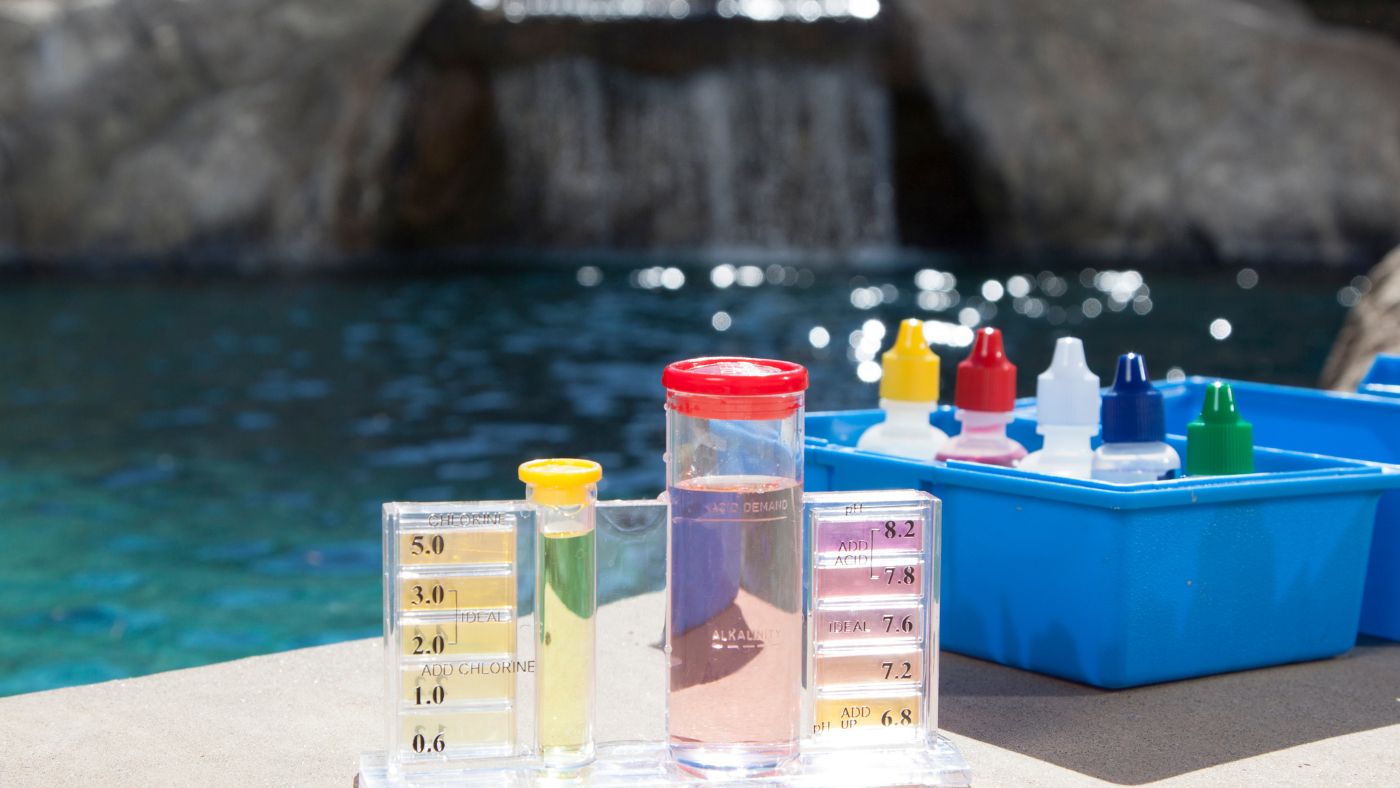
Most residential pools are typically kept around the 7.2 to 7.8 range, with many pros aiming near the middle because it gives chlorine a better working environment while keeping the water comfortable. The CDC also notes that pH affects how well chlorine kills germs, which is why “close enough” is not always close enough when people are swimming often.
Good pool pH balance also depends on alkalinity. Think of alkalinity as the buffer that helps prevent wild pH swings. If alkalinity is off, swimming pool pH levels may bounce up and down even after you add the right chemical. This is one reason homeowners sometimes add pH reducer again and again without fixing the actual pattern.
Signs Your Pool pH Is Too High
High pool pH is very common in North Texas, especially with hard water and salt systems. When pH climbs too high, chlorine becomes less effective, water may turn hazy, and calcium scale can start forming on tile, spillways, heaters, and salt cells.
Common signs of high pool pH include:
- Cloudy or dull-looking water
- White scale on tile or waterline areas
- Itchy skin after swimming
- Burning eyes even when chlorine is present
- Weak chlorine performance
- White flakes in saltwater pools
- Scale buildup inside equipment
Salt pool owners should pay extra attention because high pH can feed scale inside the salt cell. If that sounds familiar, read more about saltwater pool pH problems before the cell starts throwing errors.
Signs Your Pool pH Is Too Low
Low pool pH is less common in some DFW pools, but when it happens, it can be rough. Acidic water may feel sharp, irritate eyes and skin, and increase the risk of corrosion on metal parts. It can also contribute to staining and surface damage if it hangs around too long.
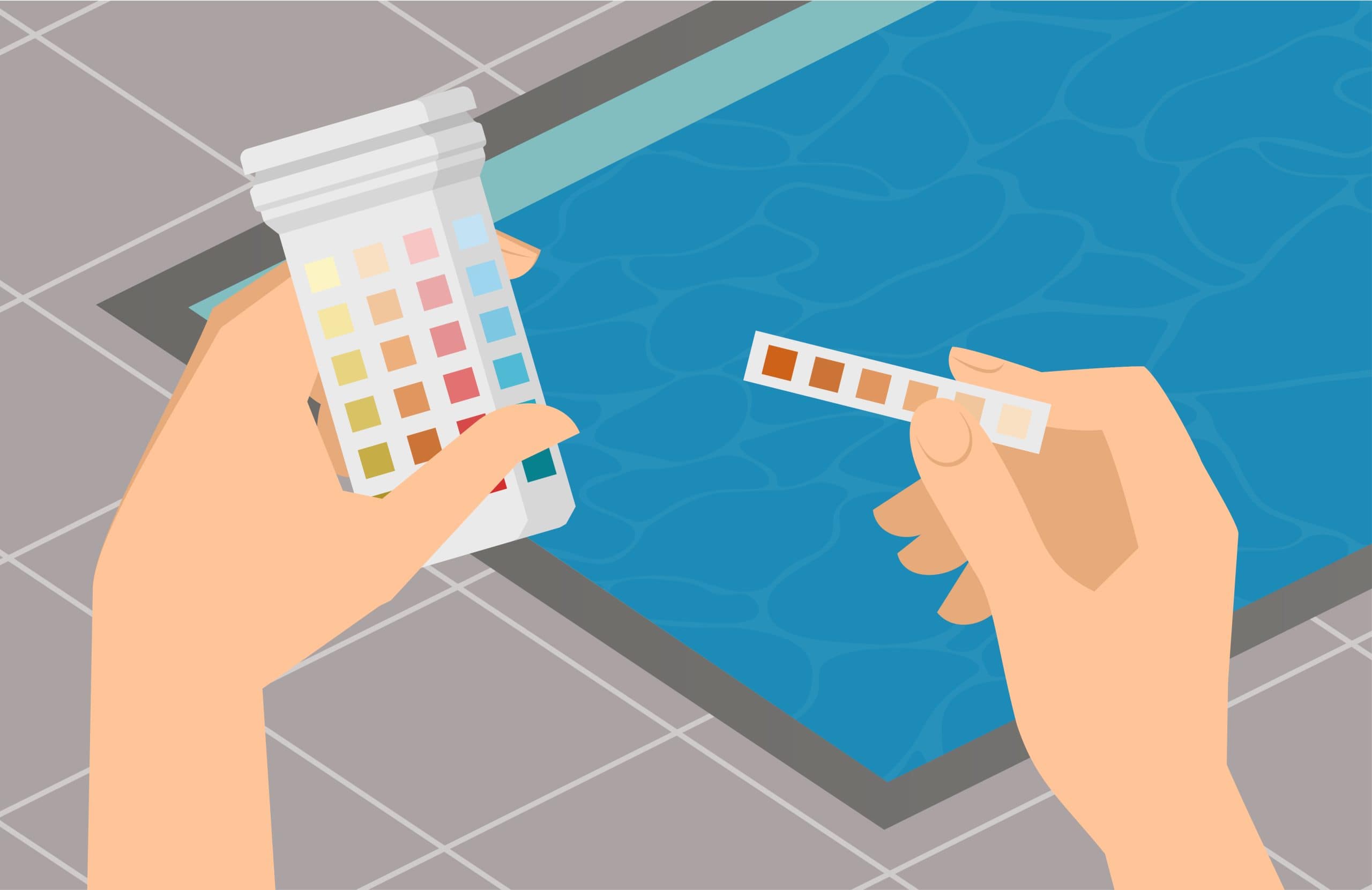
Signs of low pool pH may include:
- Eye and skin irritation
- Metal staining
- Corrosion on ladders, handrails, heaters, or fixtures
- Etching on plaster surfaces
- Water that feels harsh instead of smooth
Low pool pH is not something to ignore because damage can sneak up slowly. By the time it looks obvious, the water may have been aggressive for a while.
Why Pool pH Keeps Changing
Swimming pool pH levels do not stay perfect by magic. Rain, fill water, chemicals, salt chlorine generators, swimmers, leaves, dust, and even aeration from fountains or spillovers can all move the number.
Salt systems are a big one. They are convenient, but saltwater pools often trend upward in pH. Water features can also raise pH because aeration drives carbon dioxide out of the water. Add in Texas heat, evaporation, and hard fill water, and suddenly your pool pH balance becomes a weekly job, not a once-a-month guess.
This is why a professional pool water test can save you from chasing the wrong number.
How to Balance Swimming Pool pH Safely
To balance swimming pool pH, test first. Do not add chemicals because the water “looks like it needs something.” Test pH, alkalinity, chlorine, stabilizer, and calcium hardness so you know what is really happening.
If pH is high, a pool professional may use a pH reducer such as muriatic acid. If pH is low, the water may need a pH increaser. Either way, chemicals should be measured carefully, added with the pump running, and allowed to circulate before retesting.
A simple safe routine looks like this:
- Test the water accurately.
- Check alkalinity before making big pH changes.
- Add the correct product in the right amount.
- Circulate the pool.
- Retest before adding more.
Never mix pool chemicals together, and avoid random chemical dumping. The Poison Help safety guidance on pool chemicals is worth reading if you store or handle products at home.
People Also Ask
How do you balance swimming pool pH levels?
You balance swimming pool pH levels by testing first, adjusting alkalinity if needed, adding the correct pH increaser or reducer, circulating the water, and retesting before making another adjustment.
What is the correct pH for a swimming pool?
A common target range is about 7.2 to 7.8. Many pool pros prefer the middle of that range because it supports chlorine performance and swimmer comfort.
What happens if pool pH is too high?
High pool pH can make chlorine feel weak, cause cloudy water, encourage scale, irritate swimmers, and create problems for salt cells and heaters.
What happens if pool pH is too low?
Low pool pH can make water corrosive, irritate skin and eyes, damage metal parts, stain surfaces, and etch plaster.
Can bad pH cause cloudy water?
Yes. Bad pH can reduce chlorine efficiency and contribute to scale or imbalance, which often shows up as cloudy water.
Let PoolBurg Stop the pH Guessing Game
If your swimming pool pH levels keep swinging, PoolBurg can help you find the reason instead of just throwing more chemicals at the water. We inspect the chemistry pattern, equipment, salt system, and service routine so your pool stays clearer, more comfortable, and easier to enjoy.
For pool owners in Frisco, McKinney, Allen, Prosper, Southlake, Las Colinas, and nearby DFW areas, PoolBurg can help you balance swimming pool pH properly and keep the water from turning into a weekly headache. When you are ready, contact PoolBurg and we will help get the water back under control.