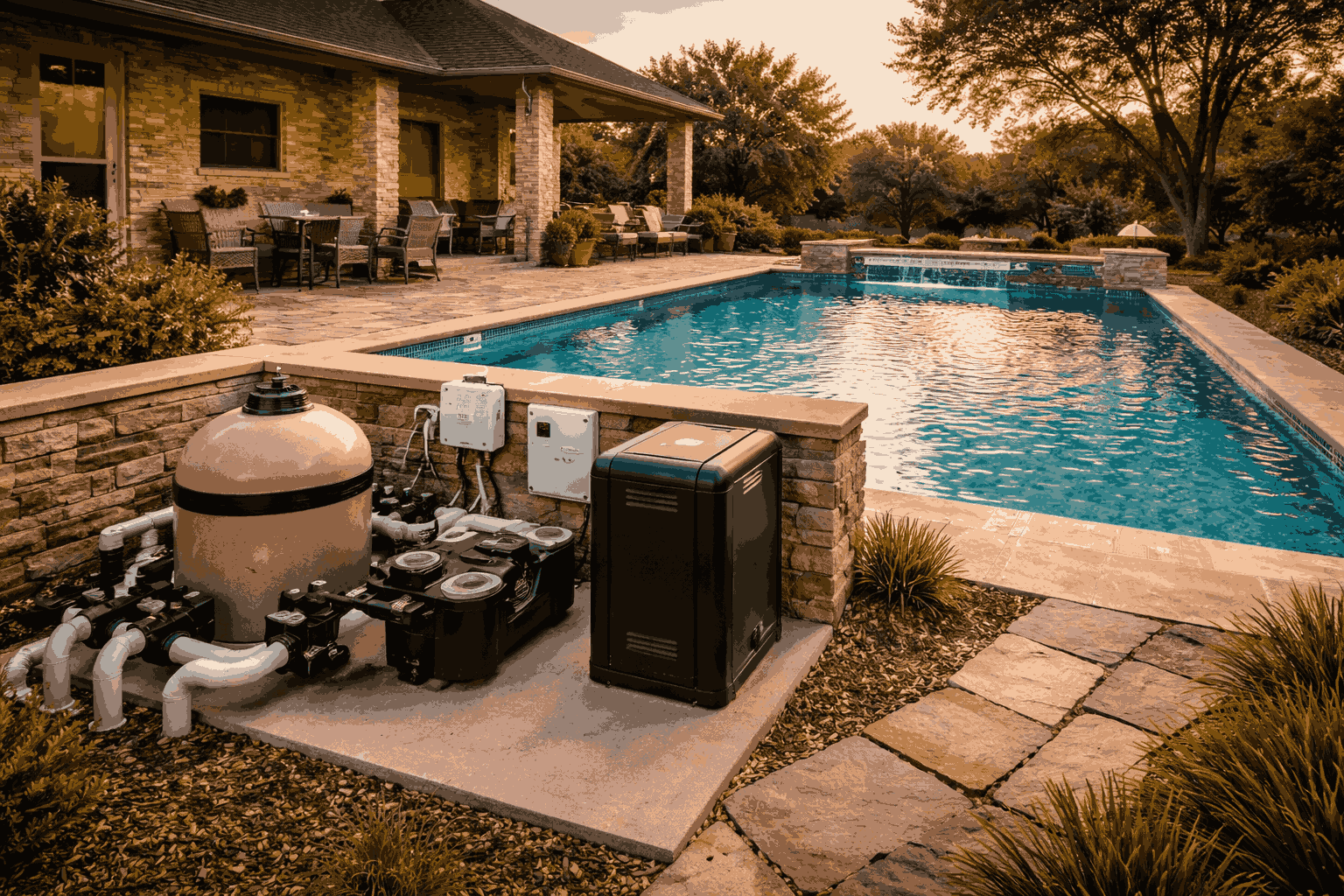
If your pool pump not working has you staring at the equipment pad wondering what happened, relax for a second. Yeah, a dead pump in a Texas summer is basically an emergency — your pool can go green in 48 hours without circulation. But plenty of pump problems come down to something simple you can check right now without spending a dime. This pool pump troubleshooting guide walks you from the easiest fix to the “okay, call PoolBurg” scenarios.
Pool Pump Won’t Turn On At All
When your pool pump won’t turn on and there’s zero sign of life, start with power. Check your breaker panel — if the pool pump breaker tripped, reset it once. If it trips again immediately, stop. That’s a short circuit or ground fault and you need professional electrical repair. The Consumer Product Safety Commission says any recurring electrical tripping near pool equipment needs a licensed tech. Also check the GFCI outlet near your equipment pad — a tripped GFCI is one of the most common reasons for a pool pump not working, and the fix is one button press.
Next, verify the disconnect switch near the pad is flipped on — it gets bumped during yard work more than you’d think. Then check your timer or automation system — power outages reset schedules constantly in DFW. Our pump running time guide covers how to set an optimal schedule if yours got wiped.
If the motor hums but won’t spin, the start capacitor is dead. That’s a $50 to $150 repair. Don’t try hand-spinning the motor — it’s dangerous. Our pool pump humming guide explains this in detail. And if there’s no movement at all, the housing is hot, or you smell burning — the motor is seized. That means pump replacement, typically $200 to $600.
Pool Pump Runs But Won’t Move Water
Pump is spinning but nothing’s flowing? That’s a priming issue. First, make sure the water level is at least halfway up the skimmer — too low and the pump sucks air. Then check the pump lid O-ring. If it’s cracked or dried out, air gets in and kills suction. The Pool & Hot Tub Alliance notes that keeping seals maintained is one of the simplest ways to extend pump life. An O-ring is a $5 to $15 part.
Clean both the skimmer basket and pump strainer basket — a clogged basket is the number one reason pumps won’t prime. If you see air bubbles in the pump basket while it runs, there’s a suction-side air leak, usually at a valve or plumbing connection. That needs professional diagnosis. Also check the impeller for jammed debris — power off first, then reach in past the basket and clear it.
Strange Pump Noises and What They Mean

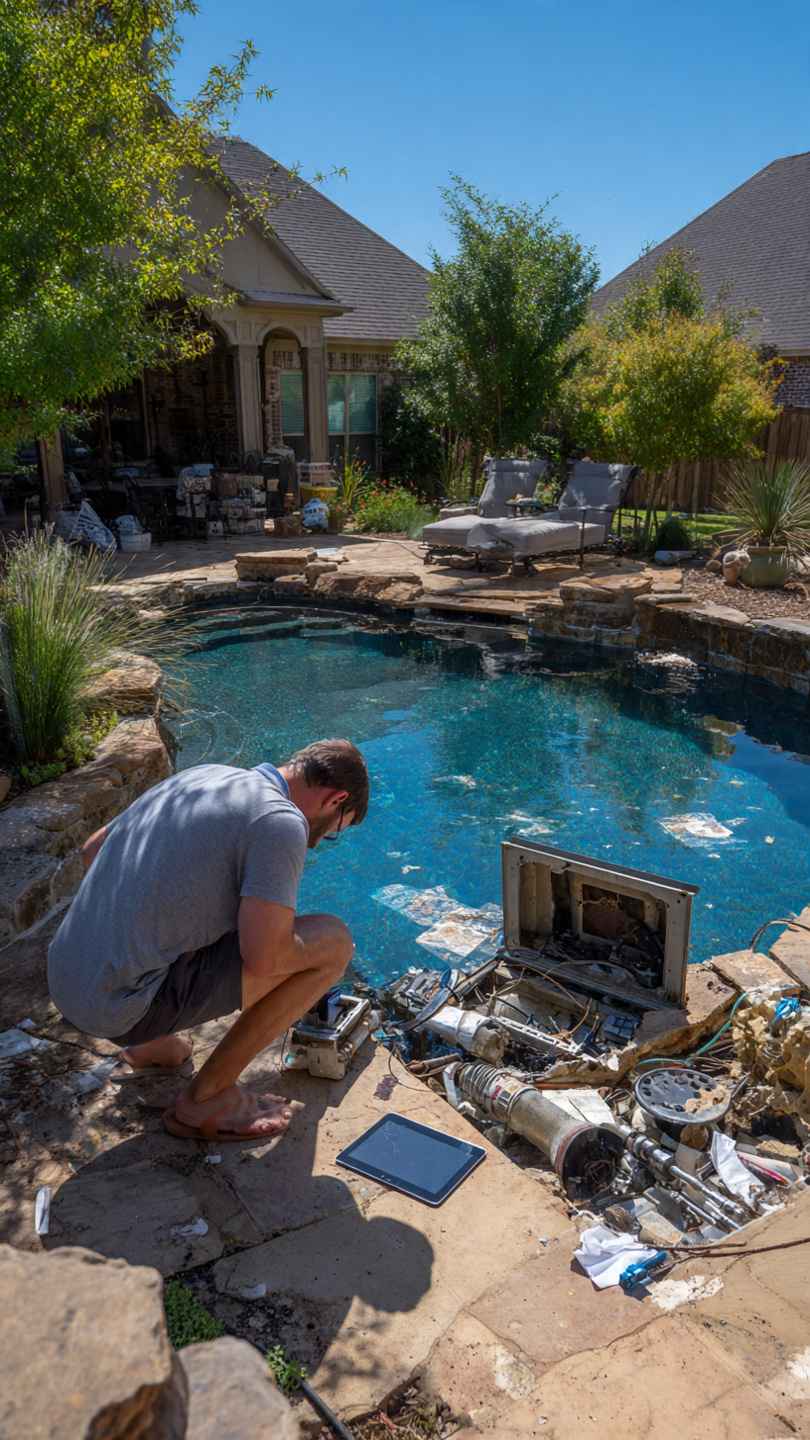
Grinding or screeching means bearings are failing — the motor needs attention soon. Loud rumbling means cavitation, where the pump is starved for water — check baskets and valve positions. The U.S. Department of Energy notes that pumps running under strain waste energy and wear out fast. A clicking noise on a variable speed pump usually means a drive board error — check the display. Our pool pump noise guide covers every sound.
Breaker Keeps Tripping? Stop Resetting It
If your pool pump not working is really a breaker that won’t stay on, stop flipping it back. Immediate trips mean a short. Trips after running awhile point to motor overheating from bad bearings or blocked ventilation. Trips during rain mean moisture intrusion. Every scenario here needs a pro — electricity and water is a dangerous combination.
When to DIY vs. When to Call PoolBurg
Safe to handle yourself: checking breakers, resetting the GFCI, cleaning baskets, filling water level, verifying timers. Call PoolBurg for anything electrical, anything involving the motor, or any pool pump not working situation that persists after the basic checks. HomeAdvisor’s pool data shows catching pump problems early saves homeowners big money on repairs. Our pump diagnosis team will tell you straight — repair or replace.
People Also Ask
Why did my pool pump stop working?
Most common causes: tripped breaker, tripped GFCI, dead capacitor, clogged baskets, or seized motor. Check power and baskets first. If that doesn’t solve it, a non-functional pump usually needs professional diagnosis.
How much does it cost to fix a pool pump?
Capacitor replacement runs $50 to $150. Motor replacement is $200 to $600. A full pump swap with a variable speed upgrade ranges from $800 to $1,500+. The CDC stresses that proper circulation matters for water safety, so don’t delay repairs.
How long can a pool go without a pump in Texas?
In summer heat, 24 to 48 hours before algae shows up. Cooler months buy you 3 to 5 days. Either way, stagnant water breeds problems fast. Our algae treatment guide covers what to do if you’re already seeing green.
Why is my pool pump humming but not running?
Almost always a dead start capacitor. The motor tries to fire but can’t get the rotational boost. Our humming pump guide walks through this step by step.
Pool Pump Not Working After Checking Everything?
Call PoolBurg. We diagnose fast, service all brands including Pentair and Hayward, and give it to you straight — no unnecessary parts, no runaround. Get in touch today and we’ll get your pool pump back online.