Pool stone repair begins with one question: is the stone failing, or has the bond beneath it let go? Mortar deterioration, deck pressure, trapped water, and soil movement can all damage the edge. A pitted face is different from a stone that rocks under your hand, so diagnosis comes first.
That distinction matters with natural stone. The Natural Stone Institute’s care guidance explains that an impregnating sealer acts as a repellent rather than making stone stain-proof. Sealer may help a compatible stone resist moisture and staining, but it cannot stabilize a loose base, stop deck movement, or rebuild soft material that is already spalling.
Which Pool Stones Usually Need Pool Stone Repair?
Natural stone coping, flagstone, travertine, decorative veneer, raised-wall caps, and spillway stone face sun, treated water, wet-dry cycling, and occasional freezes. Pool stone coping repair may involve one piece, while natural stone pool repair around a wall or spillway may require tracing water behind several pieces.
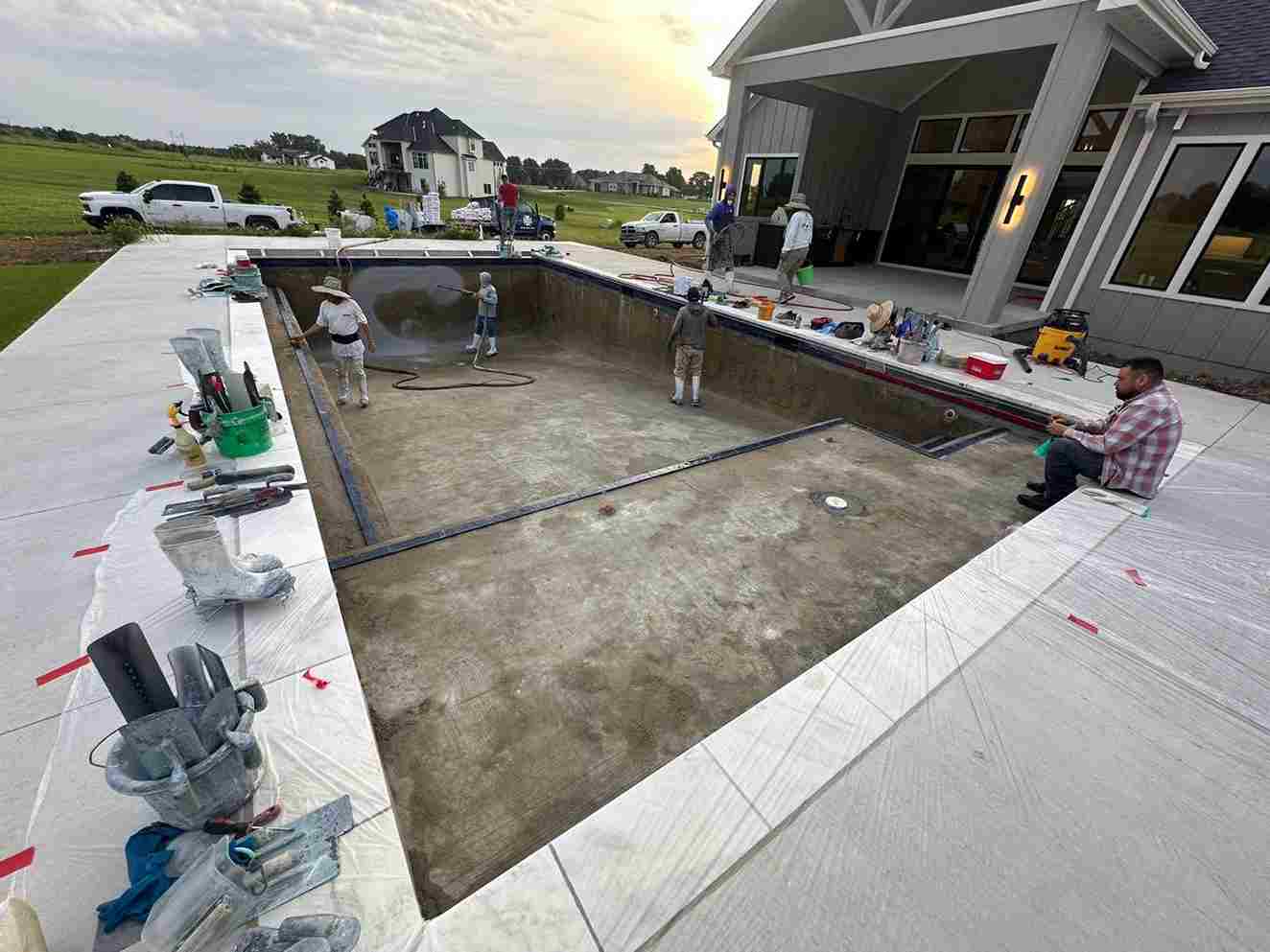
Signs the Pool Stonework Is Failing
| What You See | Likely Clue | Repair Direction |
|---|---|---|
| Stone rocks but looks intact | Released bond or setting bed | Clean, inspect, and reset if sound |
| Face is pitted or crumbling | Stone or salt-moisture deterioration | Replace material that is unsound |
| Joints are empty or powdery | Mortar has deteriorated | Remove debris and complete pool stone mortar repair |
| Several stones lift by the deck | Movement or failed expansion joint | Correct movement before resetting stone |
| White deposits return | Moisture carries mineral salts | Trace the water source before cleaning |
Do not ignore an uneven edge, missing mortar, wide cracks, or loose pool stones. White powder can also be useful evidence. The Natural Stone Institute’s efflorescence guidance describes it as mineral salts carried to the surface by water and recommends finding the cause of persistent moisture rather than repeatedly washing away the clue.
Why Pool Stones Shift in DFW
North Texas heat, cool weather, and rain after dry spells all move hardscape and soil. USDA guidance on expansive clay soils explains that clay-rich soils shrink when dry and swell when wet. Deck movement, poor drainage, and freezes can transfer that stress into coping and mortar.
The flexible joint between the deck and pool edge matters because the two structures need room to move. DECK-O-SEAL’s pool joint guidance describes a sealant designed to accommodate expansion and contraction. When old mastic hardens, splits, or disappears, the deck may press directly against the coping. PoolBurg’s pool expansion joint cracking guide shows why the visible stone should not be treated in isolation.
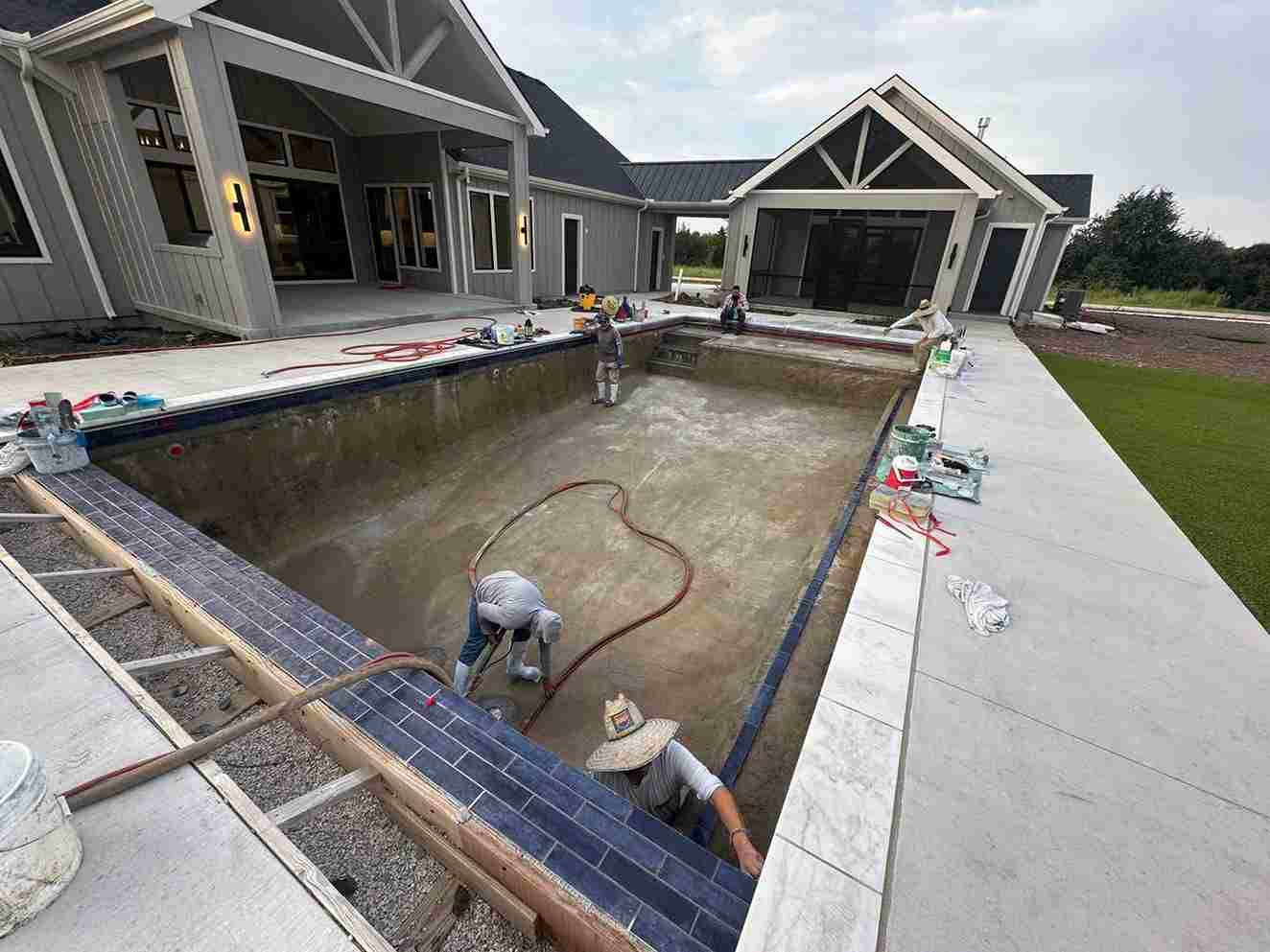
Stone Problem vs Mortar Problem
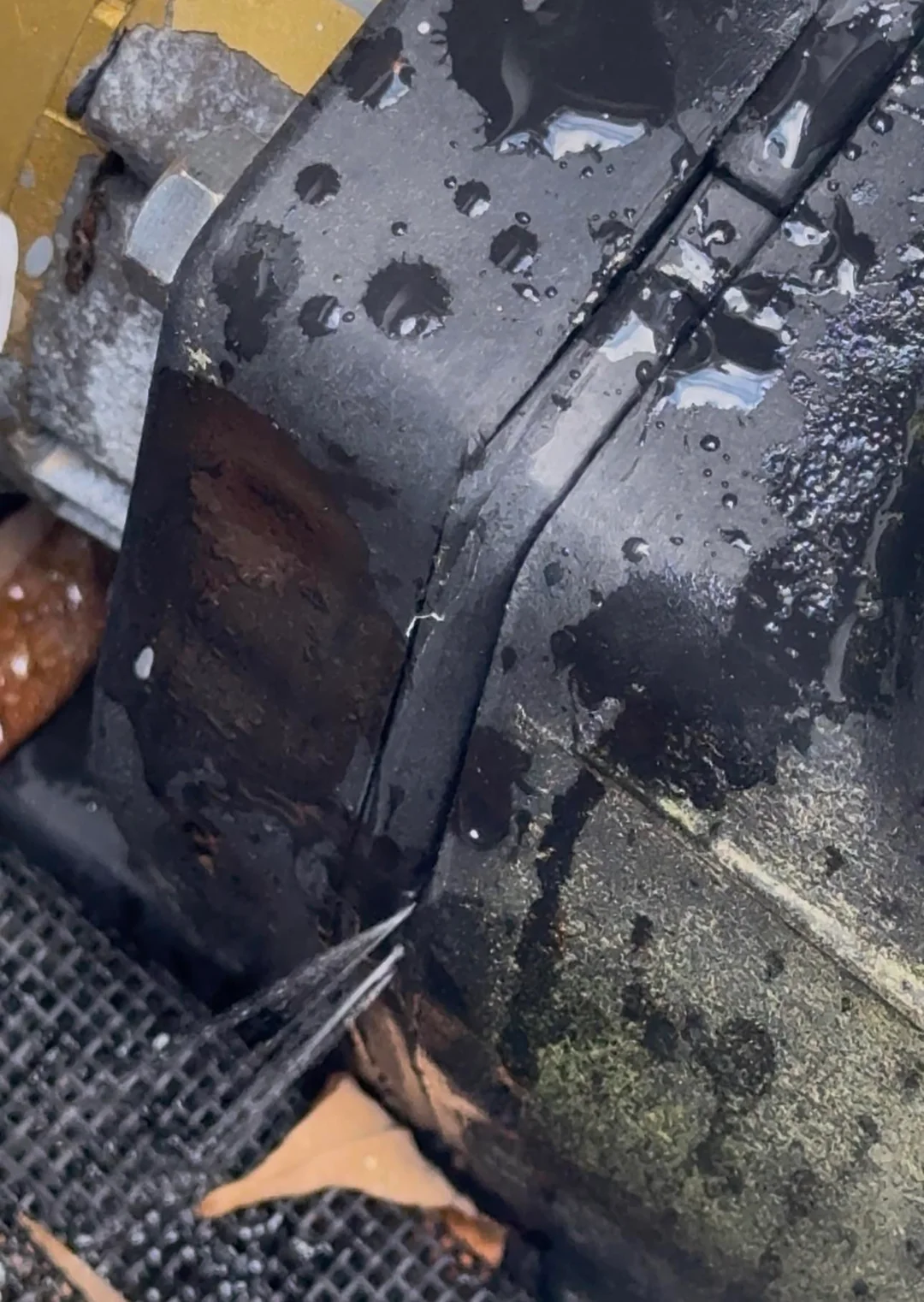
If an intact stone lifts cleanly, the setting bed or bond may be the main failure. Cracks through the piece, deep flaking, and material loss point more toward the stone. Crumbling joints suggest mortar failure, while a row of repeating cracks suggests movement below. National Park Service masonry guidance likewise treats cracking, spalling, and mortar deterioration as clues that should be assessed before repair.
Can Pool Stone Repair Reset Loose Coping?
Often, yes. A sound piece can be removed carefully, the old material cleaned away, and the base checked before it is reset with a compatible pool-rated system. Broken or soft pieces should be replaced. The LATICRETE pool installation technical resources reinforce why substrate preparation, waterproofing, bonding materials, and movement details belong in the same plan. Simply gluing a loose stone onto dusty mortar rarely solves the cause.
Why Pool Stone Repair Should Inspect Coping, Deck, and Mastic
A lasting pool stone repair looks beyond the visible piece. The technician should inspect the bond beam, nearby deck cracks, mastic, drainage, water-feature splash, and signs of moisture behind the stone. PoolBurg’s pool coping repair guidance takes that whole-edge approach. Its pool deck repair guide and Pool Mastic and Deck-O-Seal page cover the neighboring systems because resetting one stone before correcting deck pressure or water intrusion can invite the same failure back.
People Also Ask
Why are the stones around my pool loose?
The bond or mortar may have failed, or deck and soil movement may be pushing the coping.
Can pool coping stones be reset?
Yes, when the stone is sound and the base, moisture path, and movement issue are corrected first.
What causes flagstone around pools to crack?
Impact, weak material, heat, moisture, freezes, and movement below the stone can contribute.
Can missing mortar damage pool coping?
Open joints admit water and reduce support, so the surrounding stone and bond should be inspected.
Does soil movement affect pool stone?
Yes. Shrinking and swelling soil can move the deck and transfer pressure into coping and mortar.
Can water get behind coping stones?
Yes, through failed joints, cracks, poor drainage, or constant splash, where it can weaken an already poor bond.
Should pool mastic be replaced with coping repair?
Replace it when separated, brittle, missing, or unable to let the deck and coping move independently.
When should damaged pool stone be replaced?
Replace stone that is cracked through, deeply spalled, unsafe, or too weak to hold a dependable reset.
Get the Whole Pool Edge Checked
The best pool stone repair is not a quick dab of adhesive. PoolBurg checks the stone, mortar, deck, mastic, and moisture pattern together, then explains whether the right next step is resetting, selective replacement, joint work, or a specialist referral. If you have cracking or loose coping in Frisco, Plano, McKinney, Allen, Prosper, Southlake, Grapevine, or Keller, find the cause first so the finished repair has a fair chance to stay put.