

Smart pool technology has come a long way in the last few years. You can now monitor your water chemistry from your phone, control your pump and heater from the couch, and get alerts when something drifts out of range — all without walking to the equipment pad. For DFW pool owners, that’s a big deal when it’s 105 degrees outside. But not every gadget lives up to the marketing, and smart tech still can’t replace everything a professional does. Here’s what’s worth your money in 2026, from pool monitoring hardware to free pool maintenance app options and full automation systems.
Pool Monitoring Systems — Smart Pool Technology That Watches Your Water
The biggest giveaway is algae that keeps growing in the same spot no matter how much you shock or brush. If you’re killing algae in one corner every week and it keeps coming back, that’s not a chemical problem — that’s a circulation problem. Other signs: one area of the pool stays cloudy while the rest is clear, noticeable temperature differences between sections, debris that always accumulates in the same spot, and uneven chlorine readings when you test from different locations.
Our algae treatment guide covers the chemical side, but if treatment keeps failing in one area, pool circulation problems are almost certainly the root cause. The CDC’s healthy swimming guidelines emphasize that adequate circulation is essential for effective disinfection across the entire pool volume.
What Causes Poor Pool Circulation in DFW
Undersized pump. This is shockingly common in DFW because many builders install the cheapest single-speed pump they can get away with. If the pump can’t turn over your pool’s full volume at least once every 8 to 10 hours, you’ve got areas that aren’t getting flow. A variable speed pump running at a lower speed for longer hours often solves this while cutting energy costs at the same time.
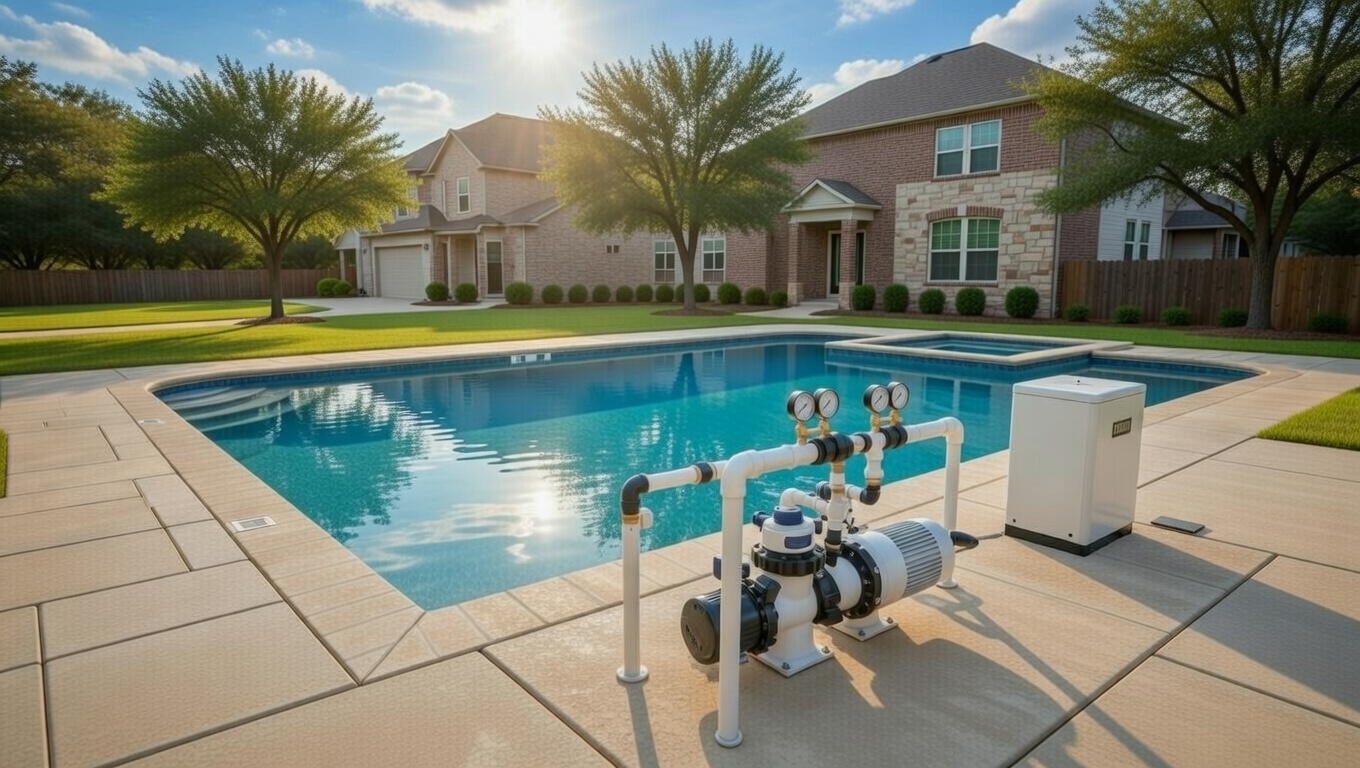
Pool monitoring devices sit in your skimmer or float in the water and continuously test chemistry, sending results to your phone. The Sutro runs $200 to $300 and tests chlorine, pH, and alkalinity automatically. The pHin costs $150 to $250 and provides real-time readings with dosing recommendations. The WaterGuru SENSE runs $300 to $400 and sits in the skimmer basket, testing while your pump runs. Pentair and Hayward also offer built-in pool monitoring through their automation platforms if you’re already in their ecosystem.
The Pool & Hot Tub Alliance has noted that smart pool technology adoption has grown significantly as device accuracy has improved. These systems are great for catching chemistry drift between service visits — especially in DFW summer when chlorine burns off fast. Our water testing guide covers what these monitors test and what still needs professional analysis.
Pool Automation and Remote Control
Full automation systems let you control pumps, heaters, lights, valves, and water features from your phone. Pentair IntelliCenter and Hayward OmniLogic are the heavy hitters — they integrate everything into a single app with scheduling, remote control, and system diagnostics. Jandy iAqualink does the same within the Jandy ecosystem. These systems cost $2,000 to $5,000+ installed but they’re genuinely useful. The Pentair support page and Hayward support page have compatibility guides for their respective platforms. Our pool automation guide covers what each system does and which fits different setups.
Don’t want to spend thousands? Standalone smart plugs ($25 to $75) can put your pump on a WiFi-controlled schedule. It’s basic smart pool technology but it works, and you can adjust run times from your phone without reprogramming a timer in the garage.
Pool Maintenance App Options — No Hardware Needed
You don’t need to buy a device to get smart about your pool. Free and low-cost pool maintenance app options include Pool Calculator apps that compute chemical dosing based on your test results and pool volume, Pooldash for tracking chemistry history, and TFP Pool Math which is built around the Trouble Free Pool methodology. These won’t test your water for you, but they eliminate guesswork when you’re figuring out how much chlorine or acid to add.
The CDC recommends maintaining accurate dosing records — a pool maintenance app makes that effortless. Our water chemistry guide covers the target ranges these apps help you hit.
What Smart Pool Technology Can and Can’t Do


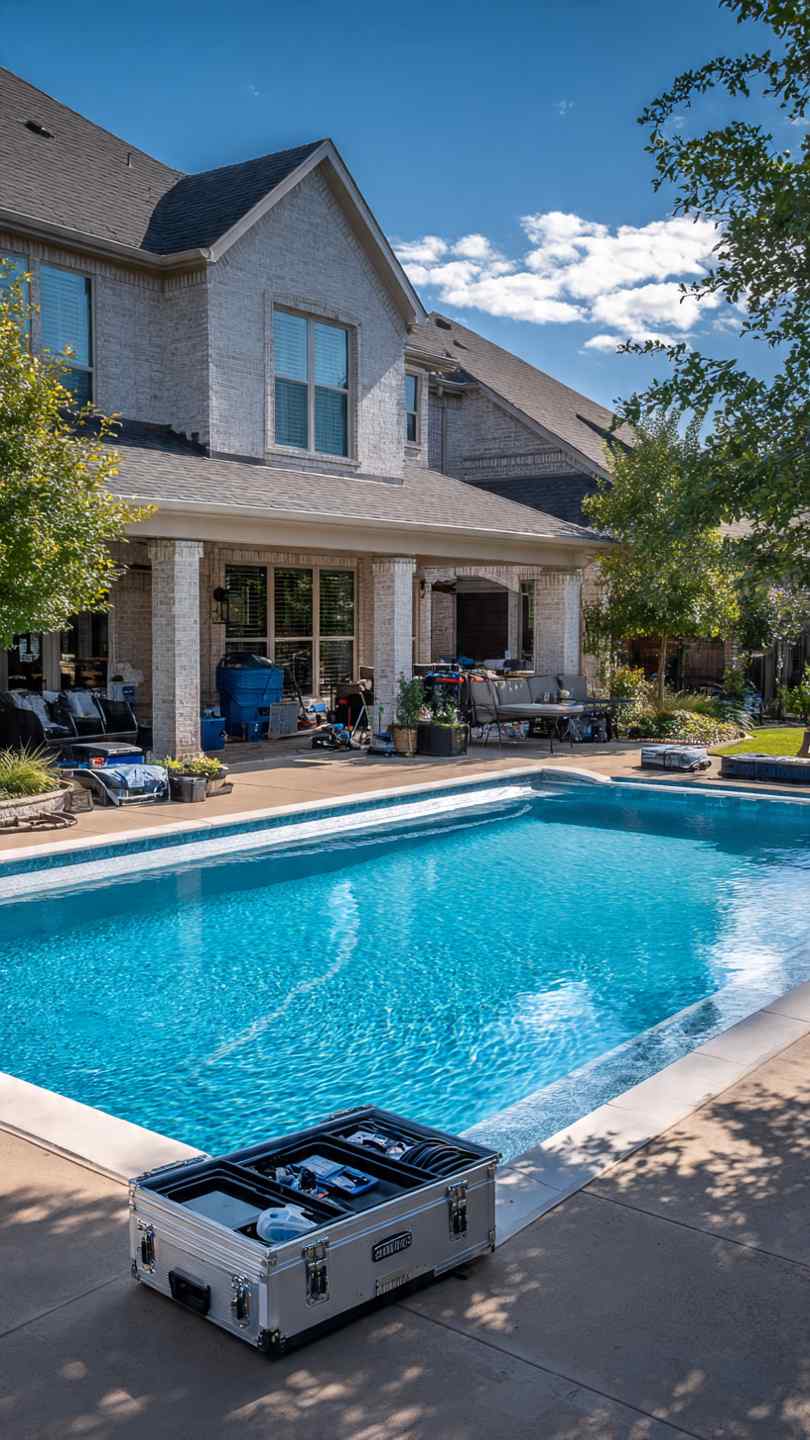
Let’s be honest about the limits. Smart pool technology can monitor chemistry, control equipment remotely, optimize schedules, and alert you to problems early. That’s genuinely valuable. What it can’t do: physically clean the pool, repair equipment, make complex chemistry decisions when multiple parameters are off simultaneously, or replace the trained eye of a technician who spots a failing seal, a developing crack, or a pump that sounds slightly wrong.
Pool monitoring catches data. A professional catches context. According to HomeAdvisor’s pool data, homeowners who combine smart monitoring with professional service report the best water quality outcomes and fewest emergency repairs.
DFW-Specific Considerations for Smart Pool Technology
A few things to think about in North Texas specifically. WiFi range can be an issue — many DFW homes have equipment pads 50 to 100 feet from the router, and smart devices need a solid connection. A WiFi extender or mesh network solves this. DFW summer heat punishes electronics, so look for devices rated for outdoor use in extreme temperatures. Storm protection matters — surge protectors on automation panels prevent damage from the lightning strikes that come with our spring and summer thunderstorms.
And power outage backup is worth considering, since DFW storms knock power out regularly. Our electrical repair guide covers protecting pool equipment from power events. The U.S. Department of Energy also notes that smart pump scheduling through automation is one of the most effective ways to reduce pool energy consumption.
People Also Ask

What is the best pool monitoring system?
For most DFW homeowners, the WaterGuru SENSE or Sutro offer the best balance of accuracy and ease of use. If you already have Pentair or Hayward automation, their built-in pool monitoring integrates seamlessly.
Can I control my pool from my phone?
Yes, with an automation system like Pentair IntelliCenter, Hayward OmniLogic, or Jandy iAqualink. These let you control pumps, heaters, lights, and water features remotely. Basic smart plugs offer pump scheduling control for much less.
Are pool monitors accurate?
Modern monitors are reasonably accurate for chlorine, pH, and alkalinity. They’re best used for trend monitoring and drift alerts rather than replacing professional testing entirely. Calibrate regularly for best results.
Do I still need pool service if I have a smart monitor?
Yes. Smart pool technology monitors data but can’t physically clean, repair equipment, or handle complex chemistry corrections. It complements professional service — it doesn’t replace it. Our maintenance services work alongside whatever tech you have.
Is pool automation worth the cost?
For most DFW pool owners, yes. The convenience of remote control, optimized scheduling, and energy savings from smart pump management typically justify the $2,000 to $5,000 investment within a few years. Our energy savings guide shows the math on pump scheduling alone.
Have Smart Pool Technology? PoolBurg Works Alongside It
Whether you’ve got a full Pentair IntelliCenter setup or a simple pool maintenance app on your phone, PoolBurg integrates with your smart pool technology instead of ignoring it. Contact us and we’ll optimize your system settings, review your monitoring data, and handle everything the tech can’t — which is still quite a lot.