I get this question all the time from frantic homeowners. You walk out to your patio expecting a refreshing breeze, but instead, your pool smells bad. Most people immediately assume they just added too much chemical, but that is rarely the truth. Think of an odor as a giant red flag from your water chemistry. Whether you are dealing with a musty pool smell or a foul rotten egg odor, the specific scent tells you exactly what is failing in your system.
A Properly Maintained Pool Shouldn’t Smell — If It Does, Something’s Wrong
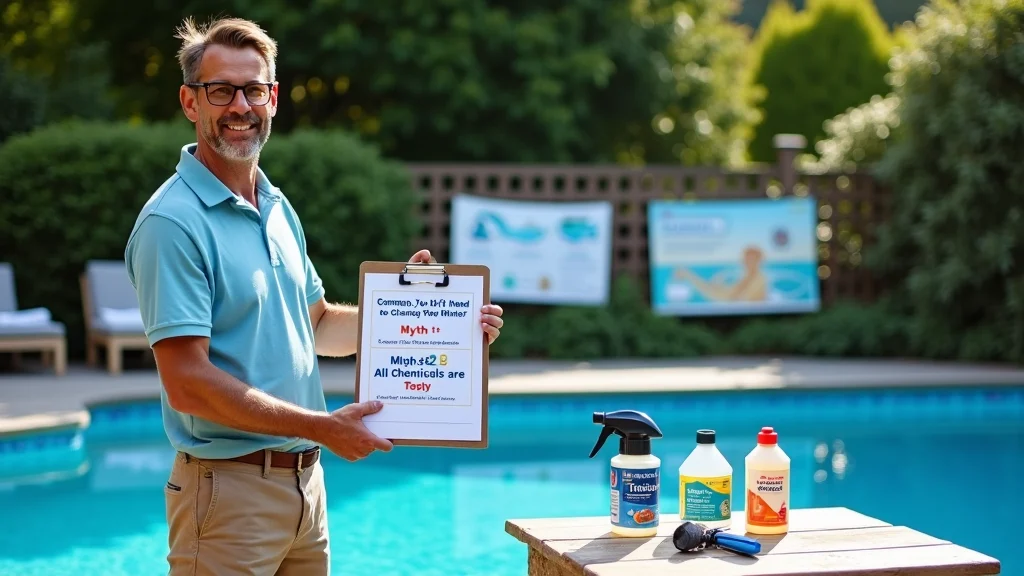
Let’s clear up a massive myth right now. Many people think swimming pools are actually supposed to smell like a giant bottle of bleach. They are not. A perfectly balanced, well-maintained pool has virtually zero odor. Any persistent pool smell indicates a specific chemical imbalance or an environmental contamination issue that needs immediate addressing. This guide is your diagnostic cheat sheet to identify the odor and apply the exact fix.
“Chlorine Smell” — The Most Common (and Most Misunderstood) Pool Odor

What you’re actually smelling: CHLORAMINES, not chlorine
If your pool smells like chlorine, you aren’t actually smelling the free chlorine. You are smelling chloramines, also known as combined chlorine. Chloramines form when your active, free chlorine attacks and combines with nitrogen compounds brought in by swimmers. We are talking about sweat, urine, cosmetics, and body oils. Pure free chlorine has a very faint, almost undetectable scent. It is the chloramines that produce that strong, pungent, indoor-waterpark odor that burns your eyes and lungs.
The counterintuitive truth: the “chlorine smell” means you need MORE chlorine, not less
When customers smell this, their first instinct is to stop adding chlorine. That is the worst thing you can do. That heavy chemical odor means your chlorine is locked up and exhausted. You actually need to shock the pool heavily with liquid chlorine to break apart those chloramines and restore your free chlorine levels. Once you execute a proper shock treatment, the smell completely vanishes.
DFW context: heavy bather loads in summer + high heat + organic contamination = chloramine factory
During the peak of a North Texas summer, this problem explodes. Heavy weekend pool parties combined with 100-degree water create a massive organic load. Without aggressive oxidation, your backyard turns into a chloramine factory overnight.
Fix and Prevention
Shock the pool heavily with liquid chlorine. Maintain your free chlorine at a steady 2 to 4 ppm. To prevent this entirely, keep a regular weekly shocking schedule during the brutal DFW summer, and encourage your guests to rinse off before jumping in. The explicitly state that a quick shower removes the bulk of the sweat and cosmetics that cause these harsh odors. See our guide for a full breakdown of how to stop skin and eye irritation.
Sulfur / Rotten Egg Smell

Cause #1: Hydrogen sulfide from anaerobic bacteria
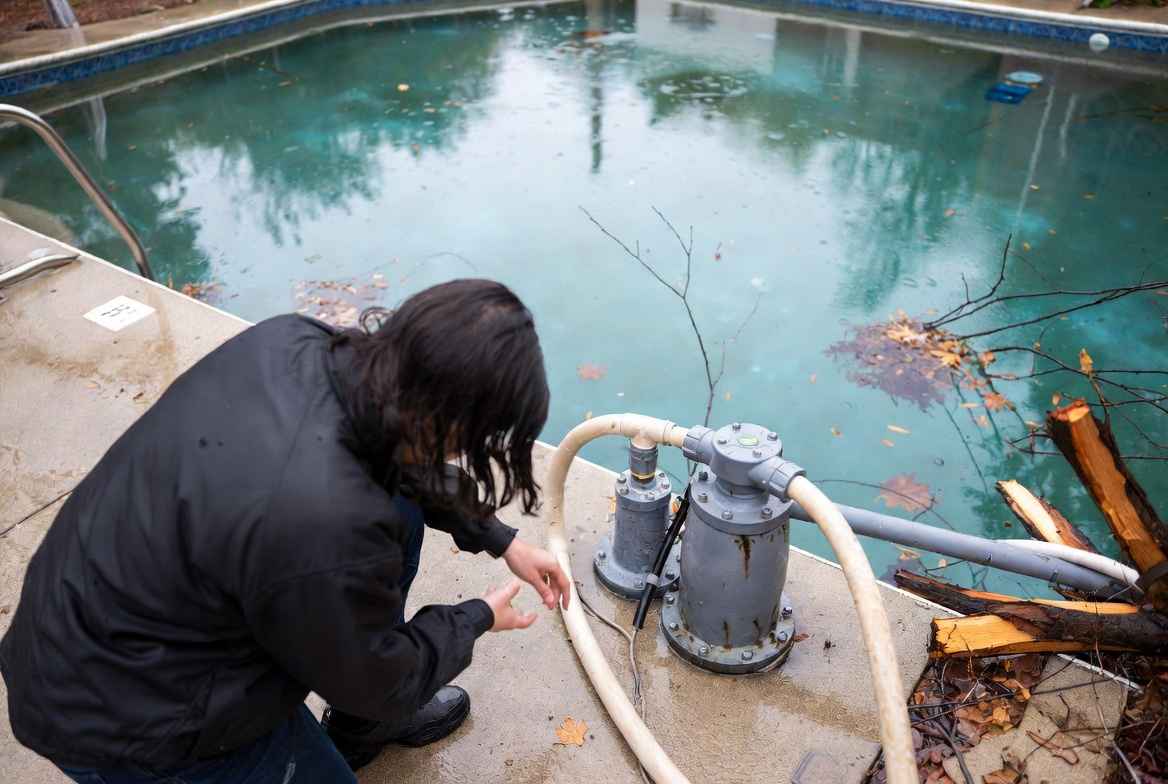
If you notice a distinct sulfur smell pool owners dread, you likely have anaerobic bacteria growing in your system. These bacteria thrive in stagnant “dead spots” where oxygen is incredibly low. We see this frequently inside neglected filter housings, deep inside underground plumbing, or immediately after a DFW winter freeze or power outage when the circulation pump sat idle for days.
Cause #2: Sulfur in fill water
Sometimes the water source is the culprit. Certain North Texas municipal water sources, particularly rural well water near Prosper, Celina, and north McKinney, contain naturally high sulfur compounds. If the smell intensifies right after you top off the water level, your hose is the problem.
Fix and Prevention
Shock the water heavily, because high chlorine levels will kill the sulfur-producing bacteria. Run your pump continuously to aggressively oxygenate all the water, and clean your filter media thoroughly. If the smell is coming from your tap, always attach a specialized hose-end carbon filter when filling the pool, and aerate the water by turning on your sheer descents or pointing your return jets toward the surface.
Musty / Earthy / Swamp Smell
Cause: algae — even before you can SEE it
If your pool smells like a stagnant pond, you are dealing with algae. Even before the water turns visibly green, early-stage algae releases organic compounds that create a highly distinct musty pool smell. Check the dark, shaded areas of your pool. Look closely behind your ladders, deep inside the skimmer throat, and in the corners of your steps.
DFW context: warm water + organic debris + any chlorine lapse = algae smell within days
In our climate, warm water mixed with a little bit of organic debris and a single day of zero chlorine is a recipe for disaster. An algae bloom can take root and start smelling within 48 hours.
Fix
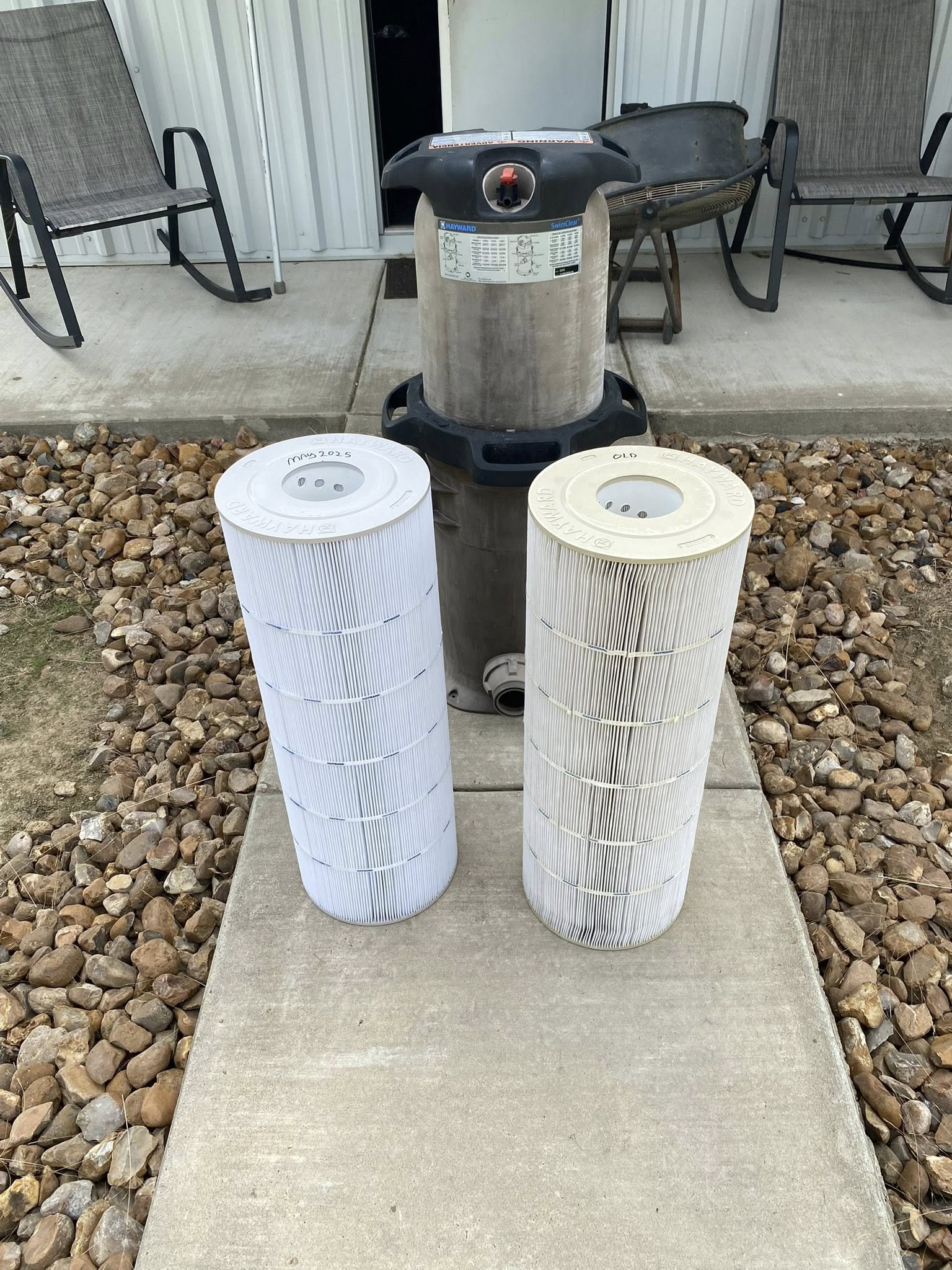
You must shock the pool, aggressively brush ALL surfaces to break the algae’s protective slime layer, and run the filter 24/7. If the smell stubbornly persists but the water is clear, open up your filter housing. Algae can easily grow inside the dark, warm filter tank even if the pool itself looks fine.
Chemical / Harsh / Burning Smell
Cause #1: very high chlorine (just shocked or chlorine overdose)
If you just dumped five gallons of liquid shock into the water, it will temporarily smell harsh. This will dissipate naturally as the sun burns the chlorine levels down. Do not let anyone swim until your free chlorine drops back below 5 ppm.
Cause #2: chemical reaction between incompatible products
This is incredibly dangerous. If you mix incompatible chemicals together, or dump different products into the skimmer at the same time, they can create toxic, burning fumes. The EPA safe chemical handling guidelines strictly warn against mixing any pool sanitizers. If you smell a harsh, burning chemical odor, clear the area immediately and let the wind ventilate it. Read our guide to avoid these dangerous reactions.
Cause #3: gas leak from pool heater
If you smell natural gas or propane near your equipment pad, this is NOT a chemistry issue. This is a highly explosive gas leak. Immediately turn off the heater unit, leave the equipment area, and call your utility company. Do not flip any electrical switches or use your phone near the equipment pad. Once the area is declared safe, call us for professional to address the compromised manifold or gas valve.
Sweet / Fruity Smell
Cause: organic contamination
A strangely sweet or fruity smell usually means organic matter is actively fermenting and decomposing in your water.
DFW context: common after fall leaf drop
We experience this heavily during the North Texas fall when massive amounts of oak and pecan leaves drop. If a thick layer of leaves sits on the bottom of the pool for a week, it essentially brews an organic tea, releasing tannins and fruity odors.
Fix
Use your heavy-duty leaf rake to drag the bottom and remove all physical debris. Shock the water, run the circulation, and use a commercial enzymatic cleaner to break down the remaining organic waste.
No Smell but Eye/Skin Irritation
Cause and Fix
If the water looks and smells fine but your eyes are burning red, you either have a stealthy buildup of chloramines or your pH is way out of range. Test your water immediately. According to the PHTA, your pH must be strictly maintained between 7.2 and 7.8 for swimmer comfort. Adjust your pH with muriatic acid or soda ash, and shock the pool if your combined chlorine reads higher than 0.5 ppm.
People Also Ask
Why does my pool smell like chlorine?
What you are actually smelling are chloramines. These form when free chlorine binds to sweat, oils, and urine in the water. It surprisingly means your pool needs a heavy dose of fresh chlorine to burn off the waste.
Is a strong chlorine smell normal in a pool?
No, it is not. A healthy, properly balanced pool has almost zero odor. A strong smell indicates poor water chemistry and a high level of organic contamination.
Why does my pool smell like rotten eggs?
This sulfur smell pool owners hate is usually caused by hydrogen sulfide gas. It is produced by anaerobic bacteria growing in areas with poor water circulation, or it is introduced by filling the pool with sulfur-heavy well water.
Can pool algae cause a bad smell?
Yes. Even before an algae bloom turns the water green, it releases organic compounds that create a distinctly earthy, musty pool smell.
Is it safe to swim if my pool smells?
Generally, no. If your pool smells bad, your sanitizer is likely depleted, leaving the water vulnerable to dangerous bacteria. If you smell natural gas near the heater, evacuate the area immediately.
Why does my pool smell musty?
A musty smell usually means algae is growing in hidden areas like the skimmer basket, behind the pool light niche, or deep inside your filter tank.
PoolBurg Eliminates Pool Odors by Fixing the Root Cause
Masking a bad smell with more scented chemicals never works. We specialize in precise chloramine management, targeted shocking protocols, and complete organic contamination control. Is your pool smelling off? Don’t guess and waste money on the wrong treatments. Check the local forecast, pick a clear day, and let our technicians handle the heavy lifting.
PoolBurg expertly diagnoses the odor and eliminates the actual cause — not just the symptom. Contact us today for reliable to keep your water fresh all year long.