Pool electrical safety is not the fun part of owning a pool, but it is one of the most important. Water, wet decks, metal handrails, pumps, lights, and outdoor outlets all live close together in a backyard pool system. When everything is installed and maintained correctly, you barely think about it. When something is wrong, the risk can get serious fast. The U.S. Consumer Product Safety Commission warns that wet skin and wet surfaces can increase electrocution risk, which is why DFW homeowners should never ignore electrical symptoms around the pool.
Why Pool Electrical Safety Is Critical in DFW
Texas gives pool owners a long swim season, which also means more time around equipment, lights, outlets, and wet surfaces. Many North Texas pools are 15, 25, or even 40 years old, and older systems may not match today’s expectations for pool electrical safety. Add in heat, storms, power surges, irrigation overspray, and aging wiring, and you can see why this is not a “maybe later” issue.
This is also one of the clearest no-DIY areas in pool ownership. A homeowner can empty baskets or brush steps. But pool bonding and grounding, breaker work, light wiring, subpanels, and code corrections belong with licensed professionals. Texas regulations also point to licensed electrical work for pool and spa electrical systems, so shortcuts are not worth it.
Pool Electrical Components That Need Professional Attention
GFCI pool protection
A GFCI pool device, or ground fault circuit interrupter, is designed to shut power off quickly when it detects current leaking where it should not go. The CPSC GFCI fact sheet explains that GFCIs help protect people from severe or fatal electric shocks, especially where electrical equipment is near water. Around a pool, GFCI protection may apply to pumps, lights, and outlets near the water. If your GFCI keeps tripping, do not bypass it. That trip is a warning, not an annoyance.
Pool bonding and grounding
Pool bonding and grounding are related, but they are not the same thing. Bonding connects metal parts around the pool so they stay at the same electrical potential. Grounding gives fault current a safe path back to the electrical system. A safe pool needs both. Pumps, heaters, light niches, rails, ladders, and other conductive parts may all be part of the safety picture. The NFPA notes that code-compliant pool electrical installation is key to swimmer safety, and this is exactly where a licensed electrician matters.
Pool lights and equipment wiring
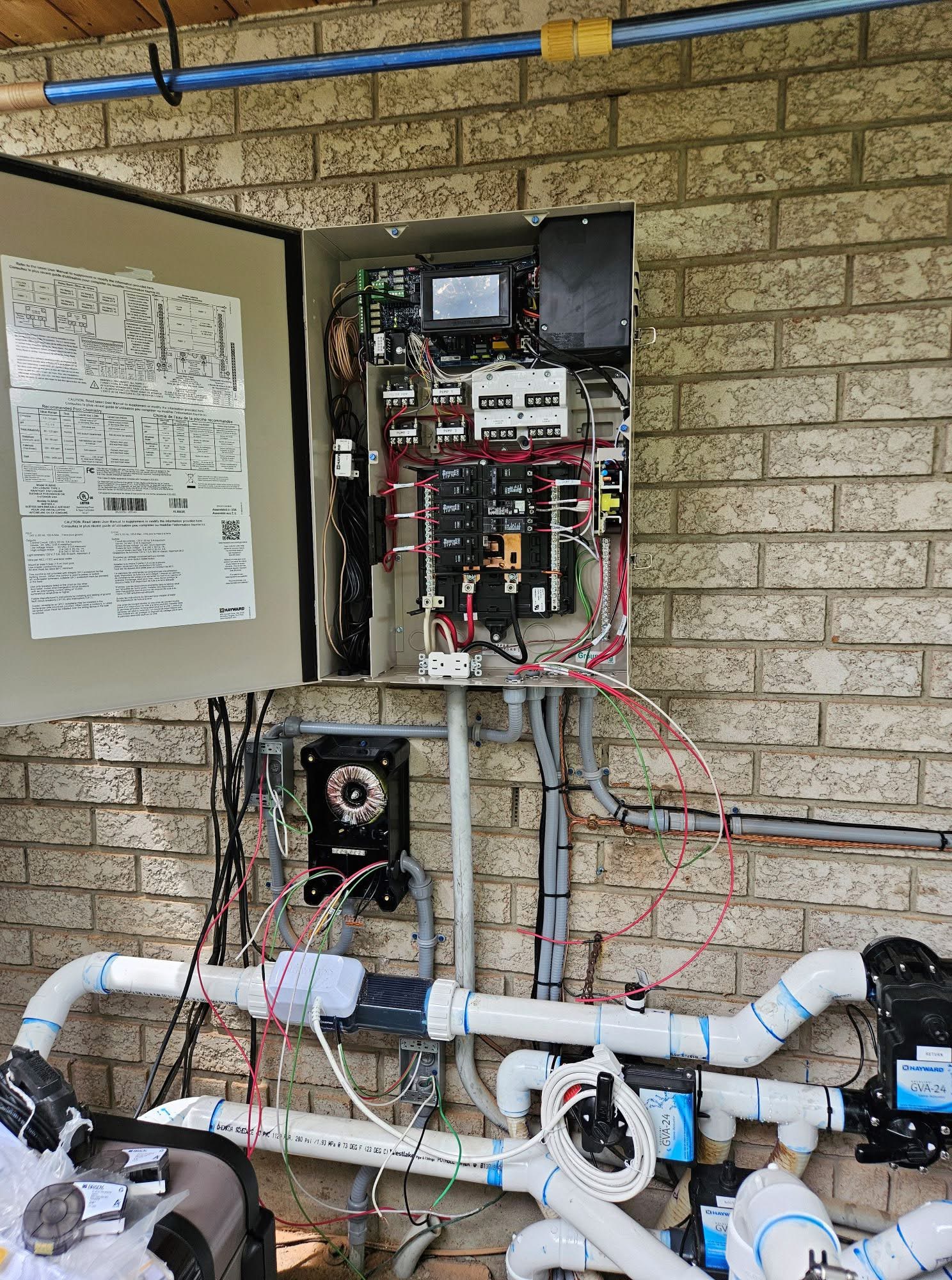
Pool lights can be low voltage or line voltage, but both still need proper protection. A leaking light niche, damaged conduit, bad transformer, or failed seal can create a dangerous condition. Equipment wiring also takes abuse in DFW. Sun, heat, moisture, ants, rodents, and chemical fumes can all wear on outdoor electrical parts over time. If a pump hums, breakers trip, lights flicker, or automation keeps shutting down, schedule pool electrical repair before the problem grows.
Common Pool Electrical Problems in North Texas
- GFCI tripping often: Moisture in a light fixture, a motor fault, damaged wiring, or an overloaded circuit can cause repeat trips. Resetting once is fine. Resetting over and over is not.
- A swimmer feels tingling: Treat this as an emergency. Get everyone out, avoid metal ladders if possible, shut power off at the breaker, and call for professional help.
- Equipment dies after storms: A tripped breaker may be simple, but repeated trips can mean surge damage, water intrusion, or a failing component.
- Old wiring looks brittle or corroded: Older DFW equipment pads often show cracked insulation, rusted boxes, loose conduit, or chewed wiring. That is not cosmetic.
- Older pools have code gaps: Renovations, equipment upgrades, and lighting changes may reveal missing GFCI protection or weak pool bonding and grounding.
ESFI pool and spa safety guidance also recommends GFCIs, grounded pool equipment, covered outdoor receptacles, and keeping electrical products away from water. Simple advice, yes, but it saves lives.
Pool Electrical Repair Costs in DFW
| Pool Electrical Repair Item | Typical DFW Range |
| GFCI replacement | $100-$300 |
| Bonding inspection or repair | $150-$500 |
| Grounding repair | $100-$400 |
| Pool light rewiring | $200-$600 |
| Equipment circuit upgrade | $200-$500 |
| Full electrical audit | $300-$800 |
| Panel or subpanel upgrade | $500-$1,500+ |
These are planning ranges, not final quotes. The real price depends on access, age, wire condition, code requirements, and whether permits or panel work are needed.
When to Call an Electrician vs PoolBurg
PoolBurg can spot symptoms during service, check obvious equipment concerns, test a GFCI, and help you understand what may be happening. Our pool electrical repair support is helpful when equipment is acting weird, pumps are not running, lights are failing, or a system needs troubleshooting. But panel work, new wiring, bonding corrections, grounding repairs, and code compliance should be handled by a licensed electrician.
That is the best practice: your pool service company catches the warning sign, then a licensed electrician handles the electrical repair when the work goes beyond pool-service scope. PoolBurg also helps homeowners keep systems healthier through weekly pool service, equipment checks, and repair guidance across DFW.
People Also Ask
Why does my pool GFCI keep tripping?
Usually because moisture, damaged wiring, a failing motor, or a ground fault is present. If it trips repeatedly, stop resetting it and have the system checked.
How do I know if my pool is properly bonded?
You usually cannot confirm it by sight alone. A licensed electrician can test bonding continuity and inspect the bonding grid and connected components.
Can old pool wiring be dangerous?
Yes. Age, heat, moisture, corrosion, UV exposure, and rodents can damage wiring and create shock or fire hazards.
How much does pool electrical repair cost?
Small fixes may be a few hundred dollars, while panel or subpanel work can cost much more. Diagnosis comes first.
Do I need a permit for pool electrical work in DFW?
Often, yes, depending on the city and type of work. A licensed electrician can confirm local requirements.
Can my pool shock someone in the water?
Yes, if there is stray voltage, a ground fault, or a bonding problem. If anyone feels tingling, get out immediately and shut off power.
PoolBurg Monitors Electrical Safety at Every Visit
Pool electrical safety should not be something you think about only after a breaker trips or a light flickers. PoolBurg looks for warning signs during regular visits, including suspicious wiring, equipment behavior, GFCI concerns, and signs that a licensed electrician should step in.
If you are worried about pool electrical safety, start with a professional set of eyes. Contact PoolBurg and let us check the pool, explain what we see, and connect you with the right licensed help when electrical work is needed.