Combined chlorine in pool water often explains that sharp “public pool” odor. It does not automatically mean too much sanitizer was added. It usually means chlorine has reacted with swimmer waste or other contaminants. Test before adding anything and let the numbers explain the smell.
What Combined Chlorine in Pool Water Means
Free chlorine is the sanitizer still available to work. Combined chlorine has reacted with compounds in the water, and total chlorine is the sum of both. LaMotte’s chlorine measurement guide explains that relationship.
CDC chloramine guidance describes chloramines as a type of combined chlorine. They can contribute to odor and irritate eyes, skin, or airways. That is why free chlorine vs combined chlorine matters even when the water looks clear.
Signs Combined Chlorine May Be High
Common clues include:
- A strong chlorine smell around the water
- Burning or watery eyes after swimming
- Itchy, tight, or irritated skin
- Dull or slightly cloudy water
- Swimmers complaining that the water feels harsh
- A chemical odor even though a chlorine test shows a reading
These signs justify testing, not guessing. The CDC eye-irritation guide notes that chloramines can affect eyes and lungs, but smell alone cannot measure combined chlorine in pool water.
What Causes Combined Chlorine?
Every busy swim adds sweat, skin cells, body oils, dirt, cosmetics, and sunscreen in pool water. Urine also adds nitrogen compounds. A heavy bather load gives sanitizer more work at once.
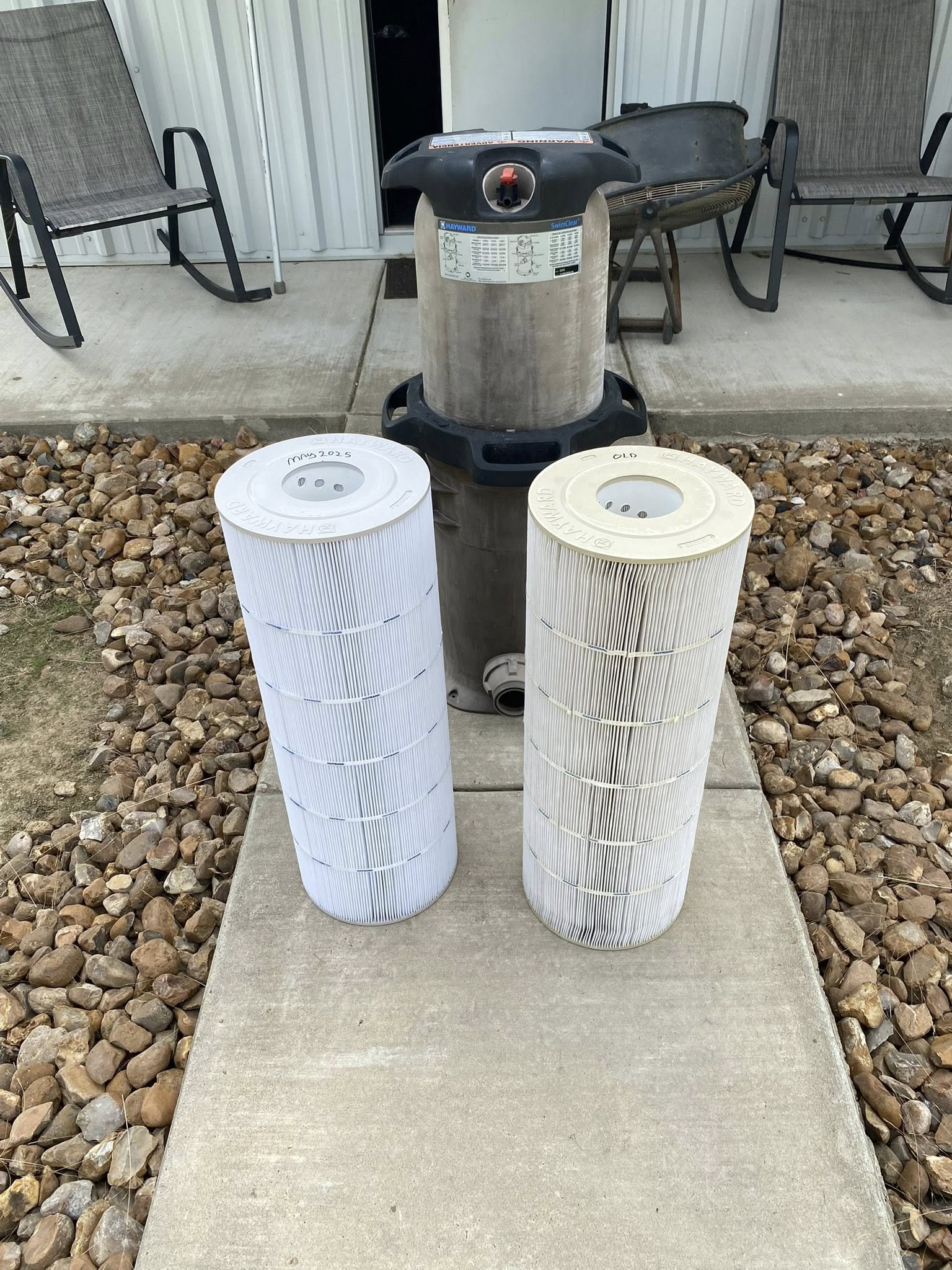
Poor circulation and a dirty filter let debris and organics linger. Inadequate free chlorine may then allow demand to outrun recovery. The same post-party contaminant load can also contribute to foam in pool water or an oily waterline.
How to Test Combined Chlorine in Pool Water
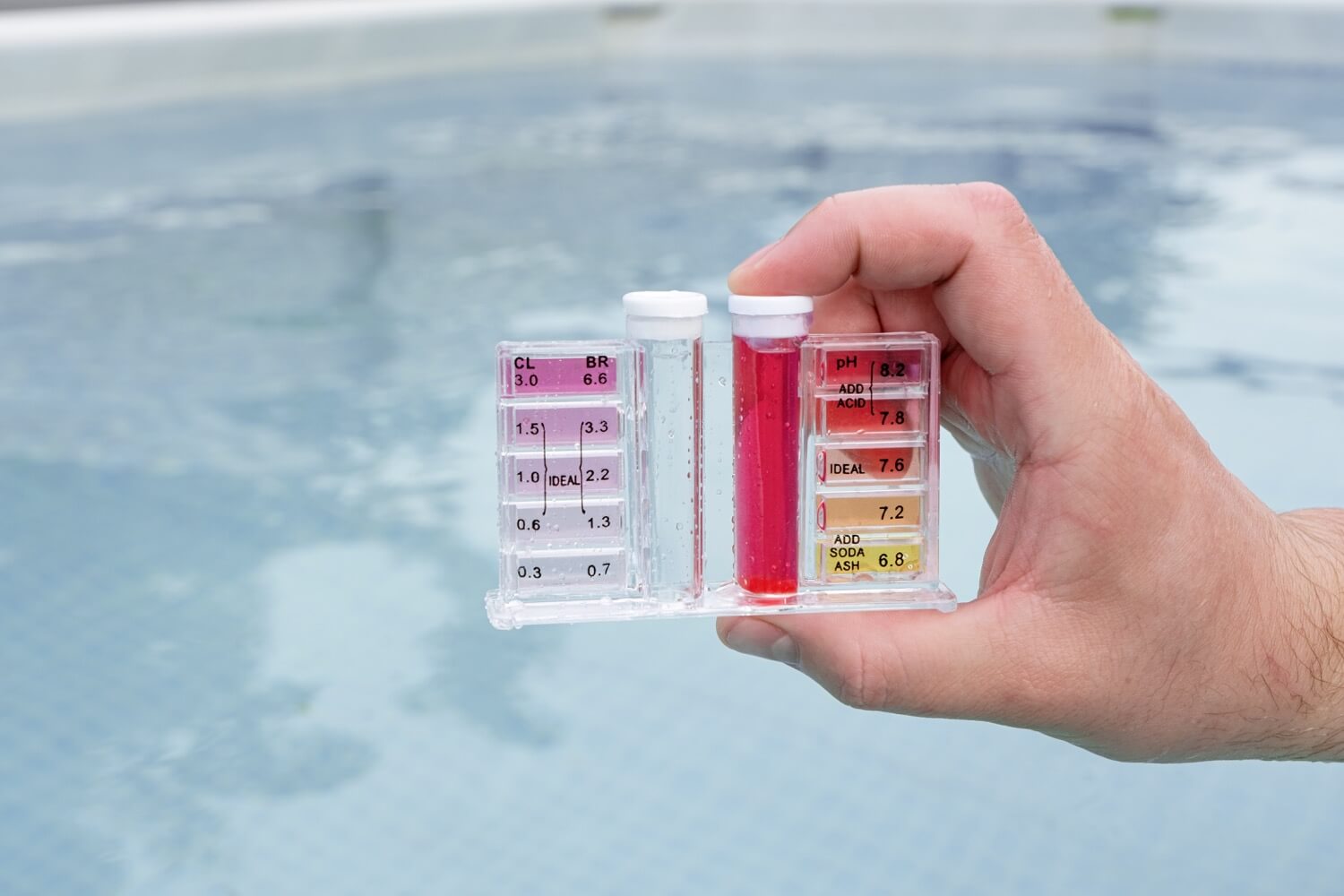
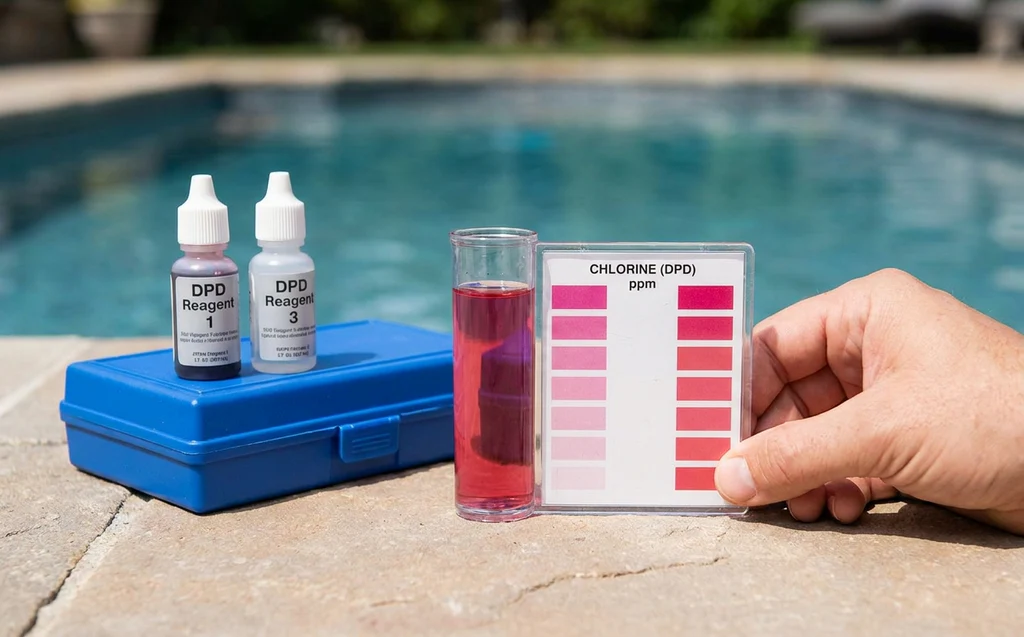
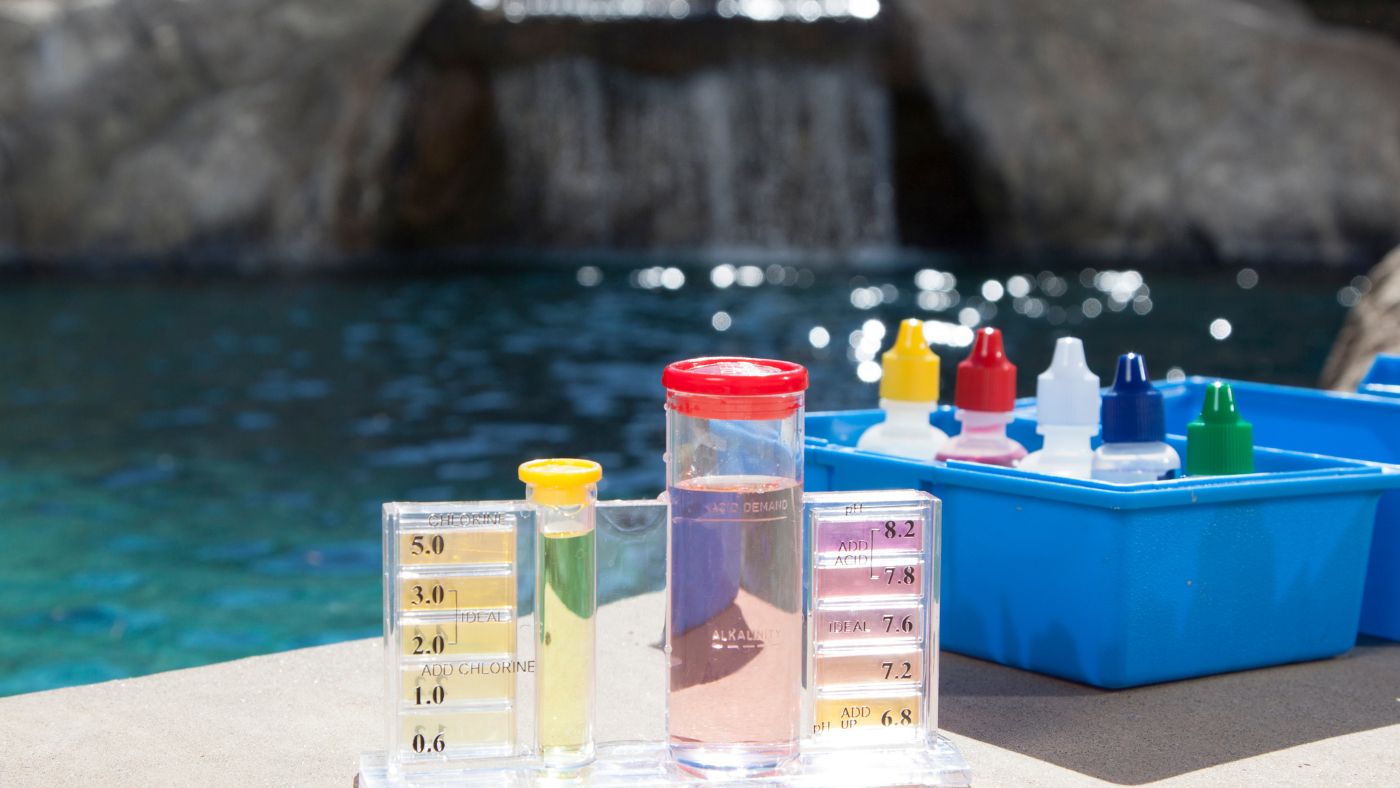
Use a kit that reports free chlorine and total chlorine. The CDC home-pool testing guide recommends routine chlorine and pH testing and says DPD kits are more accurate than strips. Taylor Technologies’ FAS-DPD explanation shows how drop testing separates the readings.
| Test Result | What It Means |
|---|---|
| Total chlorine minus free chlorine | Combined chlorine |
| Total chlorine equals free chlorine | Combined chlorine is near zero |
| 3.0 ppm total minus 2.6 ppm free | 0.4 ppm combined chlorine |
Follow the kit timing and repeat a surprising result. A good pool water testing kit beats judging chloramines in pool water by odor alone.
How to Lower Combined Chlorine
- Improve circulation and clean the filter if flow is weak.
- Skim, brush, vacuum, and remove waterline buildup.
- Check pH and restore free chlorine according to the pool, stabilizer, and product directions.
- If testing confirms elevated combined chlorine, shock correctly instead of guessing. CDC guidance calls for keeping swimmers out until levels return to the operating range.
- After parties, encourage quick pre-swim rinses and bathroom breaks.
Follow every product label and never mix pool chemicals. The CDC pool-chemical safety guidance explains why careful handling matters.
In Frisco, Allen, McKinney, The Colony, Lewisville, Wylie, and Prosper, hot afternoons and weekend crowds can raise combined chlorine quickly. Test after heavy use.
People Also Ask
What is combined chlorine?
It is chlorine that has reacted with contaminants. Subtract free chlorine from total chlorine to calculate it.
Is combined chlorine bad?
An elevated or persistent reading needs attention and may contribute to odor and irritation.
Why does my pool smell like chlorine?
A strong chlorine smell in pool water often comes from chloramines, but testing must confirm it.
How do I lower combined chlorine?
Improve circulation and filtration, remove contaminants, balance the water, and shock only when testing supports it.
What is the difference between free chlorine and total chlorine?
Free chlorine is available sanitizer. Total chlorine includes both forms, which is the key to reading free chlorine vs combined chlorine results.
Can swimmers cause combined chlorine?
Yes. Sweat, urine, oils, cosmetics, dirt, and sunscreen can form chloramines in pool water during busy swim days.
PoolBurg Makes Clean Water Smell Clean Again
Combined chlorine in pool water needs a measured correction, not chemical roulette. PoolBurg can test free chlorine, total chlorine, pH, circulation, and filtration. If the pool smells harsh or swimmers develop a pool chlorine rash, contact PoolBurg and fix the cause instead of covering the odor.