A pool heater leaking water often triggers immediate panic for homeowners. While it could signal a failed heat exchanger or internal freeze damage, the wet pad might simply be standard condensation. Avoid calculating replacement costs until you have determined the specific source and timing of the moisture.
Why Pool Heater Leaking Water Happens
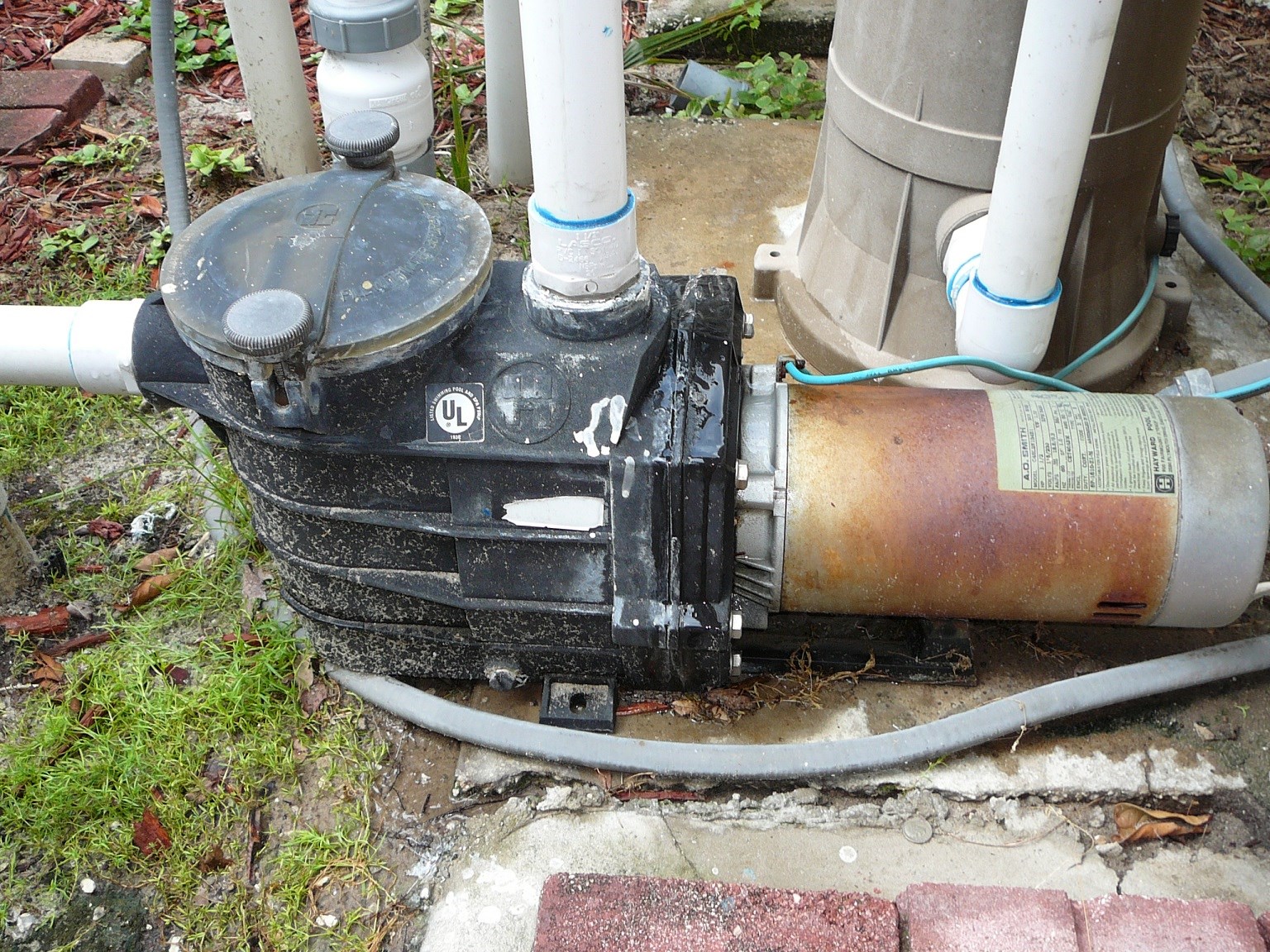
Heaters have plumbing connections and internal passages under pressure. A pool heater leaking water can begin at a union, drain plug, header, relief valve, heat exchanger, or nearby PVC. Pentair’s MasterTemp guide warns that trapped water can cause freeze damage.
A wet pad does not mean the heater is ruined. Gas heaters can create startup moisture, while heat pumps pull moisture from humid air. Trace repeated dampness before it causes pool heater rust or hides a real pool heater leak.
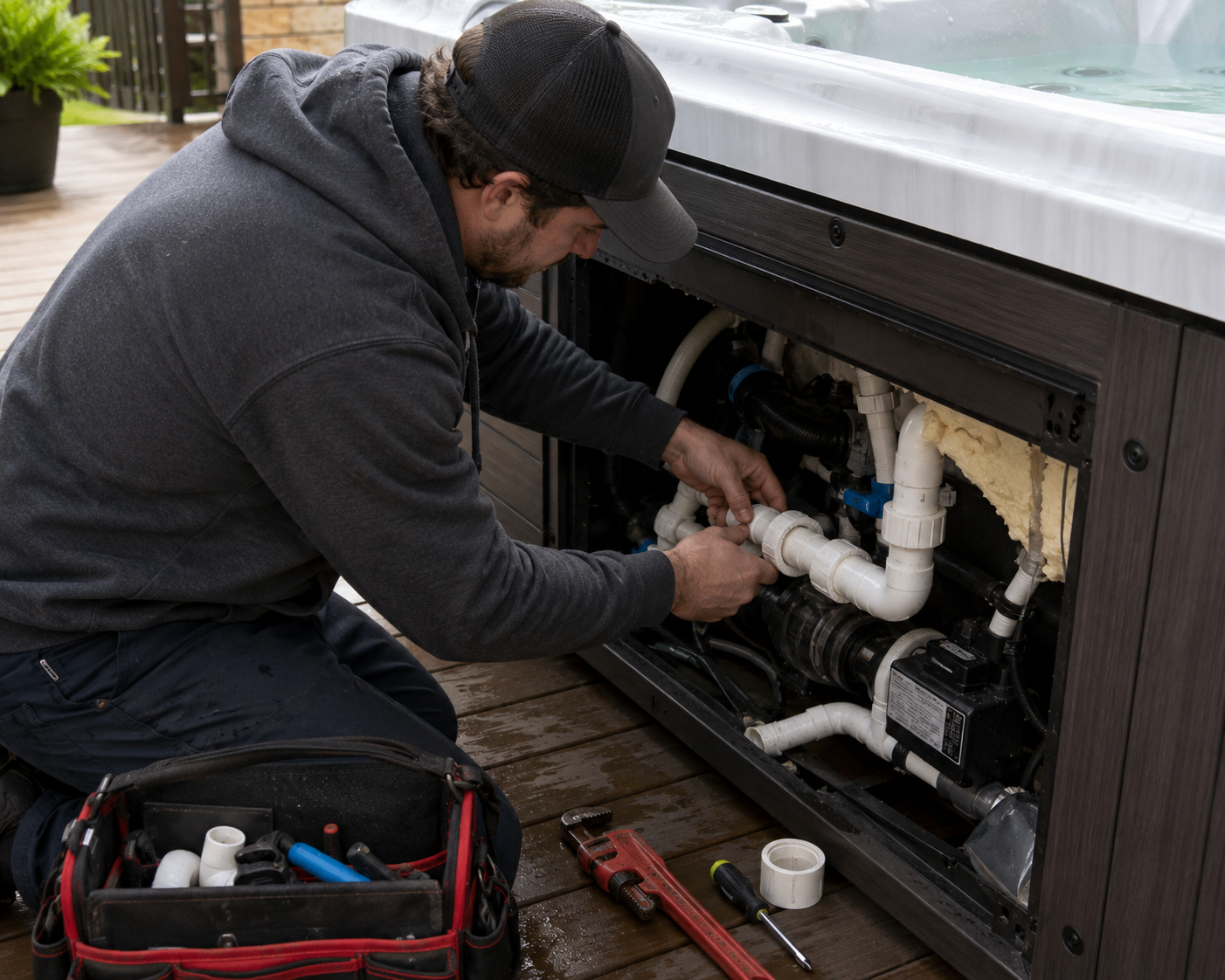
Common Places a Pool Heater Leaks
- Inlet and outlet unions: Loose collars or worn O-rings can drip whenever the pump runs.
- Drain plug: A damaged O-ring or loose plug after winterizing may cause a pool heater dripping water complaint.
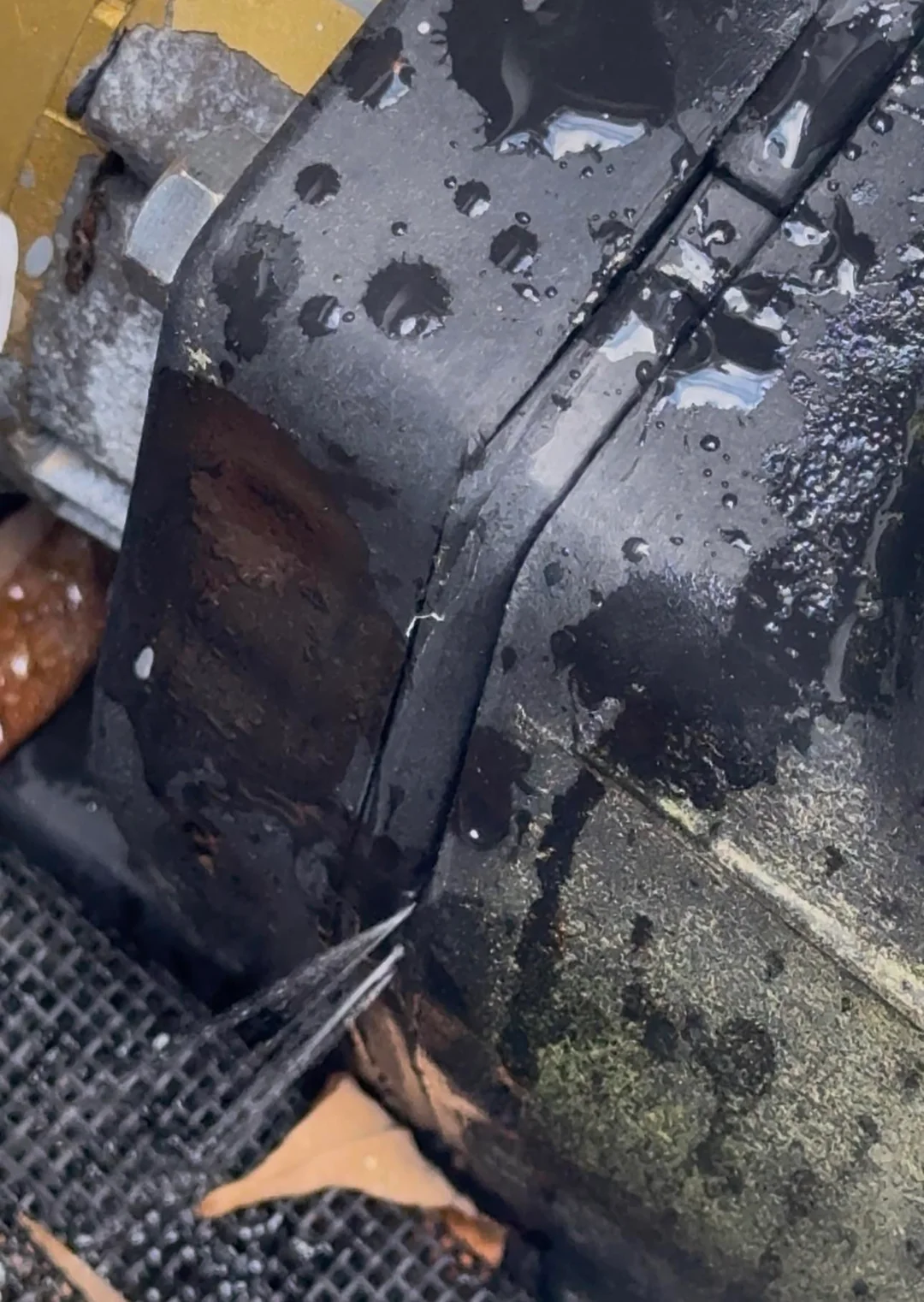
- Header assembly: Freeze damage, corrosion, or a leaking sensor port can wet the cabinet.
- Pressure relief valve: Jandy’s troubleshooting guidance says a downstream restriction can make this valve open.
- Heat exchanger: A pool heater heat exchanger leak is serious and can require major disassembly.
- Nearby PVC: A pressure-side pool equipment leak can travel across the pad and frame the heater.
- Condensate drain: A missing, disconnected, or clogged drain hose can leave normal moisture beneath the cabinet.
Pool Heater Leak vs Normal Condensation
Hayward’s HDF heater manual says condensation varies with water temperature, humidity, flow, and weather. Some gas models use a drain hose. Heat pumps condense humid air at their cold coil; AquaCal’s technical video shows how to distinguish this from a leak.
Use this simple sequence:
| What You Observe | What It Usually Suggests |
|---|---|
| Pump on and heater off | Pressurized union, header, plug, or nearby plumbing leak |
| Water starts only when the burner fires | Condensation or temperature-dependent leak |
| Heat pump running on a humid day | Often normal condensation |
| Leak worsens at higher pump speed | Weak fitting, header, or other pressure-side component |
| Water continues after shutdown | Active plumbing leak, backflow, or nearby source |
Dry the pad. Run the pump with the heater off and watch the unions and cabinet base. Then activate heat. Water returning with circulation alone is not combustion condensation. If it appears only while heating, condensation is more likely, although a temperature-related pool heater leak still needs to be ruled out.
When a Heater Leak Is Serious
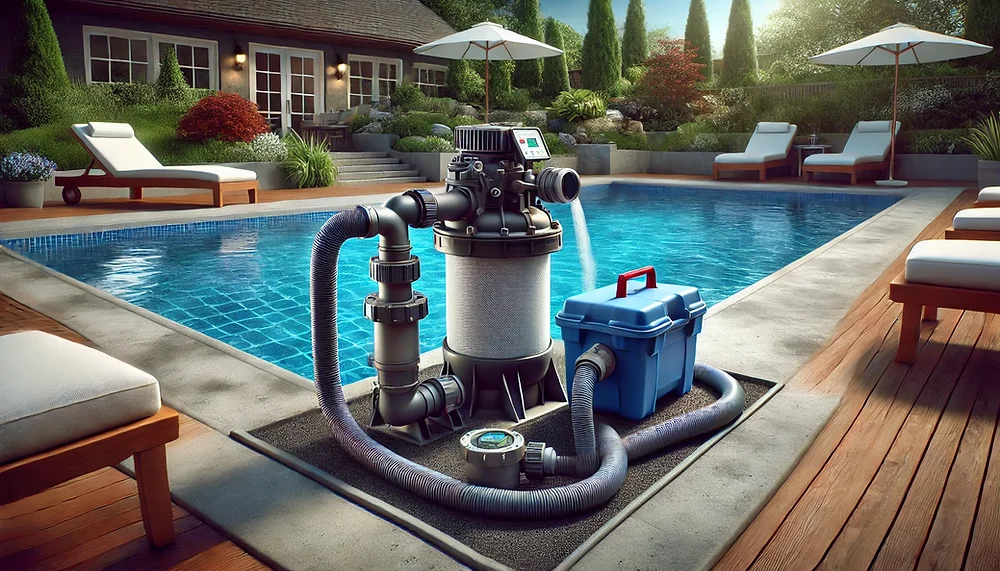
Shut the heater down when water enters the cabinet, touches wiring or gas controls, drains the pool, or arrives with pool heater error codes. Faster leaking at higher pump speed also needs attention. Pentair’s UltraTemp guide warns that equipment leaks can cause major water loss.
Do not remove internal panels. A pool heater heat exchanger leak, cracked manifold, wet electrical compartment, or gas-side problem belongs with a technician. Age, warranty, corrosion, and pool heater repair cost matter before choosing repair or replacement.
What Homeowners Should Check First
- Turn the heater off if water is near electrical or gas components.
- Check visible unions, drain plugs, valves, and PVC.
- Note whether the pool heater leaking water begins with the pump or only after heat starts.
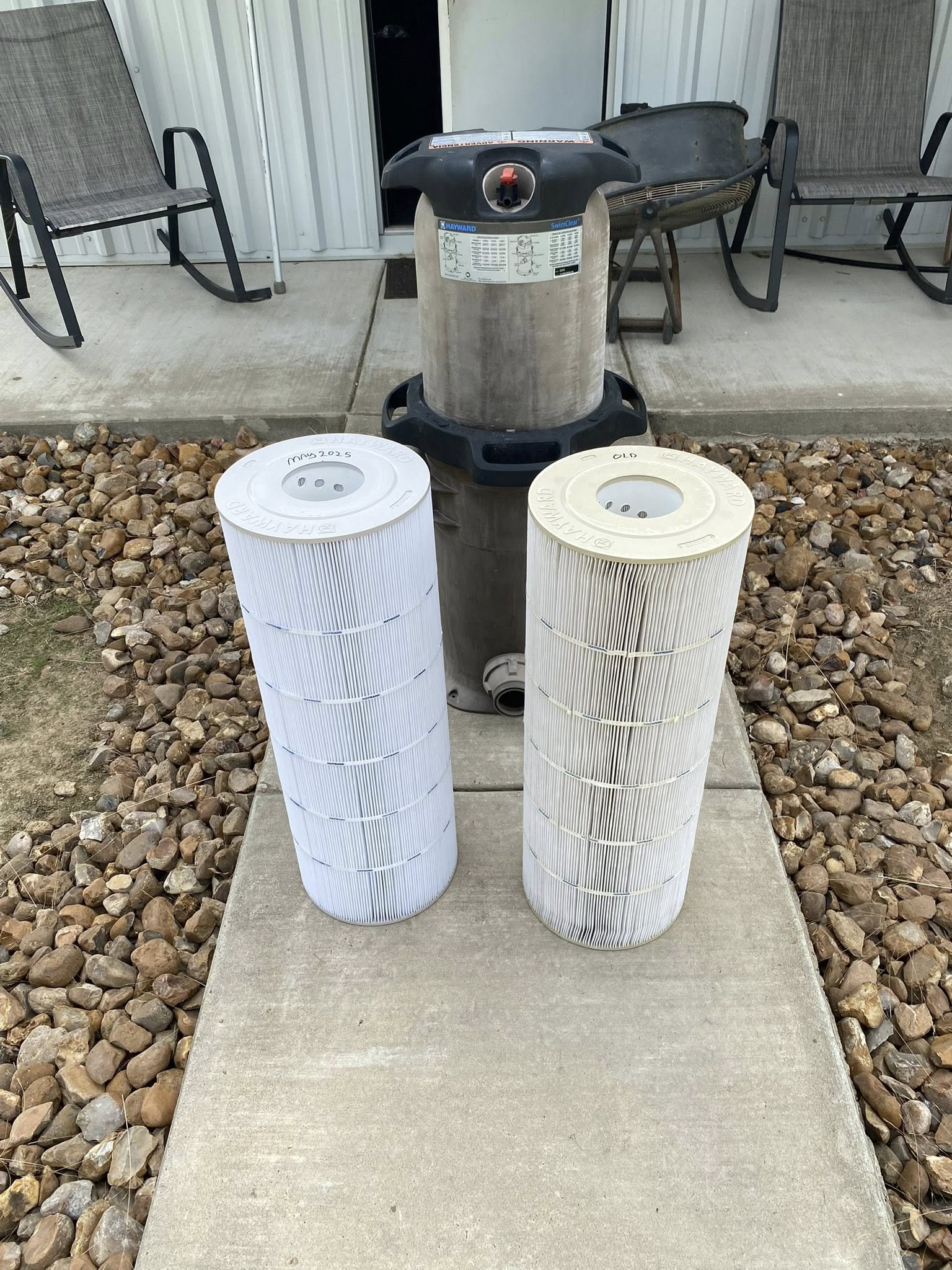
- Compare the gauge with its clean baseline. Pool filter pressure that is too high may reveal a restriction stressing a weak seal.
- Photograph the leak, model label, error code, and pump speed.
Jandy’s JXi manual emphasizes qualified service. Observe safely, but do not adjust gas valves, pressure switches, wiring, or internal parts.
Across Frisco, Plano, McKinney, Allen, Southlake, Grapevine, Keller, and Prosper, spring and fall startups often reveal freeze damage, a dry O-ring, or a blocked condensate path.
People Also Ask
Why is my pool heater leaking water?
The source may be a union, plug, header, relief valve, heat exchanger, nearby PVC, or condensation. Operating timing helps narrow it down.
Is water under a pool heater normal?
Sometimes. Heat pumps routinely produce condensation, and gas heaters may condense. A steady chlorinated leak needs inspection.
Can a pool heater leak be repaired?
Yes. Unions, O-rings, plugs, and some header parts are repairable. A leaking pool heater repair is a bigger decision when the exchanger or cabinet is corroded.
Is my heater leaking or sweating?
Dry the pad, run the pump with heat off, then activate the heater. Water during circulation alone is not combustion condensation.
Can high filter pressure cause a heater leak?
It can worsen a weak seal or make a relief valve discharge. It does not prove heater damage.
Should I run a pool heater that is leaking?
Not if water enters the cabinet, reaches controls, causes error codes, or flows steadily. Shut it down and arrange a diagnosis.
PoolBurg Finds the Leak Before You Replace the Wrong Part
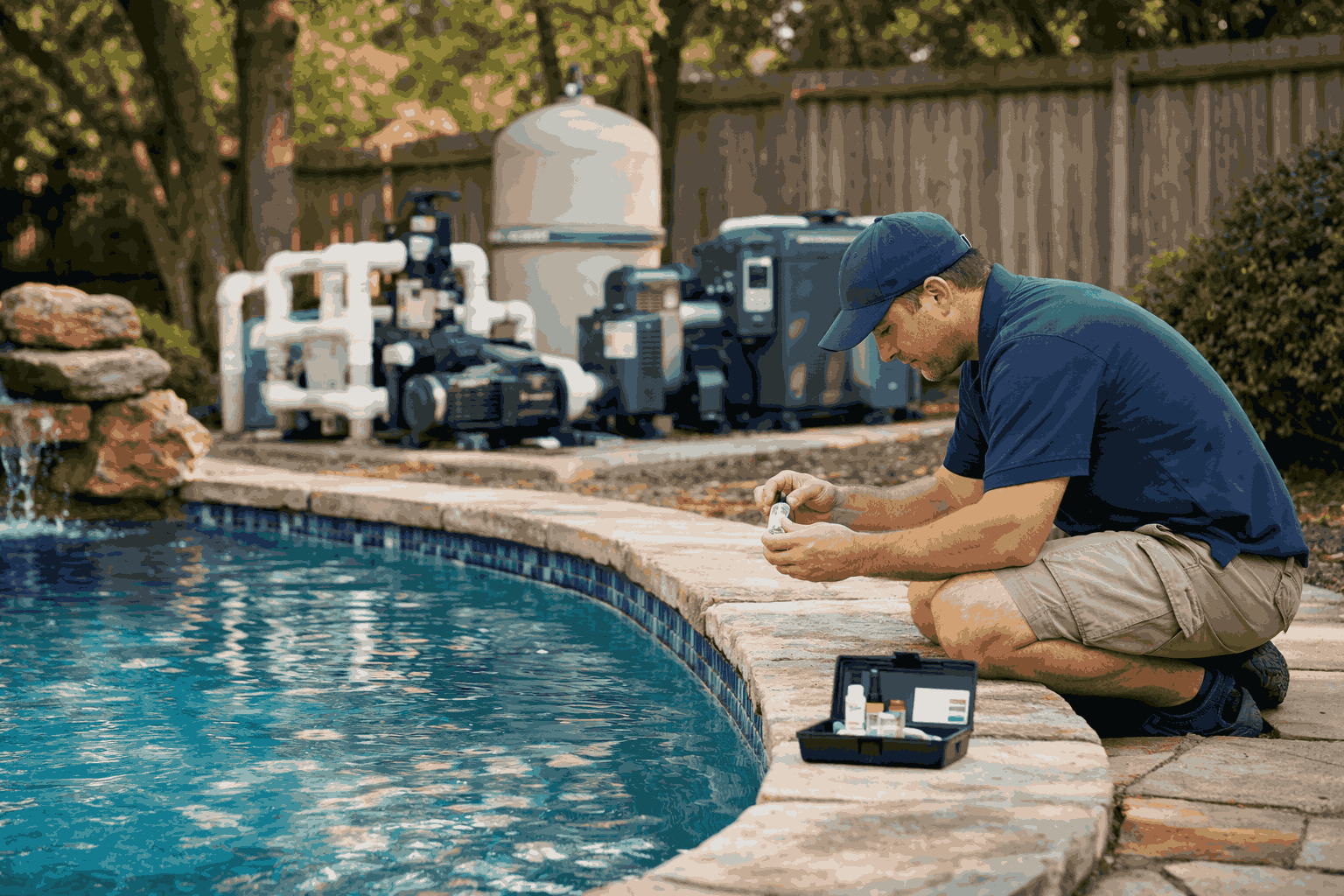
A pool heater leaking water needs a source, not a guess. PoolBurg can determine whether you have harmless condensation, a loose fitting, pressure-related leak, freeze-damaged header, or internal heater failure. If the equipment pad keeps getting wet, book local pool heater repair or contact PoolBurg before a small drip becomes a larger repair.