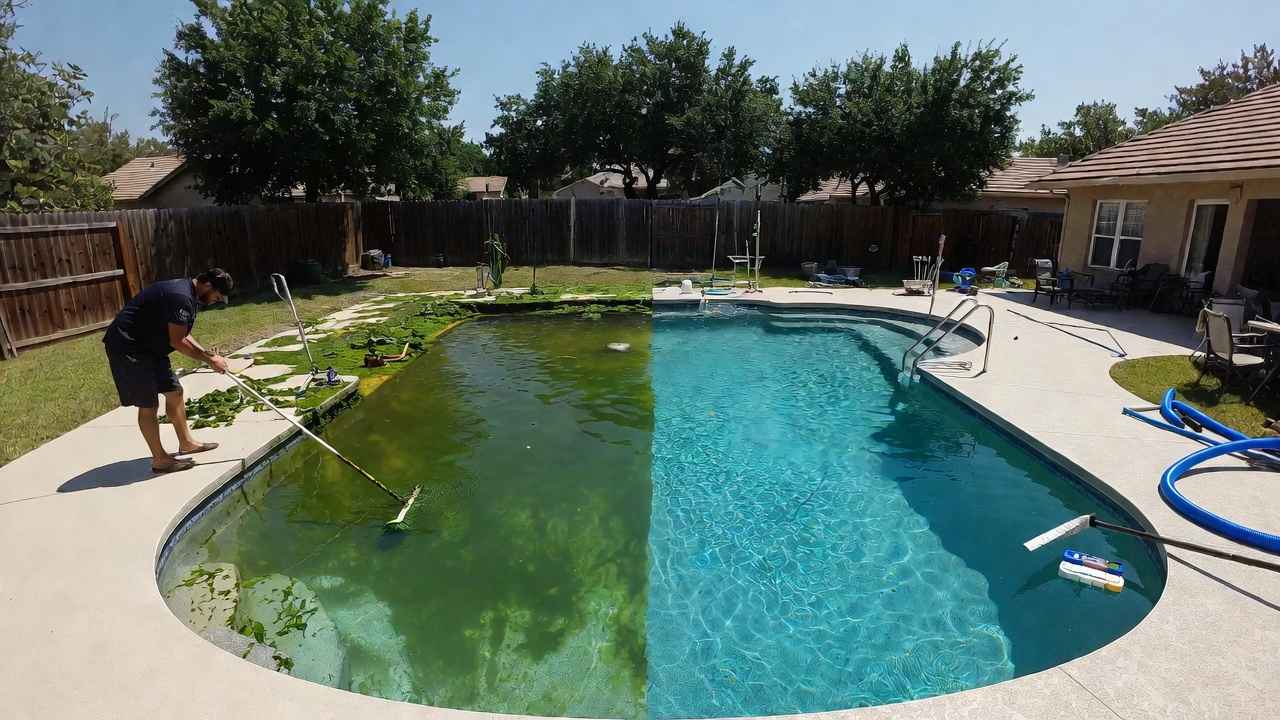
Pool stain removal is one of those things that seems like it should be straightforward until you’re actually standing at the edge of your pool staring at a brown streak on the wall that won’t brush away no matter what you do. Stains on pool surface areas are incredibly common in DFW — our hard water, iron-heavy fill water, and heavy tree coverage create the perfect recipe for pool staining that ranges from annoying to genuinely ugly. The trick is figuring out what you’re dealing with first, because the wrong treatment on the wrong stain either does nothing or makes it worse. Let’s walk through every type, how to identify it, and how to fix it.
Common Types of Pool Staining in North Texas
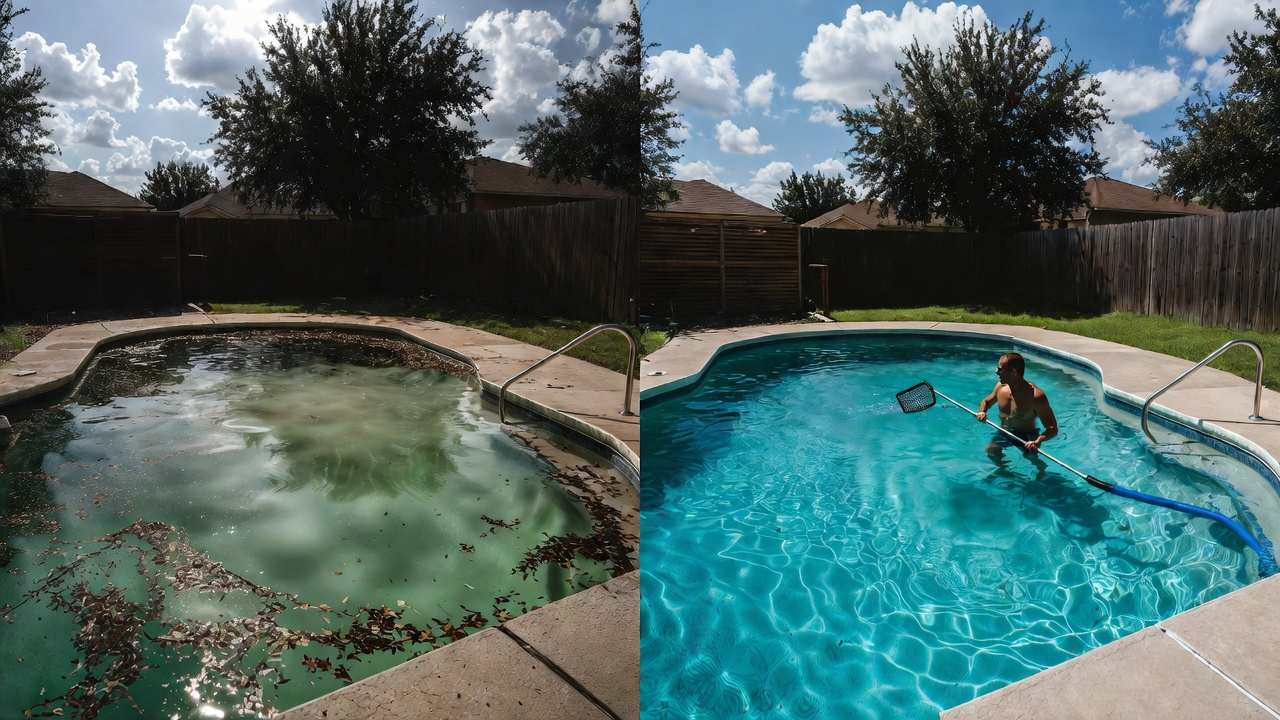
Brown and Rust Stains — Iron and Metal Pool Staining
These are the stains on pool surface areas that look like someone dragged a rusty pipe across your wall. The source is usually iron in DFW fill water, corroding metal components inside your equipment, or rebar bleed-through in older gunite pools. They appear as brown, rust-colored, or reddish patches and streaks, typically on walls, the floor, and around fittings and light niches. Iron staining is one of the most common pool staining issues we see across North Texas.
White and Grey Scale — Calcium Pool Staining
This is DFW’s number one pool staining problem, hands down. North Texas tap water arrives loaded with calcium, and when that calcium precipitates out of solution it deposits as white, grey, or chalky rough buildup on your surfaces. You’ll see it worst along the waterline tile, on spillover edges, and on pool surfaces near return jets. It’s not just cosmetic — calcium scale damages tile grout, roughens plaster, and can clog equipment. Managing this is a core part of any DFW pool maintenance program.
Green and Teal Stains — Copper Pool Staining
If you’ve got green or blue-green patches on your walls that aren’t algae, you’re probably looking at copper staining. The copper comes from copper-based algaecides, heat exchangers in gas heaters, or corroding copper plumbing. These stains on pool surface areas typically appear in zones with poor circulation where dissolved copper settles. It’s not as common as iron or calcium staining in DFW, but we see it regularly in pools that have used copper algaecide products.
Purple and Black Stains — Manganese Pool Staining
Manganese staining is less common in DFW than iron or calcium, but it does occur in some areas. It shows up as purple, black, or dark grey spots randomly distributed on walls and floor surfaces. The source is manganese dissolved in your fill water. It’s easy to confuse with black algae, so proper identification is critical before starting any treatment.
Green and Brown Organic Stains — Leaf and Debris Pool Staining
If you’ve ever pulled a pile of leaves off the bottom of your pool and found a perfect leaf-shaped brown outline underneath, that’s organic staining. Leaves, berries, flowers, and other organic matter left sitting on your pool surface leach tannins and pigments that stain the plaster. This is extremely common in DFW during fall season under pecan, oak, and Bradford pear trees — neighborhoods in Plano, Keller, and Allen deal with this constantly.
Black Spots — That Might Be Black Algae, Not a Stain
Dark black spots that feel slightly raised and won’t brush off easily are probably black algae, not staining. The treatment is completely different — check our full pool algae guide for the right approach. Treating black algae like a stain wastes time and money.
How to Identify Pool Staining — The Vitamin C and Chlorine Test
Before you spend money on pool stain removal products, you need to know what you’re treating. These two simple tests take thirty seconds and tell you exactly what type of stain you’re dealing with.
The Vitamin C Test for Metal Stains
Crush a vitamin C tablet (ascorbic acid) and rub it directly on the stain. If the stain lightens or disappears, you’re dealing with a metal stain — iron, copper, or manganese. The pool stain removal approach for metals involves ascorbic acid treatment for iron, chelating agents for copper, and metal sequestrant for ongoing prevention. The Pool & Hot Tub Alliance recommends regular metal testing as part of comprehensive pool water management.
The Chlorine Test for Organic Stains
Hold a chlorine tablet against the stain for about thirty seconds. If the stain lightens, it’s organic — caused by leaves, algae, or other biological matter. Organic pool staining treatment is straightforward: localized chlorine application and enzymatic cleaner. These stains are the easiest to fix.
If Neither Test Works
If vitamin C doesn’t affect it and chlorine doesn’t affect it, you’re likely looking at calcium scale — which requires acid treatment or professional removal. Or it’s black algae, which needs aggressive brushing and sustained high chlorine. Either way, professional pool stain removal diagnosis is the smart next step.
Pool Stain Removal Methods That Work in DFW
Metal Stain Removal
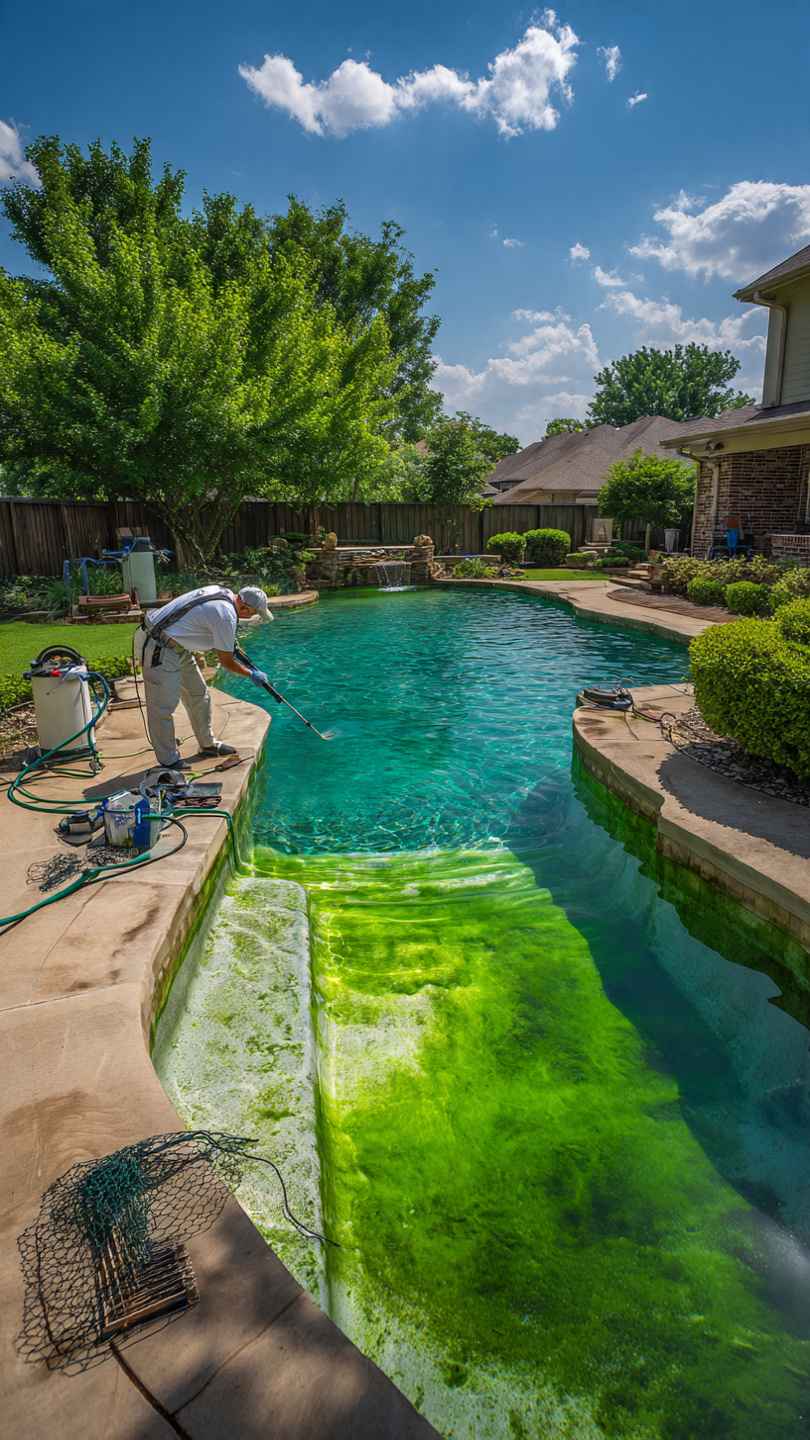
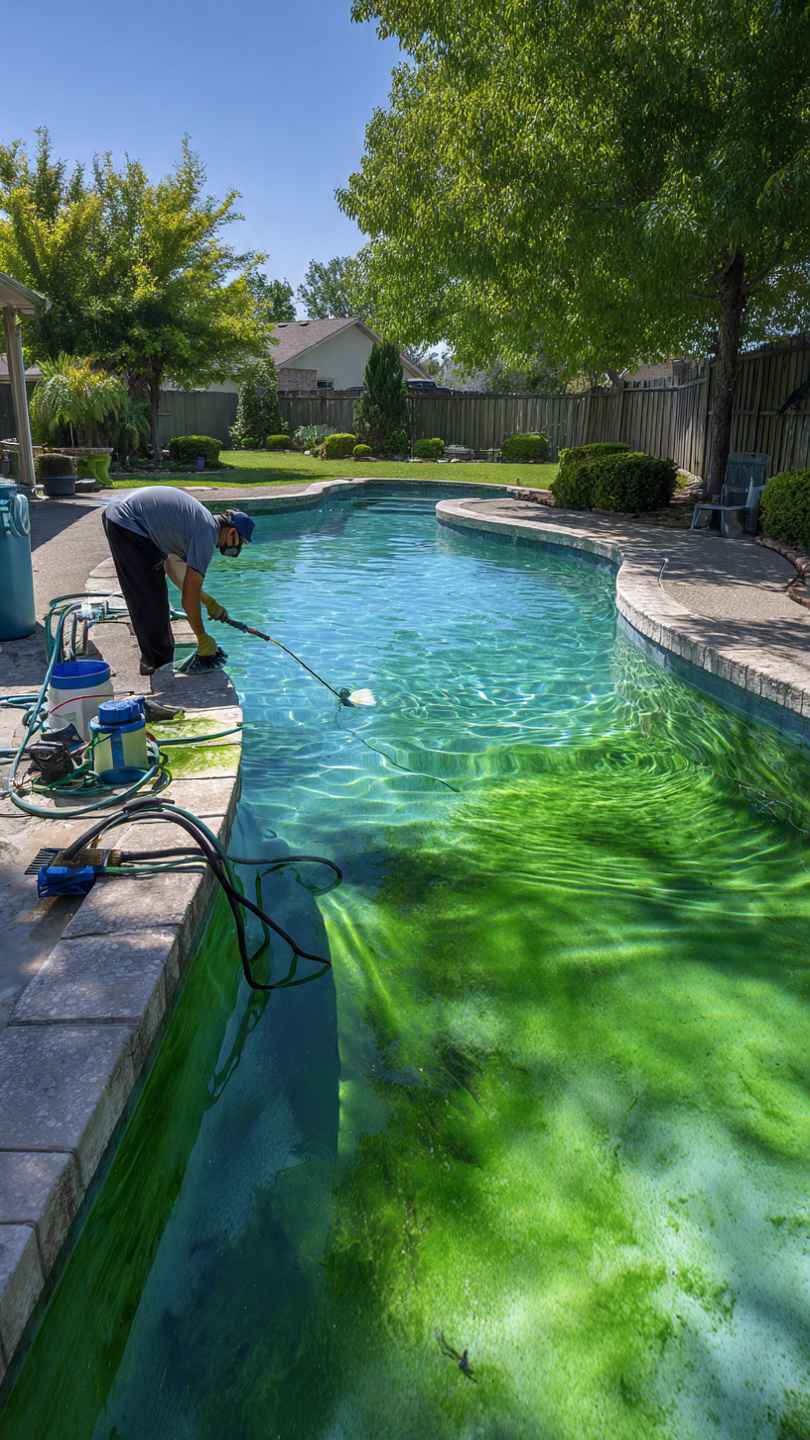
For iron stains, an ascorbic acid treatment is the gold standard — it dissolves the iron deposits without damaging your pool surface. For copper stains, a chelating agent binds the copper and allows your filter to remove it. After any metal pool stain removal, add a metal sequestrant to prevent the metals from restaining. DIY cost: $75 to $300. Professional treatment: $150 to $500.
Calcium Scale Removal
DFW’s calcium problem means this is the most common professional pool stain removal service we perform. Muriatic acid application works for waterline tile and moderate scale. A pumice stone handles small areas on gunite surfaces — but never use pumice on fiberglass or vinyl, it’ll scratch permanently. For severe scale, professional bead blasting or a full acid wash is the most effective approach. DIY cost: $100 to $500. Professional: $200 to $800.
Organic Stain Removal
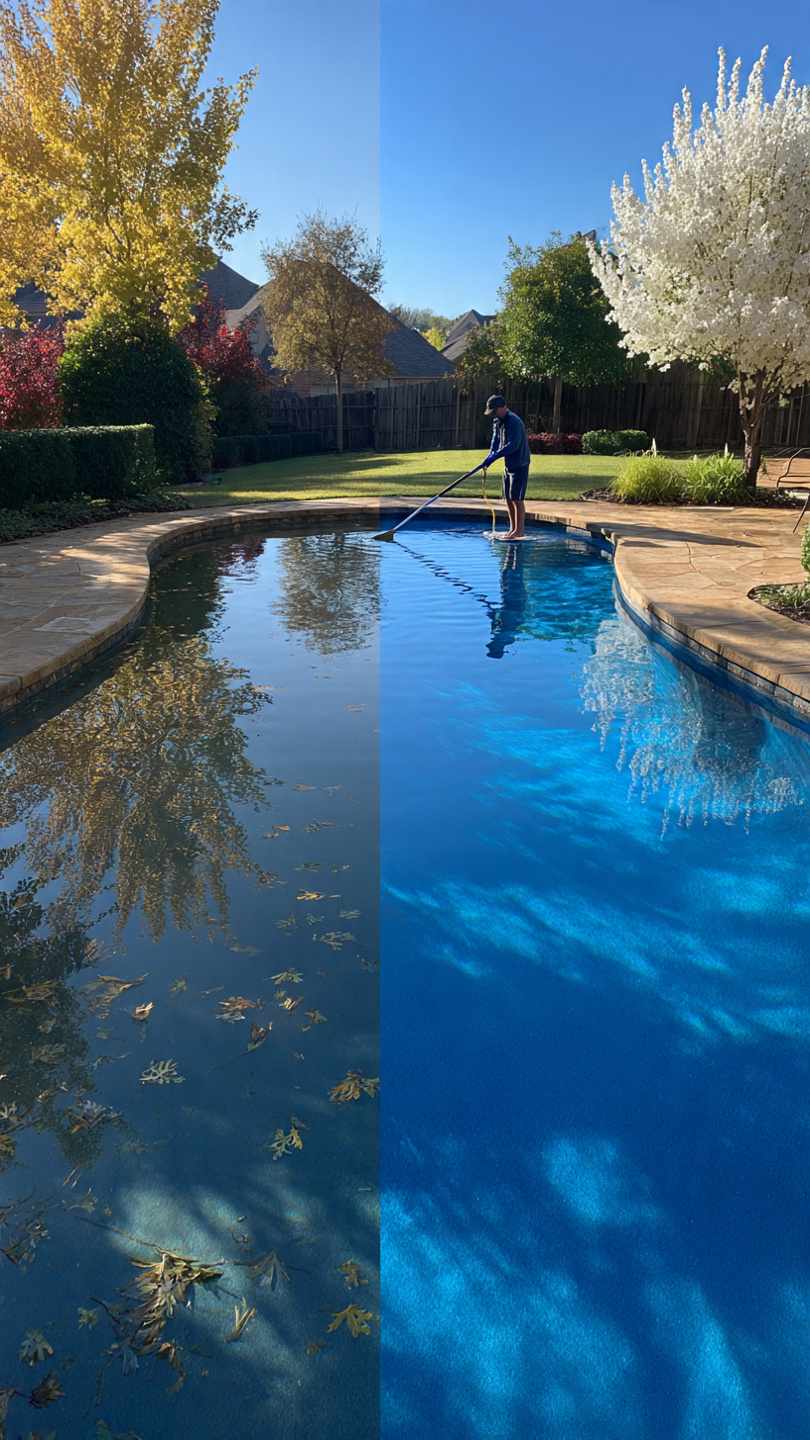
Organic stains on pool surface areas are the easiest to treat. Apply granular calcium hypochlorite directly on the stain, let it sit, and brush. For prevention, use an enzymatic pool cleaner monthly and keep up with regular skimming so debris never sits long enough to stain. Cost: minimal — usually handled with chemicals you already have.
Preventing Pool Staining in North Texas
The best pool stain removal is never needing it in the first place. For metal stains: use a metal sequestrant monthly and test your fill water for iron and copper content. For calcium scale: maintain pH at 7.2 to 7.4 (lower pH keeps calcium in solution), use a scale inhibitor product, and manage your calcium hardness through proper water balance — or a partial drain and refill when levels get too high. For organic stains: skim debris daily in fall, brush weekly, and use an enzymatic cleaner monthly.
For all pool staining types: consistent water chemistry is the single best prevention. When your water is balanced, staining conditions rarely develop. Check out our full pool maintenance tips for more detail.
People Also Ask
What causes brown stains on pool walls?
Brown stains are almost always iron. The source is typically dissolved iron in DFW fill water, corroding metal components in your equipment, or rebar bleed-through in older gunite pools. Use the vitamin C test to confirm, then treat with ascorbic acid for effective pool stain removal.
How do I remove calcium deposits from my pool?
Muriatic acid application for tile, pumice stone for small gunite areas (never fiberglass), and professional bead blasting or acid washing for severe scale. Prevention is key in DFW — keep pH at 7.2 to 7.4 and use a scale inhibitor to slow calcium pool staining buildup.
Can pool stains be removed without draining?
Many stains can be treated without draining. Metal stains respond to ascorbic acid treatment in the water. Organic stains can be spot-treated with chlorine. Calcium scale along the waterline can be cleaned with acid while the pool is full. Severe cases requiring acid washing or resurfacing do require a drain.
Why does my pool keep getting stains?
Recurring stains on pool surface areas usually mean the underlying cause hasn’t been addressed. If metals keep staining, your fill water contains iron or copper and you need ongoing sequestrant. If calcium keeps building, your water chemistry is allowing precipitation. Fix the source, not just the symptom.
Does DFW hard water cause pool stains?
Absolutely. DFW tap water is loaded with calcium and can contain elevated iron levels depending on your area. This makes calcium scale and iron staining far more common here than in cities with softer water. It’s one of the defining challenges of pool ownership in North Texas.
PoolBurg’s Pool Stain Removal and Diagnosis Services
At PoolBurg, we diagnose and treat every type of pool staining across our entire DFW service area. We start with proper identification — because the wrong treatment wastes your money — then apply targeted pool stain removal methods matched to your specific stain type. We also build prevention into your regular maintenance plan so stains don’t keep coming back. Iron, calcium, copper, organic — we’ve seen it all and we know exactly how to fix it.
Stains ruining your pool’s appearance? PoolBurg diagnoses and removes them — schedule a stain assessment.