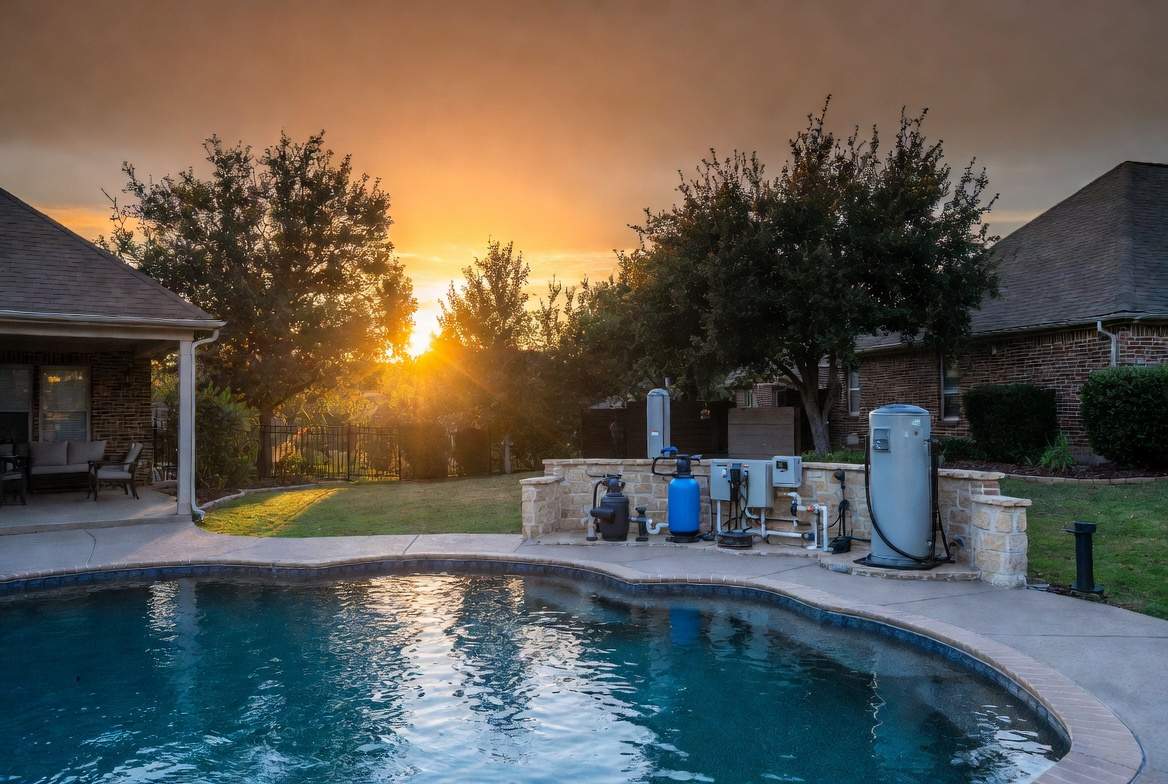
Pool energy savings are one of the biggest untapped opportunities for DFW homeowners. Behind your HVAC and water heater, your pool pump is probably the third-highest electricity consumer in your home. A single-speed pump can easily cost $100 to $200 per month during a Texas summer, and the total pool electricity cost Texas homeowners pay for an average pool runs $1,200 to $2,400 per year. The good news? You can cut that by 50 to 70% with a few smart changes. Here’s where every dollar goes and how to reduce pool energy costs without sacrificing water quality.
Where Your Pool Uses Electricity
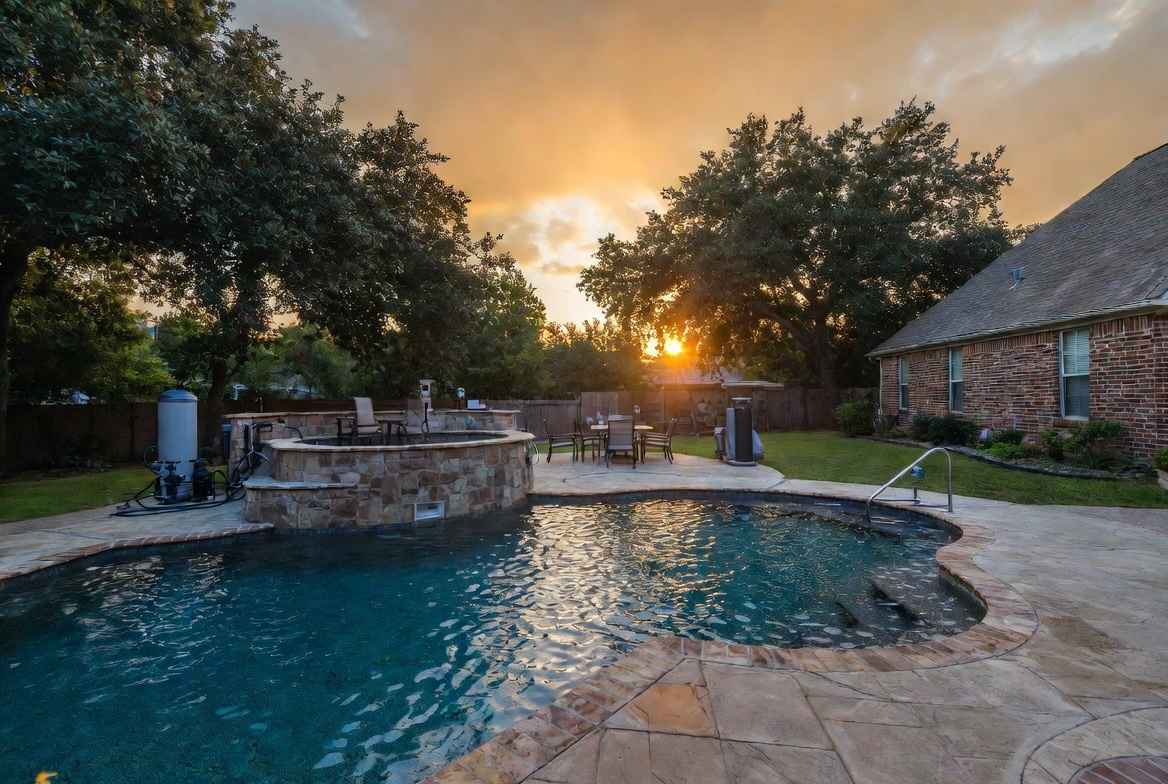
Your pool pump accounts for 70 to 85% of total pool energy consumption. It’s the single biggest variable you can control, and it’s where most pool energy savings come from. Single-speed pumps run at full power every second they’re on — massively wasteful. Variable speed pumps adjust output to match what’s actually needed. The U.S. Department of Energy confirms that variable speed pumps can reduce pool pumping energy by up to 75%.
After the pump, heating takes 10 to 25% of pool electricity if you run a heat pump or electric heater. Gas heaters use gas instead of electricity, so that’s a different cost line. Pool lights account for 1 to 3% — but old incandescent bulbs at 300 to 500 watts each add up. LED replacements use 40 to 80 watts. Salt chlorine generators draw 1 to 3%, automation systems 1 to 2%, and robotic cleaners 1 to 5%.
The 5 Best Pool Energy Savings Moves for DFW Owners
1. Upgrade to a variable speed pump. This is the single biggest pool energy savings move you can make. Savings run $600 to $1,500 per year, and the pump typically pays for itself in 12 to 18 months. Our variable speed vs single speed comparison has the full math. If you only do one thing on this list, do this one.
2. Optimize your pump schedule. Running at lower speeds for longer periods gives you the same water turnover with dramatically less energy. Example: 8 hours at 3,450 RPM versus 12 hours at 1,800 RPM — same filtration, roughly 75% less electricity. Use a timer or automation system to dial this in. Our pump running time guide covers optimal scheduling for DFW conditions.
3. Run the pump during off-peak hours. Texas has a deregulated electricity market, which means you pick your plan. Many plans offer time-of-use rates, free nights, or free weekends. Running your pump from 11pm to 11am on a free-nights plan can slash your per-kWh cost by 30 to 50%. The Public Utility Commission of Texas has tools for comparing electricity plans in your area. This is where understanding your pool electricity cost Texas numbers really pays off.
4. Use a pool cover. A solar cover retains heat and cuts heater run time by 50 to 70%. Less evaporation also means less water replacement and less chemical loss. DOE data shows that covers are the single most effective way to reduce pool heating costs. Our pool cover guide breaks down the options.
5. Switch to LED pool lights. An 80% energy reduction over incandescent, plus they last years longer. If your pool has old 300-watt bulbs, swapping to LEDs is easy pool energy savings you’ll notice on the next bill. Our pool light repair page covers upgrades and installation.
Texas Electricity Tips That Boost Pool Energy Savings

Because Texas lets you shop for electricity, your plan choice directly affects how to reduce pool energy costs. Fixed-rate plans give you predictability. Variable-rate plans can spike in summer when demand peaks — which is exactly when your pump runs the most hours. Free-nights or free-weekends plans are a pool owner’s best friend if you schedule your pump accordingly. The Texas Power Guide is a solid resource for comparing plans.
Solar is worth mentioning too. DFW gets 230+ sunny days a year. A dedicated solar system for pool equipment runs $3,000 to $8,000 with a payback period of 3 to 7 years. Some homeowners roll pool equipment into their whole-home solar setup. The Solar Energy Industries Association tracks Texas solar incentives and policy updates.
Quick Math on Pool Energy Savings
Single-speed pump: 1,500 watts × 10 hours × 30 days ÷ 1,000 × $0.12 per kWh = about $54 per month just for the pump. Variable speed at an optimized setting: 400 watts × 12 hours × 30 days ÷ 1,000 × $0.12 = about $17 per month. That’s $444 per year saved on the pump alone. Add a pool cover, LED lights, and off-peak scheduling, and your total pool energy savings add up to 50 to 70% off your current bill.
People Also Ask

How much electricity does a pool use in Texas?
An average DFW pool costs $1,200 to $2,400 per year in electricity, with the pump being the biggest draw. Single-speed pumps push toward the higher end, variable speed toward the lower end.
Is a variable speed pump worth it for energy savings?
Absolutely. It’s the single biggest pool energy savings upgrade available. Most DFW owners save $600 to $1,500 per year and recoup the pump cost in 12 to 18 months.
What time should I run my pool pump to save electricity?
During off-peak hours on your electricity plan. Many Texas plans offer free nights (typically 9pm to 6am or similar). Running the pump during those windows cuts your per-kWh cost significantly.
How much does a pool add to my electric bill in Texas?
$100 to $200 per month in summer with a single-speed pump. $30 to $70 per month with a variable speed pump on an optimized schedule. Annual total ranges from $1,200 to $2,400 before upgrades. Our DFW pool cost breakdown has the full picture.
PoolBurg Optimizes Your Pool for Maximum Energy Efficiency
Want to cut your pool electricity bill in half? Contact PoolBurg and we’ll assess your current setup — pump speed optimization, schedule programming, and equipment upgrade recommendations. Pool energy savings are real money back in your pocket every single month.