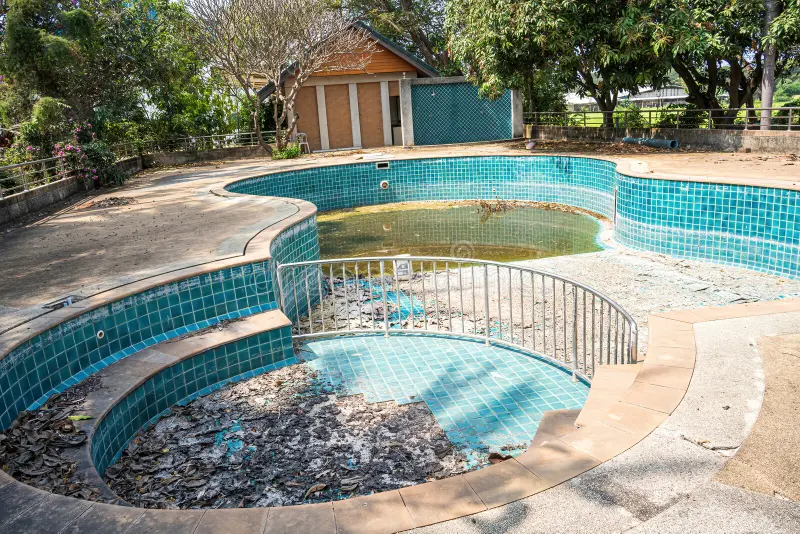
If you are a homeowner in Frisco or McKinney right now, you are likely looking at a thin layer of “yellow dust” on your water every morning. This April 2026 oak pollen onslaught is no joke—it’s an all-you-can-eat buffet for algae. But have you noticed that the pollen seems to park itself in one specific corner of the shallow end? Or maybe you have one spot on the steps where a green film appears no matter how much chlorine you dump in. These are classic pool dead spots caused by poor pool circulation.
In our unique North Texas climate, where the “liquid rock” hard water already makes chemistry a challenge, letting your water stagnate is like leaving the front door open for the “Green Monster” to move in.
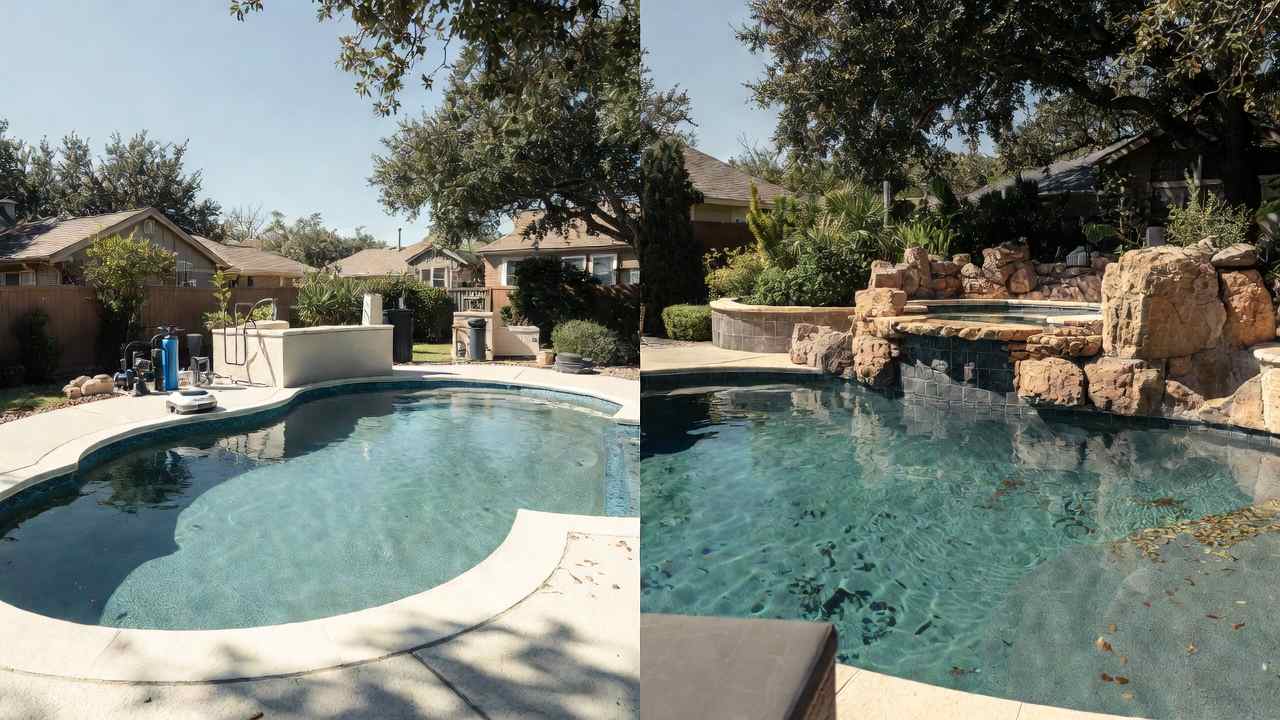
Why Circulation Matters More Than Most DFW Owners Realize
In my years helping DFW neighbors keep their pools “safe and blue,” I’ve seen that most people focus entirely on the chemical bucket. But here is the “unvarnished truth”: chemicals only work if they reach the target. Think of your pool’s circulation like the blood in your body; if it stops moving to a limb, things go south fast.
When you have poor pool circulation, your chlorine sits near the skimmer while your pool dead spots become stagnant breeding grounds. In the 85°F+ spring days we are already seeing, a dead zone can turn from “slightly hazy” to “bright green swamp” in under 48 hours. With gas prices jumping 36.1% this year and diesel hitting $5.11 due to the ongoing Iran war ripple effects, you can’t afford to waste money on “rescue” chemicals because your water isn’t moving.
Signs You Are Dealing with Pool Dead Spots and Poor Pool Circulation
How do you know if your “unpaid roommate” (the pool) isn’t pulling its weight? Look for these red flags:
- Recurring Algae: You brush away green or yellow film in the same corner every Tuesday, but it’s back by Thursday.
- Cloudy Pockets: The middle of the pool is clear, but the area behind the ladder or near the benches looks like a misty Dallas morning.
- Temperature Variations: You jump in and feel a 10-degree difference between the surface and the floor.
- Debris Graveyards: Leaves and pollen always settle in the same “orbit” rather than being pulled into the skimmer basket.
- Uneven Chlorine: Your test kit shows 3.0 ppm near the equipment pad but 0.5 ppm in the deep end.

Common Causes of Stagnant Water in North Texas
Most poor pool circulation isn’t a “broken” part; it’s a setup issue. Builders in the DFW metroplex often install “builder-grade” single-speed pumps that are undersized for the complex shapes of modern gunite pools. Other common culprits include:
- Improper Jet Aiming: Most homeowners aim their return “eyeballs” straight up to see pretty ripples. This is a mistake. Surface ripples increase evaporation and chemical off-gassing.
- Obstructions: Tanning ledges, wrap-around benches, and large floats create “shadows” where the main current can’t reach.
- Short Run Times: To save on electricity, many are running pumps only 4–6 hours. According to Energy.gov standards, a pool in a hot climate needs 1–2 full turnovers per day.
- Clogged Plumbing: Calcium buildup from our hard water can restrict flow, making a 2-HP pump feel like a 1-HP unit.
How to Improve Circulation Without a Major Renovation
You don’t need to jackhammer your deck to fix poor pool circulation. Start with these free or low-cost adjustments:
- The 45-Degree Rule: Aim your return jets downward at a 45-degree angle in a unified direction (all clockwise or all counter-clockwise). This creates a “vortex” that refreshes the floor and moves debris toward the skimmer.
- The “Problem Solver” Jet: If you have four returns, aim three to support the main loop and point the fourth directly at your worst pool dead spots (like the stairs).
- The VSP Upgrade: Switching to a Variable Speed Pump allows you to run the water slower for longer periods. It’s better for “hydraulic health” and, thanks to the 2026 Oncor incentives, you can get up to $600 back on qualifying models.
- Robotic Help: A robotic cleaner doesn’t just pick up leaves; it acts as a secondary circulation pump, scrubbing the floor and moving water in areas where the main system is weak.

People Also Ask
Why does algae always grow in the same spot in my pool?
This is the #1 sign of pool dead spots. The water in that area is stagnant, meaning the chlorine is being consumed by the sun and debris faster than the pump can replenish it.
How many hours should I run my pump for good circulation?
In a DFW April, aim for 8–10 hours. Once we hit the 100-degree summer, you’ll likely need 12+ hours to prevent poor pool circulation.
Should pool jets point up or down?
Point them down! Pointing them up causes aeration, which raises your pH and causes chemicals to evaporate faster. Downward aiming fixes pool dead spots on the floor.
Can a robotic cleaner help with poor pool circulation?
Yes. High-end robots like the iGarden M1 series can filter thousands of gallons per hour, effectively acting as a mobile return jet for your dead zones.
Persistent algae in one spot?
It might be a circulation issue rather than a chemical one. At PoolBurg, we are the “guardians of your hydraulic health.” We don’t just dump shock; we calibrate your system to eliminate pool dead spots and ensure your water stays “safe and blue” all season long.