Many DFW homeowners find that pool heat pump sizing is more complex than it appears on a spec sheet. While a 20,000-gallon capacity and a high BTU rating might seem like the only metrics that matter, the internet’s “bigger is better” advice is often oversimplified. Choosing the right unit requires a checklist of your real-world habits: your patience for warmup times, your weekly swim frequency, whether you utilize a cover, local wind exposure, and your specific goals for extending the spring and fall seasons.
That is why PoolBurg looks at the whole pool before recommending equipment. The right heat pump for inground pool comfort is not just the one that technically works. It is the one that matches your pool, your habits, and your patience level.
Why Pool Heat Pump Sizing Matters
Pool heat pump sizing matters because an undersized unit may run for long stretches and still leave the water short of your target temperature. That is frustrating when guests are coming over and the pool is still chilly. A larger unit usually recovers temperature faster, but it can also cost more upfront. The sweet spot is enough capacity without buying more heater than your pool lifestyle needs.
The U.S. Department of Energy explains that heat pump pool heaters are rated by Btu output, and that sizing starts with desired pool temperature, average outdoor temperature during the coldest month of pool use, and the temperature rise you need. That is a better starting point than guessing from gallons alone.
Factors That Affect Heat Pump Size
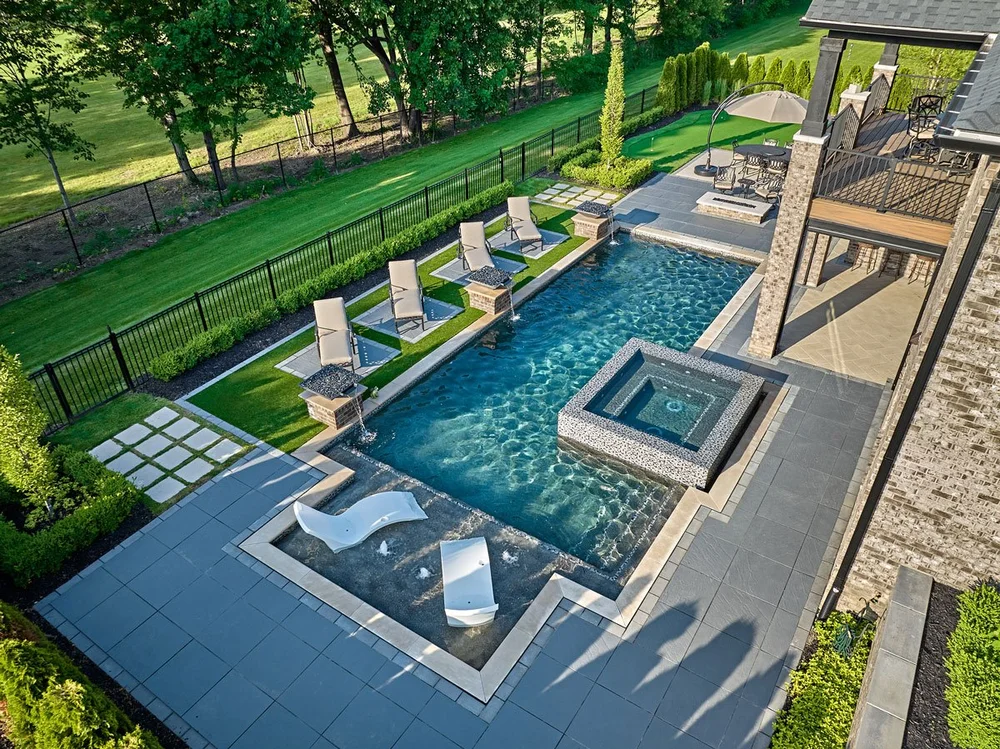
When a homeowner asks, “what size pool heat pump do I need?” the honest answer starts with a checklist. Pool gallons matter, but surface area matters too because that is where heat escapes. Shade, wind exposure, desired temperature, starting water temperature, spa attachment, and swim season goals all change the answer.
Cover use is a huge factor. Energy.gov notes that swimming pool covers can reduce pool heating costs by reducing evaporation, which means a covered pool may hold heat much better overnight than an uncovered one. In practical terms, pool heat pump sizing for a covered Plano pool may look different from pool heat pump sizing for an open, windy Southlake backyard.
Before comparing models, measure the pool correctly. If you are unsure of gallons, the Pentair pool volume calculator can help estimate volume from length, width, depth, and shape.
BTUs and Pool Heat Pumps Explained
A BTU is a heat measurement. In plain English, a higher pool heat pump BTU rating means the unit has more heating capacity. That usually helps with faster warmup and better recovery after cooler nights. But the BTU number is not the whole story. Air temperature, humidity, water flow, runtime, and equipment condition all affect real-world performance.
Tools like the Pentair pool heat pump calculator, the Raypak heat pump heater sizing tool, and the Hayward heater size calculator are useful because they move the conversation from “I saw a 140K BTU unit online” to “what does this pool actually need?”
Texas Heat Pump Sizing Considerations
In Frisco, Plano, McKinney, Allen, Southlake, Grapevine, Las Colinas, and Prosper, most heat pump conversations are really about spring and fall comfort. Texas days may feel warm, but cooler nights can pull heat out of the water. Wind across the pool can make that worse. Pool heat pump sizing should account for those shoulder-season evenings, not just the sunny afternoon temperature.
If you want steady family swimming several nights a week, a properly sized heat pump can make a lot of sense. If you only want to heat quickly for one party or an attached spa, your pool heater sizing conversation may point a different direction. PoolBurg explains that tradeoff in our heat pump vs gas pool heater guide.
Heat Pump vs Gas Heater Sizing
Heat pumps are efficient, but they are not instant heaters. Gas heaters usually heat faster and perform better in colder weather. That is why pool heat pump sizing should include expectations, not just equipment specs. A heat pump for inground pool water can be great for holding comfortable temperatures, while gas may be better for quick heat or spa use.
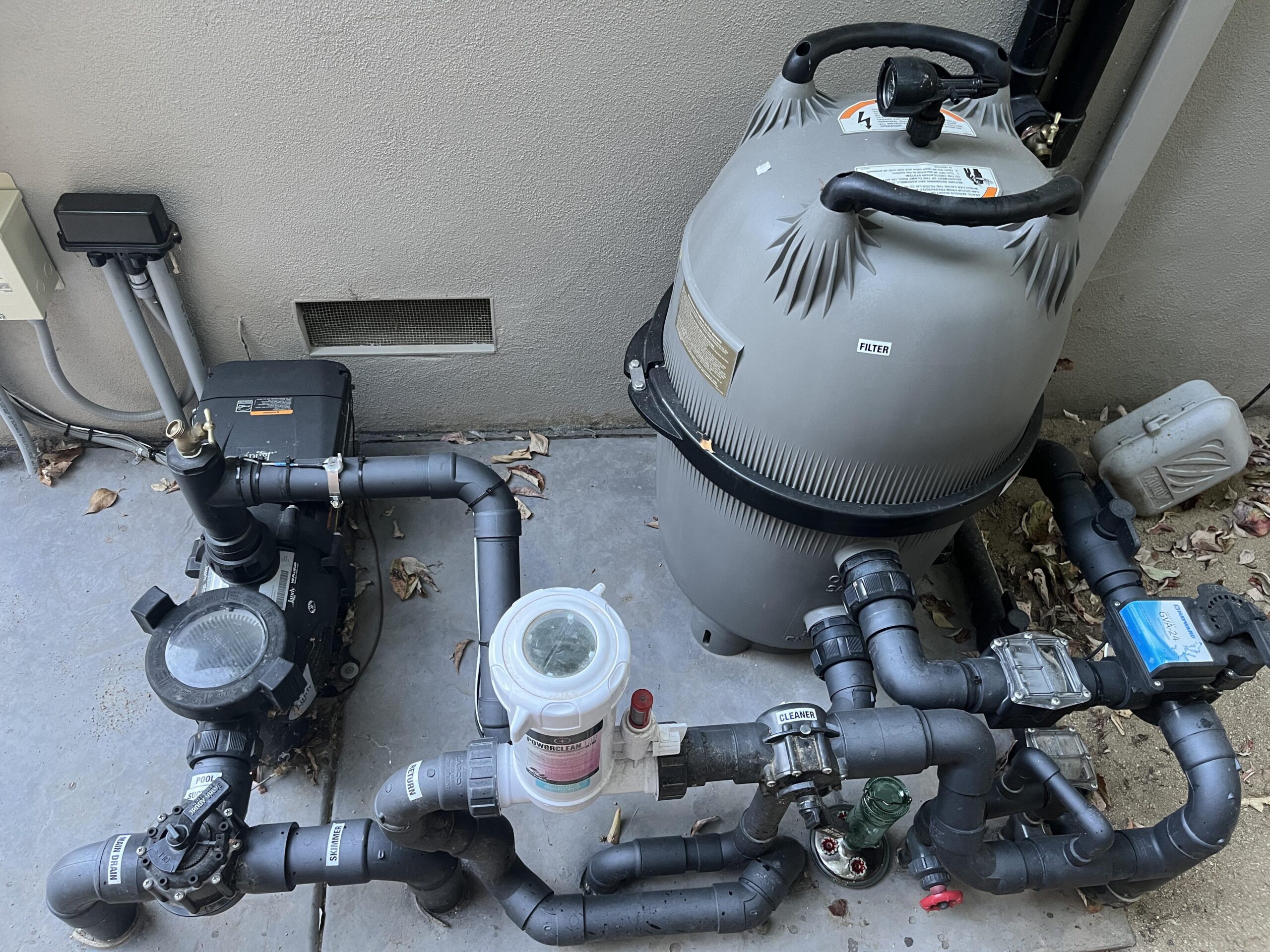
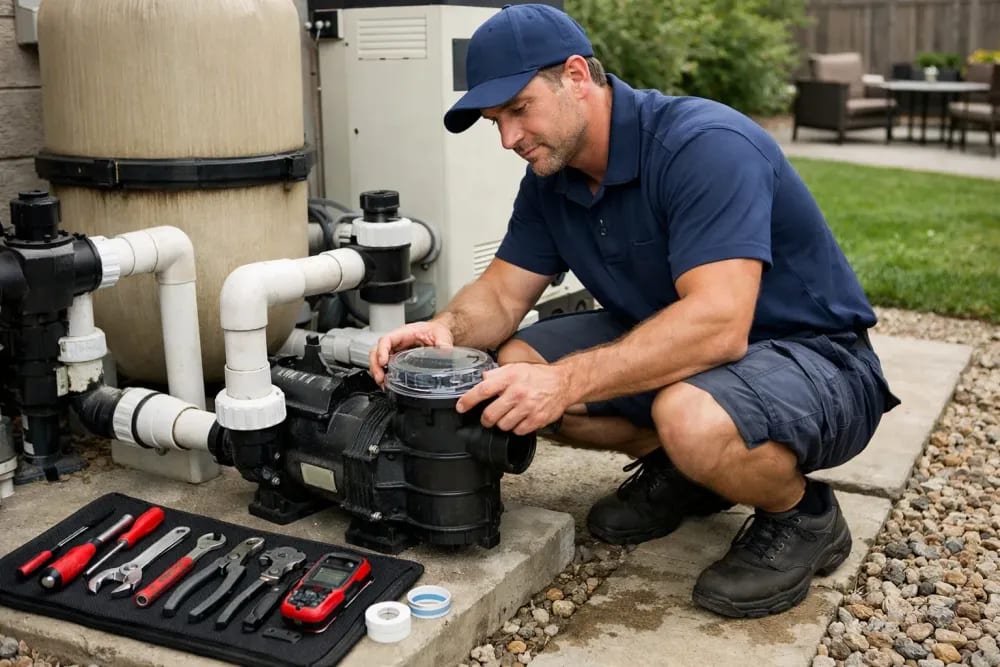
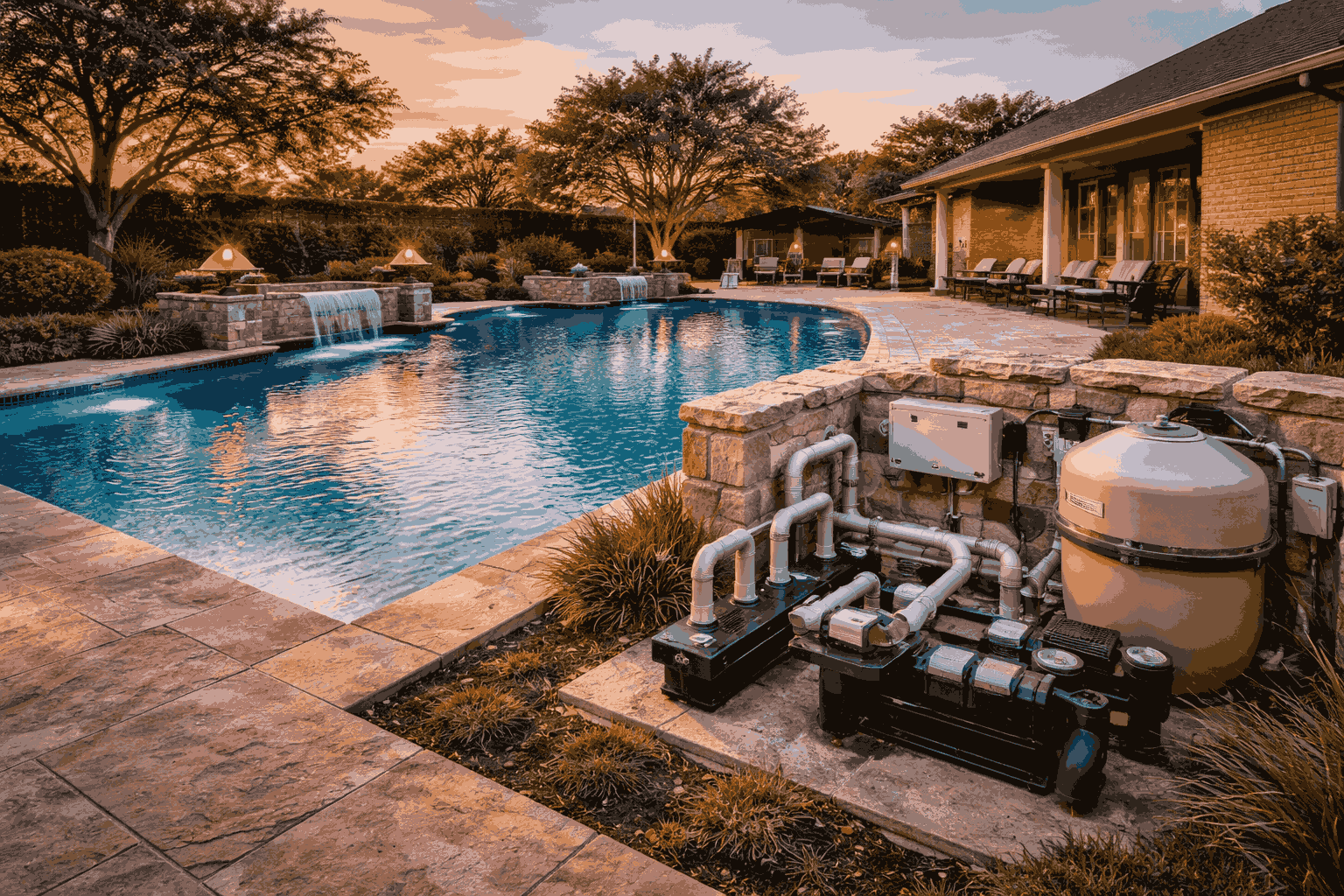
If your existing system already struggles with flow, dirty filters, or heater error codes, sizing alone will not fix everything. PoolBurg can inspect your setup through pool heating and cooling service, check condition through pool heat pump maintenance, and help you avoid buying the wrong unit for the wrong problem.
People Also Ask
What size pool heat pump do I need?
The right size depends on pool gallons, surface area, desired temperature, outdoor temperature, cover use, wind, and swim season goals. Pool heat pump sizing works best when those details are reviewed together.
How many BTUs do I need for my pool?
Higher pool heat pump BTU ratings usually mean more heating capacity, but the right number depends on your pool size, temperature rise, and how quickly you want the pool to recover.
Can a heat pump be too small for a pool?
Yes. A small heat pump may run constantly, warm slowly, and struggle during cooler nights. That does not always mean it is broken; it may simply be undersized.
Is a bigger pool heat pump better?
Sometimes, but not automatically. A larger unit may heat faster, but the best choice balances upfront cost, comfort goals, efficiency, and real pool conditions.
Does a pool cover reduce heater size needs?
A cover can make a big difference because it reduces heat loss and evaporation. It may help the heater maintain temperature with less runtime.
Is a heat pump good for Texas pools?
Yes, especially for DFW homeowners who want steady spring and fall swimming. For fast spa heating or colder weather use, gas may still be the better fit.
PoolBurg Helps Size the Heater Around Your Real Pool Life
Pool heat pump sizing should not feel like a math test you have to pass alone. PoolBurg can evaluate pool size, equipment condition, circulation, cover use, and how you actually want to swim before recommending a heater size. That way, you are not stuck with a unit that technically turns on but never gives you the comfort you paid for.
If you are comparing a heat pump, gas heater, or repair option in DFW, contact PoolBurg and let us help you choose the right path before money gets spent on the wrong heater.