If you are a homeowner in Frisco or McKinney right now, your pool is likely functioning like an “unpaid roommate” who leaves the lights on and the AC cranking. Between the 36.1% spike in regular gas prices and diesel sitting at $5.11 at our local pumps due to the ongoing Iran war disruptions, the cost of maintaining “hydraulic health” has never been higher. This April 2026, we aren’t just fighting the usual “yellow dust” oak pollen onslaught; we are fighting a massive energy squeeze.
The “unvarnished truth” is that your pool pump run time is the single biggest lever you have to control your utility bill while keeping your water “safe and blue.”
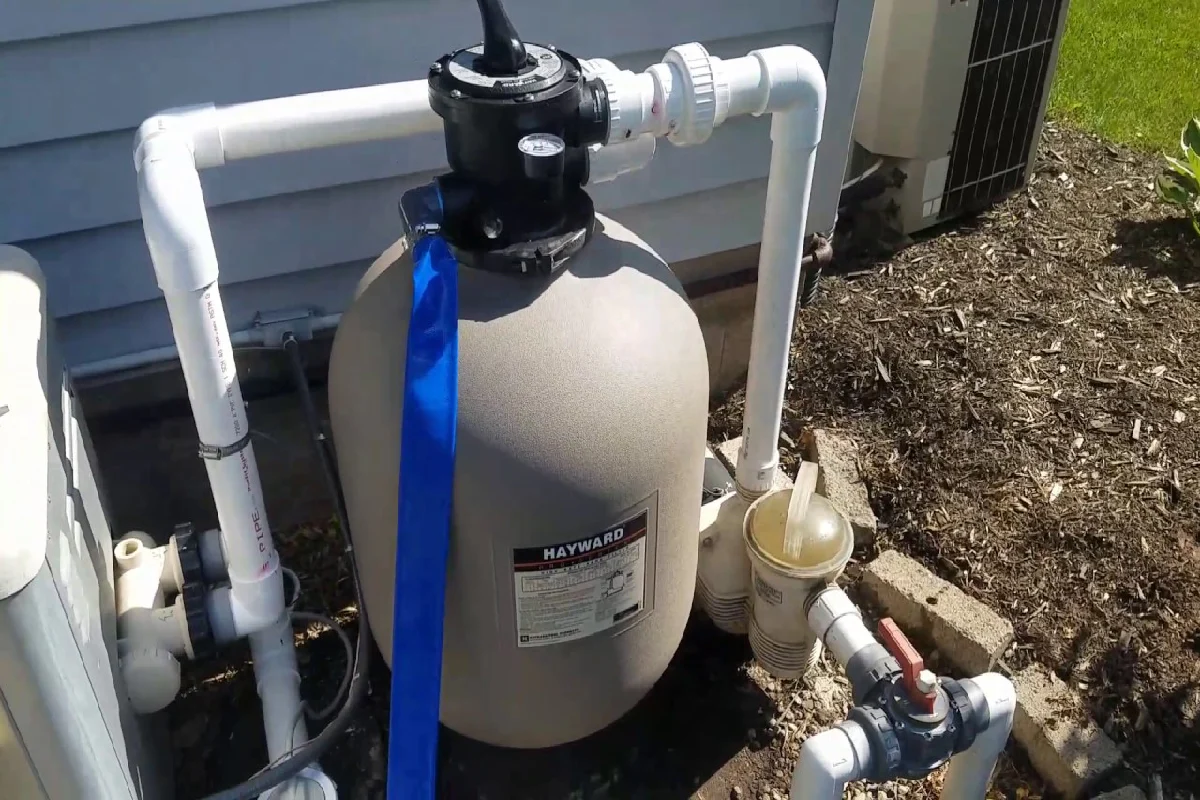
The Quick Answer for DFW Pool Owners
When my neighbors ask how long to run pool pump in Texas, I give them a seasonal roadmap because “set-it-and-forget-it” timers are a recipe for a green swamp in our climate.
- Summer (June-September): 10–12 hours per day minimum.
- Spring/Fall (March-May, October-November): 8–10 hours per day.
- Winter (December-February): 4–6 hours per day (but continuous during freeze events).
These numbers are significantly higher than national recommendations, and for a very good reason: Texas isn’t like the rest of the country.
Why Texas Pools Need More Pool Pump Run Time
In North Texas, we deal with “liquid rock” hard water and a sun that feels like a heat lamp.
Hotter Water Equals Faster Chemical Consumption
By July, DFW pool water regularly hits 88–95°F. Chlorine dissipates exponentially faster in warm water. Without adequate pool pump run time, your chemicals can’t distribute evenly, leaving stagnant “dead spots” where algae can establish itself in under 48 hours.
The Massive Debris Load
Our current April pollen season dumps an enormous organic load into pools. This “yellow dust” is an all-you-can-eat buffet for algae. If you aren’t running your filter long enough to pull that organic matter into the skimmer basket, your sanitizer will be depleted before it can actually kill anything.
Hard Water Demands Movement
DFW water is notoriously high in calcium and alkalinity. According to the NTMWD, stagnant water allows minerals to precipitate faster, leading to scale on your tiles and inside your heater.
Understanding Your Pool Turnover Rate
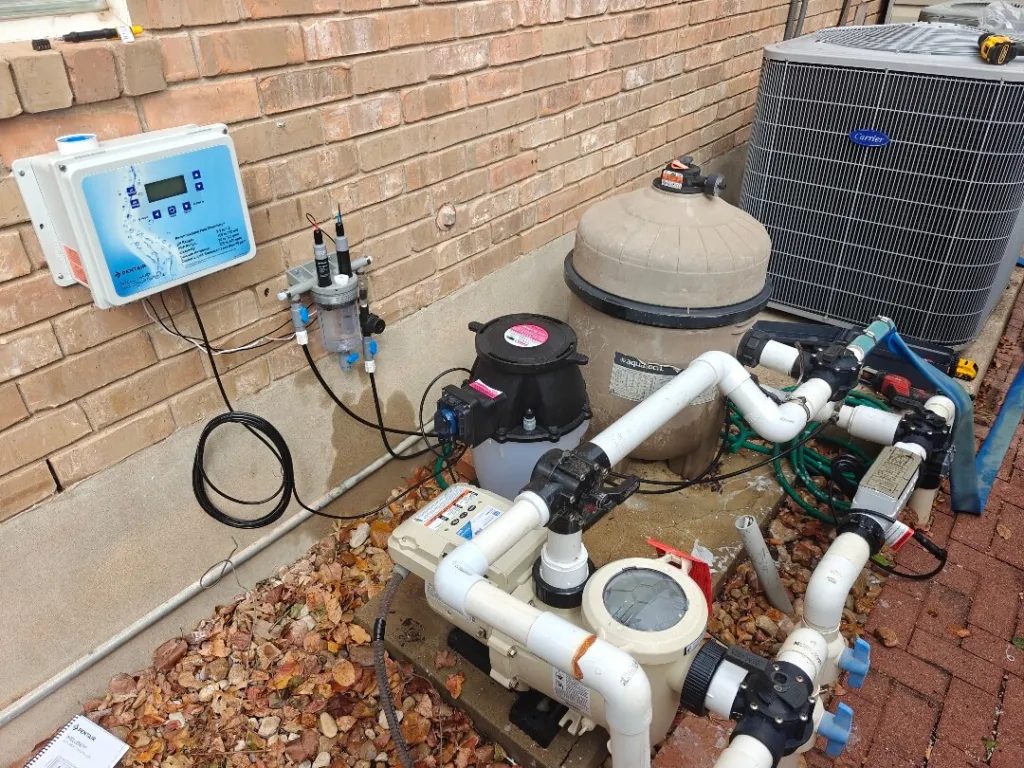
To truly master how long to run pool pump in Texas, you need to understand “turnover.” One turnover is when the entire volume of your pool passes through the filter once. In our 100°F+ summers, we recommend 1.5 to 2 full turnovers per day to maintain clarity.
The Formula:
Pool Gallons ÷ Pump Flow Rate (GPM) ÷ 60 = Hours per Turnover.
For a standard 20,000-gallon pool flowing at 50 GPM, one turnover takes about 6.6 hours. To hit our summer goal, you’d need a pool pump run time of roughly 10–13 hours.
Variable Speed Pump Strategy for DFW
The absolute best way to handle how long to run pool pump in Texas without going broke is a Variable Speed Pump (VSP). Thanks to the “Pump Affinity Law,” cutting your speed in half doesn’t just cut the power in half—it reduces energy use by seven-eighths.
We recommend a “Low and Slow” schedule:
- Low Speed (1,200-1,800 RPM): 10–14 hours for baseline filtration.
- Medium Speed (2,400-2,800 RPM): 2 hours for skimming surface debris.
- High Speed: Only for vacuuming or running the spa.
Using this strategy with a VSP can cut your electricity usage by up to 70% compared to an old single-speed motor. Plus, with current Oncor energy incentives, DFW homeowners can get up to $600 back for upgrading.
Signs You Are Not Running Your Pump Long Enough
If your chemistry levels are correct but you still see these issues, you need more pool pump run time:
- Cloudy Water: This is usually a sign of insufficient filtration time.
- Recurring Algae: If green spots appear on the walls despite high chlorine, your circulation is failing.
- Debris Accumulation: If the floor is always dirty, your skimmer isn’t pulling long enough to catch things before they sink.
Freeze Event Protocol
When DFW temperatures drop below 35°F, ignore your normal pool pump run time schedule. Run the pump continuously. Moving water resists freezing, but stagnant water in pipes will freeze and crack, leading to thousands in plumbing repairs. Never rely on a “freeze guard” alone; if the power goes out, you must manually drain your equipment.
People Also Ask
Can I run my pool pump 24/7?
Yes, and with a variable speed pump on a low setting, it is often more efficient and provides better “hydraulic health” than running a single-speed pump for 8 hours.
Should I run my pool pump at night or during the day?
In Texas, run it during the day. This is when the UV rays are eating your chlorine and the heat is fueling algae. You need circulation most when the sun is out.
Does running the pool pump longer prevent algae?
Absolutely. Algae thrives in stagnant water. High pool pump run time ensures your sanitizer reaches every corner of the pool.
PoolBurg Programs Your Pump for Optimal DFW Performance
Not sure if your system is set up for the 2026 energy reality? At PoolBurg, we are the “guardians of your hydraulic health.” We’ll analyze your pool volume and plumbing to program a custom pool pump run time that keeps your water sparkling while keeping your energy bills in check.