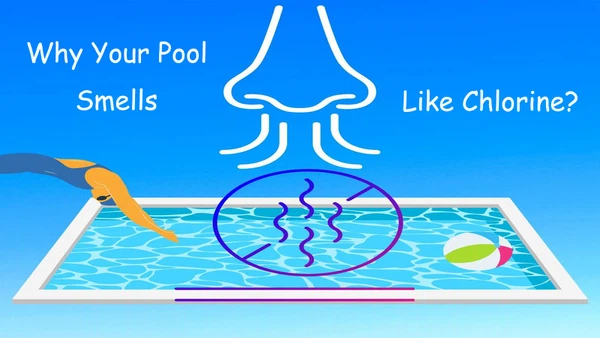
Look, I’ve been maintaining pools in Frisco and across North Texas for over 35 years, and I’ve heard it all. But the one thing I hear most often is, “Mikey, why does my pool smells like chlorine? It’s burning my eyes!”
It’s a massive misconception that a clean pool should have a strong chemical scent. The truth? A healthy, well-balanced pool shouldn’t smell like anything at all. If you’re catching a whiff of something unpleasant while you’re lounging on the tanning ledge, your water is trying to tell you something. Whether it’s a sharp chemical sting, a musty pool smell, or a “rotten egg” vibe, every odor has a specific root cause. This guide is your diagnostic tool to figure out why your pool smells bad and how to get that fresh, clear water back fast.
A Properly Maintained Pool Shouldn’t Smell — If It Does, Something’s Wrong
In the 100°F DFW summer, things happen to water chemistry at lightning speed. Many people think that a “bleach” smell means the pool is super clean. Actually, it usually means the opposite. Any persistent odor indicates that your sanitizer is losing a battle against something in the water. According to swimming safety guidelines, a strong odor is a primary sign that you should test the water before letting the kids jump in to prevent recreational water illnesses.
“Chlorine Smell” — The Most Common Pool Odor
If your pool smells like chlorine, you aren’t actually smelling chlorine. You’re smelling chloramines.
What you’re actually smelling: CHLORAMINES
Chloramines (combined chlorine) form when free chlorine reacts with nitrogen compounds brought in by swimmers—think sweat, body oils, and, yes, urine. Free chlorine itself has almost no odor. Chloramines, however, are pungent, irritating to the eyes, and can even cause respiratory issues in poorly ventilated areas.
The counterintuitive truth
If your pool smells like chlorine, you usually need more chlorine, not less. To break down those smelly chloramines, you have to reach “breakpoint chlorination.” This means shocking the pool to a high enough level that the combined chlorine is literally oxidized and “gassed off” the surface. You can find more detail on managing combined chlorine in the CDC’s professional operator toolkit.
Sulfur / Rotten Egg Smell
This one is alarming and for good reason. If you have a sulfur smell pool owners often panic, thinking a sewer line has burst.
- Cause #1: Anaerobic Bacteria. These bacteria grow in stagnant areas where oxygen is low—think dead spots behind steps, inside a filter that hasn’t been backwashed, or in a pool that sat still during a DFW power outage.
- Cause #2: Fill Water. In rural areas near Prosper, Celina, or north McKinney, some water sources naturally contain sulfur compounds. The smell often spikes right after you top off the pool.
- The Fix: Shock the pool heavily to kill the bacteria and run your pump 24/7 to oxygenate the water. If it’s from your fill water, we recommend a hose-end carbon filter. Refer to the WQA on identifying sulfur in water sources for more technical help.
Musty / Earthy / Swamp Smell
If your pool smells like a pond or a wet basement, you likely have a musty pool smell caused by algae—even if the water looks blue.
Algae produces organic compounds like geosmin that create that “dirt” smell. This is incredibly common in North Texas when the water hits 90°F. If the smell persists, we often find algae hiding in the skimmer throat or behind the pool light.
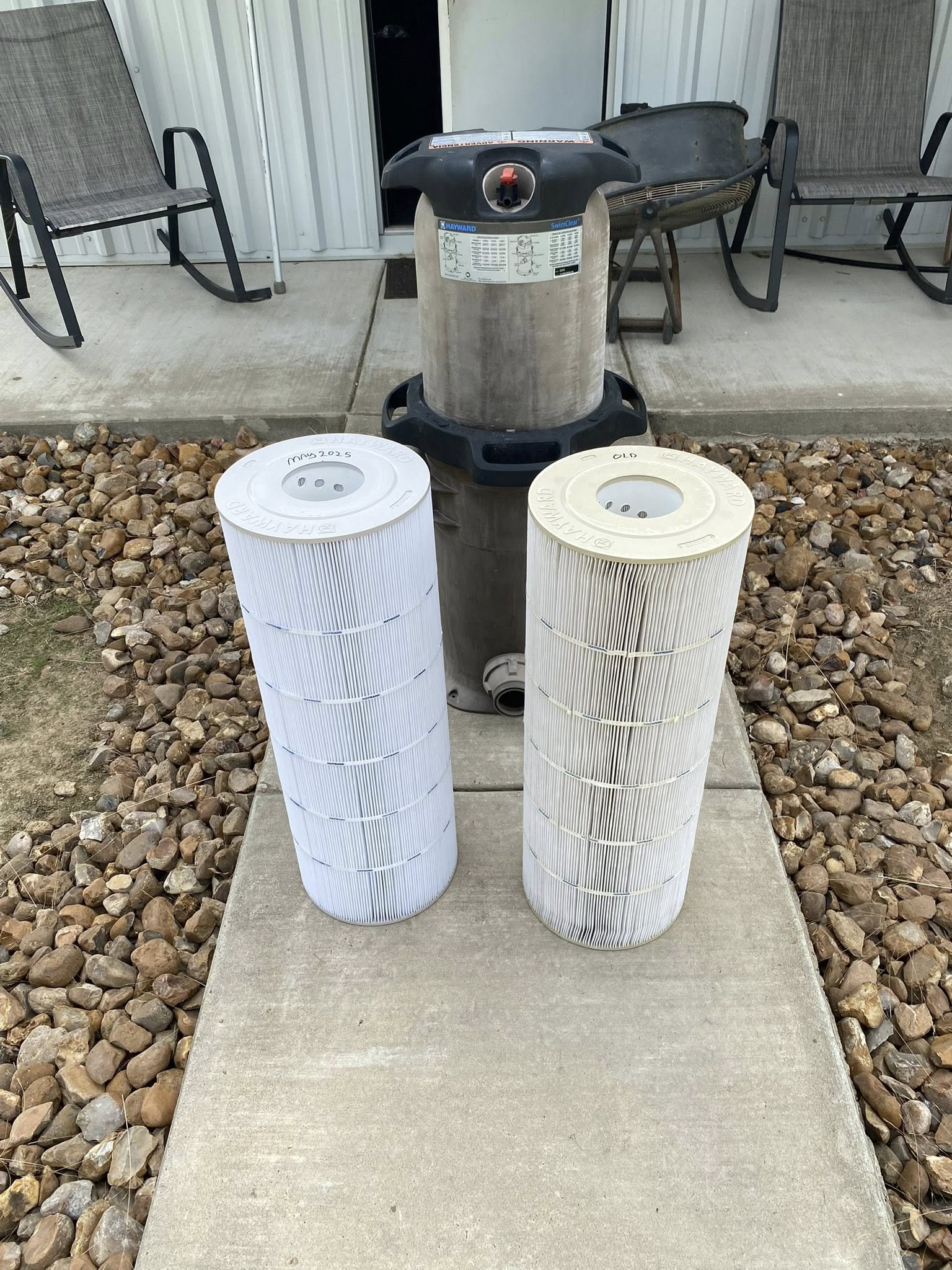
- The Fix: Aggressively brush every square inch of the pool and shock it. If the smell stays, check your filter—algae can grow inside the media itself.
Chemical / Harsh / Burning Smell
Sometimes a pool smells bad in a way that feels “sharp” or like it’s burning your nostrils.
- Cause #1: Extreme Chlorine Levels. If you just triple-shocked the pool, the smell will be intense. Stay out until the free chlorine drops below 5 ppm.
- Cause #2: Dangerous Chemical Reactions. This is the scary one. If you accidentally mixed chemicals or added them at the same time, you could be smelling toxic gas. If you smell a harsh, “bleach-on-steroids” odor, leave the area immediately and let it ventilate.
- Cause #3: Gas Leak. If you smell “rotten eggs” specifically near your pool equipment, it might not be the water—it could be a natural gas leak from your heater. This is an emergency. Turn off the heater, evacuate the area, and call your utility company immediately. Check this natural gas safety checklist for what to do during a suspected leak.
Sweet / Fruity Smell
Wait, a sweet smell is a bad thing? In a pool, yes. This is usually the smell of organic fermentation. If you have those massive North Texas oak or pecan trees dropping leaves that sit at the bottom for days, they start to “stew.”
- The Fix: Skim the debris, run the filter, and use an enzymatic cleaner to eat up those organic tannins.
People Also Ask
Why does my pool smell like chlorine?
It’s actually “combined chlorine” or chloramines. It means your chlorine is working hard but hasn’t finished the job. You need to shock the pool.
Is it safe to swim if my pool smells?
Generally, no. Strong smells indicate either high chloramines (which irritate) or a lack of sanitizer (which means bacteria is present).
Why does my pool smell like rotten eggs?
It’s either hydrogen sulfide from bacteria in stagnant water or a potential gas leak from your heater.
PoolBurg Eliminates Pool Odors by Fixing the Root Cause
We don’t just dump chemicals and hope for the best. We use precision testing to manage chloramines and eliminate circulation dead spots. Pool smelling off? PoolBurg diagnoses the odor and eliminates the cause — not just the symptom.