
Professional spa pump repair and replacement across Dallas-Fort Worth. We fix humming pumps, leaking seals, broken impellers, and failed motors. Mobile service. All brands. Same-day available.
That humming sound isn’t just annoying. It’s your pump telling you something is wrong. And if you ignore it, you risk burning out the motor, damaging the control pack, or losing your circulation entirely.
At PoolBurg, we don’t clean hot tubs. We repair them. Our spa pump repair and replacement service is built for homeowners across DFW who need a certified technician to diagnose, fix, or replace their pump – fast and right the first time.
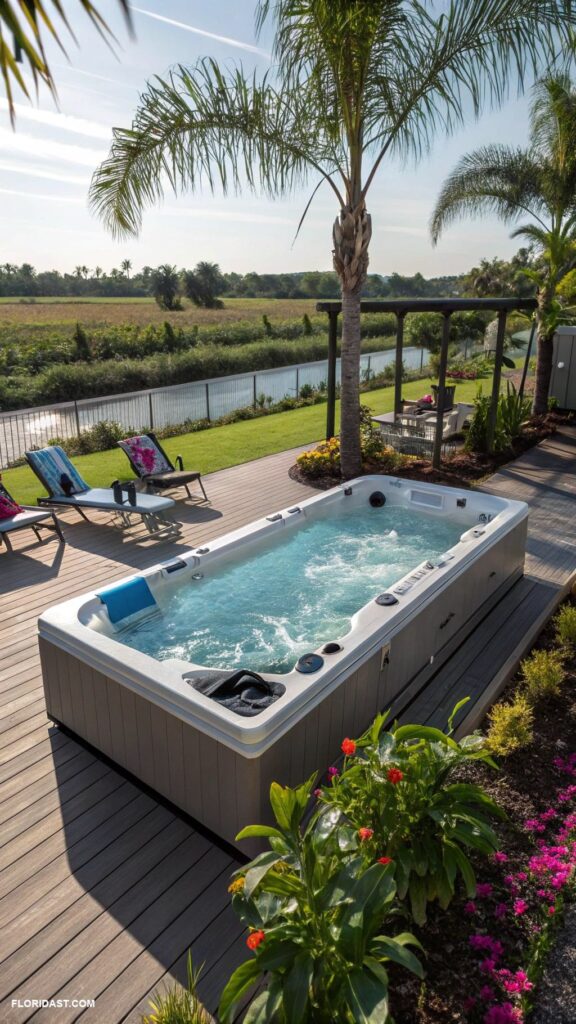
Hot tub pumps work hard. They run for hours every day, pushing water through jets, heaters, and filters. Over time, the wear and tear catches up. Here are the most common reasons spa pumps fail across Dallas, Plano, Frisco, and the rest of North Texas.
The capacitor gives your pump motor the initial jolt it needs to start. When it fails:
You hear a loud hum but the impeller doesn’t turn
The pump tries to start but gets stuck
The motor may overheat and trip the breaker
Signs: Humming sound, no water movement, breaker trips after a few seconds.
The motor’s bearings or shaft can seize up from:
Lack of lubrication (old age)
Water intrusion (failed shaft seal)
Corrosion (from saltwater systems)
Overheating (running dry)
Signs: No sound at all (dead motor) or a grinding, screeching noise when it tries to start.
The mechanical seal between the wet end and the motor keeps water out of the motor. When it fails:
Water leaks from the pump body
Water enters the motor, causing rust or short circuits
The leak worsens over time
Signs: Water pooling under the pump, rust on the motor casing, dampness inside the spa cabinet.
The impeller spins inside the wet end to push water. When it breaks:
The pump runs but moves little or no water
You hear rattling or grinding from inside the pump
Your spa jets have weak flow
Signs: Pump runs, no flow, rattling sounds, low jet pressure.
Debris can get inside the wet end:
Leaves, hair, or debris from the filter
Small toys or objects sucked through the skimmer
Scale buildup on the impeller
Signs: Pump runs but flow is weak, filter pressure is low, pump gets hot.
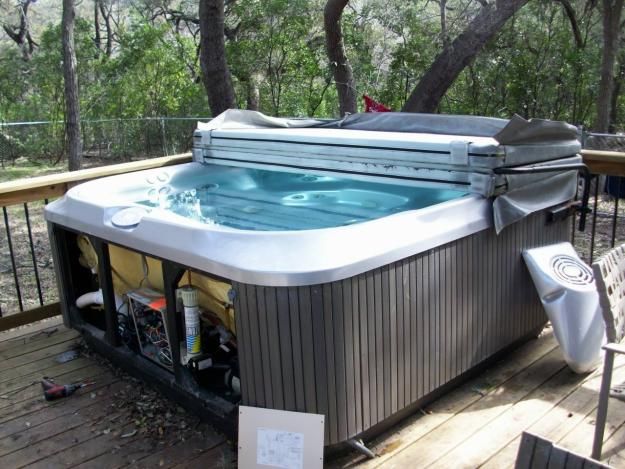
We don’t guess. We don’t swap parts until something works. Our proven 6-step process diagnoses and fixes your pump correctly the first time.
Before we touch the pump, we check:
Physical condition of the pump, motor, and plumbing
Signs of water leaks, rust, or corrosion
Electrical connections and wiring
The pump’s age and condition (critical for replacement decisions)
Tools: Flashlight, mirror, multimeter
We test the motor’s electrical health:
Check voltage at the pump (should be 120V or 240V)
Check the capacitor (microfarads mF)
Check continuity through the motor windings
Test for shorts to ground
Tools: Multimeter, capacitor tester, voltage meter
We test the mechanical side of the pump:
Remove the wet end (if needed)
Inspect the impeller for cracks or breakage
Check the shaft seal for leaks
Spin the shaft by hand (should spin freely)
Tools: Screwdriver (to spin the shaft), wrenches
If the symptom is a hum with no spin, we often try a capacitor replacement first:
We identify the correct capacitor (run or start)
We replace the capacitor
We test the pump immediately
Why it matters: This is the cheapest fix. Many “bad pump” diagnoses are actually just a $20 capacitor.
If the pump has a water leak:
We remove the wet end from the motor
We replace the mechanical shaft seal
We replace the O-rings or gaskets
We reassemble and pressure test
When the motor is seized, the wet end is cracked, or the pump is too old:
We recommend the correct replacement pump
We source the exact fit (same horsepower, same plumbing)
We install and plumb the new pump
We test the system and bleed air
Diagnosis: Failed capacitor, seized motor, or stuck impeller.
What we do: Test capacitor first. If it’s bad, replace it. If not, check the shaft for seizing. If seized, replace the motor or pump.
Diagnosis: Bad bearings or broken impeller.
What we do: Remove the wet end, inspect the impeller and bearings. Replace impeller or bearings as needed. If the motor housing is damaged, replace the entire pump.
Diagnosis: Failed shaft seal, cracked wet end, or loose plumbing.
What we do: Replace the shaft seal and gaskets. If the wet end is cracked, replace the wet end or the entire pump.
Diagnosis: Broken impeller, blocked wet end, or air lock.
What we do: Check for air locks first (loosen the bleed valve). Then inspect the impeller and wet end for blockage or breakage. Remove debris or replace the impeller.
Diagnosis: Short in the motor windings, water intrusion, or bad capacitor.
What we do: Test the motor for shorts to ground. If the windings are wet or shorted, replace the motor or pump. Check the capacitor for shorts.
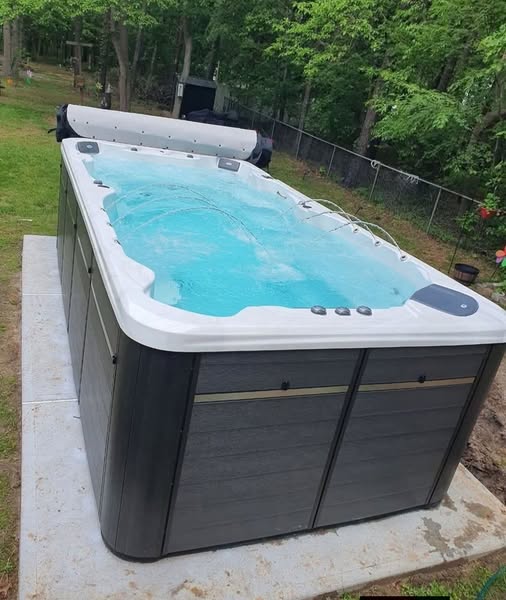
Standard for older spas and basic hot tubs
One speed: on or off
Common brands: Pentair, Hayward, Sta-Rite
Two speeds: low (circulation) and high (jets)
More efficient than single speed
Common brands: Balboa, Gecko, LX
Multiple speeds, highly energy efficient
Can run at very low RPM for circulation
Common brands: Pentair IntelliFlo, Hayward TriStar, Jandy
Dedicated small pump for filtration and heating
Runs 24/7 on many high-end spas
Common brands: Grundfos, Laing, Sugatsune
Large pump dedicated to high-flow jets
Often runs on high speed only
Common brands: Waterway, Gorman-Rupp, Sta-Rite
Note: Actual pricing depends on pump type, horsepower, and brand.
| Service | Typical Range |
|---|---|
| Diagnostic fee (applied to repair) | 125−125−150 |
| Capacitor replacement | 150−150−300 |
| Pump seal replacement | 250−250−500 |
| Impeller replacement | 300−300−600 |
| Motor replacement (same pump body) | 400−400−800 |
| Full pump replacement (1 HP) | 500−500−900 |
| Full pump replacement (2-3 HP) | 700−700−1,400 |
| Variable speed pump replacement | 1,200−1,200−2,500 |
| Emergency or weekend service | +150−150−300 |
We provide upfront quotes before any work begins.
Portable hot tubs are easier to access but harder to move:
We can tip or lift the tub for access
We use portable pressure testing equipment
We can often repair on-site without moving the tub
We seal the repair and test before we leave
Common portable brands we repair: Sundance, HotSpring, Caldera, Jacuzzi, Bullfrog, and all major brands.
Built-in spas require more work:
We use dye and UV tracing
We pressure test the entire plumbing loop
We may need to remove coping or tile
We repair underground leaks with targeted excavation
We restore the area to original condition
Common built-in manufacturers we repair: Pentair, Hayward, Jandy, and all custom-built spas.
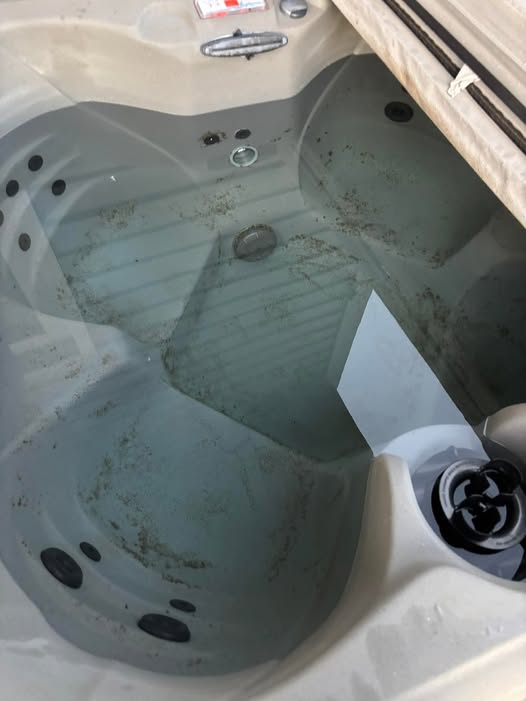

Pump is inside the cabinet, accessible through a panel
We can replace the pump without moving the tub
We have common portable pump parts on our truck
We check the plumbing for leaks and cracks during the repair
Common portable brands: Sundance, HotSpring, Caldera, Jacuzzi, Bullfrog, Master Spas
Pump is in a mechanical room or under a deck
Access may require removing deck boards or paneling
We bring all tools needed for tight spaces
We test the pump in place before leaving
Common built-in manufacturers: Pentair, Hayward, Jandy, Zodiac
| Why Us | What That Means |
|---|---|
| Focused on repair only | We don’t clean. We fix pumps. |
| Certified & insured | You’re protected. We’re legit. |
| Mobile service | We come to your home. No shop visits. |
| Same-day available | Fast help when you need it. |
| Transparent pricing | Quote before work. No hidden fees. |
| Warranty on repairs | Our work is guaranteed. |
| All brands | Sundance, HotSpring, Caldera, Jacuzzi, Bullfrog, Pentair, Hayward, and more. |
| DFW wide coverage | We serve the entire metroplex. |
If you hear a hum but the pump doesn’t spin, it’s usually the capacitor. If the pump is silent or makes grinding noises, it’s likely a motor or bearing failure. We can test both in under 30 minutes.
Standard pumps: 3-7 years
High-quality pumps: 7-12 years
Variable speed pumps: 5-10 years
Factors that shorten life: low water levels, poor chemistry, running dry, freezing temperatures.
If you are handy, yes. But the risks are real:
Wrong pump size (too small = weak jets; too large = overwork)
Wrong voltage (120V vs 240V)
Wrong plumbing size (1.5″ vs 2″)
Air lock (pump won’t prime)
We recommend professional installation for reliability and warranty.
Sometimes. If the wet end is in good condition, we can replace just the motor. If the wet end is cracked or the impeller is broken, we replace the whole pump.
Jet pump: Large, high-flow, runs on high speed for jets
Circulation pump: Small, low-flow, runs 24/7 for filtration and heating
Many newer spas have both. We repair and replace both types.
Not always. Weak jets can be caused by:
Clogged filter
Air lock
Broken impeller
Small pump size
Leaky plumbing
We diagnose the root cause before recommending a new pump.
We provide professional Spa and Hot Tub Pump repair across North Texas, including Frisco, Plano, McKinney, Allen, and surrounding communities.
Let Poolburg handle the maintenance, water care, and equipment so you can enjoy your Spa without the stress.