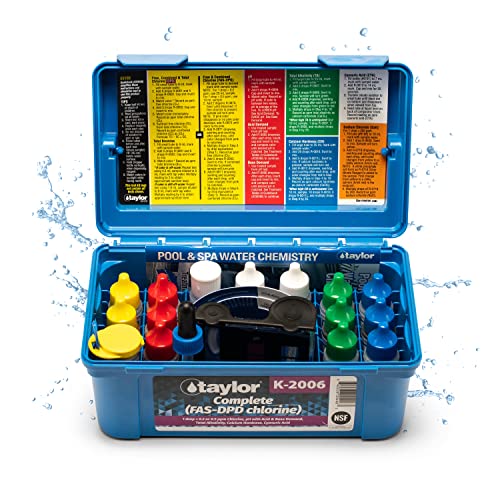
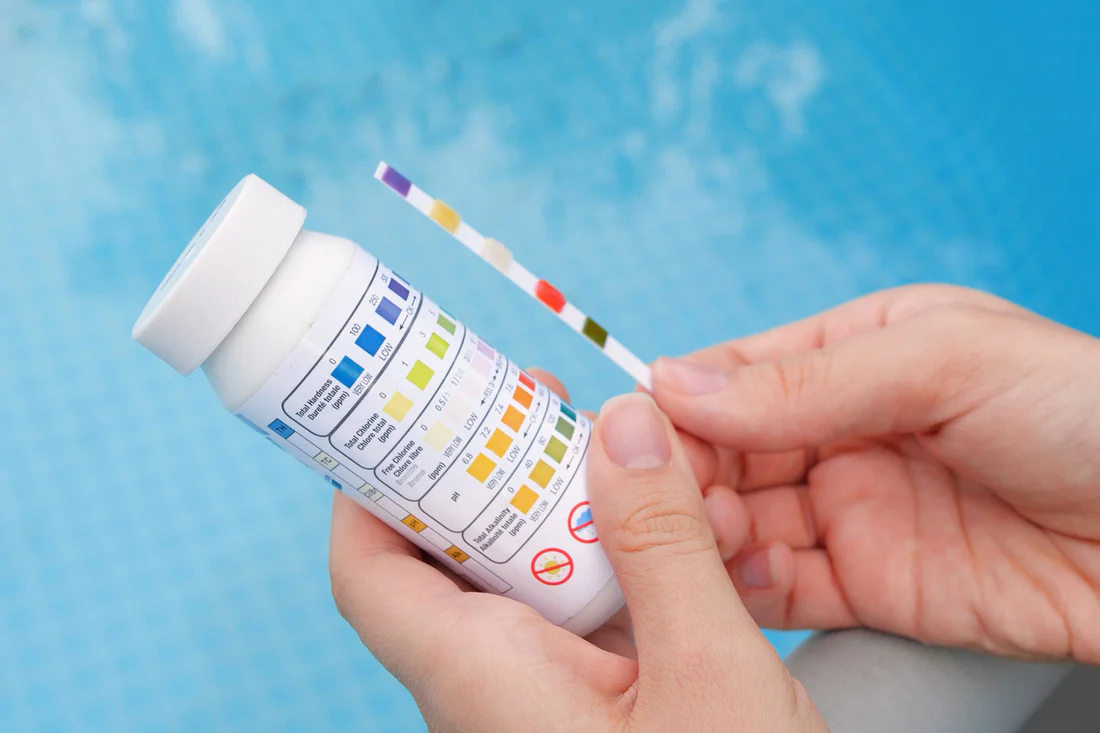
If you’ve dipped a test strip into your water this morning in Texas, you’re likely staring at a confusing rainbow of colors. With the current “yellow dust” oak pollen onslaught we’re seeing across North Texas this April, your pool is working overtime. This pollen acts as an all-you-can-eat buffet for algae, and if you don’t know what do pool test numbers mean, you could be throwing money away on chemicals that aren’t even working.
Between Texas diesel prices hitting $5.11 due to the Iran war energy crunch, your pool can quickly become an expensive “unpaid roommate.” Understanding pool water test results is the only way to keep your water “safe and blue” without going broke in 2026.
Your Water Test Results Are a Report Card — Here’s How to Read Them
Think of your test results as a weekly report card for your pool’s health. Each entry tells a specific story about your “hydraulic health.” In North Texas, we “grade on a curve” because our municipal water district delivers water that is already near the scaling threshold. If you don’t know what do pool test numbers mean in the context of DFW’s “liquid rock” hard water, you’ll end up fighting a losing battle against cloudy water and stained plaster.
The 8 Numbers That Matter for DFW Pools
When understanding pool water test data, focus on these eight parameters. These are the “Big 8” that determine if your water is a sanctuary or a science experiment gone wrong.
1. Free Chlorine (FC)
This is your active sanitizer. For DFW, we target 2–4 ppm. In our 100-degree sun, chlorine burns off 30–50% faster than in the north. If you’re asking what do pool test numbers mean when FC is below 1.0, it means your pool is unsanitized and unsafe to swim.
2. pH
pH measures how acidic or basic your water is. Our target is 7.4. DFW water is naturally alkaline, so your pH will constantly drift up. When people ask what do pool test numbers mean for high pH, it usually means your chlorine is “sluggish” and scale is forming on your tiles.
3. Total Alkalinity (TA)
TA is the “anchor” for your pH. We want 80–120 ppm. If this is off, your pH will bounce wildly. Understanding pool water test results for TA is vital because Frisco tap water often arrives at 150+ ppm, requiring acid treatment from day one.
4. Calcium Hardness (CH)
This measures the “hardness” of your water. In North Texas, we target 200–400 ppm. Because of our limestone-rich soil, this is our #1 challenge. If you want to know what do pool test numbers mean when CH is over 450, it means you likely need a partial drain-and-refill.

5. Cyanuric Acid (CYA)
Think of CYA as “sunscreen” for your chlorine. Target 30–50 ppm. Too low, and the sun eats your chlorine in two hours. Too high (over 100), and you have “chlorine lock,” where the sanitizer is present but can’t actually kill germs.
6. Salt Level
For salt pools, we want 2,700–3,400 ppm. Spring rains can dilute this quickly, so check it after any big DFW thunderstorm.
7. Phosphates
Phosphates are algae food. We keep these below 300 ppb. Our current oak and cedar pollen spikes introduce massive phosphate loads, making understanding pool water test results for phosphates a top priority this month.
8. Total Dissolved Solids (TDS)
TDS is the “age” of your water. We want this under 2,500 ppm. In Texas, high evaporation rates concentrate TDS faster, meaning you need a “fresh start” every 3–5 years.
How to Use Your Test Results — The Decision Flowchart
When you get your results, don’t panic. Follow this simple logic:
- Step 1: Check FC and pH first. These are your immediate safety indicators.
- Step 2: If pH is high (very common in DFW), add muriatic acid before anything else.
- Step 3: If FC is low, add liquid chlorine.
- Step 4: If you still see cloudiness, look at your CH and filter performance.
Knowing what do pool test numbers mean allows you to make these surgical adjustments instead of “shotgunning” expensive chemicals into the water.
Common Misreadings and Testing Mistakes
Even with a great kit, you can get the wrong answer if your technique is off.
- Direct Sunlight: Never read a test strip in full Texas sun; it washes out the colors.
- Expired Reagents: Reagents only last a year. Storing them in a 140-degree DFW garage kills their accuracy in weeks.
- Surface Sampling: Don’t take water from the top two inches. Reach down to your elbow to get a true representative sample.
People Also Ask
What should my pool water test numbers be in Texas?
Target FC (2.0-4.0), pH (7.4), and TA (80-120). These are the pillars of North Texas water health.
What is the most important pool test number?
Most pros agree it’s pH. It controls how effective your chlorine is and whether your water is corrosive or scale-forming.
How do I lower calcium hardness?
You can’t “chemical” it away. You must drain and refill with fresh water—but test your tap water first, as it’s often hard too!
PoolBurg Tests and Interprets Your Water at Every Visit
Tired of staring at strips and wondering what do pool test numbers mean? At PoolBurg, we are the “guardians of your hydraulic health.” We perform professional-grade testing at every visit and use the latest 2026 water quality standards to ensure your water is perfectly balanced for your family.