While sunscreen in pool water is not a catastrophic event, it is important to be realistic about its impact. Protecting your skin is the priority during those long North Texas swim days, but homeowners should realize that lotions, oils, and sweat significantly increase the load on your filtration system. If you find yourself wondering why the water looks dull after a busy weekend in Allen, Frisco, or Prosper, the answer usually starts with these common bather contaminants.
The practical answer is simple: sunscreen in pool water can leave a surface film, create a sticky waterline, increase chlorine demand and load the filter faster. The fix is not to ban sunscreen. The fix is to understand what it does and build a smart post-swim routine around it.
What Sunscreen, Oils and Body Products Do Once They Hit the Pool
Surface film, waterline rings and filter loading
Most sunscreen in swimming pool water does not dissolve neatly. Some of it floats as a thin sheen. Some sticks near the tile line. Some becomes tiny suspended material that the filter has to catch. That is why oily pool water can look fine in the morning and dull by Sunday evening after kids, guests, towels, snacks and repeated sunscreen applications have all joined the party.
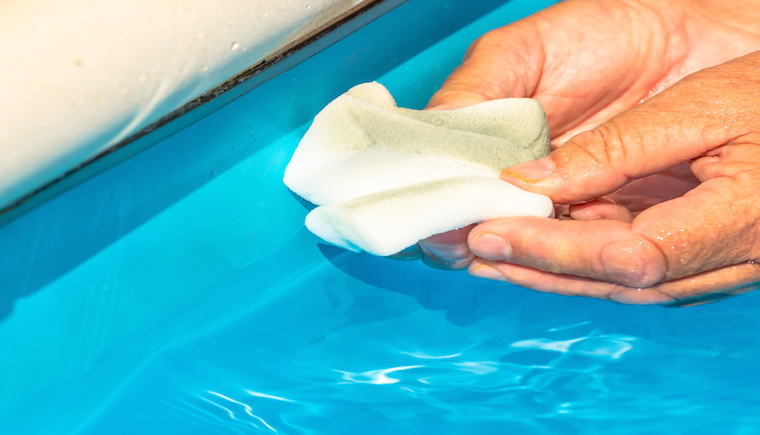
The waterline is usually the tattletale. A gray, tan or greasy ring can point to sunscreen, sweat, body oils and airborne grime collecting where the water meets the wall. It is one of the most common pool scum line causes, especially when swimmers apply spray sunscreen and jump in before it has had time to set.
Why a Busy Weekend Changes Pool Chemistry So Quickly
Higher chlorine demand and more suspended contaminants
Chlorine has a job: sanitize the water and oxidize contaminants. When a lot of people swim, the pool receives more sweat, sunscreen, oils and tiny debris. That creates higher chlorine demand. CDC home pool guidance recommends keeping chlorine and pH in range, and the pool needs extra attention when it is being used by a number of people.
This is why cloudy water often shows up after parties. It is not always algae at first. Sometimes it is simply a heavy bather load plus weak circulation, low sanitizer, dirty baskets or a tired filter. If the water looks flat, slightly milky or greasy after a big swim day, do not guess. Test first.
Signs Sunscreen and Body Oils Are Part of the Problem
Oily sheen, sticky waterline and dull water
The big clues are easy to spot. You may see an oily rainbow film when the sun hits the surface. You may feel a sticky line around the tile. You may notice dull water even though the pool was cleaned recently. Sometimes the filter pressure starts climbing sooner than normal because the filter is catching fine debris and oily residue.
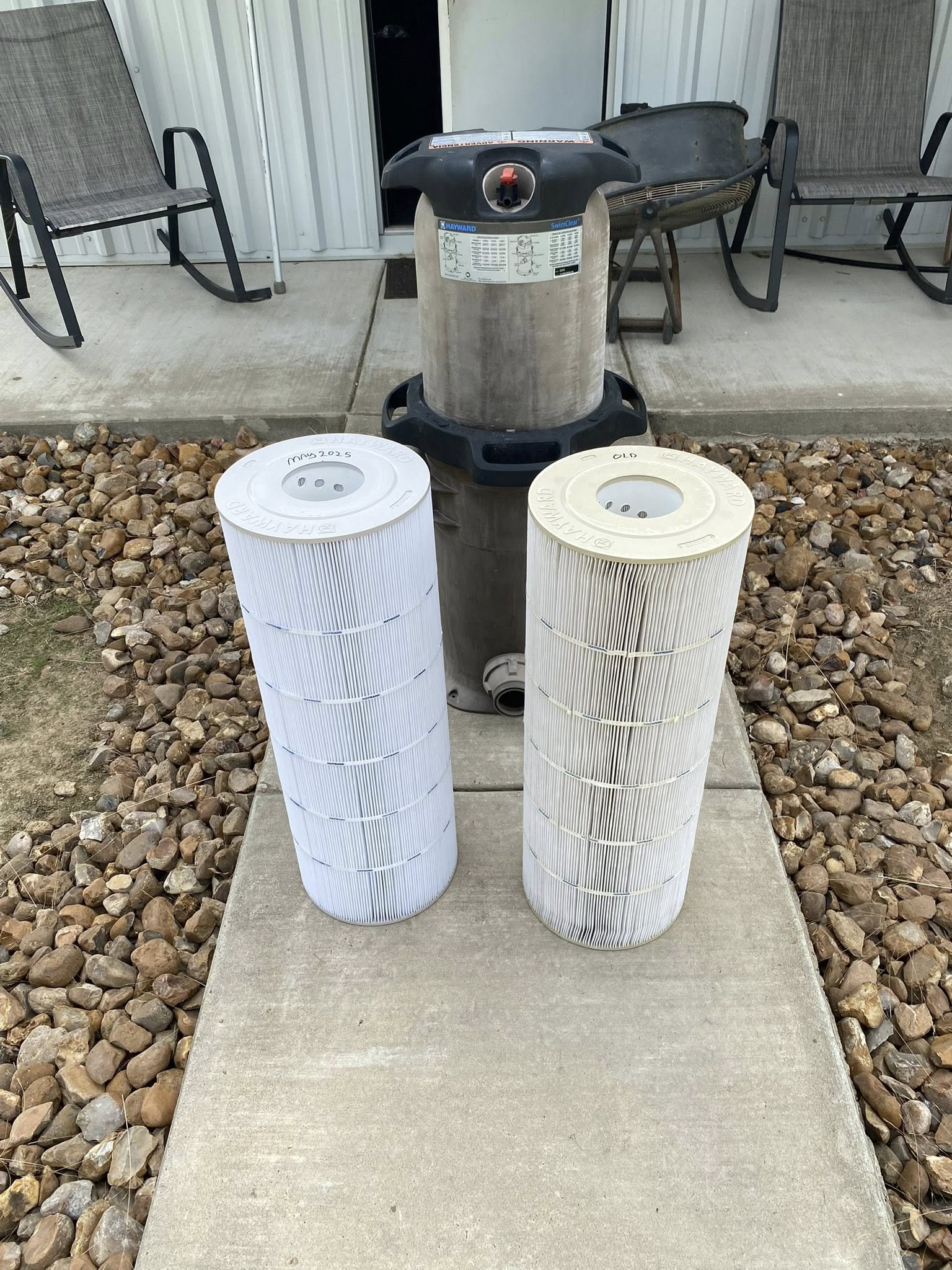
If the issue keeps coming back, pair this article with PoolBurg’s cartridge pool filter cleaning frequency guide and pool skimmer basket cleaning frequency. Surface gunk and filter loading usually travel together.
What to Do After Heavy Bather Load
Skim, brush, clean baskets, test and check filter pressure
After a busy pool day, keep the routine boring in the best way. Skim the surface. Brush the waterline. Empty skimmer baskets and the pump basket. Test chlorine and pH before adding chemicals. If the water is already dull, run the system long enough to circulate and filter the full pool, then check the pressure gauge.
If filter pressure is 8 to 10 PSI above the clean baseline, cleaning or backwashing may be due. Hayward’s filter-pressure guidance gives the same clean-starting-pressure logic. PoolBurg also has a full guide on normal pool filter pressure gauge reading if the gauge is confusing.
Quick Post-Party Pool Checklist
| Step | Why It Matters |
| Skim and empty baskets | Removes floating debris before it breaks down or blocks flow. |
| Brush the waterline | Loosens sunscreen residue and helps prevent a sticky scum line. |
| Test chlorine and pH | Shows whether the pool can safely recover without guessing. |
| Check filter pressure | Confirms whether sunscreen, pollen or debris is loading the filter. |
| Run circulation | Helps the filter catch suspended material before water turns cloudy. |

Prevention That Is Realistic, Not Preachy
Rinse habits and smarter sunscreen timing
No one wants a pool party that feels like airport security. A better rule is simple: apply sunscreen before swimming, give it time to absorb, and rinse if a shower is available. The FDA’s sunscreen guidance and the American Academy of Dermatology’s sunscreen advice both point people toward proper application and reapplication, especially after swimming or sweating.
For pool care, the best compromise is not “no sunscreen.” It is “do not spray yourself like a glazed donut and cannonball in 12 seconds later.” Let sunscreen set, use hats and swim shirts for extra protection, and give the pool a quick reset after heavy use.
When Cloudiness Is No Longer Just Sunscreen
Algae risk, filter problems and low runtime
Sunscreen in pool water can start the cloudiness conversation, but it is not always the whole story. If chlorine is low, pH is high, the filter is dirty, runtime is short or algae is beginning, the water can go from slightly dull to ugly fast. For salt pools, PoolBurg’s saltwater pool cloudy water guide is a helpful next read.
If the pool is cloudy after swimmers again and again, weekly maintenance may be the smarter move. PoolBurg’s weekly pool service can keep baskets, chemistry, pressure, brushing and filter health on a schedule so every Monday does not feel like a pool recovery project.
The Bottom Line
Sunscreen in pool water can make a pool cloudy, greasy and harder to balance, but it should be treated as a maintenance issue, not a reason to skip sun protection. Apply sunscreen correctly, rinse when practical, clean the waterline, watch chlorine and pH, and give the filter a chance to do its job.

People Also Ask
Can sunscreen make pool water cloudy?
Yes. Sunscreen, lotions and body oils can create fine suspended residue that makes water look dull or cloudy, especially after heavy swimming.
Why is there an oily layer on my pool?
An oily layer usually comes from sunscreen, body oils, hair products, lotions or environmental debris floating on the surface.
Why does my pool get a scum line after a party?
A scum line forms when oils, sunscreen, sweat and dirt collect at the waterline and stick to the tile or pool wall.
Should I shock my pool after lots of swimmers?
Test first. If free chlorine is low or combined chlorine is high, shock may be needed, but do not add chemicals blindly.
Does the filter remove sunscreen?
The filter can catch some residue, but oils may also need brushing, waterline cleaning, proper circulation and sometimes enzyme-style pool products.
How do I clean a sunscreen ring at the waterline?
Brush or wipe the waterline with a pool-safe tile cleaner, then clean baskets and check filter pressure so loosened residue can be removed.
Can body oils lower chlorine faster?
Yes. Body oils and other organics increase chlorine demand because sanitizer has more contaminants to work through.
What is the best post-party pool-cleaning routine?
Skim, brush the waterline, empty baskets, test chlorine and pH, check filter pressure and run circulation long enough to clear the water.
PoolBurg CTA
If your pool turns cloudy or greasy after every weekend, PoolBurg can help. Our team can clean baskets, brush the waterline, check filter pressure, test chemistry, inspect circulation and set up a simple routine for heavy-use family pools in Allen, Frisco, The Colony, Lewisville, Wylie, Prosper and nearby DFW communities. Contact PoolBurg to schedule a next-day cleanup or weekly service plan.