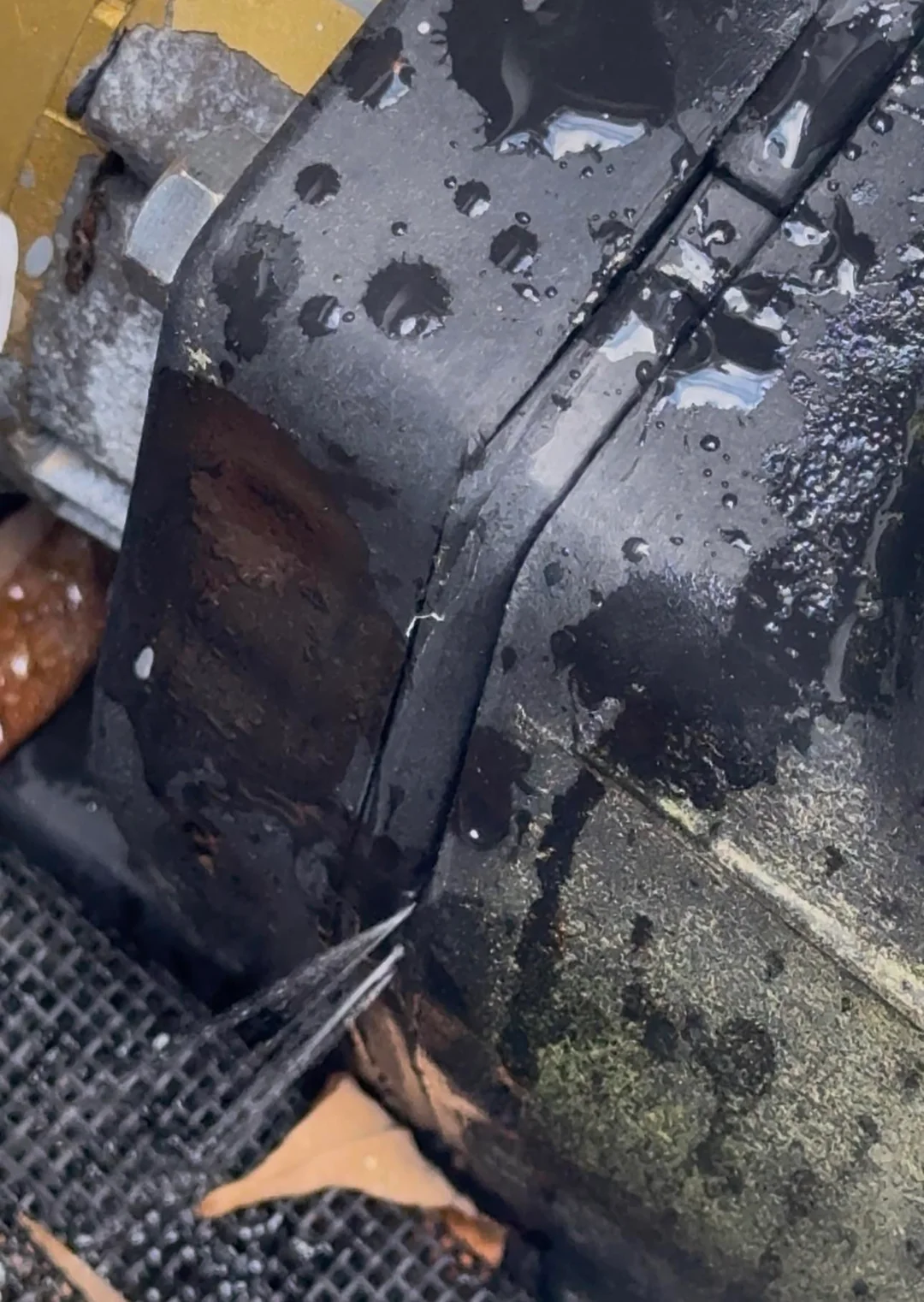
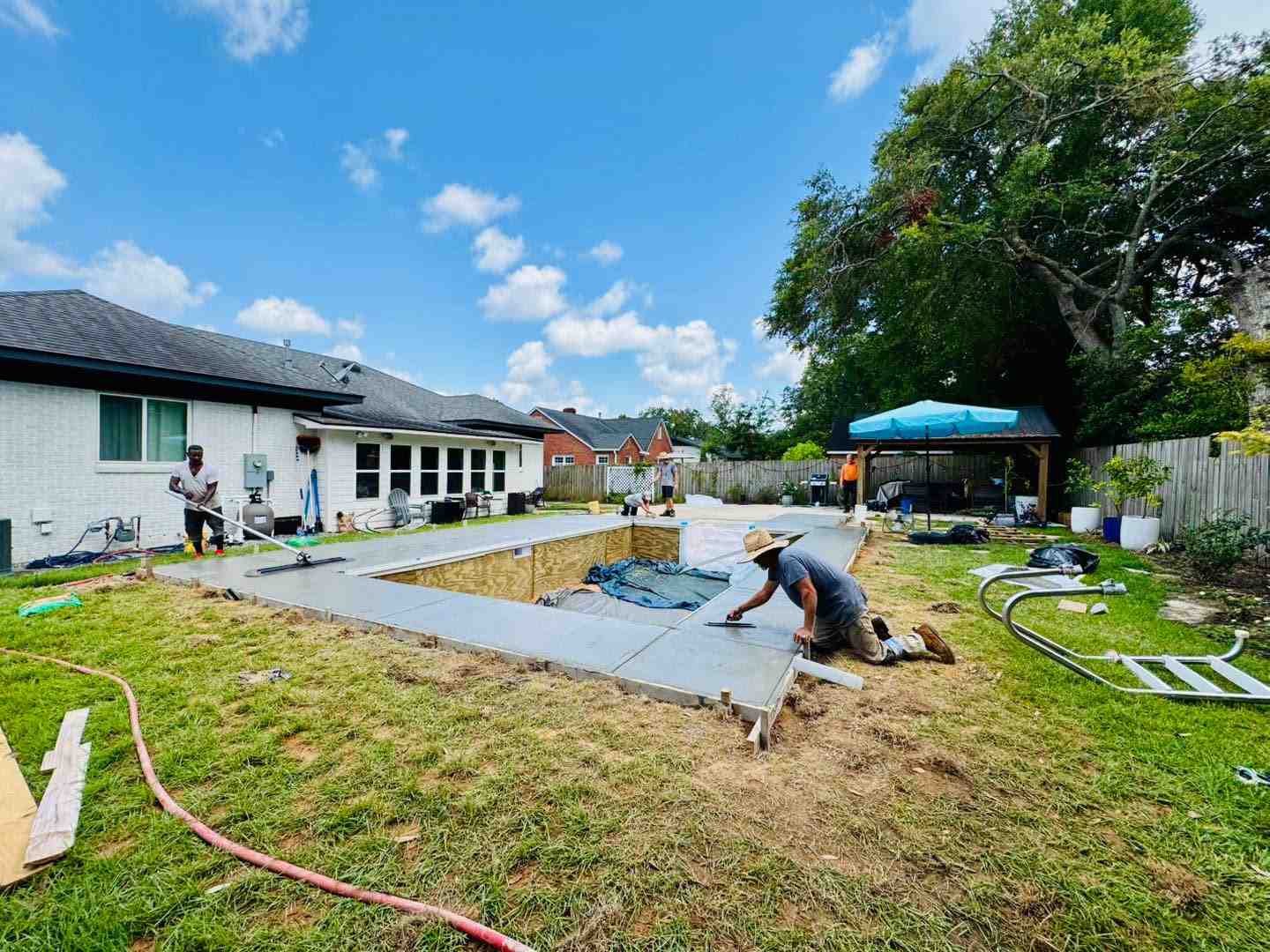
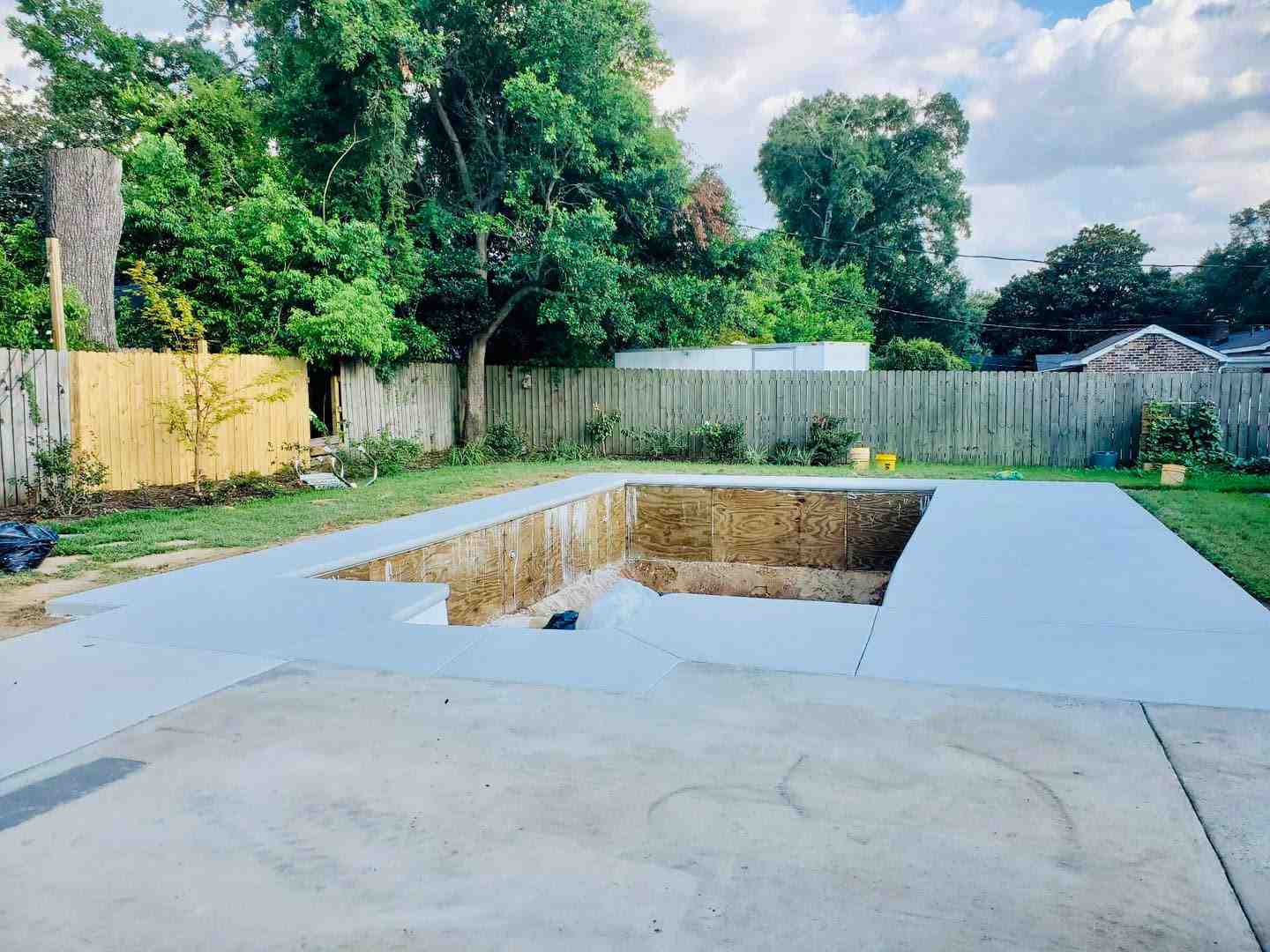
When cosmetic wear is distributed across a structurally stable concrete slab rather than being confined to a single crack or chip, pool deck resurfacing is typically the more strategic option. This process allows you to refresh the color, enhance the overall texture, and seamlessly blend existing patches. However, it is important to note that resurfacing is ineffective for resolving underlying drainage issues, raising a sunken slab, or permanently masking active structural shifting.
What Pool Deck Resurfacing Means
Resurfacing keeps most of the existing concrete. The contractor cleans and mechanically prepares it, removes loose material, repairs suitable cracks, preserves working joints, and applies a bonded decorative or textured finish. Complete replacement means demolishing and rebuilding the slab.
That distinction matters. Sika’s stampable-overlay instructions describe an overlay for structurally sound, non-moving concrete and warn that repaired cracks may still transfer through the new surface. Good swimming pool deck resurfacing therefore begins with diagnosis and preparation, not a prettier topcoat. ICRI’s concrete-surface-profile reference also shows why coating and overlay systems specify different preparation profiles.
Signs Pool Deck Resurfacing May Be the Better Choice
Consider resurfacing when discoloration, flaking, pitting, old patchwork, roughness, or small stable cracks affect much of the deck. A dated or slippery coating and a surface that feels painfully hot may also justify a whole-deck plan. When the same cosmetic repair keeps multiplying, pool deck repair and resurfacing can deliver a more consistent finish than another mismatched patch.
A single stable crack or isolated spall may only need cracked pool deck repair. QUIKRETE’s patching guidance, for example, labels its patching compound for non-structural cosmetic repairs. That is a useful boundary: a patch product is not a cure for heaving, settlement, or a failing base.
Repair, Resurface, or Replace?
Use a simple three-way test:
- Repair an isolated, non-moving hairline crack or chip when the surrounding finish remains sound.
- Resurface widespread surface wear when elevations, drainage, joints, coping, and the concrete substrate are stable.
- Correct or replace slabs with vertical offsets, sinking, heaving, wide or reopening cracks, severe delamination, root pressure, or drainage that sends water beneath the deck.
An overlay follows what is underneath it. Existing control and expansion joints must remain functional; NRMCA’s Concrete in Practice library includes dedicated guidance on slab-on-grade joints. Repair pool expansion joint cracking and address loose or damaged coping before the decorative work. Resurfacing also will not safely erase an uneven trip edge without separate leveling or slab correction.
Pool Deck Resurfacing Options
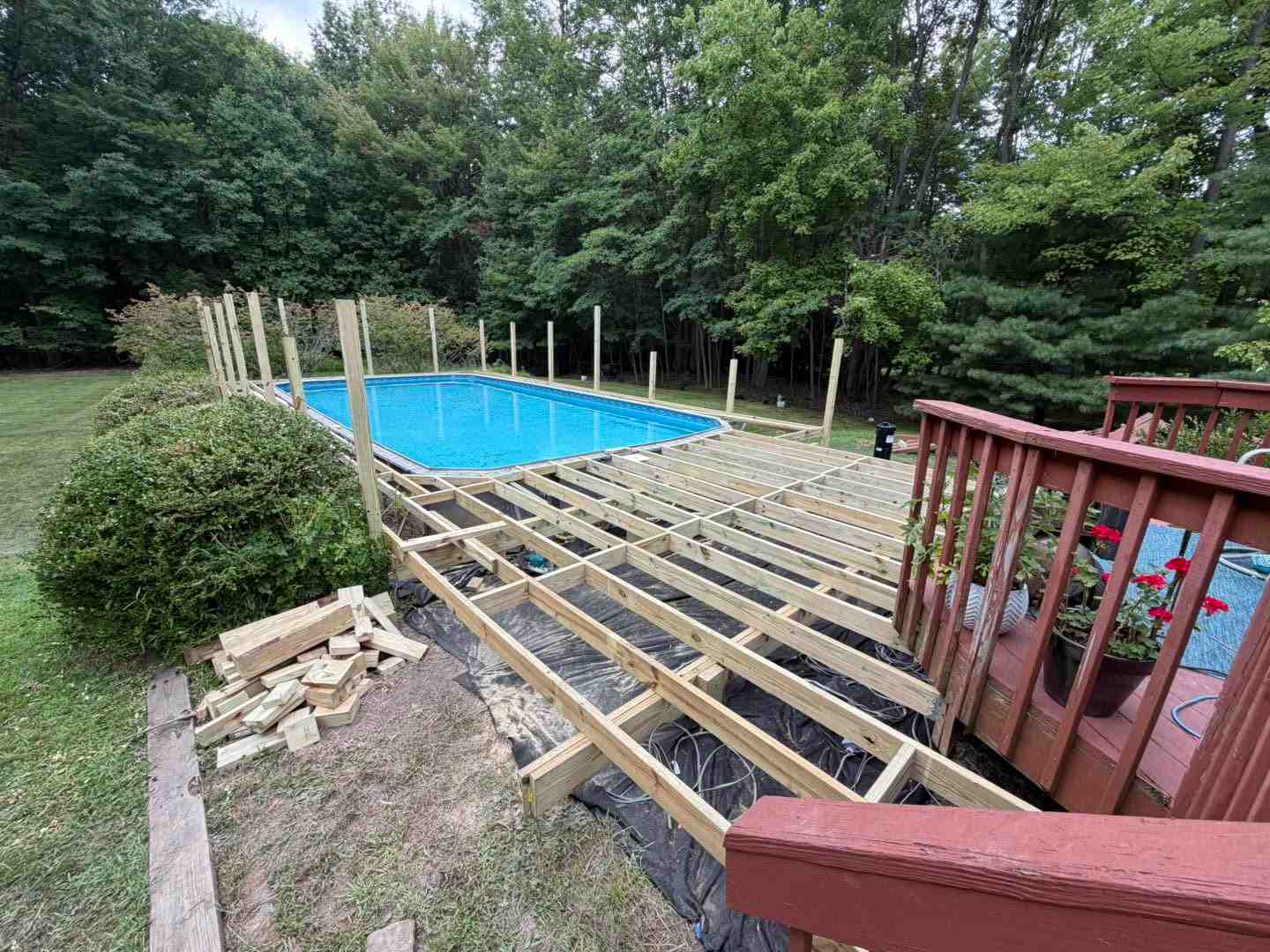
Common choices include a thin cementitious overlay, spray texture, decorative coating, stain and sealer, or a stampable finish. Pavers, stone, and porcelain can create a larger pool patio resurfacing project, but added height must not trap water, interfere with coping, or create threshold and trip problems.
Ask for a wet-surface sample, not just a dry showroom board. CPSC pool-safety guidance recommends slip-resistant pool-deck materials and regular cleaning. For Texas heat, lighter or more reflective systems may feel cooler, but there is no universal “coolest” coating. EPA cool-pavement guidance explains how reflectance and evaporation can reduce pavement heat while noting there is no official cool-pavement labeling program.
Why North Texas Pool Decks Crack
Frisco, Plano, McKinney, Allen, Prosper, Keller, Southlake, and Grapevine decks face strong sun, moisture swings, occasional freezes, tree roots, and drainage pressure. Texas Department of Transportation guidance notes that Texas has some of the country’s most expansive soils. USGS guidance on swelling clay explains that some clays expand when wet and contract as conditions change. It is reasonable to infer that the same movement can stress backyard slabs.
Before approving pool deck resurfacing, inspect crack patterns, slope, drainage, hollow areas, deck-to-coping separation, and recent movement. PoolBurg’s pool deck repair guide explains the warning signs common around DFW pools.
People Also Ask
What is pool deck resurfacing?
It prepares and repairs a sound existing deck, then adds a new bonded finish without removing every slab.
Can a cracked pool deck be resurfaced?
Yes, if cracks are stable and properly treated. Active movement can make cracks reappear through the overlay.
Is resurfacing cheaper than replacing a pool deck?
It often avoids demolition costs, but extensive leveling, drainage, or structural repairs can make replacement the better value.
How long does pool deck resurfacing last?
There is no universal lifespan. Substrate stability, preparation, drainage, product, installation, UV exposure, and maintenance all matter.
Can resurfacing make a pool deck less slippery?
Yes, with an appropriate texture or slip-resistant system. Request wet-slip information and keep algae and residue off the deck.
What is the best surface for a hot Texas pool deck?
Compare lighter colors, reflectance, texture, barefoot comfort, maintenance, and a real outdoor sample rather than relying on a “cool deck” label.
Should coping be repaired before deck resurfacing?
Yes, when coping is loose, cracked, or moving. Check missing tile grout at the same time.
Can resurfacing fix uneven concrete?
It may correct minor surface variation within a product’s limits, but it does not fix a sunken, heaved, or actively moving slab.
PoolBurg Can Help Choose the Right Scope
Pool deck resurfacing should make the patio look better because the underlying problems were understood first. PoolBurg can inspect surface wear, movement, drainage, joints, coping, and elevations before recommending cosmetic resurfacing, structural repair, or full replacement. Explore PoolBurg’s renovation ideas or contact PoolBurg for a practical DFW assessment.