Pool pump bearing repair becomes a real possibility when your backyard equipment pad starts sounding like a blender full of gravel. That sharp screech, grinding noise, or high-pitched whine usually means the motor is struggling to spin smoothly. Sometimes the fix is possible. Sometimes the smarter move is motor replacement. The trick is knowing which situation you are dealing with before the pump seizes completely.
For homeowners in Keller, Southlake, Grapevine, Las Colinas, Carrollton, and Farmers Branch, a noisy pool pump motor is more than annoying. In DFW heat, poor circulation can quickly lead to cloudy water, algae, and chemical problems. PoolBurg can inspect the motor, check for leaks, and explain whether pool pump bearing repair still makes sense.
What Pool Pump Bearings Do
Pool pump motor bearings are small parts with a huge job. They support the motor shaft so it can spin fast, steady, and smooth. When the bearings are healthy, the pump has a fairly consistent hum. When they wear down, that hum can turn into a scream, grind, or metallic rattle.
Think of bearings like the smooth rollers inside the motor. If they dry out, rust, overheat, or get contaminated by water, the shaft stops spinning cleanly. That is when pool pump bearing repair enters the conversation. General SKF bearing failure guidance also points to noise, vibration, heat, and contamination as common signs that bearings are in trouble.
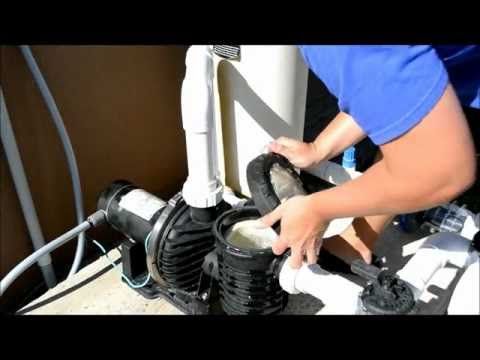
Signs of Bad Pool Pump Bearings
The clearest warning sign is sound. A pool pump grinding noise often starts softly, then gets louder over weeks or months. A screeching or whining sound can also point toward worn bearings, especially if the motor still runs but sounds rough. Other signs include:
- A loud, high-pitched motor sound
- Grinding that gets worse as the pump runs
- Motor vibration near the equipment pad
- A motor that feels hotter than usual
- A noisy pool pump motor that used to run quietly
- The pump shutting off or struggling after running for a while
These symptoms can overlap with other pump issues, so it is worth comparing them with faulty pool pump signs before assuming the bearings are the only problem.
What Causes Pool Pump Bearings to Fail?
Age is a big one. Every motor has a service life, and bearings wear down as the pump runs season after season. But age is not the only reason bearings fail. A leaking shaft seal can let water move toward the motor, and water around electrical motor components is bad news. Heat, poor ventilation, running the pump dry, and long daily run times can all speed up bearing wear.
Texas pools often run hard during summer, especially when homeowners are trying to keep water clear through heat, pollen, and heavy use. That is why related issues like average lifespan of a pool pump and pool pump repair cost matter when deciding whether the motor is worth saving. For broader energy context, ENERGY STAR pool pump guidance and the U.S. Department of Energy swimming pool pump guide both explain why efficient pump operation matters.
Can Pool Pump Bearings Be Repaired?
Yes, pool pump bearing repair can sometimes be done, but it depends on the condition of the motor. If the motor windings are still healthy, the shaft is not badly damaged, and the problem is mostly worn bearings, a repair may be reasonable. If the motor has water damage, overheating damage, severe corrosion, or repeated failures, replacement may be the better long-term decision.
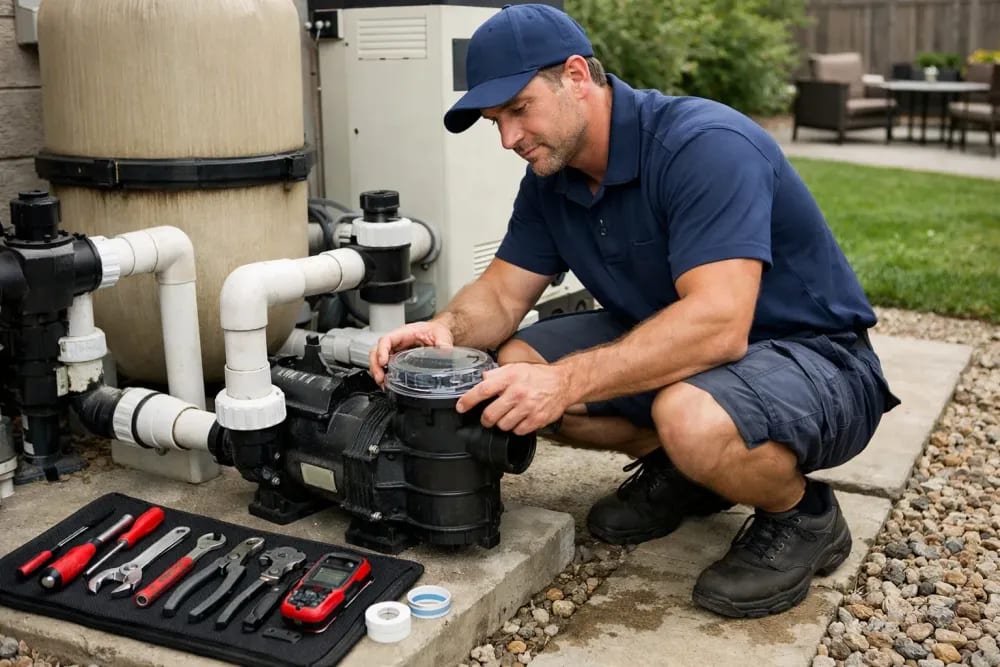
This is where homeowners get burned by guessing. Replacing bearings is more involved than changing a lid O-ring. The motor usually has to be opened, inspected, and reassembled correctly. If a leaking seal caused the bearing failure, the seal must be addressed too, or the new bearings may fail again. PoolBurg can check for a pool pump shaft seal leak before recommending pool pump bearing repair.
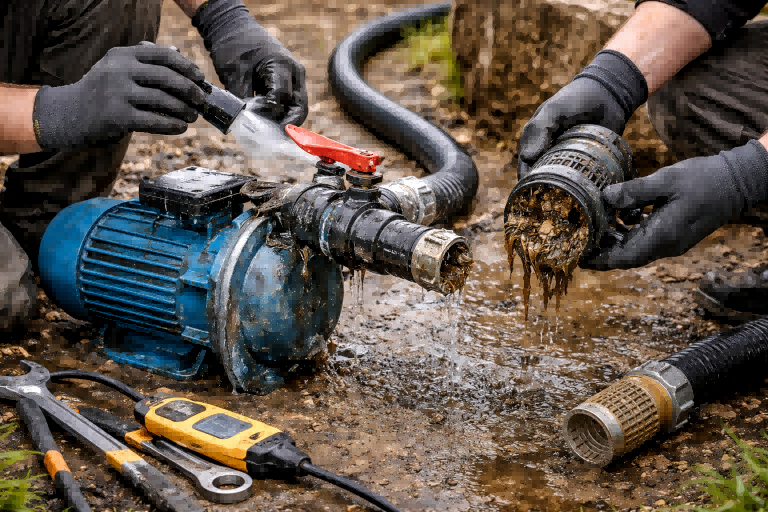
Why a Noisy Bearing Should Not Be Ignored
A noisy pump is easy to tune out until it ruins a peaceful backyard evening. But a noisy bearing is not just a sound issue. If the bearing keeps wearing down, the motor can overheat, seize, or stop suddenly. Once circulation stops, chlorine does not move well, filtration drops, and algae can move in quickly.
The CDC healthy swimming guidance is a good reminder that clean, properly treated pool water depends on consistent pool care. A failing pump makes that much harder. If you hear a pool pump grinding noise, it is better to inspect it early than wait for an emergency breakdown in July.
When Replacement Makes More Sense Than Repair
Pool pump bearing repair is not always the winner. Replacement may be smarter if the motor is old, the pump housing is cracked, parts are difficult to source, or the unit has already needed several repairs. It may also be worth discussing replacement if the pump is an older single-speed model and energy use is becoming painful.
A professional inspection can separate a repairable bearing issue from a failing motor. PoolBurg can also compare the repair against a pool pump motor repair or full pump replacement so you are not paying to revive equipment that is already at the end of its useful life.
People Also Ask
Can pool pump bearings be replaced?
Yes, pool pump motor bearings can sometimes be replaced, but the motor has to be in good enough condition to justify the labor.
What does a bad pool pump bearing sound like?
A bad bearing often sounds like grinding, screeching, whining, or a rough metallic growl that gets louder over time.
Why is my pool pump screeching?
A screeching pump may have worn bearings, a motor issue, or internal friction. It should be inspected before the motor overheats or seizes.
How long can a pool pump run with bad bearings?
There is no safe timeline. It may run for a while, but every hour can increase heat, wear, and the chance of sudden failure.
Should I repair or replace a noisy pool pump?
Repair may make sense on a newer motor with limited damage. Replacement is often smarter for old, corroded, inefficient, or repeatedly failing pumps.
Can a leaking shaft seal ruin bearings?
Yes. Water intrusion from a bad shaft seal can damage bearings and may eventually harm the motor itself.
Call PoolBurg Before the Noise Becomes a Failure
If your pump is screaming, grinding, vibrating, or getting louder every week, do not wait for it to quit during the hottest part of the season. PoolBurg can inspect noisy pump motors, identify whether pool pump bearing repair is realistic, and recommend repair only when repair makes sense.