How often to clean a salt cell is not as simple as “every few weeks” or “whenever you remember.” The better answer is this: inspect the salt cell on a regular schedule, but only clean it when scale or performance symptoms justify it. That matters because a dirty cell can stop making enough chlorine, but over-cleaning with acid can also shorten the life of an expensive component. For DFW homeowners dealing with hard water, high pH drift, and long summer run times, smart salt cell maintenance is more about timing and water balance than panic-cleaning.
What The Salt Cell Does
A salt cell is the part of a salt chlorine generator that turns dissolved salt into chlorine. That means salt systems are still chlorine systems. They simply produce chlorine on site instead of relying only on tablets or liquid chlorine. The CDC explains that home pools still need proper chlorine and pH levels to help control germs, which applies whether the chlorine comes from a salt system or a jug.
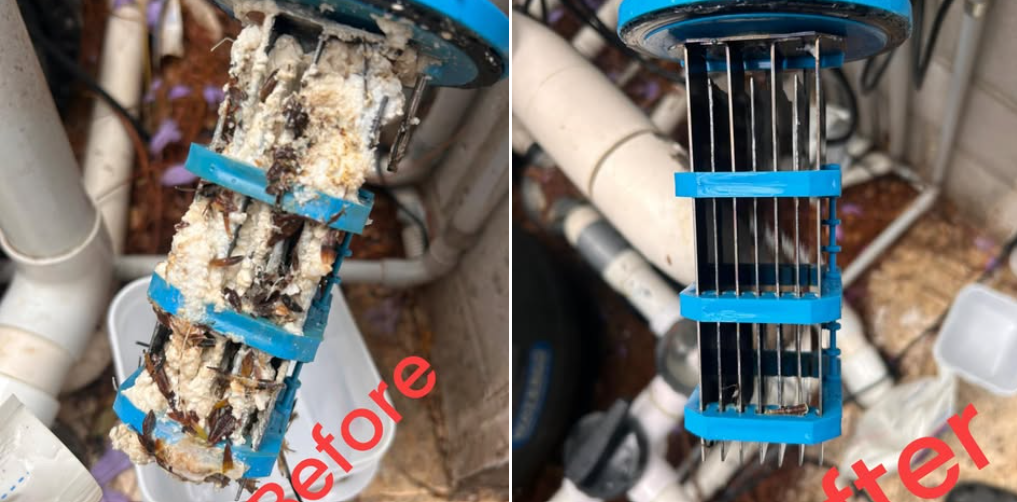
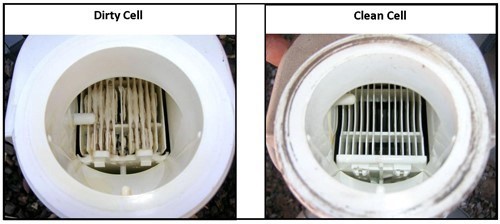
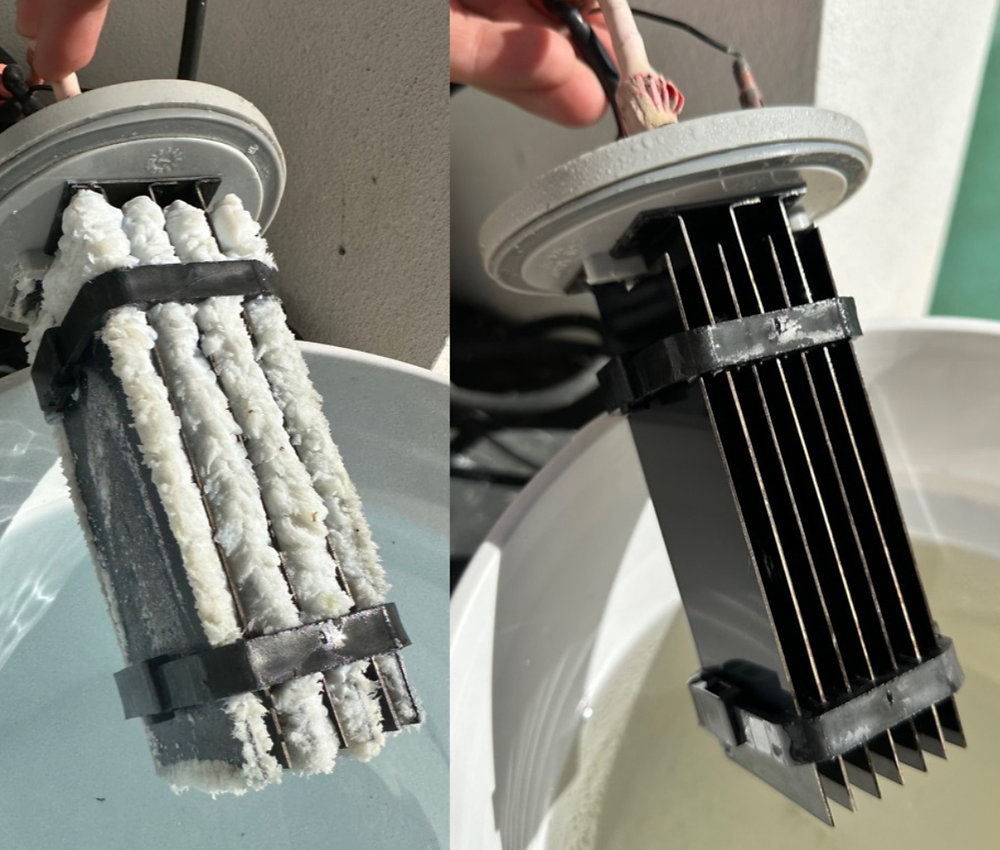
Inside the cell, water passes over coated metal plates. Over time, calcium scale can form on those plates, especially when pH, calcium hardness, alkalinity, and water temperature are working against you. Once scale blocks the plates, chlorine production can drop.

Inspection Frequency vs Cleaning Frequency
Inspection frequency and salt cell cleaning frequency are not the same thing. Hayward’s AquaRite manual recommends visually inspecting the cell every three months or after cleaning the filter, and says the system flashes the Inspect Cell light after about 500 hours as a reminder to inspect and clean if necessary.
That phrase “if necessary” is the important part. You may inspect the cell and find it clean. If so, put it back and focus on chemistry. The goal is not to acid wash on autopilot. The goal is to keep the cell clear enough to work without wearing it down for no reason.
Signs The Salt Cell Actually Needs Cleaning
You may need to clean salt cell plates when you see visible white, crusty scale, when the system shows a cell service or inspect warning, or when chlorine stays low even though the pump is running, salt level is correct, and output settings make sense. Low chlorine alone does not prove the cell is dirty, though. It could also be low stabilizer, low salt, cold water, poor flow, a dirty filter, or a cell near the end of its life.
Pentair’s IntelliChlor guide explains that the system reverses polarity to help reduce calcium buildup, but it also gives acid-cleaning instructions when scale needs to be removed. The newer IntelliChlor Plus and LT manual warns not to use mechanical tools on the blades, not to use undiluted acid, and not to leave acid in the cell too long because excessive acid washing can damage the blades.
Why Over-Cleaning Is Also A Problem
Salt chlorinator cleaning sounds harmless, but acid is not a vitamin. It removes scale, but it can also attack the cell coating if used too often, too strong, or too long. If there is no visible scale and the system is producing chlorine correctly, cleaning may not help anything.
CDC pool chemical safety guidance also reminds pool owners to use personal protective equipment and avoid unsafe chemical handling around pool systems. Acid cleaning is one of those jobs where instructions matter, ventilation matters, and guessing is a bad plan.
Why DFW Water Conditions Matter
North Texas pools are tough on salt cells. Hard fill water, evaporation, hot equipment pads, and pH drift can all encourage calcium scale. In Frisco, Plano, McKinney, Allen, The Colony, Lewisville, Southlake, Grapevine, Las Colinas, Farmers Branch, Carrollton, Addison, Keller, Garland, Mesquite, Wylie, and Prosper, a salt cell can look fine in spring and start struggling hard by midsummer.
Orenda’s scale guidance explains that unbalanced water and high pH can lead to calcium carbonate scale in salt chlorine generators. PoolBurg’s own salt cell scale buildup guide and saltwater pool pH problems article are good local follow-up reads if your cell keeps scaling again after cleaning.
PoolBurg’s Salt Cell Maintenance Workflow
PoolBurg does not start with acid. We inspect first. Then we verify chemistry: salt level, free chlorine, pH, alkalinity, calcium hardness, stabilizer, water temperature, flow, and filter condition. If the cell has scale, we clean it carefully. If the cell is clean but the pool is not making enough chlorine, we look for the real cause instead of blaming the cell.
After cleaning, the water still needs balancing. If pH and calcium stay high, the scale comes back and the homeowner ends up cleaning the same expensive part over and over.
People Also Ask
How often should a salt cell be cleaned?
Most homeowners should inspect the cell about every three months or when the system gives a warning. Clean it only when visible scale or performance symptoms show that cleaning is actually needed.
What causes scale on a salt cell?
High pH, high calcium hardness, high alkalinity, warm water, evaporation, and poor water balance can all encourage calcium scale on the cell plates.
Can I clean a salt cell too often?
Yes. Too much acid cleaning can shorten cell life, especially if the solution is too strong, the soak is too long, or the plates did not need cleaning.
Why is my salt pool not making enough chlorine?
The cause could be a scaled cell, low salt, low stabilizer, short pump run time, poor flow, cold water, dirty filter, wrong output setting, or an aging cell.
Does hard water shorten salt cell life?
Hard water can increase scale pressure, and heavy scale makes the cell work poorly. Good pH and calcium management helps protect the cell.
PoolBurg Can Help Protect Your Salt Cell
If you are not sure how often to clean a salt cell, do not guess with acid. PoolBurg can inspect the cell, confirm whether it actually needs cleaning, check why scale is forming, and rebalance the pool so the problem does not come right back. Contact PoolBurg for salt cell inspections across Frisco, Plano, McKinney, Allen, and nearby DFW cities.