
In this guide
4-Step Ozone System Winterization Guide.
Properly winterizing your pool ozone system helps protect the ozone generator, injector, tubing, and connected plumbing from freezing temperatures and water damage.
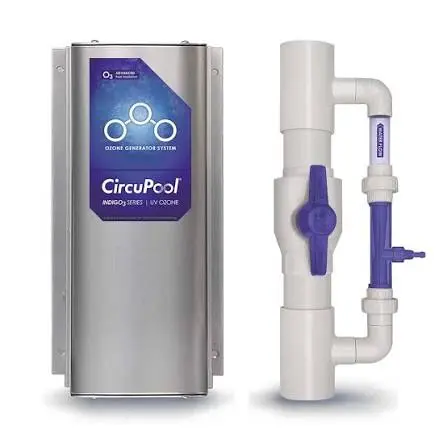
01 Shut Off Power 02 Isolate Valves 03 Disconnect Tubing 04 Drain Manifold
⚠️ Critical Ozone Safety Precaution
Ozone systems combine high-voltage electrical components with concentrated gas delivery. Always cut power at the main breaker before handling delivery lines or check valves. If moisture enters the electronic cell chamber during freeze cycles, the unit can burn out permanently.
STEP 01
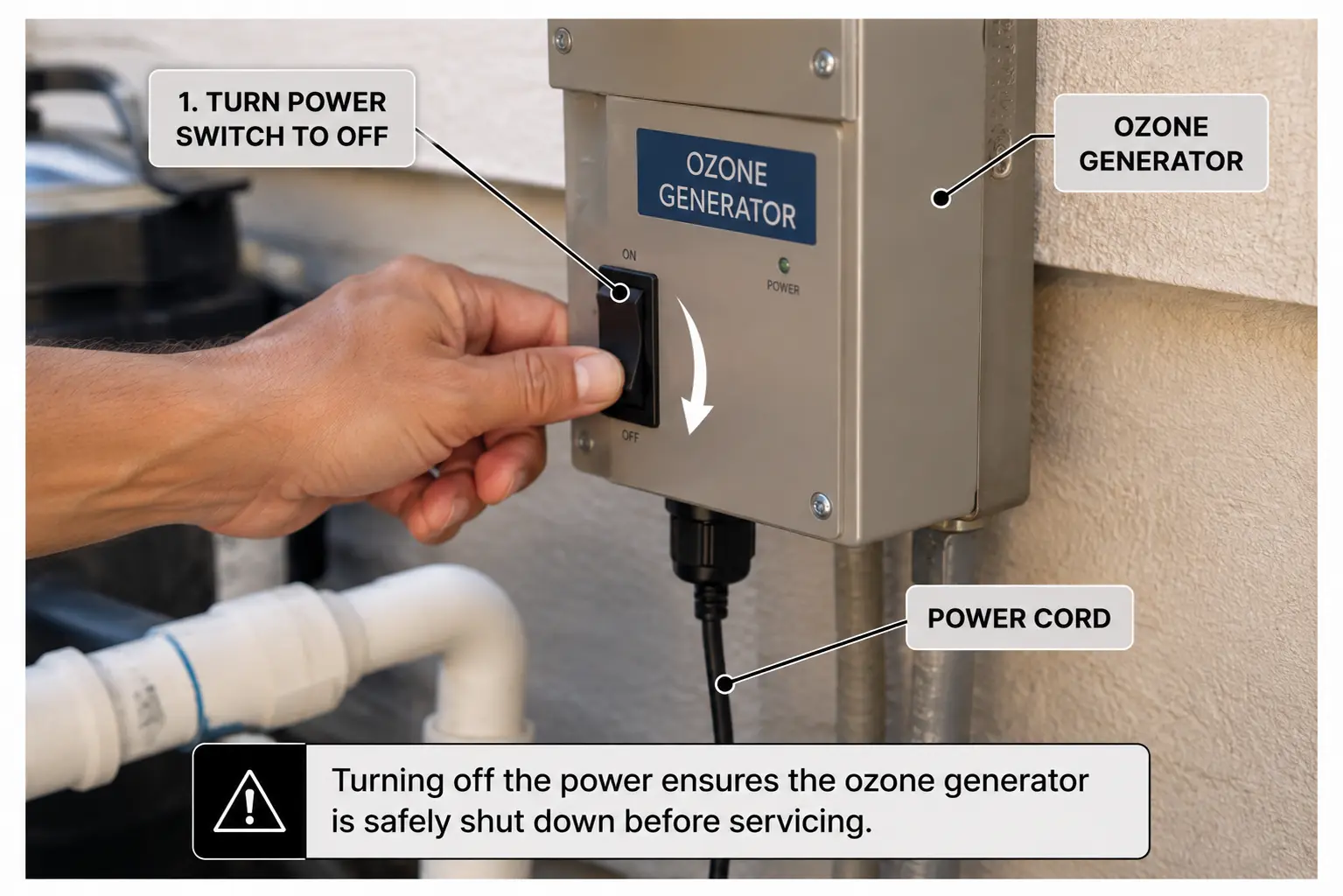
Turn Off Power to the Ozone Generator
Turn off power to the ozone generator unit both at its dedicated power switch and at the main pool equipment breaker panel. Verify the power light on the unit is completely unlit.
STEP 02
Isolate the Ozone Injector Manifold
Close the bypass ball valves located on the plumbing loop feeding the ozone Mazzei injector. This cuts off water flow from the main filtration line into the ozone delivery system.
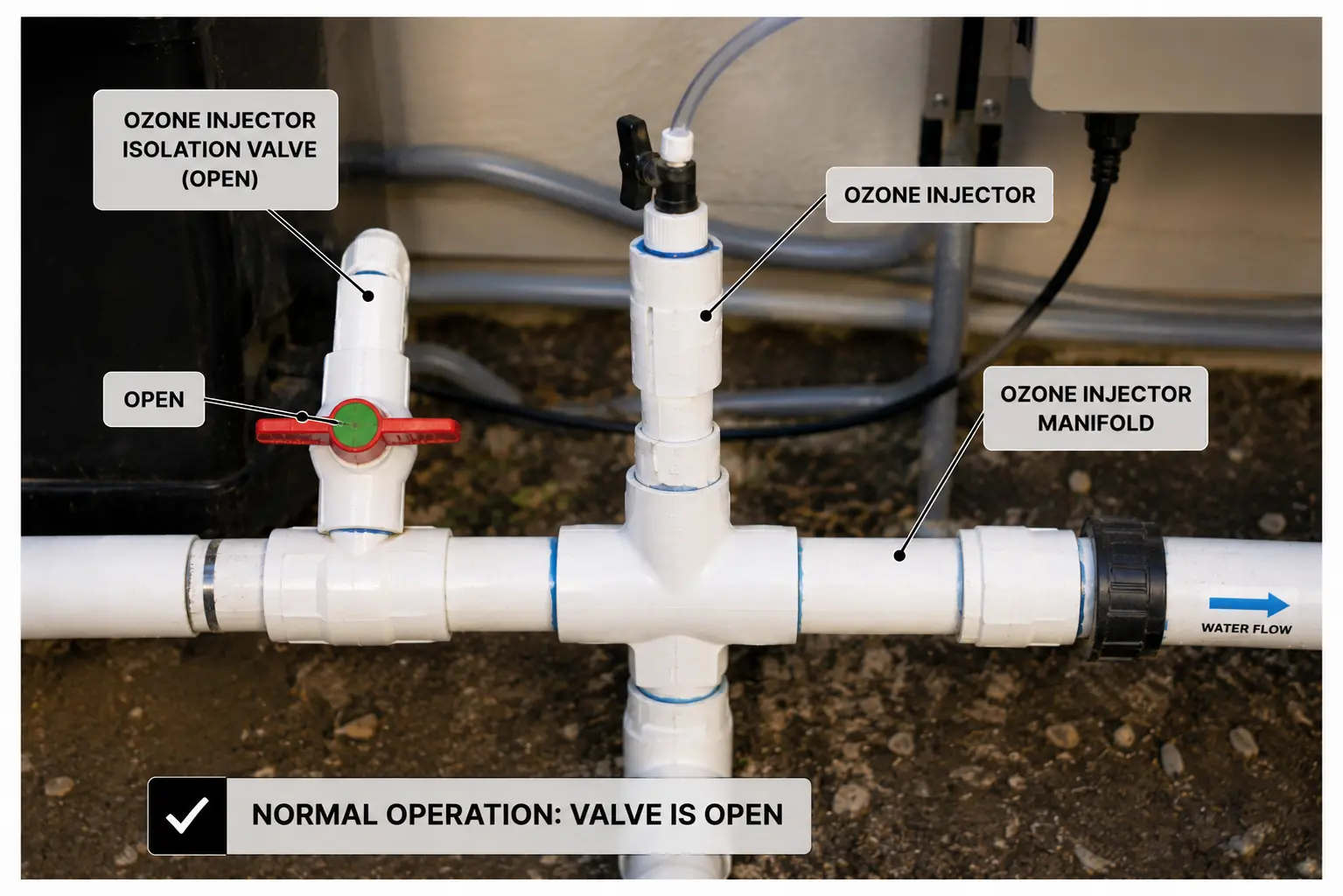
Normal Operation (Open)
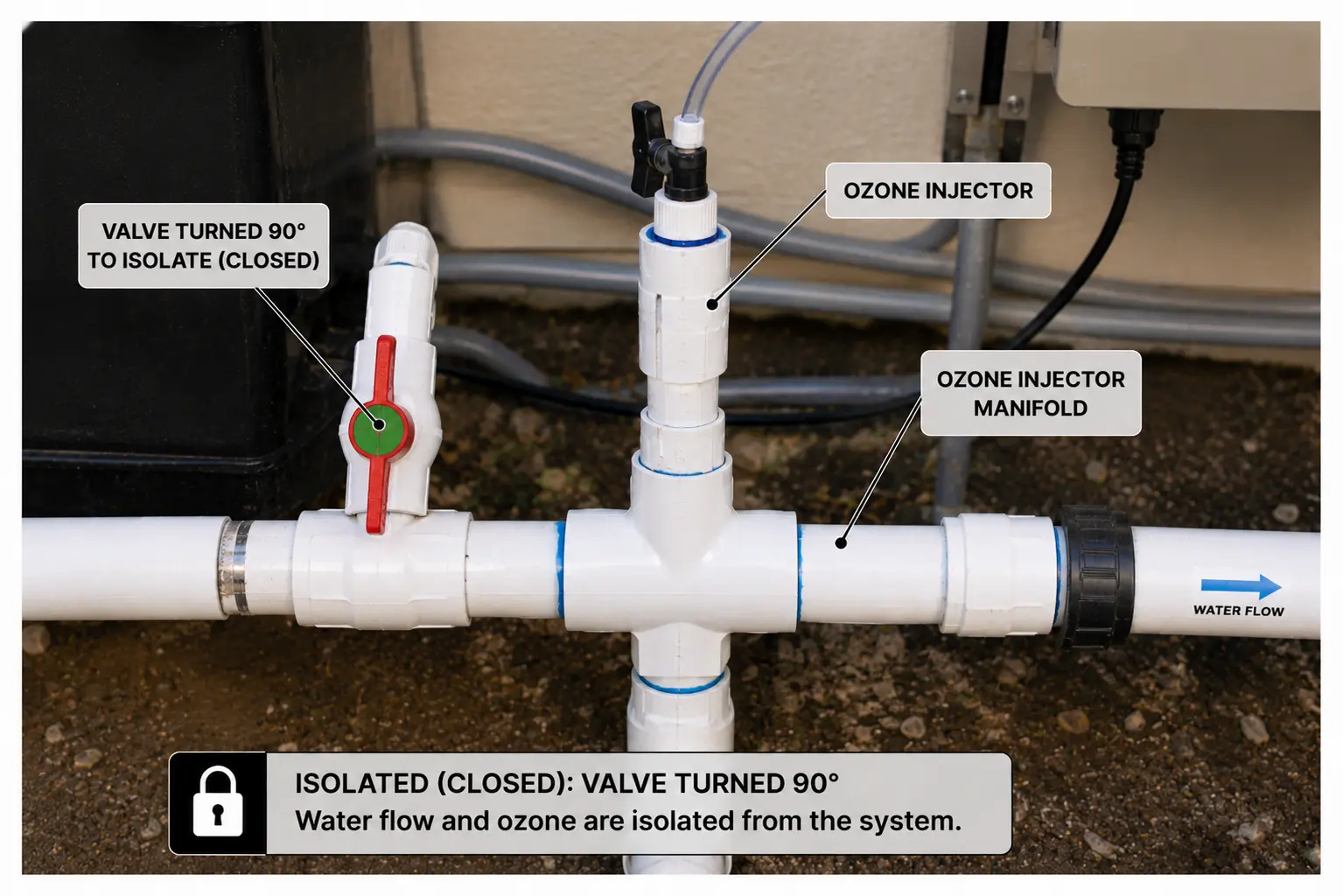
Turned 90° to Isolate (Closed)
STEP 03
Disconnect Delivery Tubing & Drain Check Valves
Unclip the Kynar/vinyl ozone supply tubing from the bottom of the generator unit and the Mazzei injector. Inspect the inline check valve for trapped water, drain it completely, or remove it for indoor winter storage to prevent internal valve cracking.
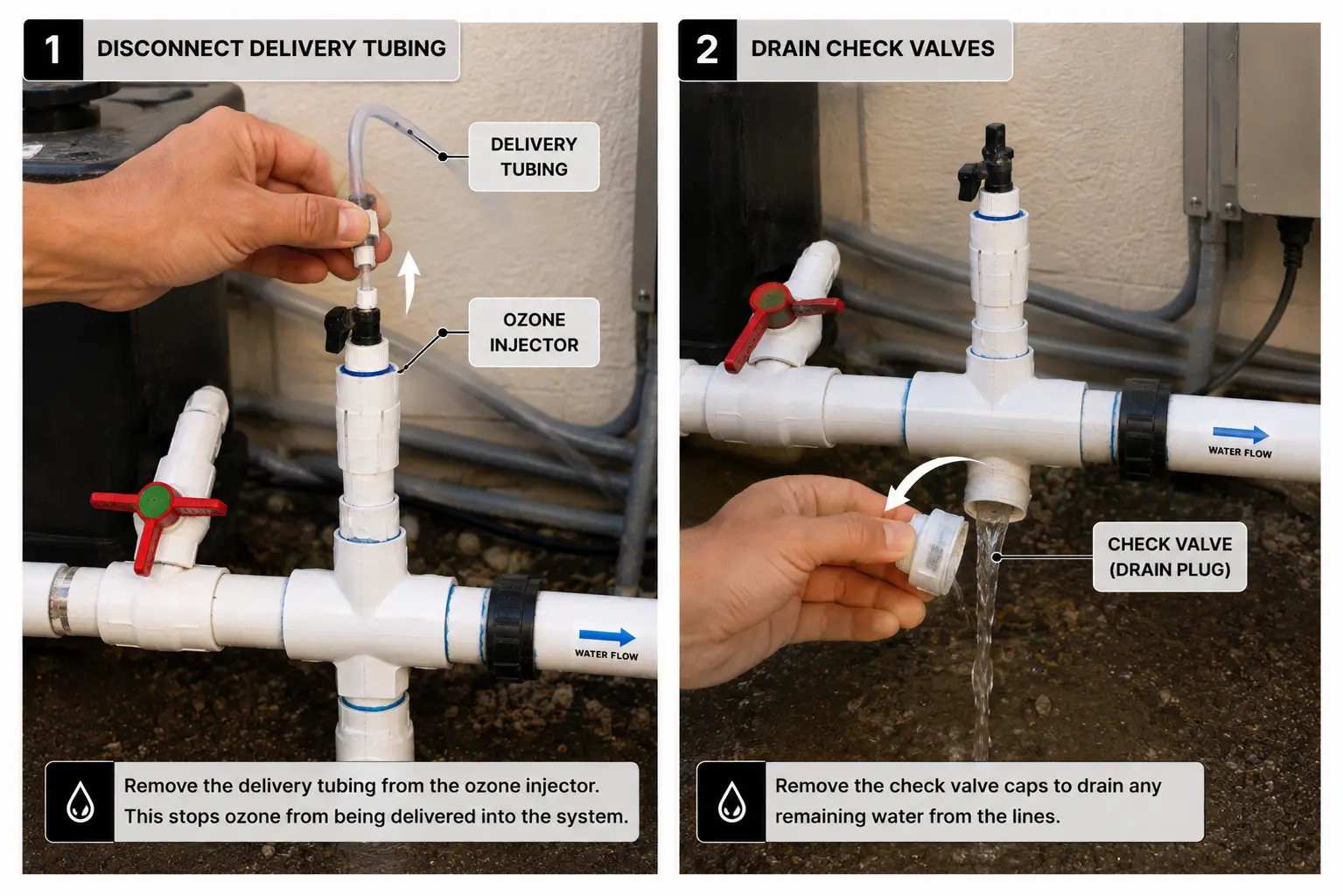
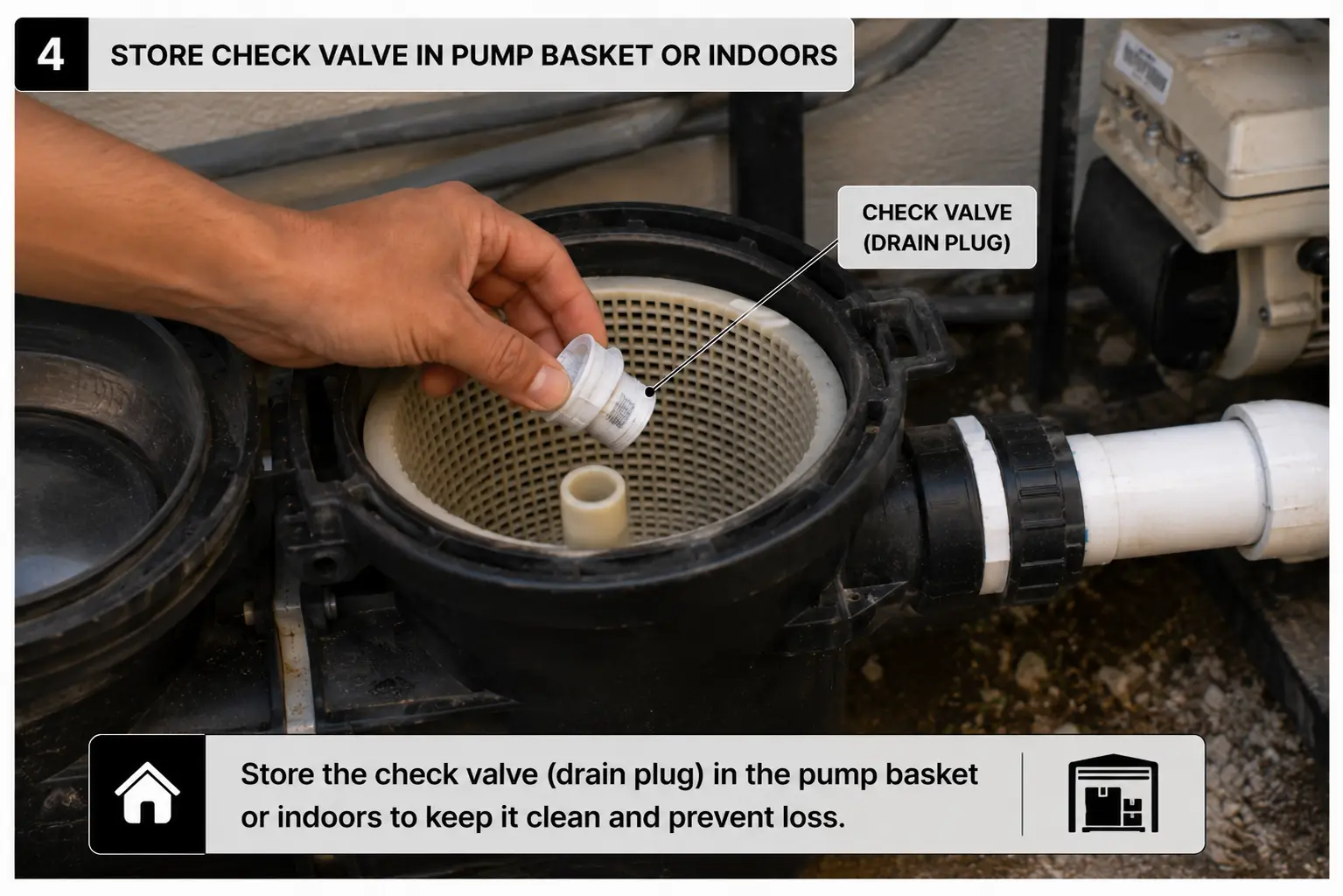
Store check valve in pump basket or indoors.
STEP 04
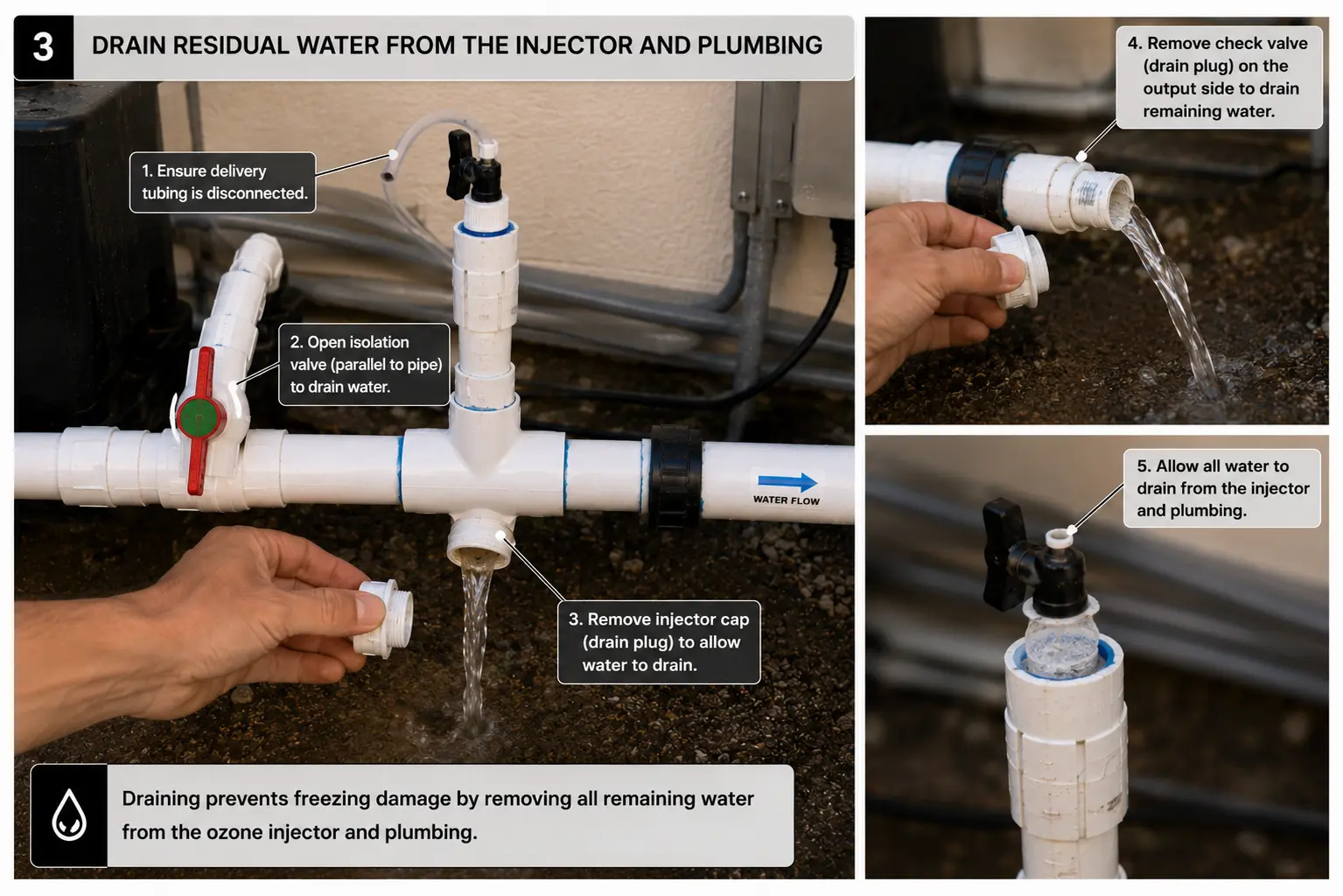
Drain Residual Water from the Injector & Plumbing
Unscrew the drain plug on the ozone manifold (if equipped) or use low-pressure air to blow out remaining water from the Mazzei injector loop. Ensure no standing water remains trapped where it could expand during a hard freeze.
↓
Your Pool Equipment May Require Additional Steps
Winterizing Your Pool Pump
Winterizing Your Pool Filter
Winterizing Your Pool Heater
Winterizing Your Heat Pump
Winterizing Pool Automation
Winterize In-Floor Cleaning
Autofill Winterization
Fill Line Hose Winterization
Frequently Asked Questions
Why does an ozone system need to be winterized?
Water left inside the Mazzei injector or delivery tubing can freeze, cracking the check valve and allowing water to backflow into the electronic ozone cell chamber—causing total unit failure when power is restored.
Can I leave my ozone check valve outside during the winter?
It is best practice to remove the inline check valve and store it indoors or in your dry pump basket. Residual moisture inside the microscopic spring mechanism can freeze and ruin the seal.
Does an ozone system need to be blown out with air?
Yes. Because ozone injectors use micro-channels to create suction, even small droplets of water trapped inside can freeze and block airflow or rupture the injector body.
Need Help Winterizing Your Ozone or Sanitation System?
Ozone generators and UV sanitation loops require delicate care to prevent expensive electrical and plumbing damage. Let Poolburg certified technicians safeguard your system this winter.
Ozone System Winterization – Proudly Serving Dallas
We proudly offer expert ozone system winterization in Dallas and throughout the DFW metroplex. Our certified technicians professionally blow out, purge, and protect your ozone generator, injector, and plumbing lines from freezing temperatures — preventing cracked components, water damage, and costly spring replacements. We serve Highland Park, Colleyville, Flower Mound, Prosper, Allen, McKinney, Plano, Frisco, Southlake, and all surrounding communities in Dallas, Tarrant, Denton, and Collin counties.
Dallas, Highland Park, Colleyville, Flower Mound, Prosper, Allen, McKinney, Plano, Frisco, Southlake, Little Elm, Celina, The Colony, Carrollton, Fort Worth, Arlington, Garland, Richardson and Irving.
 Book a visit