
In this guide
Step-by-Step Pool Equipment Winterization Guide
Protect your pool equipment from freezing temperatures and seasonal damage. Follow this step-by-step guide to properly prepare your pool equipment for winter.
01
Turn Off Power
Shut off power at the main pool breaker.
02
Equipment Position
Determine if equipment is above or below pool water level.
03
Release Pressure
Release pressure from the entire pool filtration system.
04
Remove Pump Lids
Remove pump and leaf canister lids safely.
05
Booster Pump
Drain the cleaner booster pump completely.
06
Pumps & Filters
Remove drain plugs from all pumps and filters.
07
Pool Heater
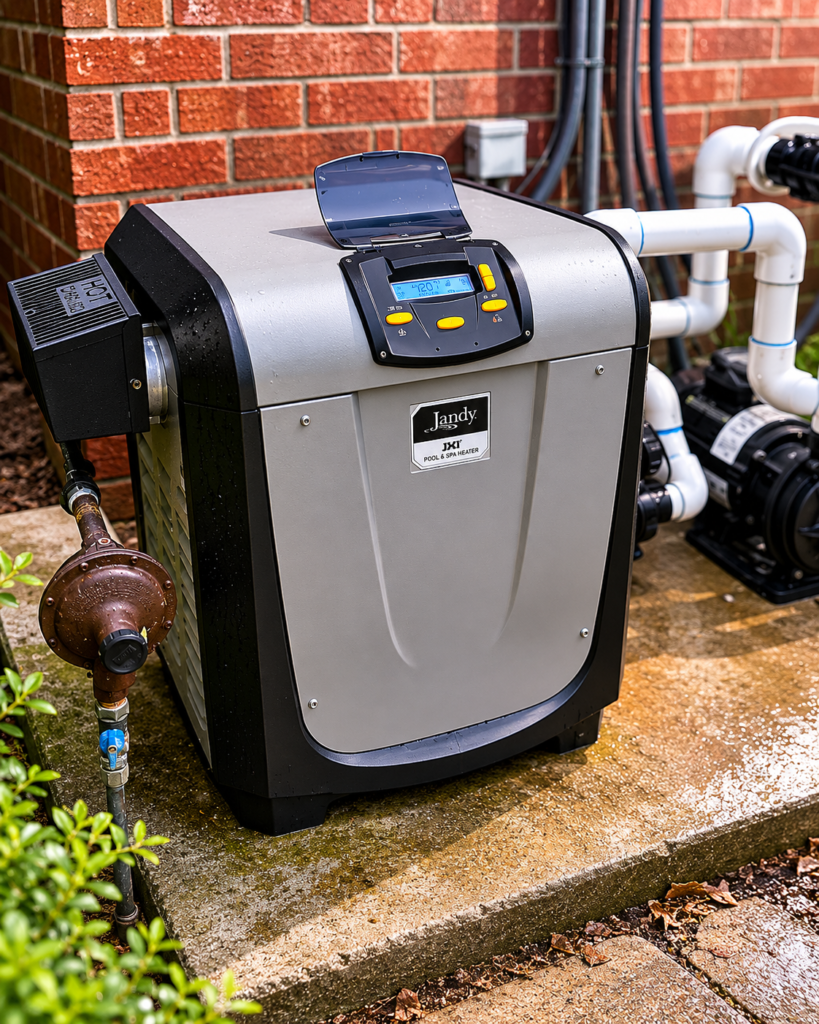
Drain pool heater to prevent internal freeze damage.
08
Chlorinator
Winterize and clean your automatic chlorinator.
Before You Begin
Pool equipment configurations vary by manufacturer and installation. This guide covers common pool equipment setups, but your system may require additional steps...
⚠️
Important:
Never work on energized pool equipment. Turn off power before servicing equipment.
STEP 01
Turn Off Power at the Breaker
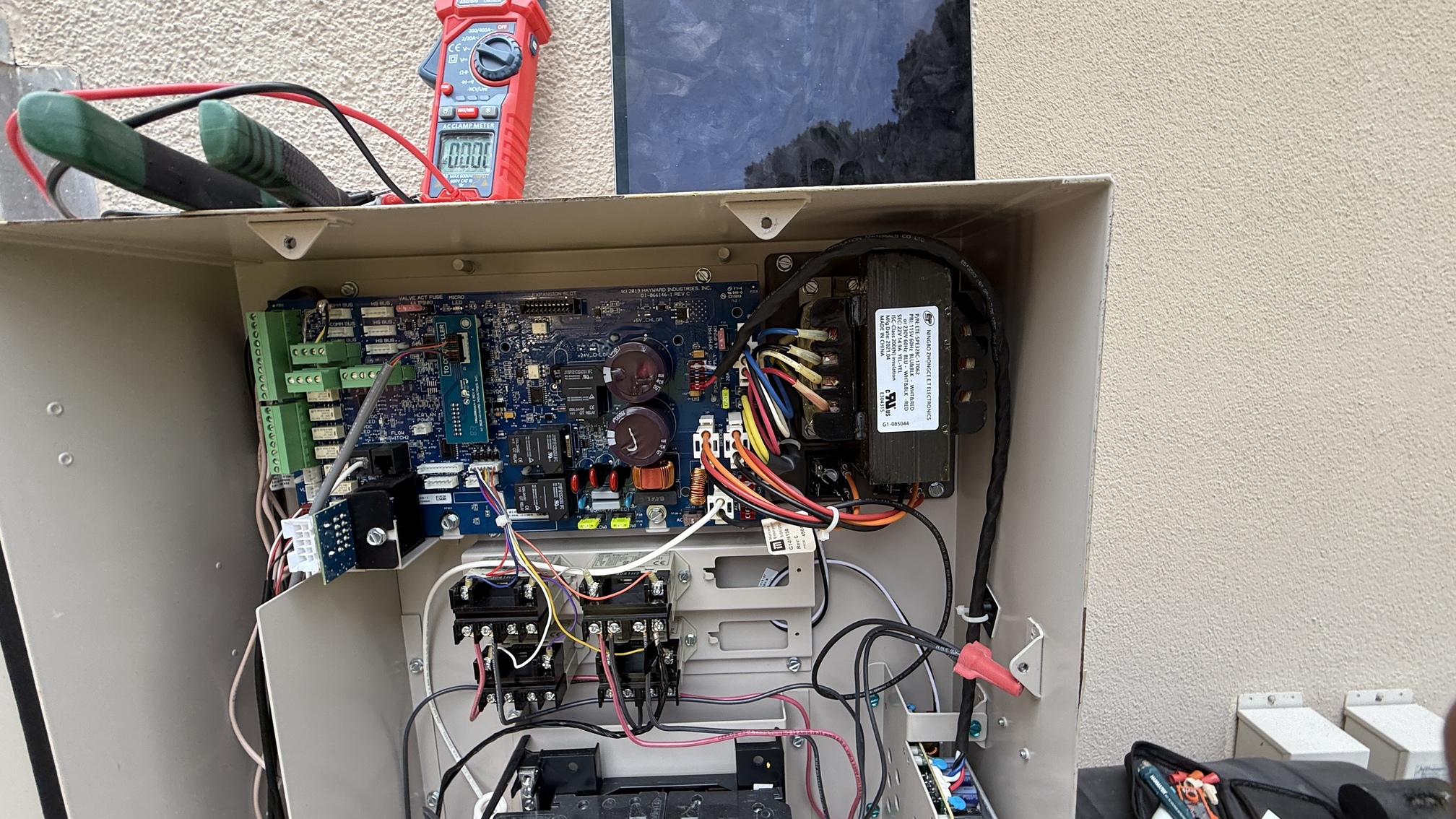
Turn off all power at the breaker box located at the pool equipment.
STEP 02
Determine Equipment Location
Evaluate whether your system lies above or below the water levels.
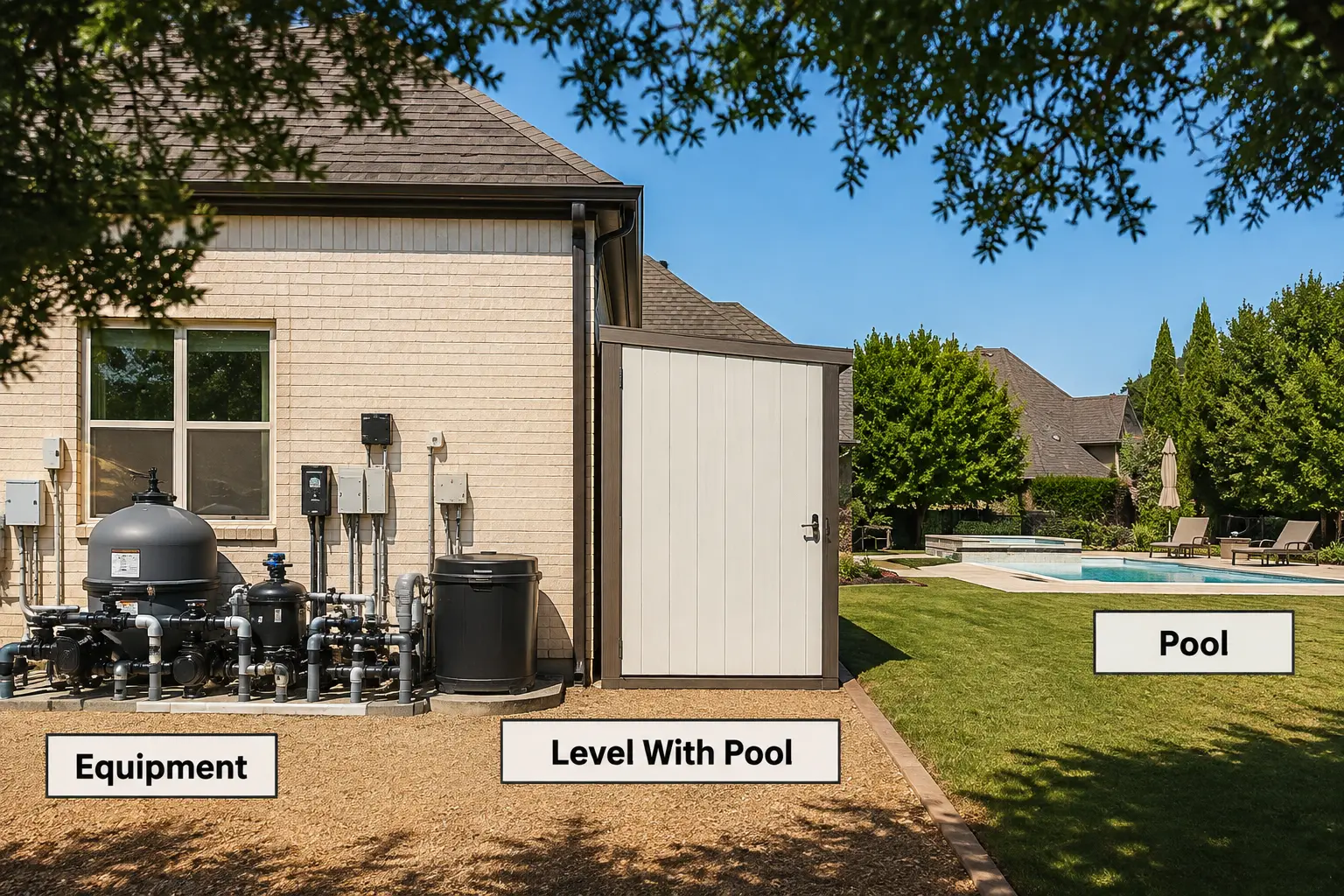
Equipment Above Pool Level
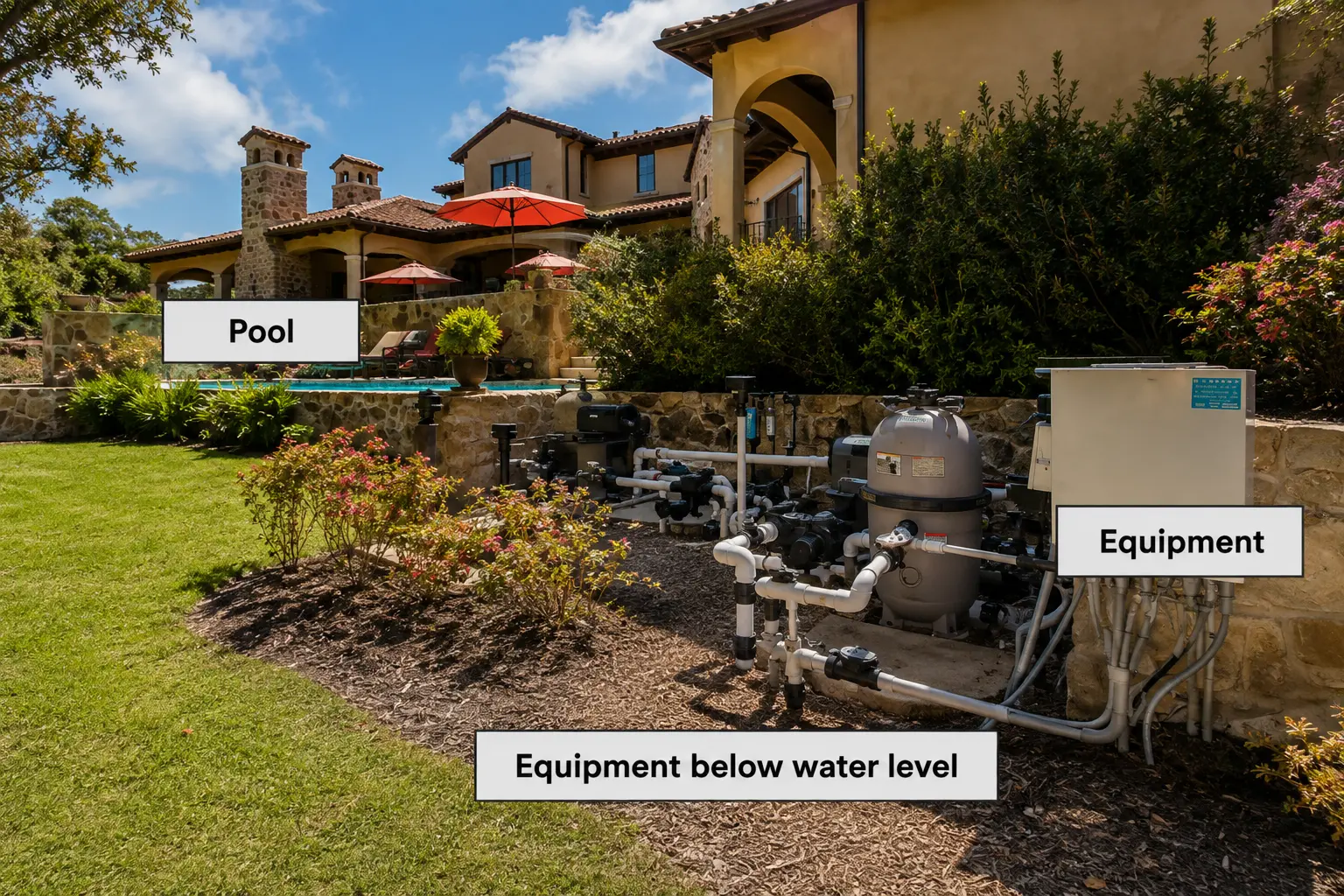
Equipment Below Pool Level
STEP 03
Release Pressure From the System
Safely open valves to decompress the pressurized parts.
Open Spigot
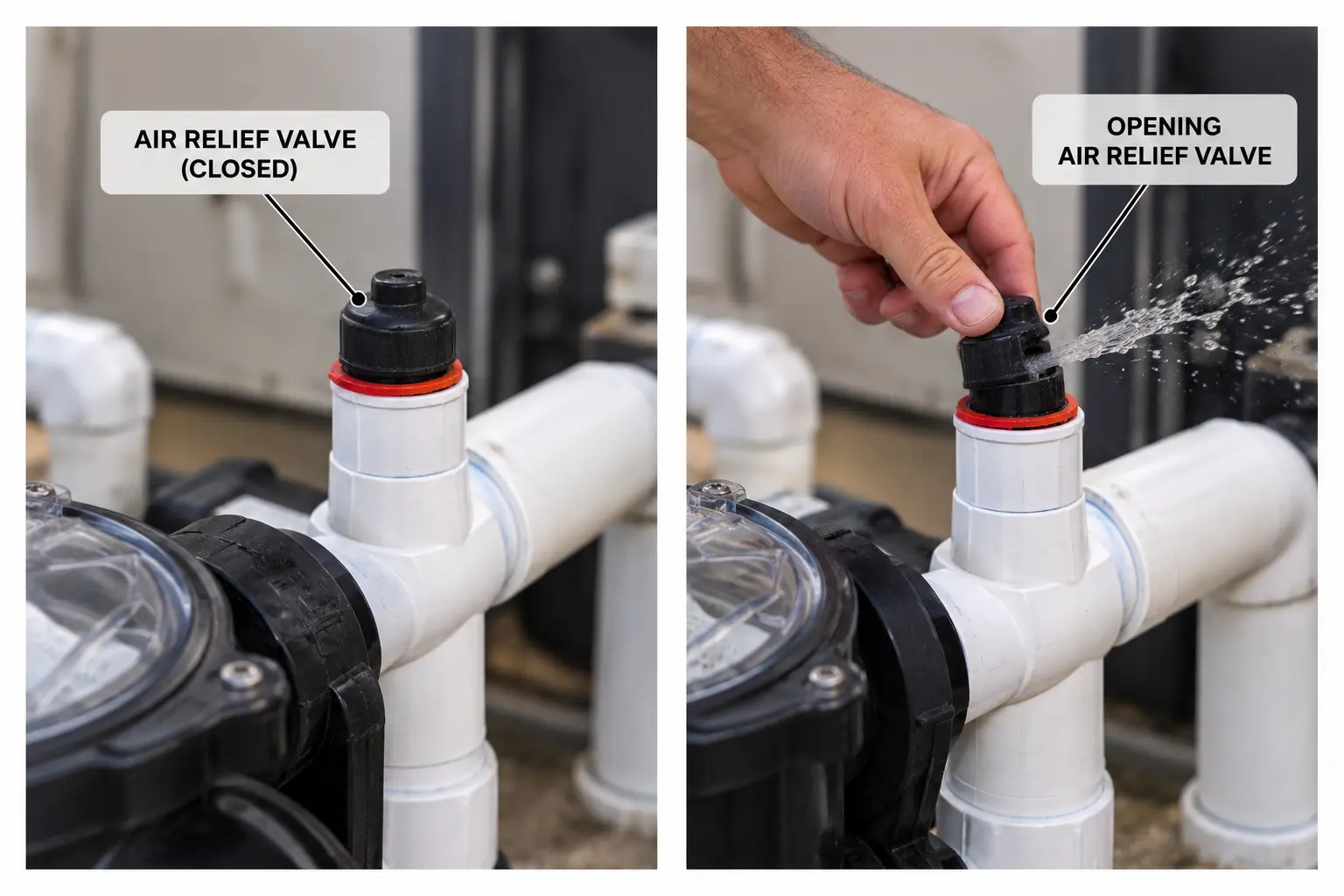
Open Air Relief Valve
STEP 04
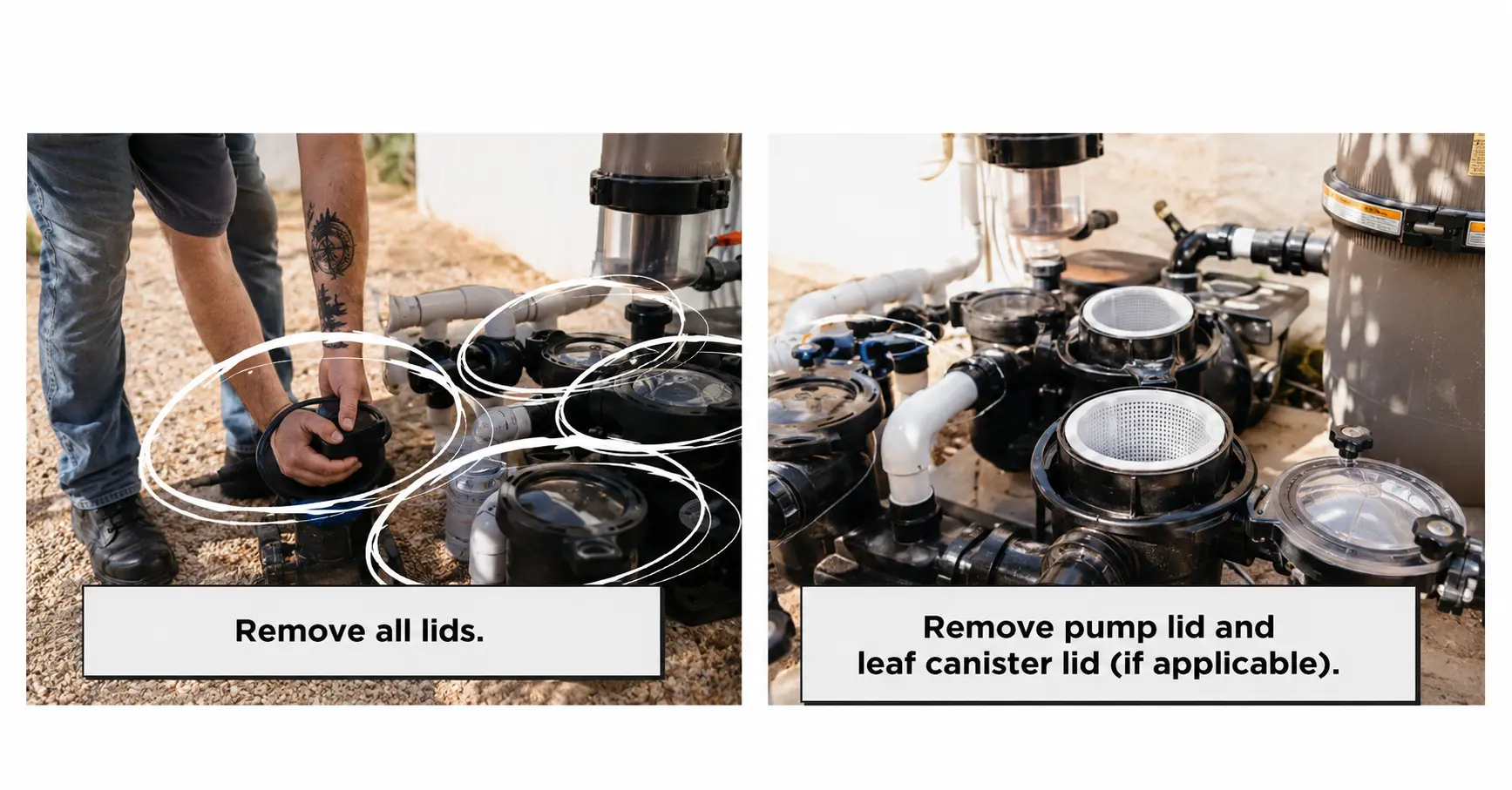
Remove Pump and Leaf Canister Lids
Untighten the locks and pull open the protective casing lids.
REMOVE LIDS
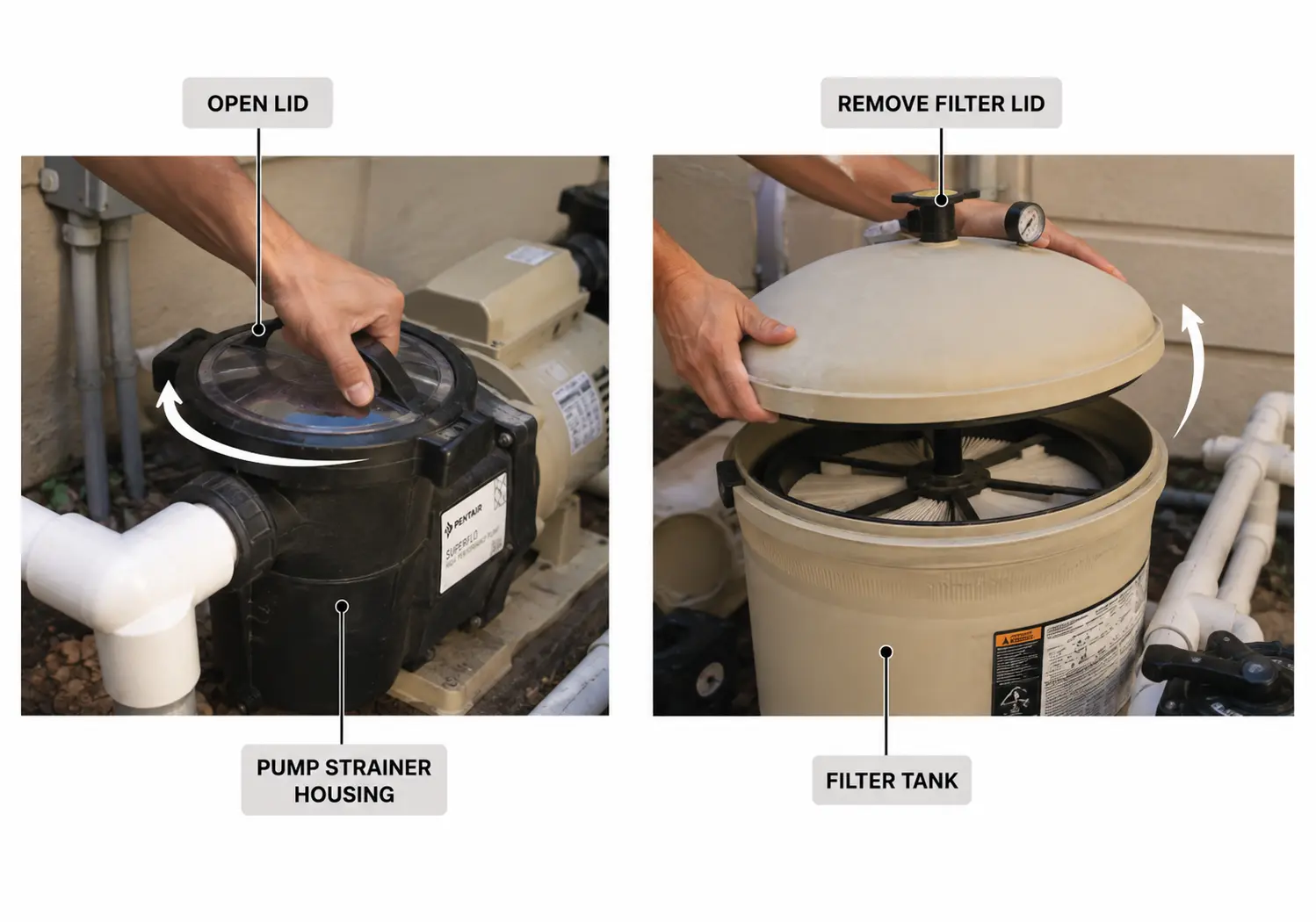
OPEN EQUIPMENT
STEP 05
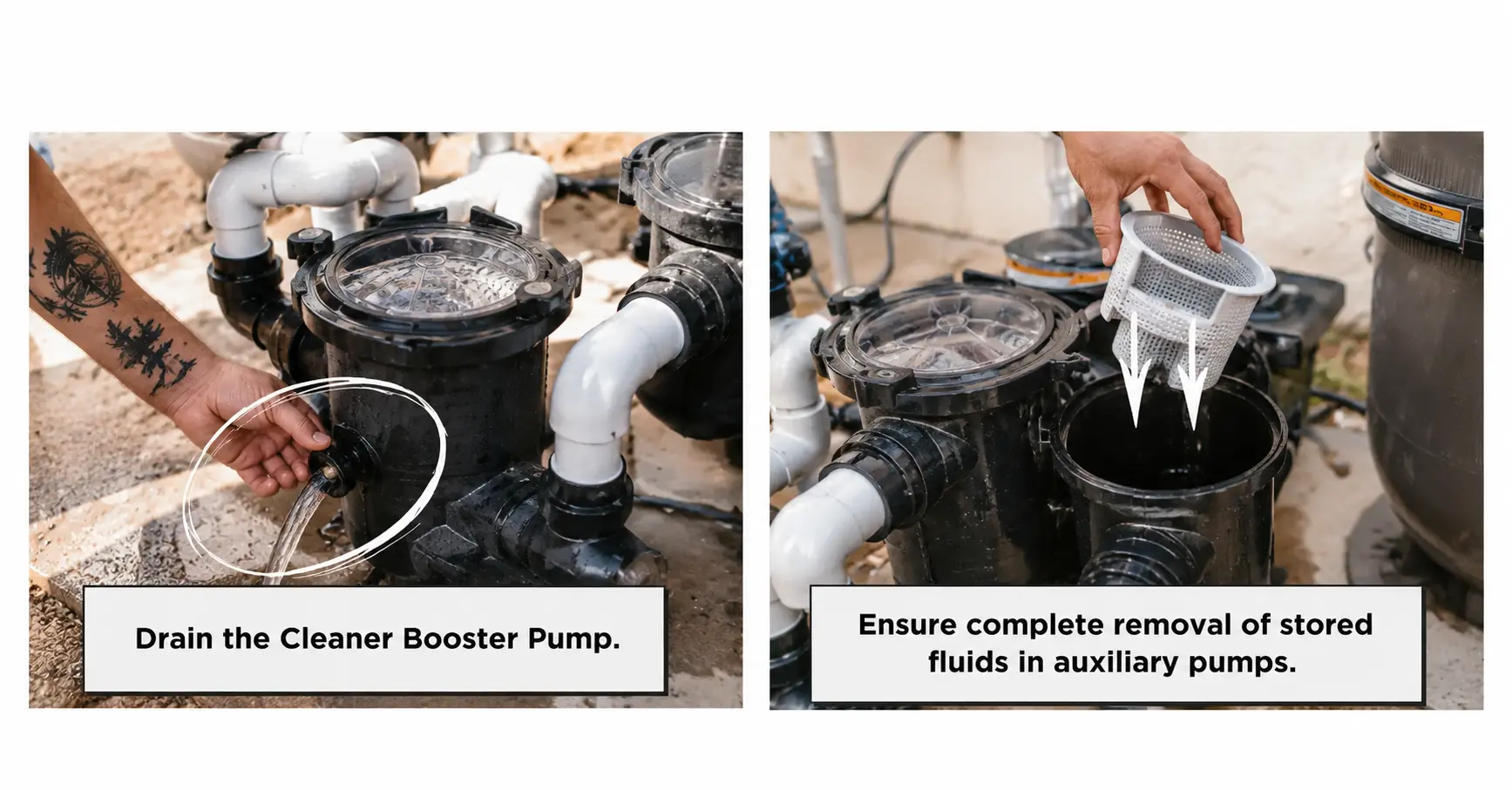
Drain the Cleaner Booster Pump
Ensure complete removal of stored fluids in auxiliary pumps.
↓
STEP 06
Remove Drain Plugs From Pumps and Filters
Follow a 3-step sequence to manage and secure your structural plugs.
01 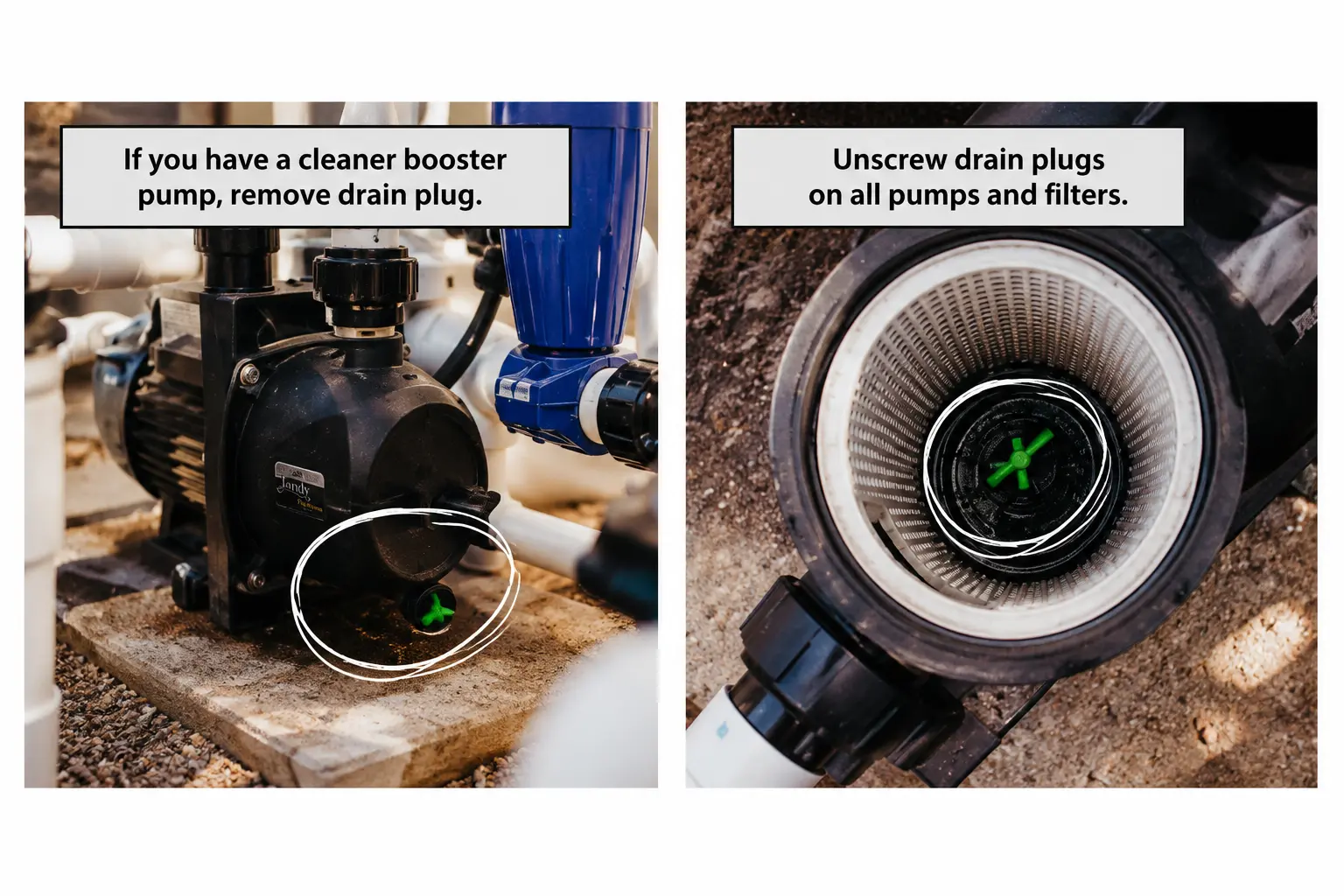
Locate the drain plug
02
Unscrew the plug
03 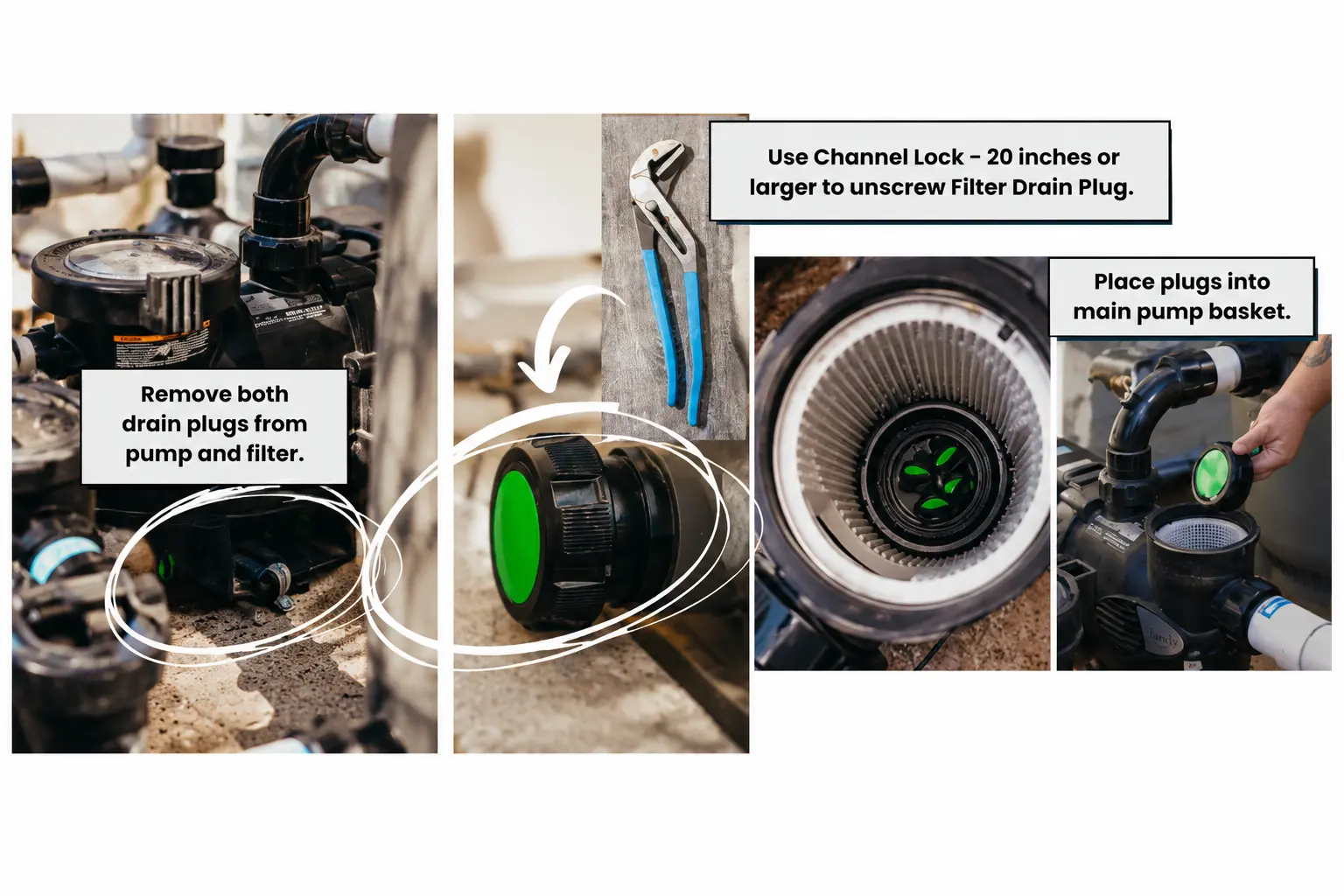
Place the plug in the pump basket
STEP 07
Drain the Pool Heater
Protect internal coils by completely draining the pool heater unit.
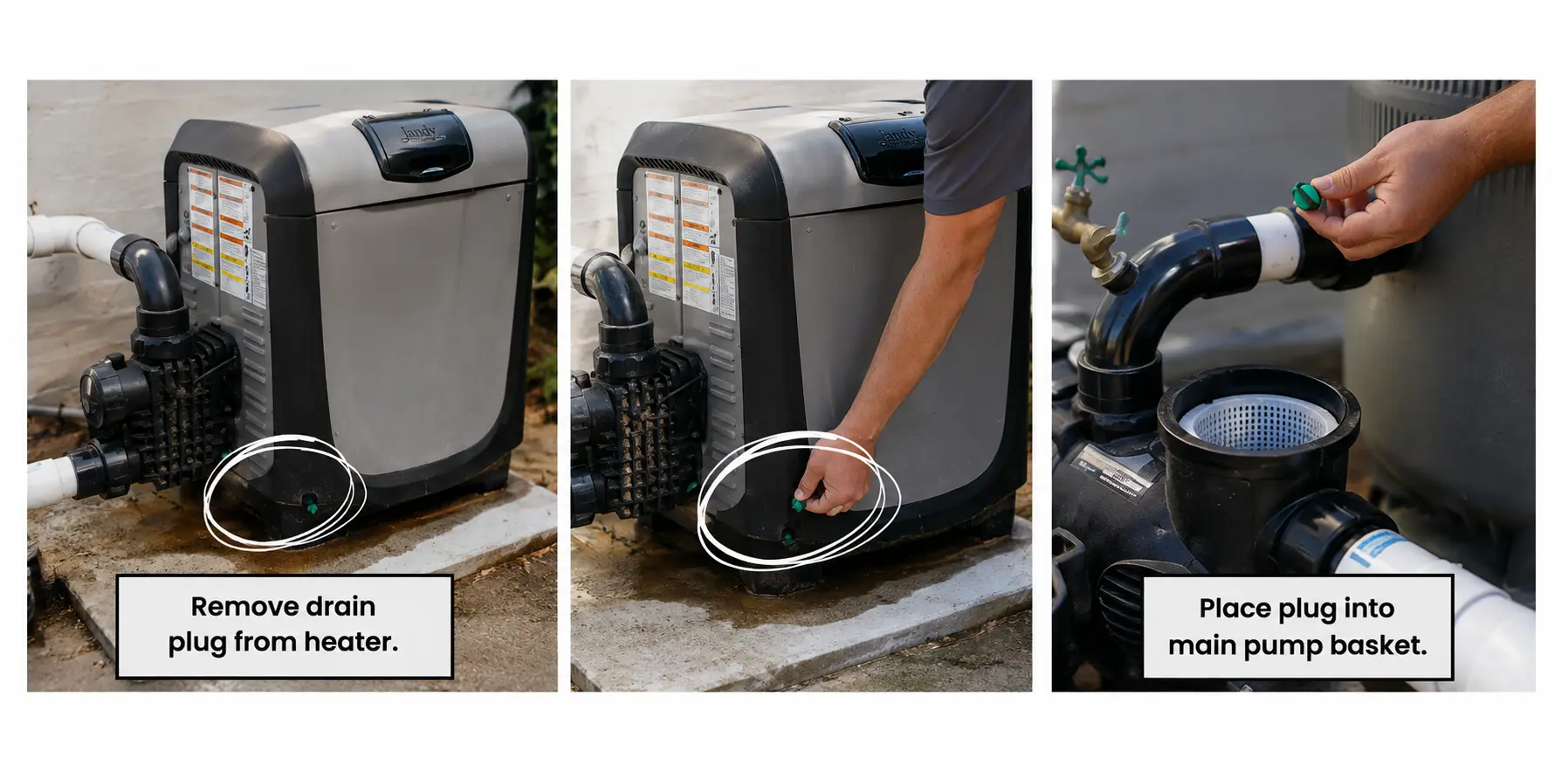
Front Header Drains
↓
STEP 08
Winterize Your Chlorinator
Handle chlorine storage elements properly for cold temperatures.
01. Remove chlorinator lid
↓
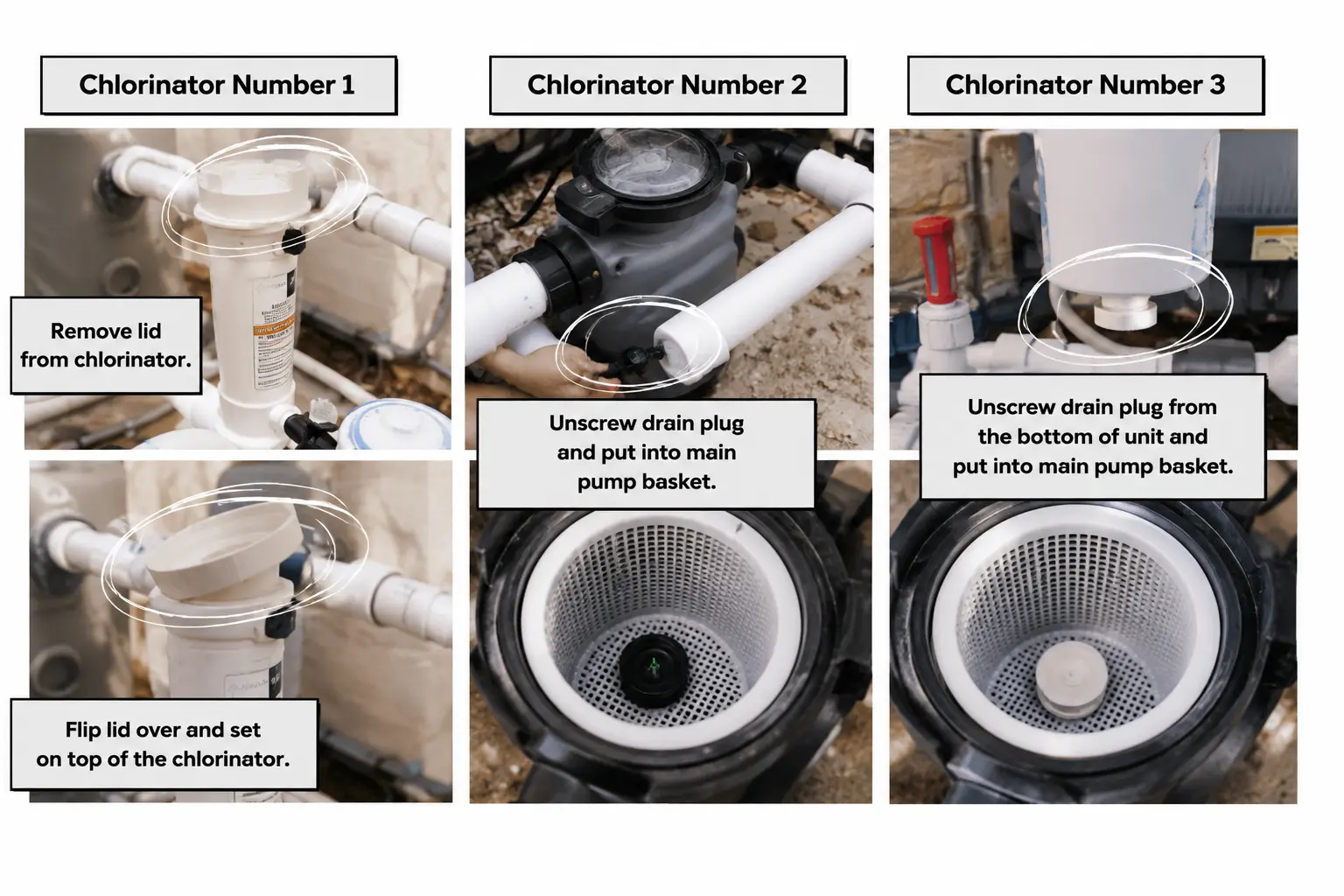
02. Flip the lid over
↓
03. Set the lid loosely on top of the chlorinator
Your Pool Equipment May Require Additional Steps
Winterizing Your Pool Pump
Winterizing Your Pool Filter
Winterizing Your Pool Heater
Winterizing Your Heat Pump
Winterizing Pool Automation
Winterize In-Floor Cleaning
Autofill Winterization
Fill Line Hose Winterization
Frequently Asked Questions
Do I need to winterize my pool in Dallas / DFW?
Yes. While North Texas winters are milder than those in northern states, the DFW Metroplex frequently experiences sudden, severe freeze events and hard multi-day freezes. When water freezes inside un-winterized pool pumps, filter tanks, heaters, or chillers, it expands with enough force to crack heavy-duty plastic manifolds and burst metallic plumbing line headers. Proper equipment winterization prevents thousands of dollars in off-season repairs.
When should I winterize my pool equipment?
You should prepare your pool equipment in late autumn, typically late October through mid-November, before the first hard freeze hits North Texas. If you choose to keep your pool open year-round relying on automated freeze protection, you should still have your freeze sensors, valves, and backup power setups inspected by early November.
Should I drain my pool completely for winter?
No, never drain your pool completely in Texas. North Texas contains heavy clay soil that expands and shifts dramatically with moisture changes. An empty pool loses the downward weight of the water, making it vulnerable to hydrostatic pressure that can crack concrete, warp vinyl liners, or literally force an inground pool shell out of the ground. Winterization involves draining water from the equipment and pipes, not emptying the pool structure.
What pool equipment needs to be winterized?
Every component holding standing water must be winterized, including:
Primary filtration pumps and leaf baskets
Filter tanks (DE, cartridge, or sand)
Gas heaters and reversible heat pumps
Poolburg evaporative chillers
Pressure-side cleaner booster pumps
Salt chlorine generator cells and in-line erosion chlorinators
Above-ground valves and exposed PVC plumbing lines
Do pool pumps need to be drained?
Yes, absolutely. Water left trapped inside a pump volute (housing) will freeze, expand, and shatter the plastic casing, split the lid threads, and ruin internal seals. Removing all drain plugs allows internal water to fully evacuate. Store the removed plugs safely inside the pump basket so they aren’t lost over the winter.
Do pool heaters need to be drained?
Draining your pool heater is one of the most critical winterization steps. The heat exchanger tubes (made of copper or cupronickel) inside gas heaters are extremely thin-walled and vulnerable to ice pressure. A cracked heat exchanger cannot typically be repaired—it requires replacing the entire heater unit.
Does a pool chiller need to be winterized?
Yes. Whether you have an evaporative chiller or a reversible heat pump chiller, water sits inside internal manifolds, spray headers, and heat exchange coils. If this water freezes, it will split internal components and void your manufacturer warranty. The unit must be drained and isolated prior to sub-freezing temperatures.
What happens if water freezes inside pool equipment?
When water freezes into ice, its volume expands by roughly 9% with immense hydrostatic force. This expansion easily warps filter tanks, cracks pump bodies, ruptures PVC pipes at the elbow joints, and destroys expensive internal heating/cooling coils.
Can I winterize my pool equipment myself?
If you are comfortable working with pool plumbing, electrical breakers, and know where every manufacturer drain plug is located, you can perform a DIY winterization using our step-by-step guide. However, because missing a single drain plug (such as on a booster pump or heater header) can lead to catastrophic freeze damage, many homeowners prefer having a trained professional handle it.
Can Poolburg winterize my pool equipment for me?
Yes! Poolburg provides full-service, professional pool winterization across McKinney, Frisco, Allen, Dallas, and the surrounding DFW area. Our technicians systematically inspect your setup, drain all equipment, blow out lines where necessary, install freeze isolation plugs, and ensure your system is 100% protected before winter hits.
Protect Your Pool Equipment This Winter
Not sure which components need to be drained or winterized? Let PoolBurg handle it for you.
Pool System Winterization – Proudly Serving Dallas
We proudly offer comprehensive pool system winterization in Dallas and throughout the DFW metroplex. Our certified technicians professionally blow out, purge, and protect all critical components — including your pump, filter, heater, chiller, heat pump, autofill, in-floor cleaning system, ozone system, fill lines, hoses, and spigots — to prevent freezing, cracking, and costly spring repairs. We serve Highland Park, Colleyville, Flower Mound, Prosper, Allen, McKinney, Plano, Frisco, Southlake, and all surrounding communities in Dallas, Tarrant, Denton, and Collin counties.
Dallas, Highland Park, Colleyville, Flower Mound, Prosper, Allen, McKinney, Plano, Frisco, Southlake, Little Elm, Celina, The Colony, Carrollton, Fort Worth, Arlington, Garland, Richardson and Irving.
 Book a visit