While iron is the core culprit, the origin of pool rust stains varies from dissolved minerals in source water to corroding internal hardware, forgotten metal debris, or structural rebar leaching through the finish. Identifying the specific cause is critical; otherwise, a generic chemical treatment might provide a temporary cosmetic fix while the underlying problem remains unaddressed.
The pattern is the first clue. Widespread discoloration after a refill means something different from one streak beginning at a screw or floor fitting.
What Pool Rust Stains Look Like
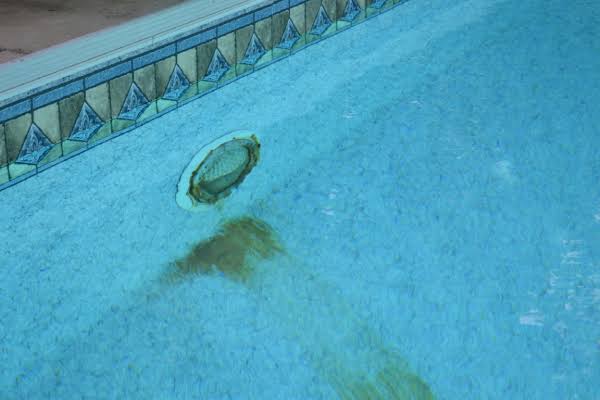
Typical pool rust stains are orange, red-brown, or tea-colored. Look for spots on plaster or steps, streaks below fittings, halos around ladder anchors, or a mark shaped like a forgotten metal object. USGS guidance on iron in water confirms that iron commonly creates rusty reddish-brown or yellow staining.
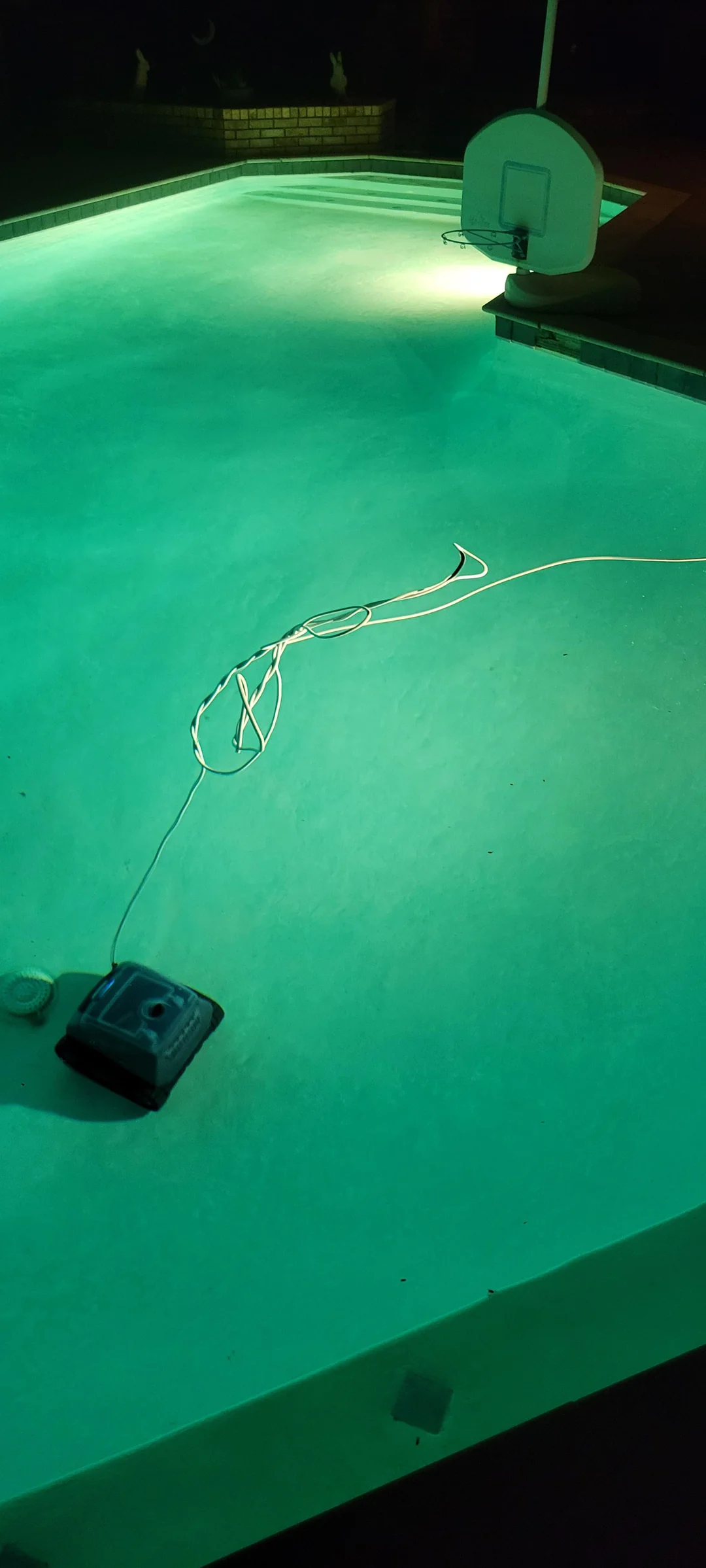
In the supplied photo, several dark trails seem to begin at floor fittings. That does not prove corrosion, but it makes those fittings a smarter first inspection point than the whole pool. Old in-floor cleaning nozzles can hide metal weights or fasteners.
Common Causes of Pool Rust Stains
- Iron in fill water: Well water, irrigation overspray, and source water may contain dissolved iron. Once oxidized, iron stains pool surfaces. The EPA’s nuisance-contaminant guidance associates iron with reddish or orange staining.
- Metal left underwater: Screws, batteries, tools, and other metal debris can leave concentrated marks.
- Corroding fixtures: Ladder anchors, light screws, drain hardware, heater parts, and old cleaning fittings may create repeating streaks.
- Rebar near the surface: A spot that returns beside damaged plaster may begin below the finish. Pool and Spa News’ rebar repair overview shows why cleaning the surface does not repair rusting steel.
- Corrosive water: Low pH and aggressive water can attack metal. The Pool and Hot Tub Alliance’s metal-staining guidance explains that water below pH 7 is likely corrosive.
Pool Rust Stains vs Organic Stains
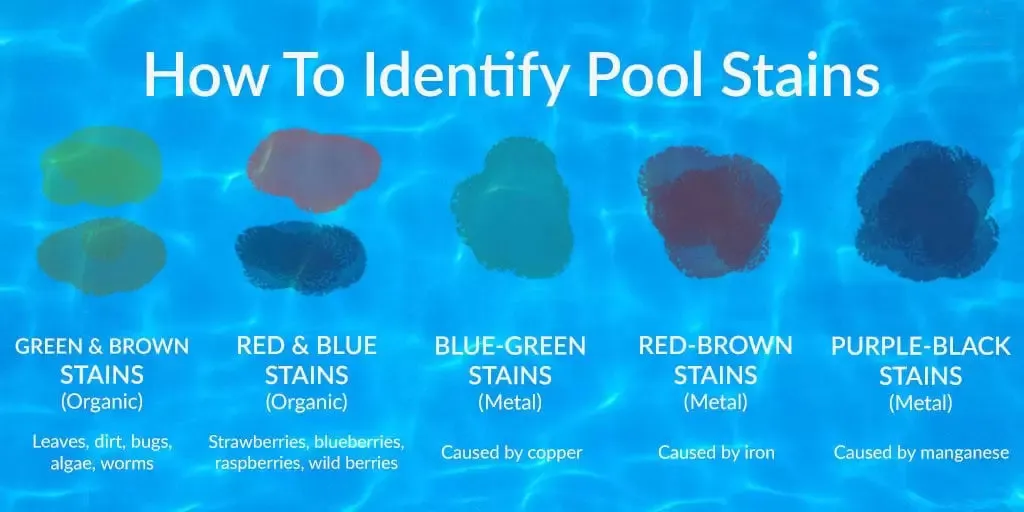
Color helps, but it is not proof. Rust stains in pool plaster tend to be orange or reddish-brown and may trace to one source. Organic brown pool stains are often greener, softer-edged, and shaped like settled leaves. Calcium scale is usually pale and rough, although trapped metal can tint it brown.
Start with brushing and the stain’s location. A professional may use a surface-compatible ascorbic-acid test for iron or a controlled chlorine test for organics. A purpose-made stain identification kit beats guessing. Never mix chlorine with acid or place strong products directly on a finish unless its manufacturer approves it.
Can Pool Rust Stains Be Removed?
Often, yes. Some iron stains respond to an ascorbic-acid or metal treatment made for the pool finish. The Leslie’s pool stain guide explains why iron and organic stains need different approaches. A sequestrant can help keep metal dissolved, but it cannot repair a corroded fitting or rebar.
Severe pool metal stains or an unknown finish deserve professional treatment. Rebar corrosion usually requires opening the damaged area, addressing the steel, and patching the finish. Until the source is fixed, stain removal may be temporary.
How to Prevent Pool Rust Stains
- Keep the full water balance steady; review pool pH too low and pool calcium hardness too low together.
- Remove metal objects and storm debris quickly.
- Inspect anchors, screws, fittings, and old floor-cleaning parts when a stain has a clear starting point.
- Test source and pool water for iron after refilling. Pool water testing kits cover routine chemistry; metals may need a separate test.
- Repair chipped plaster before underlying hardware remains exposed.
Across Frisco, Plano, McKinney, Allen, Southlake, Keller, Grapevine, Garland, Mesquite, and Wylie, hard water can add pool tile calcium buildup that muddies the picture. Hardness is not rust; iron or another corroding metal is still required.

People Also Ask
What causes rust stains in a pool?
Pool rust stains are usually iron marks. The source behind rust stains in pool finishes may be fill water, metal objects, corroding fixtures, or rebar.
How do I remove rust stains from pool plaster?
Identify the source first. When iron stains pool plaster, a compatible treatment may help, while rebar corrosion needs physical repair.
Are brown stains metal or organic?
Either is possible. Orange-red streaks favor iron; green-brown marks where leaves rested favor organic material. Spot testing helps confirm it.
Can low pH cause rust stains?
Low pH can make water corrosive, allowing it to attack metal fixtures or equipment and contribute to pool metal stains.
Why do rust stains keep coming back?
Recurring brown pool stains usually mean the iron source, corroding part, rebar, or water-balance problem was never corrected.
Can metal objects stain a pool?
Yes. Even a small screw, battery, hairpin, or metal toy can leave a concentrated rusty mark after sitting underwater.
PoolBurg Can Trace Pool Rust Stains to the Source
PoolBurg can compare the pattern with pool plaster stains, test the water, and inspect fittings or surface damage. Contact PoolBurg to learn whether the fix is chemistry, metal treatment, hardware replacement, or surface repair.