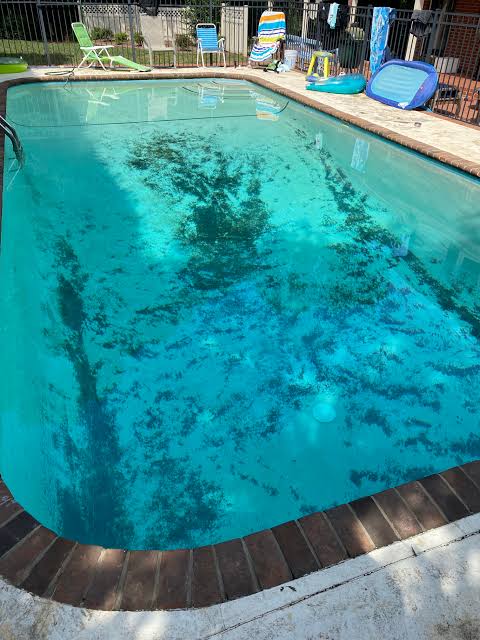
Pepper-like colonies of black algae on pool surfaces establish a defensive biofilm, meaning sanitizers cannot penetrate the growth effectively until thorough brushing disrupts this outer layer. Because of this, a simple shock treatment and brief brushing are rarely enough to fully eradicate it, and the same spots often return even after the pool water seems completely clear.
What Black Algae Looks Like
Black pool algae usually appears as small black, charcoal, or deep blue-green dots. Black algae in pool plaster favors grout, cracks, and other rough areas. The spots may feel slightly raised or slimy and refuse to wipe away like loose dirt.
A 2025 study of black algae biofilms found that the sampled growth was dominated by filamentous cyanobacteria with traits that help it form resilient biofilms. In everyday pool language, it is still called black algae.

Why Black Algae in Pool Surfaces Is Harder to Kill
The protective film is the big problem. Rough plaster, cracks, and grout give the colony shelter. People sometimes say black algae has “roots,” but that is not literal; the growth is lodged deeply enough in a porous finish to survive light cleaning.
BioGuard’s black algae guidance emphasizes brushing because it opens the protective layer to sanitizer. Weak chlorine without repeated brushing may lighten spots without finishing the job.
Black Algae vs Stains
Not every cluster of black spots in pool plaster is alive. Metal or mineral stains normally stay flat after brushing. Black algae may feel raised, smear slightly, or return in the same rough area.
Algae on pool plaster often forms scattered colonies in shaded or low-flow zones, while a stain may trail from one fitting. If unsure, compare common pool plaster stains and arrange a controlled spot test before adding a large chemical dose.

How to Treat Black Algae Safely
- Test before treating. Measure free chlorine, pH, cyanuric acid, and the full balance. The CDC’s home-pool testing guidance explains that pH and stabilizer affect chlorine performance.
- Choose the correct brush. Stainless steel may be suitable for sound plaster or concrete when the finish manufacturer allows it. Use nylon on vinyl, fiberglass, or painted surfaces. An EPA-registered algae-treatment label specifically calls for a surface-compatible brush.
- Disrupt every colony. Brush walls, steps, grout, corners, and every spot. Repeat this throughout the pool algae treatment.
- Raise and hold chlorine correctly. The target depends on pool volume, cyanuric acid, product strength, and the label. There is no universal “bags of shock” answer. Circulate, retest, and redose only as directed.
- Remove what breaks loose. Vacuum debris and clean or backwash the filter as directed. Clean brushes, cleaner parts, and removable equipment too.
- Use chemicals carefully. Follow every label, wear the stated protective gear, and never mix chlorine with acid or another chemical. The CDC’s pool chemical safety guidance explains the danger. Keep swimmers out until testing meets the product’s re-entry directions.
Why Black Algae Comes Back
When black algae in pool surfaces returns, the biofilm may not have been brushed deeply enough, chlorine may have fallen too soon, or flow may still miss the area. A pool stabilizer that is too high can slow chlorine action, while a dirty filter and aging plaster create more trouble.
A salt system may make chlorine delivery more consistent, but it cannot replace brushing and testing. A pool phosphate remover may support prevention when phosphates are high; it is not the primary cure. Reliable pool maintenance guidance still comes back to testing, circulation, filtration, and sanitizer.
Older plaster pools in Plano, Carrollton, Farmers Branch, Garland, Mesquite, Keller, and Southlake can be stubborn where shade and rough finishes overlap. Compare look-alike yellow algae in pool before choosing how to kill algae in pool.
People Also Ask
What causes black algae in a pool?
Black pool algae takes hold when protected biofilm finds rough surfaces, weak sanitation, poor circulation, or neglected areas.
Is black algae dangerous?
The 2025 study found its sampled cyanobacteria non-toxic but noted that biofilms could harbor other bacteria. Treat unexplained black spots in pool surfaces and avoid swimming until circulation, sanitizer, and pH are verified.
How do I kill black algae?
Confirm it first, brush with a surface-safe tool, maintain a label-based chlorine treatment, circulate continuously as directed, and clean the filter and tools.
Why does black algae keep coming back?
Common reasons include incomplete brushing, falling chlorine, high stabilizer, poor flow, a dirty filter, or rough aging plaster.
Can black algae grow in plaster?
Yes. Algae on pool plaster is common because its pores, cracks, and worn patches protect colonies from casual brushing.
Do I need professional algae treatment?
Professional help is wise when growth is widespread, the surface type is uncertain, chemistry will not hold, or previous treatments have failed.
PoolBurg Can Break the Return Cycle
PoolBurg can identify black algae in pool surfaces and correct the chemistry, brushing, filtration, and circulation issues helping it survive. Contact PoolBurg for a pool algae treatment plan built around the finish and actual test results.