Saltwater pool check cell light on? The system wants attention, but it is not automatically asking for a new cell. Depending on the brand and whether the light is flashing or steady, the cause may be a scheduled inspection reminder, low measured salt, scale, weak flow, an aging cell, or a sensor or controller problem.
What the Saltwater Pool Check Cell Light Means
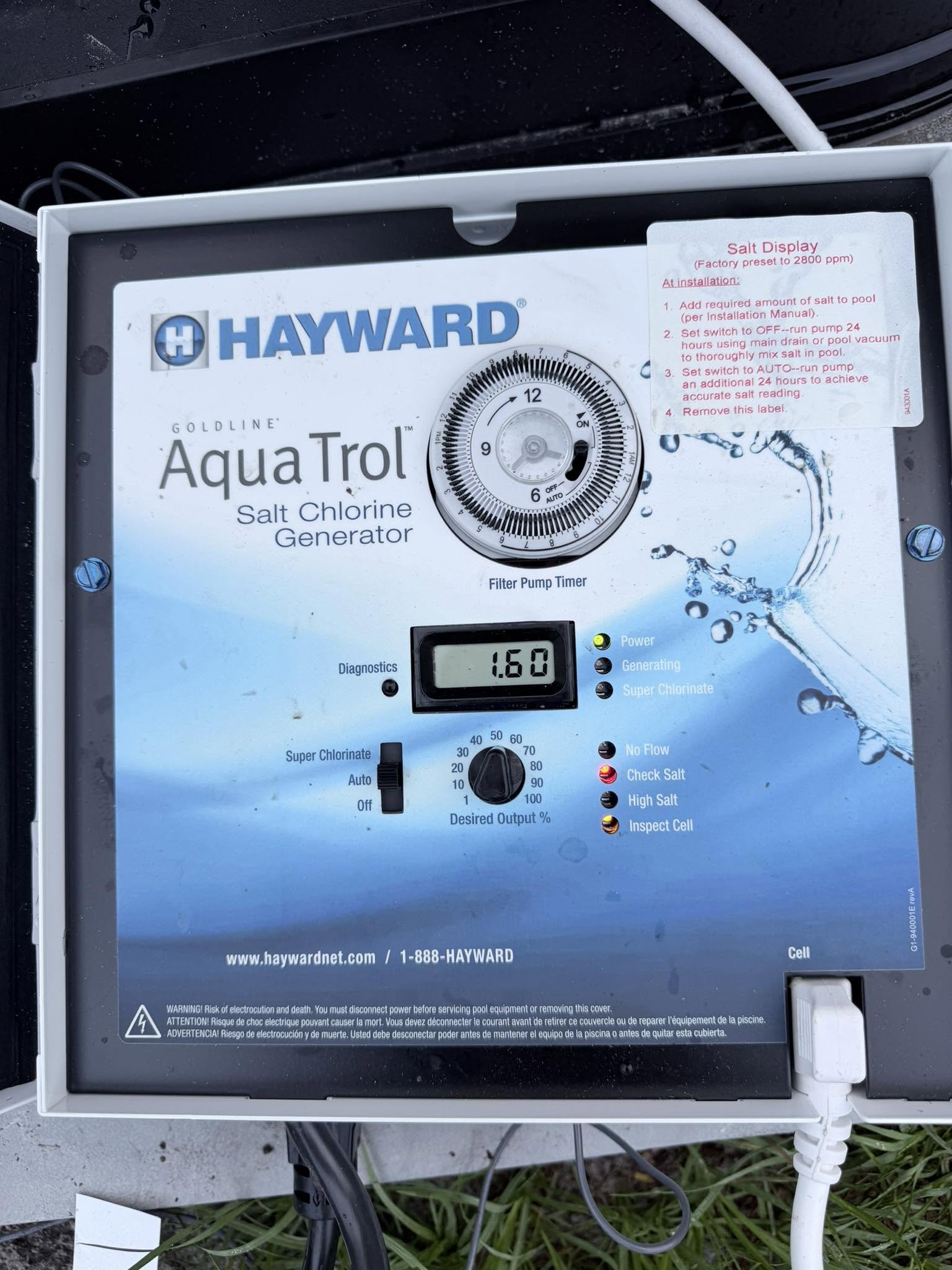
Start by reading the exact label and your model’s manual because systems do not use warning lights the same way. The Hayward AquaRite manual, for example, says a flashing Inspect Cell light can be a roughly 500-hour reminder, while a steady light can indicate reduced efficiency. Its separate Check Salt light can signal low measured salt and stop generation.
That distinction matters. A reset can clear a reminder after inspection, but it cannot repair scale, a failed sensor, or worn plates. If you searched “check cell light salt pool,” first identify which light is actually on.
Common Reasons the Check Cell Light Turns On
The most common causes are:
- White calcium scale coating the cell plates
- Low or high salt compared with the manufacturer’s range
- Weak water flow from a dirty filter, full basket, closed valve, or pump issue
- A timer-based inspection reminder
- Incorrect cell type selected in the controller
- A drifting salt, temperature, or flow sensor
- Old plates that no longer produce enough chlorine
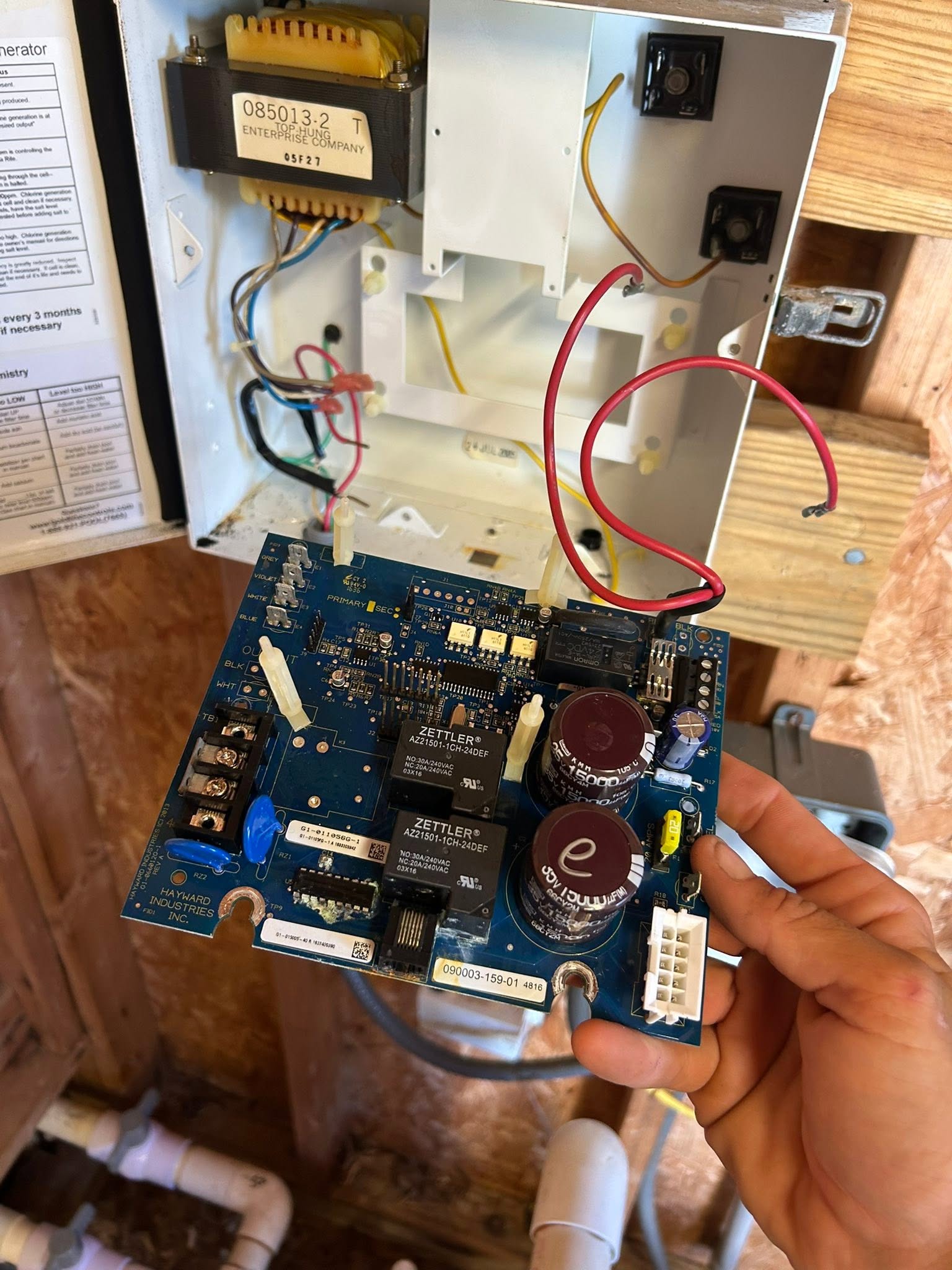
- A wiring, connector, or control-board fault
The Hayward AquaRite specifications show why model-specific ranges matter. Another brand may use different thresholds and reset steps. Treat a saltwater pool check cell light or salt chlorinator service light as a diagnostic prompt, not permission to pour in more salt.
What to Check Before Replacing the Cell
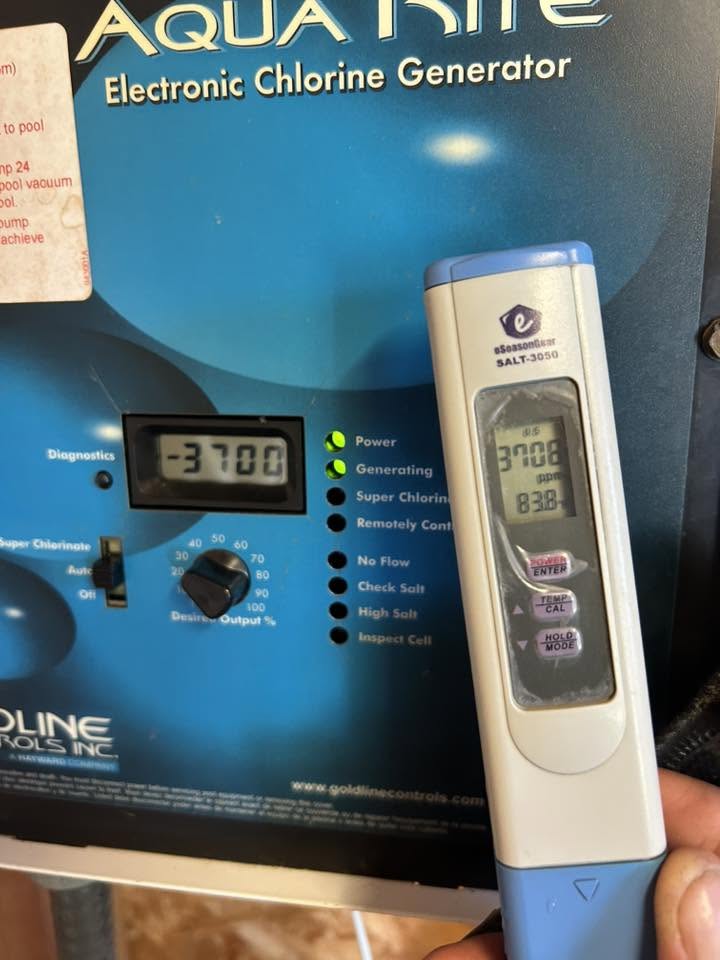
Compare the panel reading with an independent test, such as the drop method used by the Taylor sodium chloride test kit. If the panel says 2,100 ppm but a reliable test says 3,300 ppm, stop adding salt. Scale, calibration, cell selection, a sensor, or the cell itself may explain the mismatch. PoolBurg’s saltwater pool low salt warning and saltwater pool high salt level guides show why guessing can create a second problem.
Also test free chlorine, check filter pressure and flow, empty baskets, note recent rain or refill water, and record cell age. The CDC’s home-pool testing guidance confirms that salt pools still need routine chlorine and pH testing.
Cleaning the Cell Versus Replacing the Cell
Turn off power and follow the exact manual before removing a cell. The Pentair IntelliChlor guide recommends inspecting for scale and warns that excessive acid washing damages the blades. Pentair’s acid-cleaning instructions also require power and filter pressure to be addressed safely.
Cleaning helps visible scale; it cannot restore worn coating. Match salt cell cleaning frequency to actual buildup. If the saltwater pool check cell light remains after salt, flow, chemistry, settings, and cleaning check out, output testing can separate salt cell scale buildup from true failure and an unnecessary salt cell replacement cost.
What Happens If You Ignore the Check Cell Light?
Ignoring a saltwater pool check cell light can let chlorine output fall, followed by cloudiness or algae. Severe scale may shorten cell life. The Jandy AquaPure manual lists dirty filters, clogged baskets, valve position, and sensor installation among flow checks. If chlorine has dropped, review salt cell not producing chlorine instead of trusting the light alone.
People Also Ask
Why is my saltwater pool check cell light on?
It may be an inspection reminder or a warning about salt, scale, flow, sensors, age, or controls. Verify the water before replacing parts.
Does check cell mean replace the salt cell?
No. Replacement becomes likely only when correct salt, flow, settings, and a clean cell still produce poor output.
Can a dirty filter trigger a salt cell warning?
Yes, indirectly. Restricted flow can cause a no-flow or service shutdown, although not every warning is flow-related.
How often should a salt cell be cleaned?
Inspect on the manufacturer’s schedule, but clean only when scale or debris is present.
Can low salt cause a check cell light?
Yes. Some systems reduce output or shut down below range. Confirm the reading independently before adding salt.
How long does a salt cell last?
Many last several years, but runtime, sizing, balance, scale, and cleaning habits all matter.
PoolBurg Can Diagnose the Warning Before You Buy Parts
A saltwater pool check cell light is especially common around Frisco, McKinney, Allen, Prosper, Keller, Southlake, and Las Colinas, where hard water can accelerate scale. PoolBurg can test actual salt, chlorine output, flow, cell condition, sensors, and controls. Contact PoolBurg to learn whether the right fix is a reset, chemistry correction, cleaning, repair, or replacement.