When determining if pool safety cover springs require replacement, look for distinct indicators such as deep rust, permanent stretching post-removal, pitting, deformed shapes, or broken hooks. It is also critical to replace them if they fail to maintain the specific tension required by the manufacturer. While a sagging cover often highlights an issue, it is not a definitive diagnosis on its own, as fabric stretch, loose anchors, improper water levels, or strap issues can produce an identical appearance.
What Pool Safety Cover Springs Do
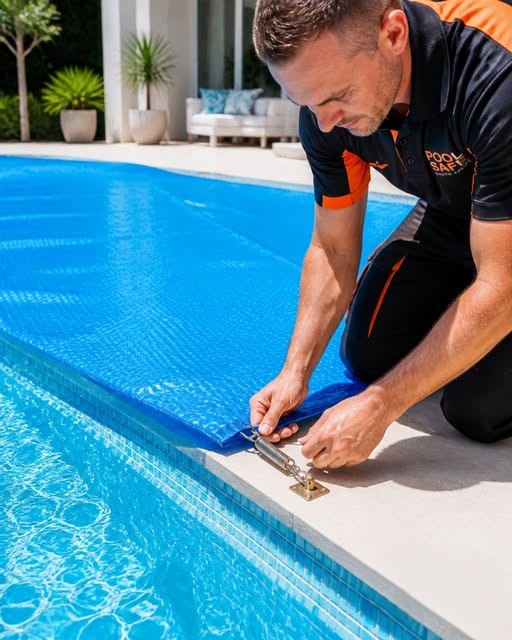
Springs connect the cover straps to deck anchors and maintain flexible tension across the pool. That tension helps preserve overlap, limit wind-driven movement, and respond to weather loads. Springs do not make a cover safe by themselves; fabric, straps, anchors, deck condition, fit, and water level all matter.
The ASTM F1346 safety-cover standard sets performance and labeling requirements for qualifying covers, which must still be installed and used as instructed. Never test a cover by walking on it, and keep children and pets off it.
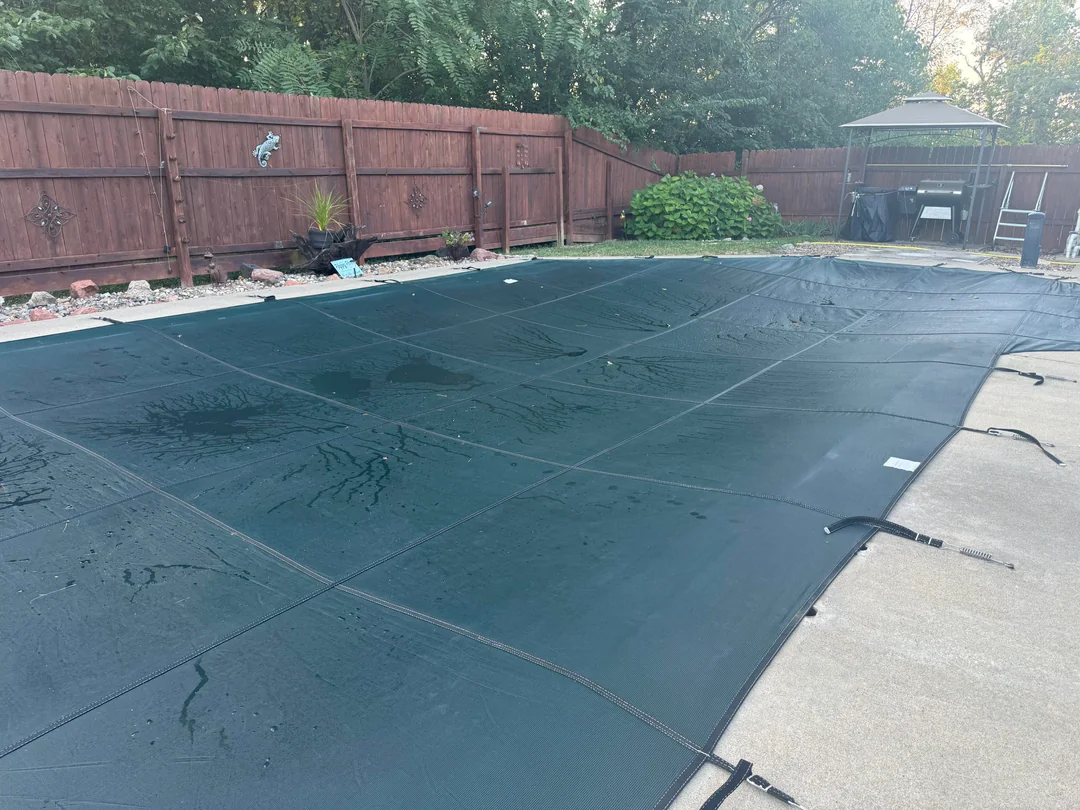
Signs Pool Safety Cover Springs Are Worn
Look closely before the cover season and after severe wind, rain, or a freeze. Warning signs include:
- Coils that remain permanently spread or no longer rebound
- Bent spring bodies, distorted loops, cracked ends, or damaged hooks
- Heavy rust, flaking, or pitting rather than light surface discoloration
- Uneven straps or a spring that repeatedly slips off its anchor
- Recurring sag after debris and standing water are removed
- A spring that cannot reach the manufacturer’s specified installed position
Do not judge pool cover tension from one internet percentage. The LOOP-LOC mesh-cover care instructions give different targets for in-ground and on-ground covers, while the Meyco safety-cover manual uses its own coil measurement. Follow the manual for your brand, model, and hardware.
What Causes Pool Cover Springs to Wear Out?
Age and repeated loading gradually reduce spring strength. Corrosion removes metal, while excessive leaves, water, ice, or snow can stretch hardware beyond its range. A loose cover may whip in the wind; an overtightened one may overload springs, straps, or anchors.
Water level matters because manufacturer instructions may rely on pool water for support under seasonal loads. Latham’s safety-cover care guidance recommends checking alignment, tension, strap length, debris, and water level together. PoolBurg’s pool cover water removal and pool cover sagging guides explain why extra weight and poor support shorten hardware life.
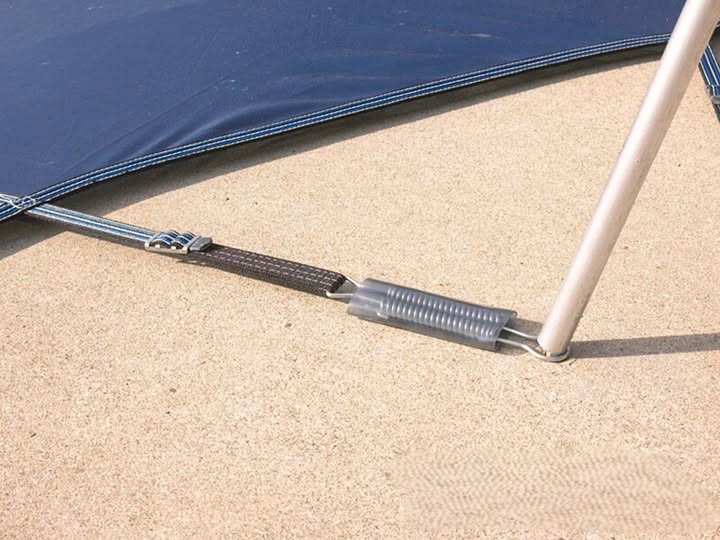
Springs Versus Anchors Versus Straps
Pool cover springs provide elastic tension, anchors create fixed deck attachment points, and straps connect the fabric to the hardware and distribute the pull.
A long or twisted strap can reduce tension, while pool cover anchors loose in shifting decking may let the entire connection move. Inspect all three parts with the fabric edge and stitching.
Can Safety Cover Springs Be Replaced?
Yes. Safety cover spring replacement is practical when the fabric, straps, and anchors remain sound. The new spring must match the approved type, size, and connection method; a generic piece that “looks close” is not a safety specification.
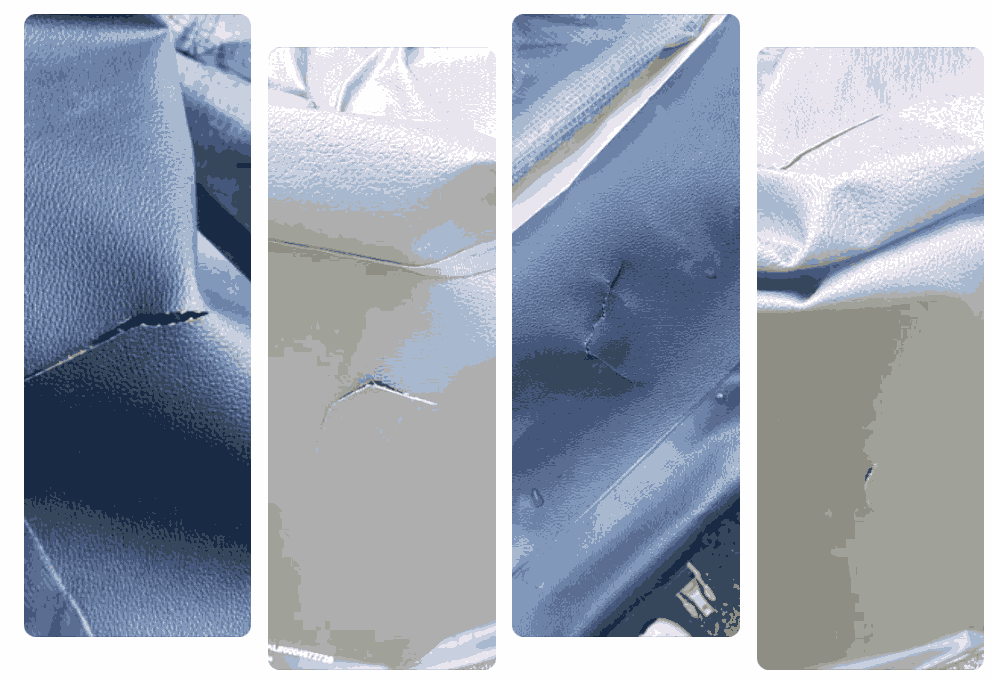
Use the proper installation tool because a tensioned spring can release suddenly. If several pool cover springs are corroded, anchors move, or fabric is torn, inspect the whole system before relying on it. PoolBurg’s torn pool cover repair guide explains why damaged safety-cover fabric is not merely cosmetic.
For Plano, Frisco, McKinney, Allen, Southlake, Grapevine, Keller, and Prosper homes, inspect before the season and after North Texas wind, hail, or freezes. The EPA’s pool water-efficiency guidance notes that covers can reduce evaporation and retain heat, but efficiency does not prove damaged hardware is safe.
People Also Ask
What do pool safety cover springs do?
They maintain flexible tension between the cover straps and deck anchors, helping the cover stay aligned, snug, and properly overlapped.
When should safety cover springs be replaced?
Replace them when they are permanently stretched, badly rusted or pitted, bent, cracked, unable to rebound, or unable to meet the cover manufacturer’s tension requirement.
Why is my safety cover sagging?
Possible causes include worn springs, loose or misadjusted straps, shifting anchors, debris or water weight, low pool water, damaged fabric, or an incorrect fit.
Can rusty pool cover springs fail?
Yes. Light staining is not the same as structural damage, but deep corrosion and pitting can weaken the metal. Replace questionable hardware rather than testing it under load.
How tight should a safety cover be?
Tight enough to meet the exact manufacturer’s installation measurement while keeping the designed flexibility. There is no single percentage for every cover.
Should springs and anchors be inspected together?
Absolutely. A good spring cannot compensate for a loose anchor, damaged strap, weak deck, or torn cover.
PoolBurg Can Check the Entire Safety Cover System
Pool safety cover springs should never be evaluated in isolation. PoolBurg can inspect the springs, pool cover tension, straps, anchors, deck, water level, and cover fabric before seasonal use. Contact PoolBurg to find out whether adjustment, targeted hardware replacement, cover repair, or full replacement is the safer next move.