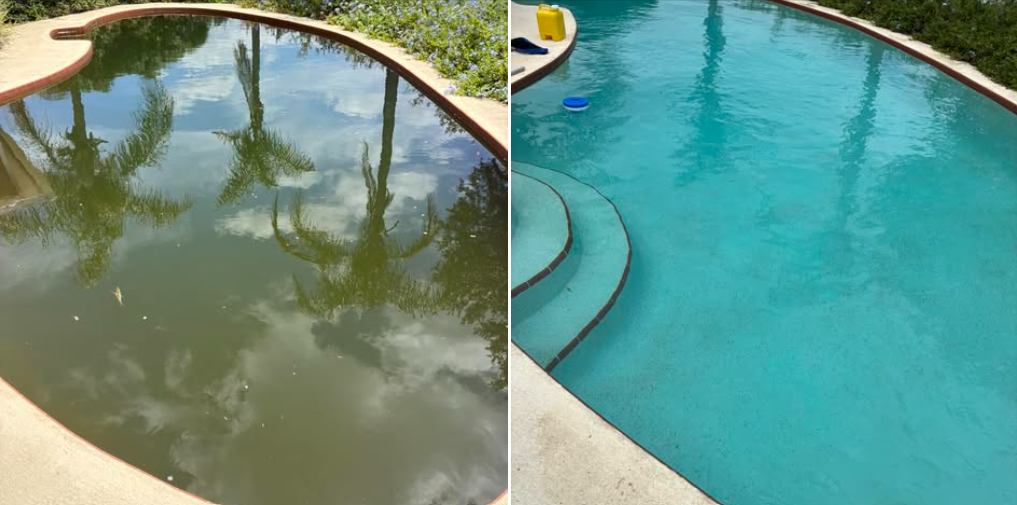
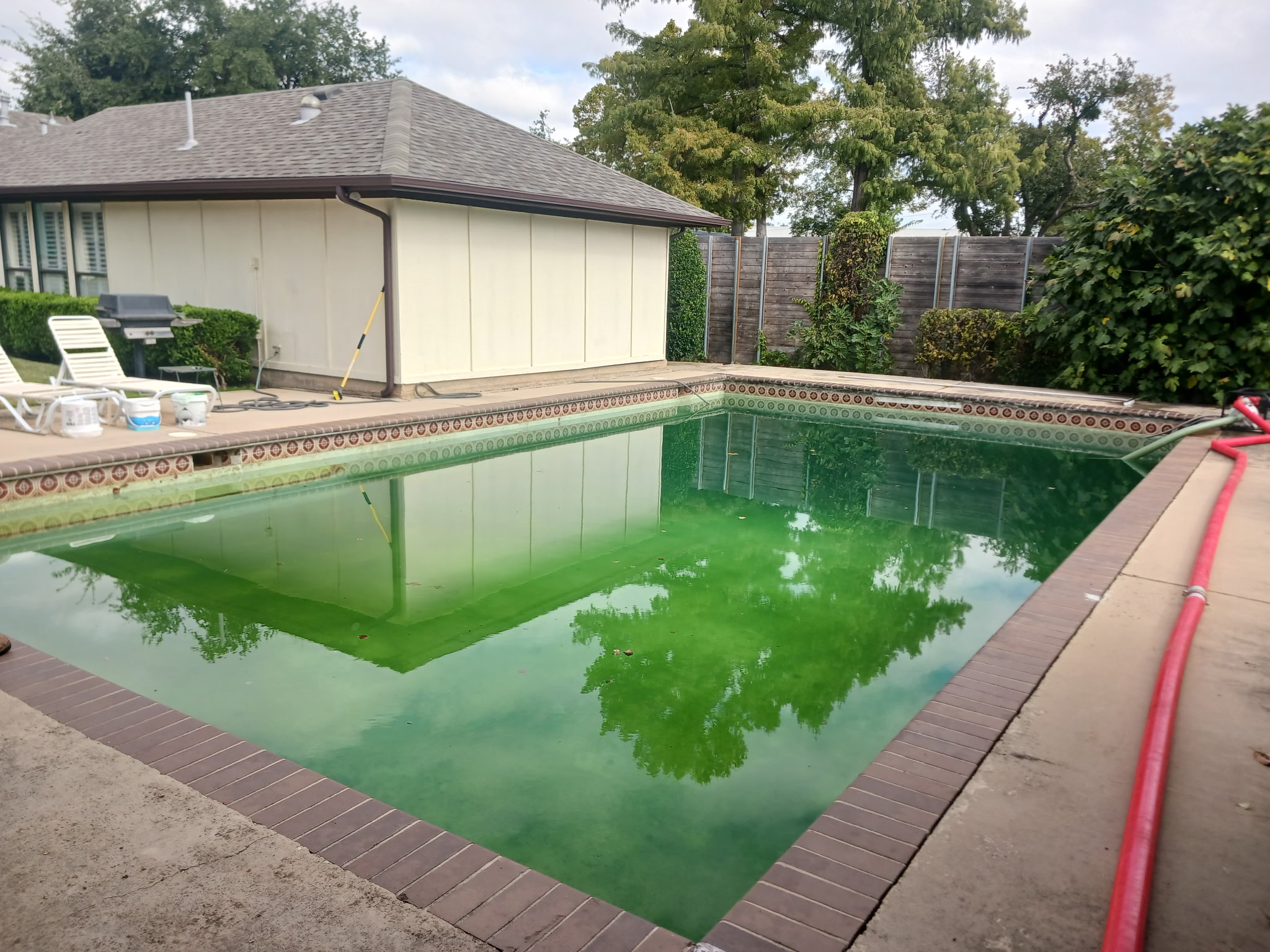
A green pool after rain means the storm likely pushed chemistry and cleanup past the system’s limit. Rain can dilute sanitizer while wind, debris, and runoff add more for chlorine and the filter to handle. Weak circulation can then invite algae. Still, test before reaching for shock because green does not always mean algae.
Why a Green Pool After Rain Happens
Rain does not create algae. It can dilute chlorine, raise the water above the best skimming range, and deliver contaminants that use sanitizer or block flow. Low stabilizer also leaves chlorine vulnerable when sunlight returns.
The CDC home-pool testing guidance calls chlorine and pH the first defense. The EPA explanation of stormwater runoff shows that runoff can collect dirt, fertilizer, bacteria, and nutrients.
What homeowners call rainwater pool algae is usually a bloom exploiting lower sanitizer, organic debris, and poor flow.
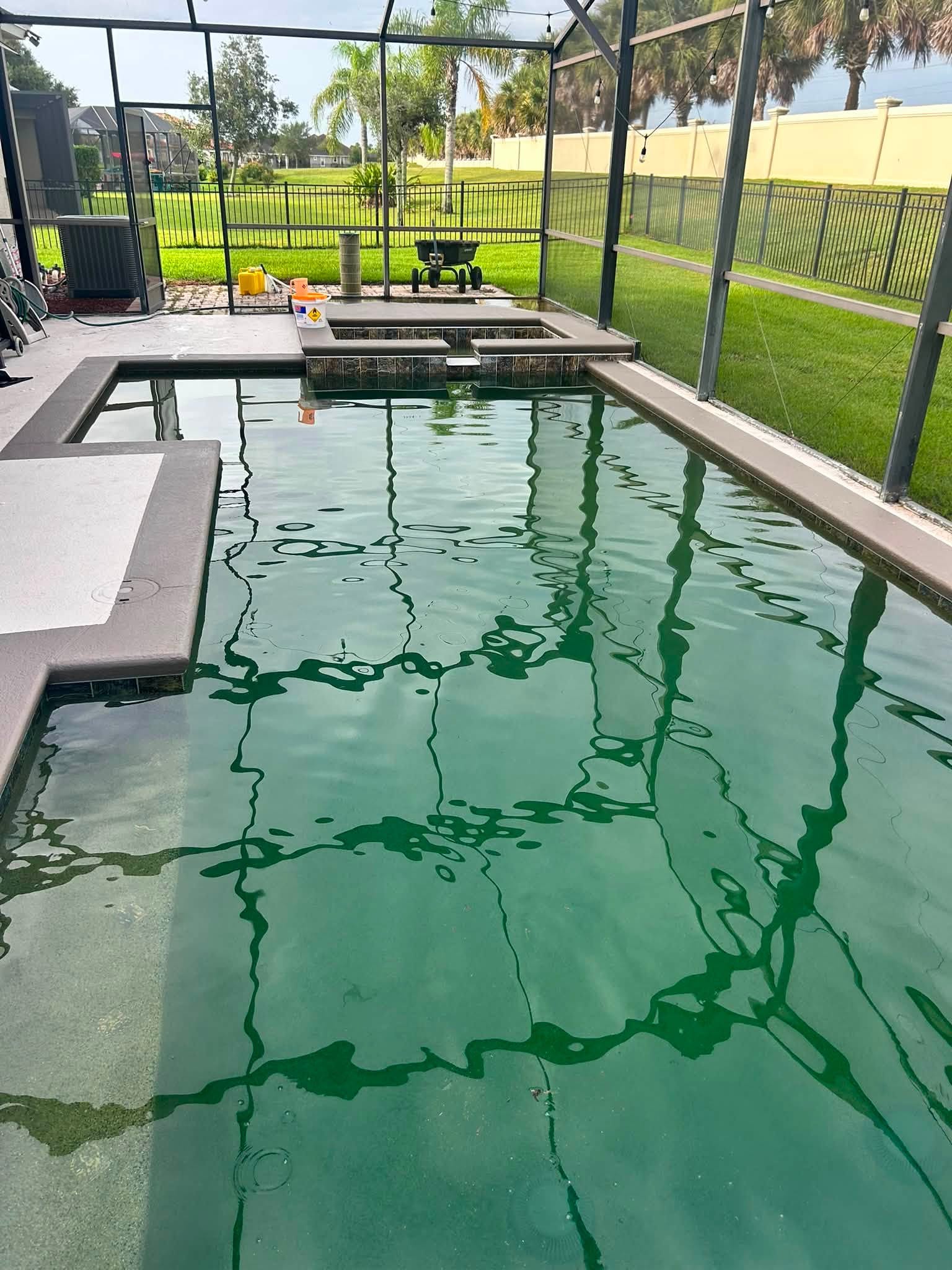
Is Green Water Always Algae?
Usually, but not always. Algae clouds water, makes surfaces slippery, and creates a green puff when brushed. Pollen and debris may float or settle like dust.
Clear water with an aqua tint points more toward metals, especially after adding chlorine. LaMotte’s pool-water quality guidance explains that copper or iron can color water after a strong dose. If a pool turned green after rain but the walls are clean, test for metals before adding more oxidizer.
What to Do First After the Pool Turns Green
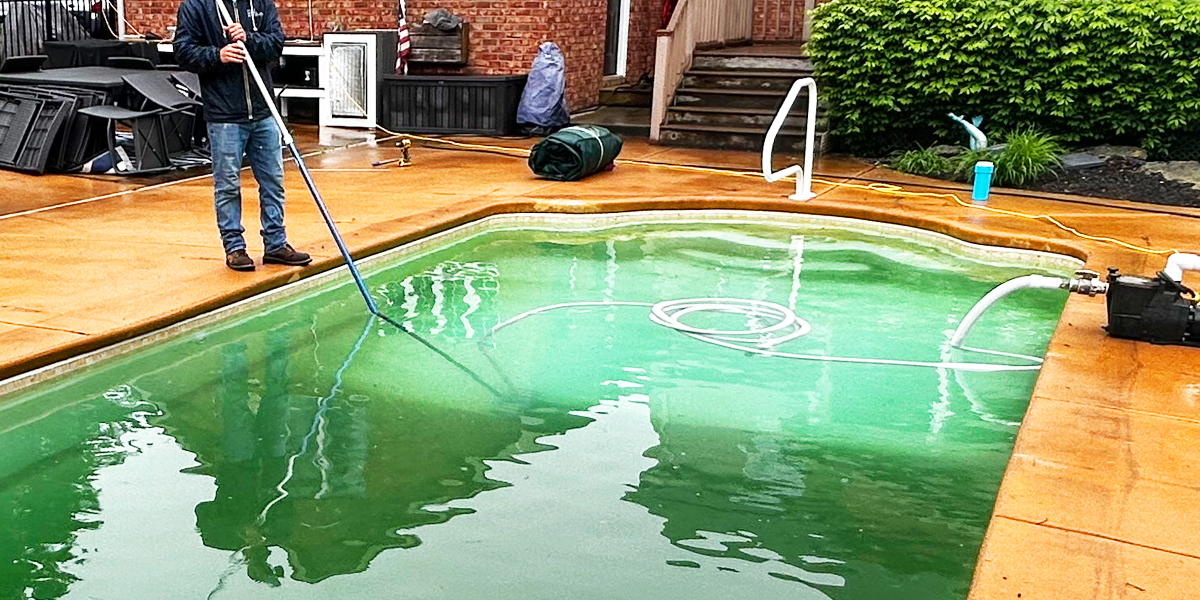
Keep swimmers out while the water is green, unusually cloudy, or the bottom cannot be seen clearly. Then work in this order:
- Remove debris and empty the skimmer and pump baskets.
- Test free chlorine, pH, alkalinity, and cyanuric acid.
- Brush walls, steps, corners, and other low-flow spots.
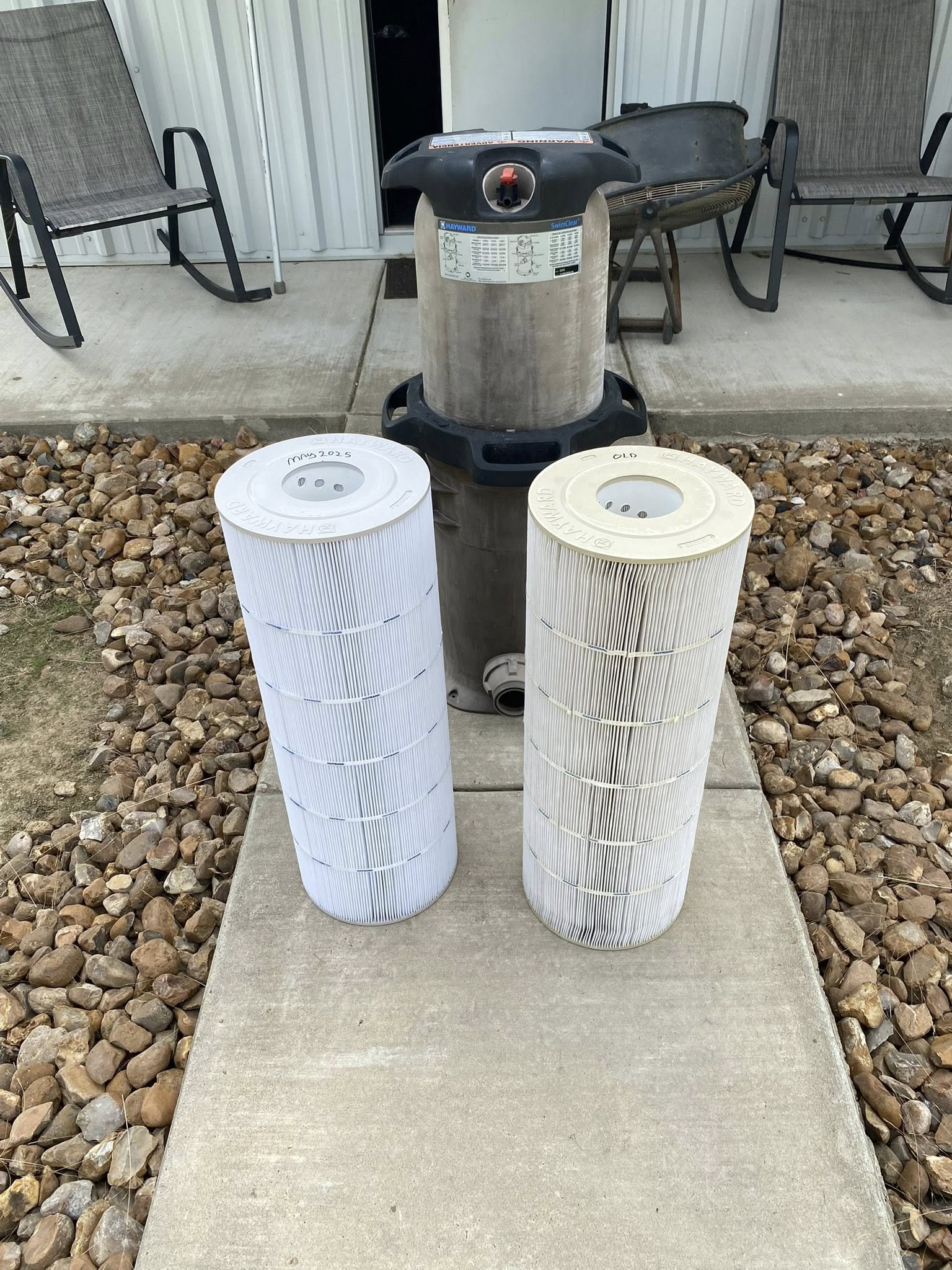
- Check pump prime, return flow, and filter pressure.
- Clean or backwash the filter when required.
- For confirmed algae, treat by pool volume, chemistry, and label; circulate and retest.
PoolBurg’s pool maintenance after rain checklist and pool algae treatment guide explain the process. Use a drop kit or professional test when strips seem questionable.
Why Pool Shock After Rain May Not Fix It
Shock is an oxidizer, not a cleanup crew. It cannot remove leaves, open a clogged basket, or brush plaster. Treatment may kill algae yet leave green pool water until dead material is filtered out. The Hayward pool-shock guide also starts with cleaning, brushing, checking pH, and running the pump.
Treatment also falls short when the dose does not match pool volume, pH is off, stabilizer is excessive, or circulation has dead spots. Pentair’s pool-water chemistry guide explains that stabilizer protects chlorine but can cause problems when too high. See cloudy pool after shock if the water turns hazy. A pool phosphate remover may support prevention, but it never replaces sanitizer, brushing, or filtration.
Follow every label, use the required protective equipment, and keep products separate. The CDC pool-chemical safety guidance warns against improper handling or mixing.
How to Prevent Green Water After Storms
Before a storm, remove debris, confirm chlorine and pH, and direct yard runoff away. After heavy rain, correct the water level, empty baskets, circulate, inspect filter pressure, and retest. Do not shock after every shower; let the readings and pool condition decide.
That routine matters in Garland, Mesquite, Wylie, Plano, Carrollton, Farmers Branch, The Colony, and Lewisville, where North Texas wind brings pollen and leaves. If yellow dust returns to shaded surfaces, compare it with yellow algae in pool before treating.
People Also Ask
Why did my pool turn green after rain?
Heavy rain may dilute sanitizer while debris and runoff increase chlorine demand. Algae can grow when filtration or circulation cannot keep up.
Should I shock my pool after rain?
Not automatically. Test first. Shock may be appropriate for confirmed algae or low sanitizer, but dose it for the pool, chemistry, and label.
Can rain lower chlorine?
Yes. Significant rainfall can dilute chlorine, while storm contaminants consume the remaining sanitizer faster.
Why is my pool green but chlorine is high?
Algae may still be clearing, total chlorine may be confused with free chlorine, stabilizer may be high, or oxidized metals may tint otherwise clear water.
How long does it take to clear a green pool?
A light bloom may improve in a day or two; a severe case can take several days. Chemistry, brushing, circulation, and filtration determine the timeline.
Can a dirty filter keep a pool green?
Yes. A loaded filter slows debris removal and flow, leaving dead algae suspended and active growth in weak-circulation areas.
PoolBurg Can Clear a Green Pool After Rain
A green pool after rain needs a full recovery plan, not chemical roulette. PoolBurg can identify algae, metals, or storm debris; test the water; brush surfaces; clean the filter; and correct circulation. If the water is not improving, contact PoolBurg for storm recovery that treats the cause.